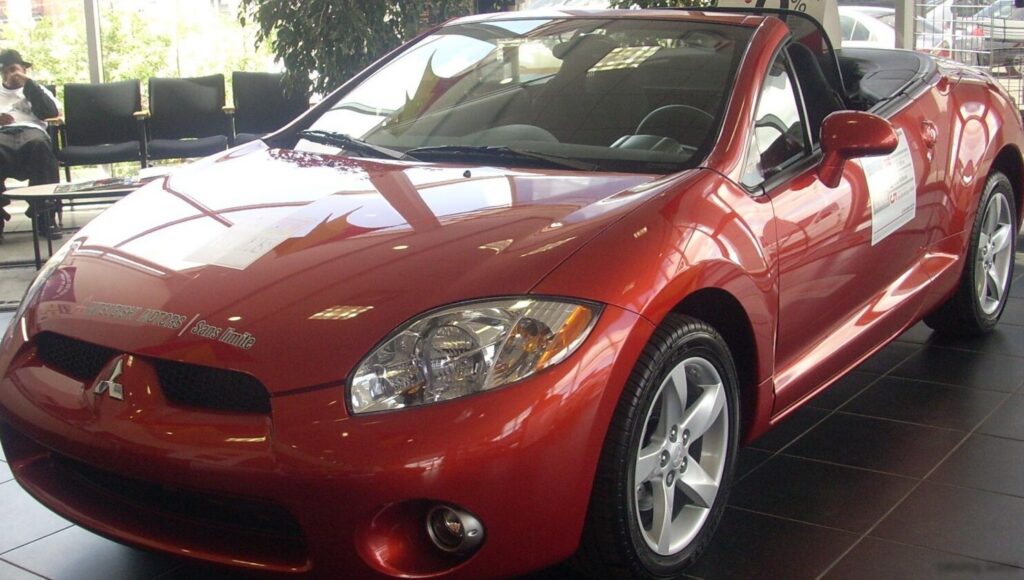
The Mitsubishi Eclipse Spyder IV (4G), produced between 2006 and 2009, represented the final iteration of the Eclipse convertible. Positioned as a stylish and relatively affordable sports-oriented convertible, it aimed to capture a segment of the market seeking open-air motoring with a touch of performance. This fourth generation, built on the GS platform, marked a significant departure from earlier Eclipse models, focusing on a more refined driving experience and contemporary styling. The 2.4L MIVEC variant, producing 162 horsepower, served as the primary engine option for the Spyder, offering a balance between performance and fuel efficiency. It was marketed towards buyers who desired a sporty aesthetic without the higher price tag or more aggressive performance of potential future performance trims.
Technical Specifications
| Brand | Mitsubishi |
| Model | Eclipse |
| Generation | Eclipse Spyder IV (4G) |
| Type (Engine) | 2.4L MIVEC (162 Hp) |
| Start of production | 2006 |
| End of production | 2009 |
| Powertrain Architecture | Internal Combustion engine |
| Body type | Cabriolet |
| Seats | 4 |
| Doors | 2 |
| Fuel Type | Petrol (Gasoline) |
| Power | 162 Hp @ 6000 rpm |
| Power per litre | 68.1 Hp/l |
| Torque | 217 Nm @ 4000 rpm / 160.05 lb.-ft. @ 4000 rpm |
| Engine layout | Front, Transverse |
| Engine Model/Code | 4G69 |
| Engine displacement | 2378 cm3 / 145.11 cu. in. |
| Number of cylinders | 4 |
| Engine configuration | Inline |
| Cylinder Bore | 87 mm / 3.43 in. |
| Piston Stroke | 100 mm / 3.94 in. |
| Compression ratio | 9.5:1 |
| Number of valves per cylinder | 4 |
| Fuel injection system | Multi-port manifold injection |
| Engine aspiration | Naturally aspirated engine |
| Valvetrain | DOHC |
| Engine oil capacity | 4.3 l / 4.54 US qt | 3.78 UK qt |
| Coolant | 8.8 l / 9.3 US qt | 7.74 UK qt |
Powertrain & Engine Architecture
The heart of the 2006-2009 Eclipse Spyder IV 2.4L was the 4G69 engine, a 2.4-liter inline-four cylinder powerplant. This engine utilized Mitsubishi’s MIVEC (Mitsubishi Innovative Valve timing and lift Electronic Control) technology. MIVEC allowed for variable valve timing on both the intake and exhaust camshafts, optimizing engine performance across a wider RPM range. The 4G69 featured a cast iron block with an aluminum cylinder head, contributing to a reasonable balance between durability and weight. Fuel delivery was handled by a multi-port fuel injection system, providing precise fuel metering for efficient combustion. The engine’s 9.5:1 compression ratio was a compromise between performance and the ability to run on readily available gasoline grades. The 5-speed manual transmission was the standard offering, providing drivers with direct control over the engine’s power. The transmission featured typical gear ratios for a front-wheel-drive sports car, prioritizing acceleration in the lower gears and reasonable cruising speeds in the higher gears.
Driving Characteristics
The 162 horsepower and 160 lb-ft of torque produced by the 2.4L MIVEC engine provided adequate, though not exhilarating, performance for the Eclipse Spyder. Acceleration from 0 to 60 mph typically took around 7.5 to 8.5 seconds, depending on testing conditions and driver skill. The 5-speed manual transmission allowed drivers to extract the most performance from the engine, while the automatic transmission, though offering convenience, resulted in a noticeable decrease in acceleration. The front-wheel-drive configuration meant that torque steer was present under hard acceleration, particularly in the lower gears. Handling was generally considered competent, with the independent McPherson strut front suspension and independent multi-link rear suspension providing a comfortable ride and reasonable cornering ability. Compared to potential higher-performance versions (had they been offered), the 2.4L MIVEC variant prioritized everyday usability and fuel economy over outright speed.
Equipment & Trim Levels
The Eclipse Spyder IV 2.4L MIVEC typically came standard with features such as air conditioning, power windows and locks, a CD player with MP3 compatibility, and alloy wheels. Safety features included ABS brakes and front airbags. Higher trim levels, such as the RS, added features like a premium sound system, leather upholstery, and a power-operated convertible top. Optional extras included a sunroof, upgraded audio systems, and various cosmetic enhancements. The interior design was modern for its time, with a focus on ergonomics and ease of use. The dashboard layout was straightforward, with clearly labeled controls and a centrally mounted infotainment system.
Chassis & Braking
The Eclipse Spyder IV utilized a unibody construction for rigidity and weight reduction. The front suspension employed independent McPherson struts, while the rear suspension featured an independent multi-link setup. This configuration aimed to provide a balance between ride comfort and handling precision. Braking duties were handled by ventilated discs at the front and solid discs at the rear. The ABS (Anti-lock Braking System) was standard, enhancing braking performance and stability, especially in adverse conditions. The steering system was a rack-and-pinion setup with hydraulic power assistance, providing responsive and precise steering feel. The standard tire size was 225/50 R17, mounted on 17-inch alloy wheels.
Market Reception & Comparison
The 2006-2009 Mitsubishi Eclipse Spyder IV 2.4L MIVEC received mixed reviews from automotive critics. While the styling was generally praised, the performance was often considered adequate but not exceptional. Fuel economy was rated as average for its class. Compared to competitors like the Mazda MX-5 Miata, the Eclipse Spyder offered more interior space and a more comfortable ride, but lacked the Miata’s pure sports car focus. Compared to other convertibles in its price range, the Eclipse Spyder offered a good value proposition, with a reasonable level of features and a stylish design. Reliability was generally considered average, with some reports of minor issues with the electrical system and convertible top mechanism.
Legacy
The Mitsubishi Eclipse Spyder IV 2.4L MIVEC represents the final chapter in the Eclipse convertible story. While it didn’t achieve the same iconic status as some of its predecessors, it remains a popular choice among used car buyers seeking an affordable and stylish convertible. The 4G69 engine is known for its durability and relatively low maintenance costs, making it a reliable powertrain option. Today, well-maintained examples of the Eclipse Spyder IV 2.4L MIVEC can be found on the used car market at relatively affordable prices, offering a fun and accessible open-air driving experience. Its lasting appeal lies in its blend of sporty styling, reasonable performance, and everyday usability.