
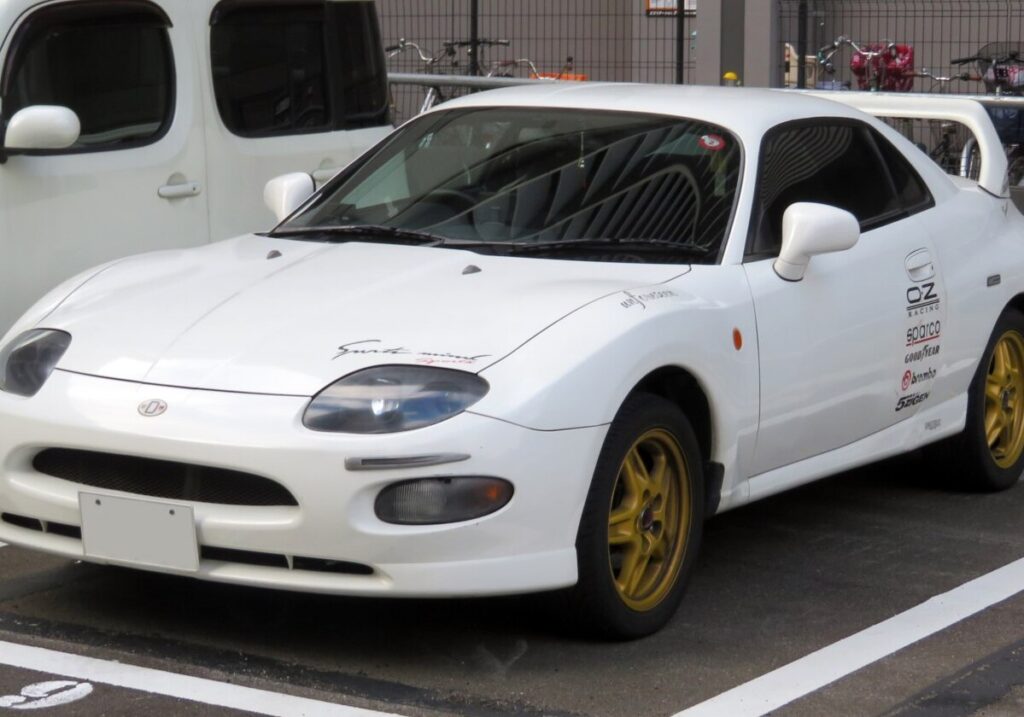
The Mitsubishi FTO, specifically the E-DE3A generation produced between 1994 and 1999, represented Mitsubishi’s attempt to recapture the sporty coupe market. Positioned as a more affordable and accessible alternative to rivals like the Honda Prelude and Toyota Celica, the FTO offered a blend of style, comfort, and reasonable performance. The 1.8 i 16V GS variant, equipped with a 126 horsepower engine and a four-speed automatic transmission, served as a mid-range offering within the FTO lineup, appealing to buyers prioritizing ease of use and fuel efficiency over outright speed. It was a popular choice in Japan, where it was primarily marketed, and saw limited export to other markets, including Australia and the United Kingdom.
Technical Specifications
| Brand | Mitsubishi |
| Model | FTO |
| Generation | FTO (E-DE3A) |
| Type | 1.8 i 16V GS (126 Hp) Automatic |
| Start of production | 1994 |
| End of production | 1999 |
| Powertrain Architecture | Internal Combustion engine |
| Body type | Coupe |
| Seats | 2 |
| Doors | 2 |
| Fuel Type | Petrol (Gasoline) |
| Weight-to-power ratio | 8.7 kg/Hp, 114.5 Hp/tonne |
| Weight-to-torque ratio | 6.8 kg/Nm, 146.4 Nm/tonne |
| Power | 126 Hp @ 6000 rpm |
| Power per litre | 68.7 Hp/l |
| Torque | 161 Nm @ 4500 rpm (118.75 lb.-ft. @ 4500 rpm) |
| Engine layout | Front, Transverse |
| Engine displacement | 1834 cm3 (111.92 cu. in.) |
| Number of cylinders | 4 |
| Engine configuration | Inline |
| Cylinder Bore | 81 mm (3.19 in.) |
| Piston Stroke | 89 mm (3.5 in.) |
| Compression ratio | 10:1 |
| Number of valves per cylinder | 4 |
| Fuel injection system | Multi-port manifold injection |
| Engine aspiration | Naturally aspirated engine |
| Valvetrain | OHC |
| Kerb Weight | 1100 kg (2425.08 lbs.) |
| Fuel tank capacity | 60 l (15.85 US gal | 13.2 UK gal) |
| Length | 4320 mm (170.08 in.) |
| Width | 1735 mm (68.31 in.) |
| Height | 1300 mm (51.18 in.) |
| Wheelbase | 2500 mm (98.43 in.) |
| Front track | 1560 mm (61.42 in.) |
| Rear track | 1580 mm (62.2 in.) |
| Drivetrain Architecture | The Internal combustion engine (ICE) drives the front wheels of the vehicle. |
| Drive wheel | Front wheel drive |
| Number of gears | 4 |
| Gearbox type | automatic transmission |
| Front suspension | Wishbone |
| Rear suspension | Coil spring |
| Front brakes | Ventilated discs |
| Rear brakes | Disc |
| Assisting systems | ABS (Anti-lock braking system) |
| Steering type | Steering rack and pinion |
| Power steering | Hydraulic Steering |
| Tires size | 185/70 R14 S |
| Wheel rims size | 14 |
Powertrain & Engine Architecture
The heart of the FTO 1.8 i 16V GS is the 4G63 inline-four cylinder engine, displacing 1834cc. While the 4G63 is a robust and well-regarded engine family, this particular iteration was tuned for economy and smoothness rather than outright performance. It features a single overhead camshaft (SOHC) valvetrain operating four valves per cylinder. Fuel delivery is managed by a multi-port fuel injection system, contributing to improved efficiency and reduced emissions. The engine produces 126 horsepower at 6000 rpm and 161 Nm (118.75 lb-ft) of torque at 4500 rpm. This engine is paired with a four-speed automatic transmission, designed for comfortable and effortless driving. The transmission’s gear ratios are optimized for fuel economy and smooth acceleration, prioritizing usability over sporty responsiveness.
Driving Characteristics
The FTO 1.8 i 16V GS with the automatic transmission delivers a comfortable and predictable driving experience. Acceleration is adequate for everyday driving, but it won’t provide the exhilarating performance of the higher-spec V6 models. The automatic transmission shifts smoothly, but can feel somewhat sluggish when attempting quick overtaking maneuvers. Compared to the five-speed manual version, the automatic sacrifices some responsiveness and driver engagement. The weight distribution is reasonably balanced, contributing to stable handling, but the suspension is tuned for comfort rather than aggressive cornering. The steering is light and precise, making it easy to maneuver in urban environments.
Equipment & Trim Levels
The GS trim level of the FTO 1.8 i 16V offered a good level of standard equipment. Interior features typically included cloth upholstery, power windows, power door locks, and a basic audio system. Air conditioning was also standard. Optional extras included alloy wheels, a sunroof, and upgraded audio systems. The dashboard layout is functional and driver-focused, with clearly labeled controls. The interior materials are of decent quality, but not luxurious. The FTO’s interior space is limited, reflecting its coupe body style, with a focus on providing a comfortable environment for the driver and front passenger.
Chassis & Braking
The FTO E-DE3A utilizes a front-engine, front-wheel-drive layout. The front suspension employs a wishbone configuration, while the rear suspension utilizes a coil spring setup. This suspension arrangement provides a comfortable ride quality, absorbing bumps and imperfections in the road surface effectively. The braking system consists of ventilated discs at the front and solid discs at the rear. Anti-lock braking system (ABS) is standard, enhancing safety by preventing wheel lockup during hard braking. The steering system is a rack and pinion type with hydraulic power assistance, providing light and precise steering feel.
Market Reception & Comparison
The Mitsubishi FTO 1.8 i 16V GS was generally well-received by critics as an affordable and stylish coupe. However, it was often criticized for its lack of outright performance compared to its rivals. Fuel economy was considered to be good for its class. Compared to the FTO’s V6 variants, the 1.8L automatic offered significantly lower running costs and a more relaxed driving experience, making it a popular choice for buyers prioritizing practicality and affordability. The 1.9L versions offered a better balance of performance and economy, but at a higher price point. The FTO faced competition from the Honda Prelude, Toyota Celica, and Nissan 200SX, all of which offered varying degrees of performance and features.
Legacy
The Mitsubishi FTO, while not a massive sales success, has gained a cult following among enthusiasts. The 4G63 engine is known for its durability and potential for modification. The 1.8L automatic variant, while not the most sought-after version, remains a relatively affordable entry point into FTO ownership. These cars are now becoming increasingly rare, and well-maintained examples are appreciating in value. Common issues with these vehicles include age-related wear and tear on suspension components, and potential for oil leaks from the engine. Overall, the FTO 1.8 i 16V GS represents a charming and capable coupe from the 1990s, offering a unique blend of style, comfort, and reliability.
