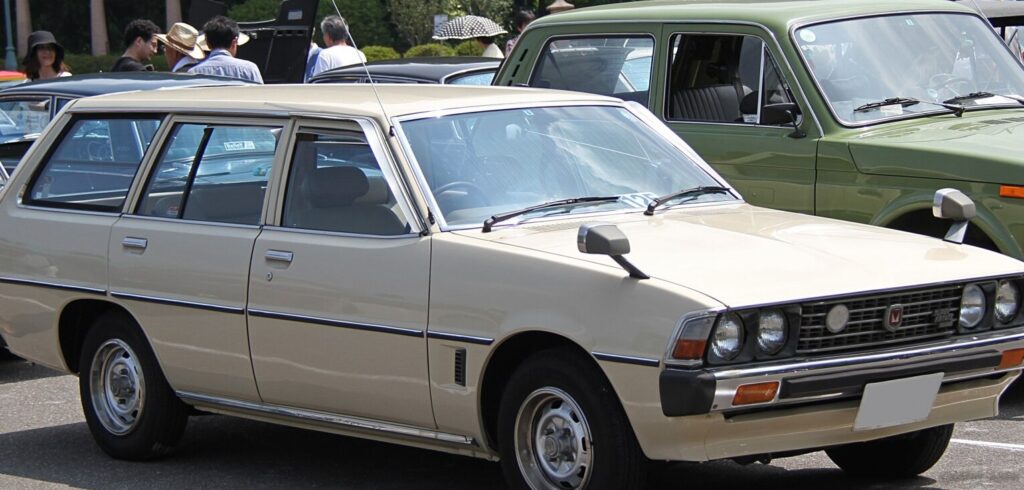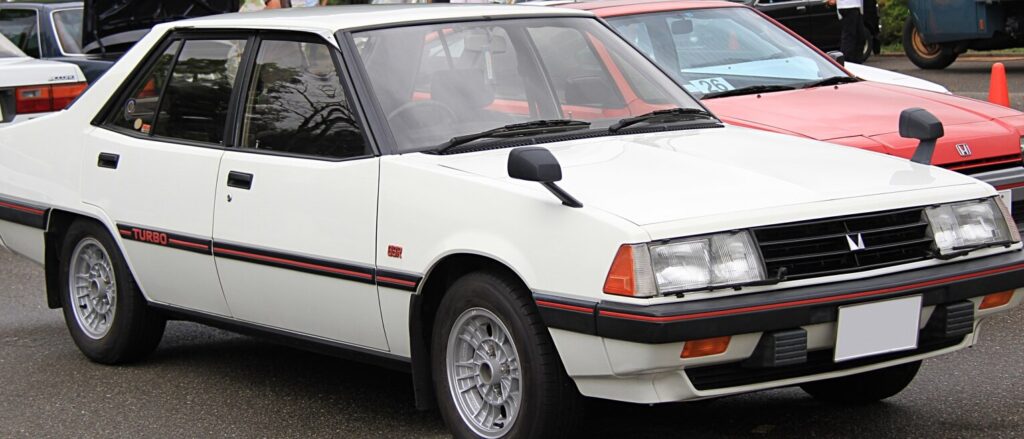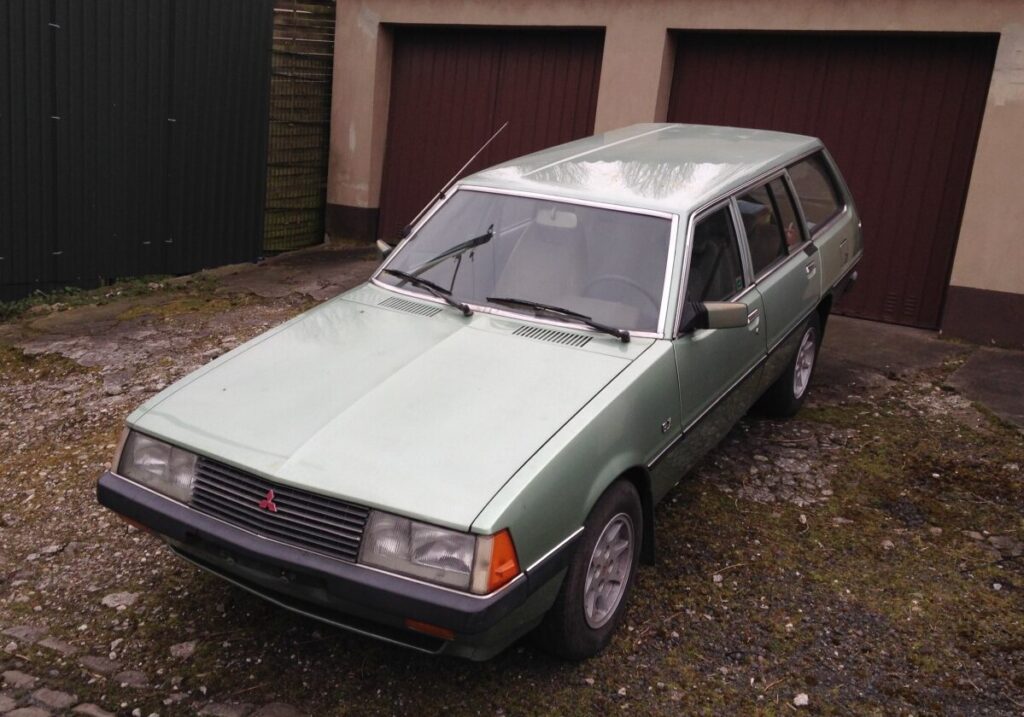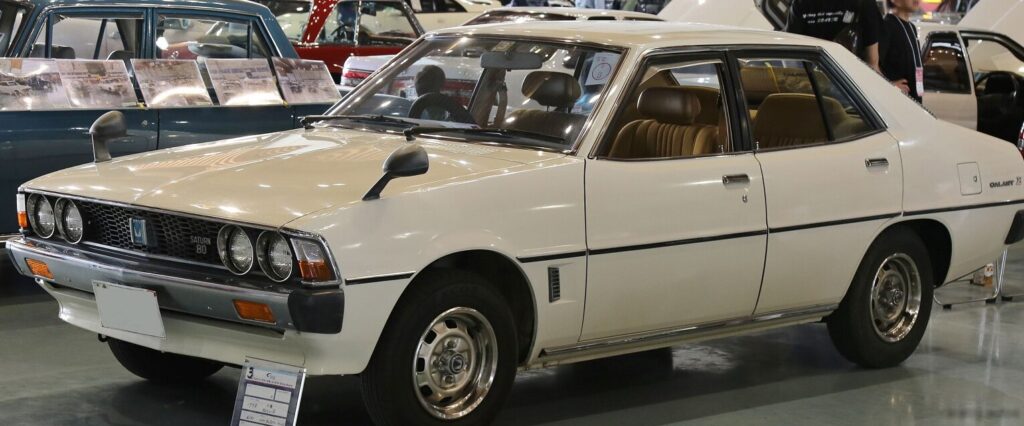
The Mitsubishi Galant III 1.6, produced between 1976 and 1980, represented a significant evolution in Mitsubishi’s mid-size sedan offerings. Falling within the broader Galant III generation (A110 series), this 75 horsepower variant served as the entry point into the Galant lineup, primarily aimed at buyers seeking economical and reliable transportation. While not the most powerful Galant available, the 1.6L engine and automatic transmission combination offered a balance of affordability and convenience that appealed to a wide segment of the Japanese domestic market, and to a lesser extent, export markets. This model played a crucial role in establishing the Galant’s reputation for durability and value.
Technical Specifications
| Brand | Mitsubishi |
| Model | Galant |
| Generation | Galant III (A110 Series) |
| Type (Engine) | 1.6L (75 Hp) |
| Start of Production | 1976 |
| End of Production | 1980 |
| Powertrain Architecture | Internal Combustion Engine |
| Body Type | Sedan |
| Fuel Type | Petrol (Gasoline) |
| Power | 75 Hp |
| Engine Aspiration | Naturally Aspirated |
| Engine Code | Typically 4G32 |
| Displacement | 1597 cc (97.4 cu in) |
| Bore x Stroke | 78.5 mm x 86.5 mm (3.09 in x 3.41 in) |
| Compression Ratio | 8.5:1 |
| Valve Configuration | Overhead Valve (OHV) |
| Fuel System | Carbureted |
| Transmission | 3-Speed Automatic |
| Drive Type | Rear-Wheel Drive |
| Weight (approx.) | 1,150 – 1,250 kg (2,535 – 2,756 lbs) |
Powertrain & Engine Architecture
The Galant III 1.6 was powered by the 4G32 engine, a 1.6-liter inline-four cylinder gasoline engine. This engine utilized a relatively simple overhead valve (OHV) configuration with two valves per cylinder. It was a naturally aspirated engine, relying on atmospheric pressure for intake, and employed a single, two-barrel carburetor for fuel delivery. This carburetor system, while common for the era, was less efficient and precise than later fuel injection systems. The 4G32 produced 75 horsepower at approximately 5,200 rpm and 99 lb-ft of torque at 3,200 rpm. The engine block was cast iron, contributing to its durability, while the cylinder head was aluminum. The 3-speed automatic transmission was a typical design for the mid-1970s, offering smooth but not particularly quick shifts. It was a hydraulically controlled unit, lacking the electronic controls found in modern automatics.
Driving Characteristics
The driving experience in the Galant III 1.6 with the automatic transmission was geared towards comfort and ease of use rather than performance. Acceleration was modest, with 0-60 mph times estimated to be around 14-16 seconds. The automatic transmission’s gear ratios were optimized for fuel economy and smooth cruising, resulting in a somewhat sluggish response during overtaking maneuvers. Compared to the manual transmission versions of the 1.6, or the larger 2.0-liter engines available in the Galant III range, this variant felt noticeably less spirited. However, the automatic transmission made it a more accessible option for drivers who preferred the convenience of not having to shift gears, particularly in urban environments. The rear-wheel-drive layout provided predictable handling, but the relatively soft suspension tuning prioritized ride comfort over sporty handling.
Equipment & Trim Levels
The 1.6L automatic Galant III typically represented the base trim level. Standard equipment generally included cloth upholstery, basic instrumentation (speedometer, fuel gauge, temperature gauge), and a two-spoke steering wheel. Air conditioning was often an optional extra, as were power windows and a radio. Interior appointments were functional and durable, reflecting the car’s focus on practicality. The dashboard layout was straightforward, with clearly labeled controls. Exterior features typically included chrome bumpers, steel wheels with hubcaps, and relatively simple exterior trim. Higher trim levels, available with the larger engines, offered features like upgraded upholstery, woodgrain interior accents, and more sophisticated audio systems.
Chassis & Braking
The Galant III utilized a body-on-frame construction, which was common for sedans of that era. The suspension consisted of independent front suspension with MacPherson struts and a live rear axle with leaf springs. This setup provided a comfortable ride, but didn’t offer the same level of handling precision as more modern independent rear suspension designs. Braking was typically accomplished with drum brakes on all four wheels, although some later models or higher trim levels may have featured front disc brakes. The braking system was adequate for normal driving conditions, but lacked the stopping power and fade resistance of more advanced braking systems. Steering was unassisted, requiring more effort at low speeds.
Market Reception & Comparison
The Galant III 1.6 automatic was generally well-received as a practical and reliable family sedan. Critics acknowledged its affordability and fuel efficiency, but noted its lack of outright performance. Compared to its siblings, the 1.6L automatic was positioned as the entry-level option, appealing to buyers who prioritized economy and convenience over sporty driving dynamics. The larger 2.0-liter engines offered significantly more power, while the manual transmission versions provided better fuel economy and a more engaging driving experience. In terms of reliability, the 4G32 engine proved to be quite durable, although the carburetor system required periodic maintenance and tuning. Fuel economy was reasonable for the time, averaging around 25-30 mpg in mixed driving conditions.
Legacy
The Mitsubishi Galant III 1.6, while not a performance icon, played a vital role in establishing the Galant’s reputation as a dependable and value-oriented sedan. The 4G32 engine, despite its relatively simple design, proved to be remarkably robust and capable of withstanding years of use. Today, finding a well-maintained Galant III 1.6 can be a challenge, but they are appreciated by classic car enthusiasts for their simplicity and reliability. Parts availability can be limited, but many components are still obtainable through specialist suppliers or online marketplaces. The Galant III 1.6 represents a snapshot of automotive engineering from the mid-1970s, offering a glimpse into a time when practicality and durability were highly valued in family transportation. Its enduring appeal lies in its honest design and its ability to provide reliable service for decades.