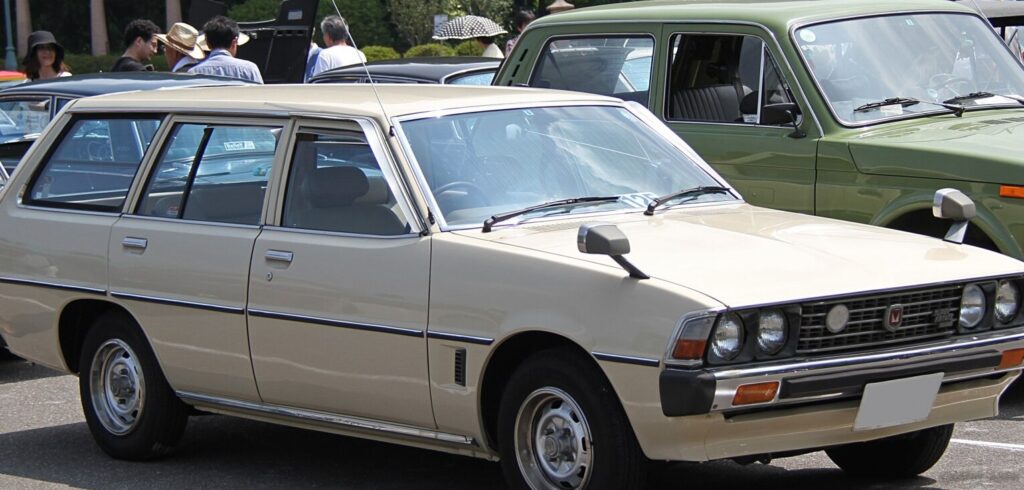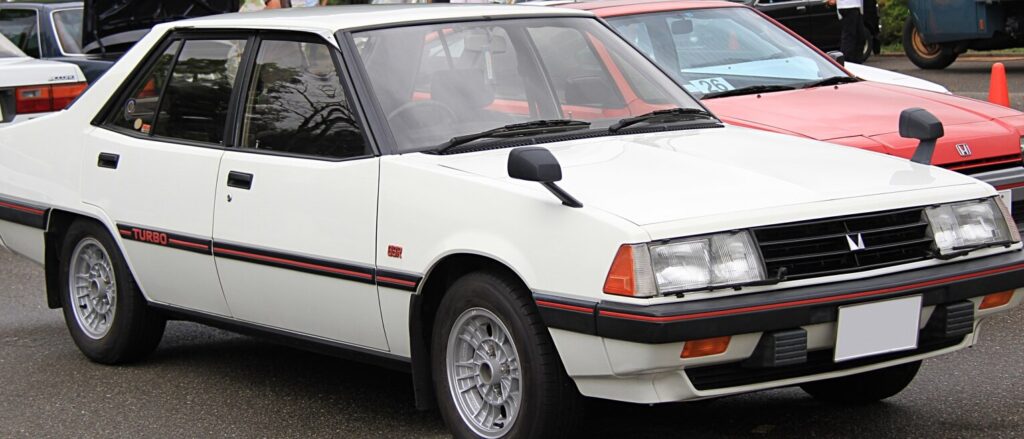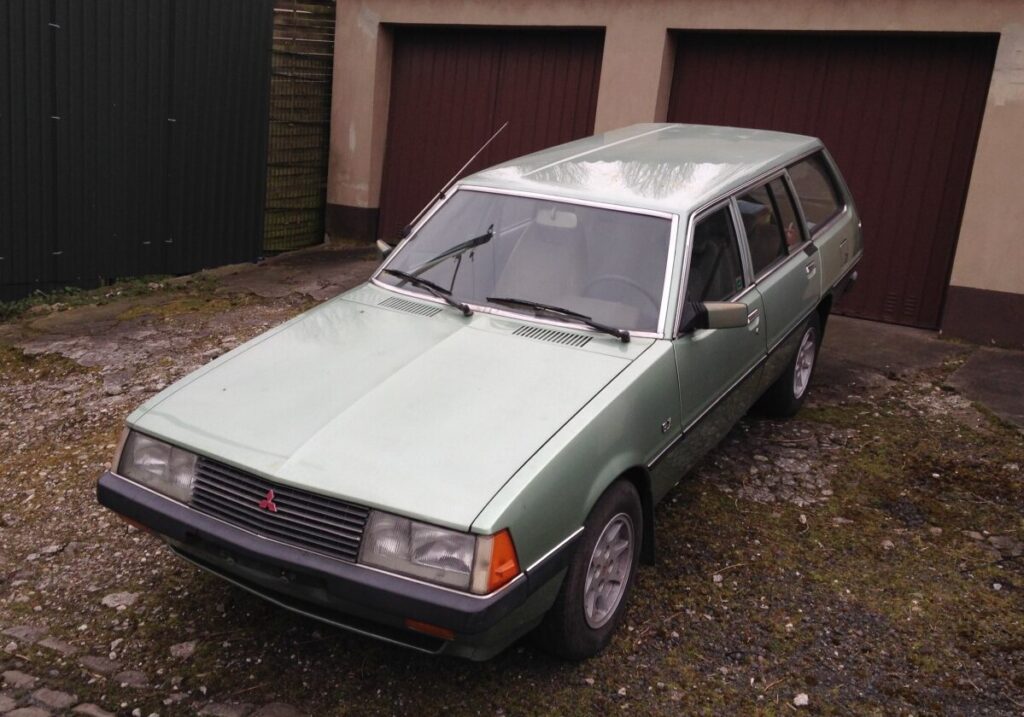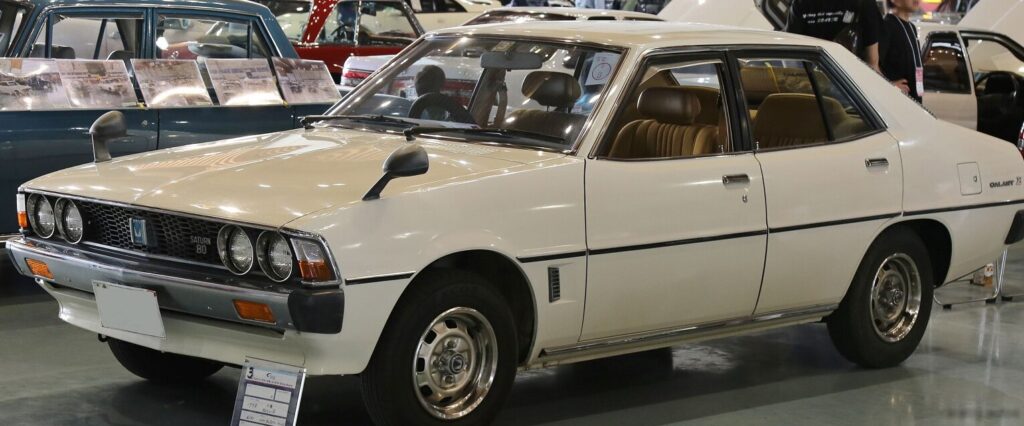
The Mitsubishi Galant III 2.0, producing 98 horsepower, represents a significant iteration in the Galant lineage, manufactured between 1979 and 1980. This model occupied a crucial position within the third generation (A110 series) of the Galant, a period marked by Mitsubishi’s increasing ambition in the mid-size sedan market. Positioned as a mainstream offering, the 2.0-liter variant aimed to balance affordability with reasonable performance and comfort, catering to a broad customer base seeking a practical and reliable family vehicle. It was a key model for Mitsubishi as they continued to expand their presence outside of Japan, particularly in export markets.
Technical Specifications
| Brand | Mitsubishi |
| Model | Galant |
| Generation | Galant III (A110 Series) |
| Type (Engine) | 2.0 (98 Hp) |
| Start of Production | 1979 |
| End of Production | 1980 |
| Powertrain Architecture | Internal Combustion Engine |
| Body Type | Sedan |
| Fuel Type | Petrol (Gasoline) |
| Power | 98 Hp |
| Engine Aspiration | Naturally Aspirated |
| Engine Displacement | 1995 cc |
| Cylinder Configuration | Inline-4 |
| Valvetrain | Overhead Camshaft (OHC) |
| Fuel System | Carbureted |
| Transmission | 3-Speed Automatic |
| Drive Type | Rear-Wheel Drive |
| Weight (approx.) | 1,250 – 1,350 kg (2,756 – 2,976 lbs) |
Powertrain & Engine Architecture
The heart of the Galant III 2.0 was the 4G32 engine, a 1,995 cc inline-four cylinder powerplant. This engine utilized a single overhead camshaft (OHC) design, a relatively modern feature for the late 1970s, contributing to smoother operation and improved efficiency compared to older pushrod designs. The 4G32 was a naturally aspirated engine, relying on atmospheric pressure for intake, and employed a carburetor for fuel delivery. While not as precise as fuel injection, carburetors were cost-effective and relatively simple to maintain. The engine produced 98 horsepower at approximately 5,200 rpm and around 138 lb-ft of torque at 3,000 rpm. This configuration was paired exclusively with a three-speed automatic transmission, designed for ease of use and comfort rather than outright performance. The transmission was a conventional hydraulic automatic, offering a ‘Drive’, ‘Neutral’, ‘Park’, and ‘Reverse’ selection. The drivetrain was rear-wheel drive, a common configuration for sedans of this era.
Driving Characteristics
The Galant III 2.0 with the automatic transmission offered a comfortable, if not particularly exhilarating, driving experience. The three-speed automatic, while providing smooth shifts, resulted in relatively wide gear ratios. Acceleration was adequate for everyday driving, but passing maneuvers required careful planning. The engine’s torque peak at 3,000 rpm meant that the car felt most responsive in the mid-range, but lacked the punch of higher-output engines or manual transmission variants. Compared to the available manual transmission options, the automatic version sacrificed some responsiveness for convenience. The rear-wheel drive configuration provided a balanced feel, although handling was typical of sedans from the late 1970s – exhibiting some body roll in corners. The suspension, consisting of independent front suspension with MacPherson struts and a live axle with leaf springs in the rear, prioritized ride comfort over sporty handling. Steering was power-assisted, making maneuvering at low speeds easier.
Equipment & Trim Levels
The Galant III 2.0, in its base trim, was reasonably well-equipped for its time. Standard features typically included cloth upholstery, a basic AM/FM radio, and manual windows and door locks. The dashboard layout was functional and straightforward, with clearly marked gauges for speed, fuel level, and coolant temperature. Optional extras, depending on the market, could include air conditioning, a more advanced radio with cassette player, and upgraded interior trim. The interior generally featured a practical design with durable materials, reflecting the car’s intended role as a family sedan. Exterior trim was relatively understated, with chrome accents on the bumpers and window surrounds. The 2.0-liter automatic variant generally represented a mid-range trim level within the Galant III lineup, offering a step up in convenience and comfort compared to the base models but lacking the luxury features of the higher-spec trims.
Chassis & Braking
The Galant III utilized a body-on-frame construction, a common practice for vehicles of this era. The chassis was designed to provide a balance of strength and rigidity. The front suspension employed MacPherson struts, offering a reasonable level of ride comfort and handling. The rear suspension utilized a live axle with leaf springs, a cost-effective and durable design. Braking was accomplished via drum brakes on all four wheels, which were standard for this class of vehicle at the time. Power steering was often included as standard equipment, making low-speed maneuvering easier. Stabilizer bars were typically fitted to the front suspension to reduce body roll during cornering. The tires were typically bias-ply tires, reflecting the technology of the late 1970s.
Market Reception & Comparison
The Mitsubishi Galant III 2.0 Automatic was generally well-received as a practical and reliable family sedan. Critics praised its comfortable ride and relatively spacious interior. However, the automatic transmission and 98 horsepower engine were often noted as being somewhat underpowered, particularly when compared to competitors offering more powerful engines or manual transmission options. Compared to other trims in the Galant lineup, such as the higher-output 2.6-liter versions, the 2.0-liter automatic offered better fuel economy but significantly less performance. Fuel economy was a key selling point, averaging around 22-26 mpg in combined driving conditions. Reliability was generally good, although maintenance costs could be moderate due to the carburetor and the age of the vehicle.
Legacy
The Mitsubishi Galant III 2.0 Automatic, while not a performance icon, played a significant role in establishing Mitsubishi’s reputation for building reliable and practical vehicles. The 4G32 engine proved to be a durable powerplant, and many examples remain on the road today. In the used car market, these Galants are often sought after by enthusiasts looking for a classic Japanese sedan. The simplicity of the engine and transmission makes them relatively easy to maintain, although finding replacement parts can sometimes be a challenge. The Galant III 2.0 Automatic represents a snapshot of automotive engineering from the late 1970s, offering a glimpse into a time when comfort and reliability were prioritized over outright performance. Its enduring presence in the classic car community is a testament to its build quality and enduring appeal.