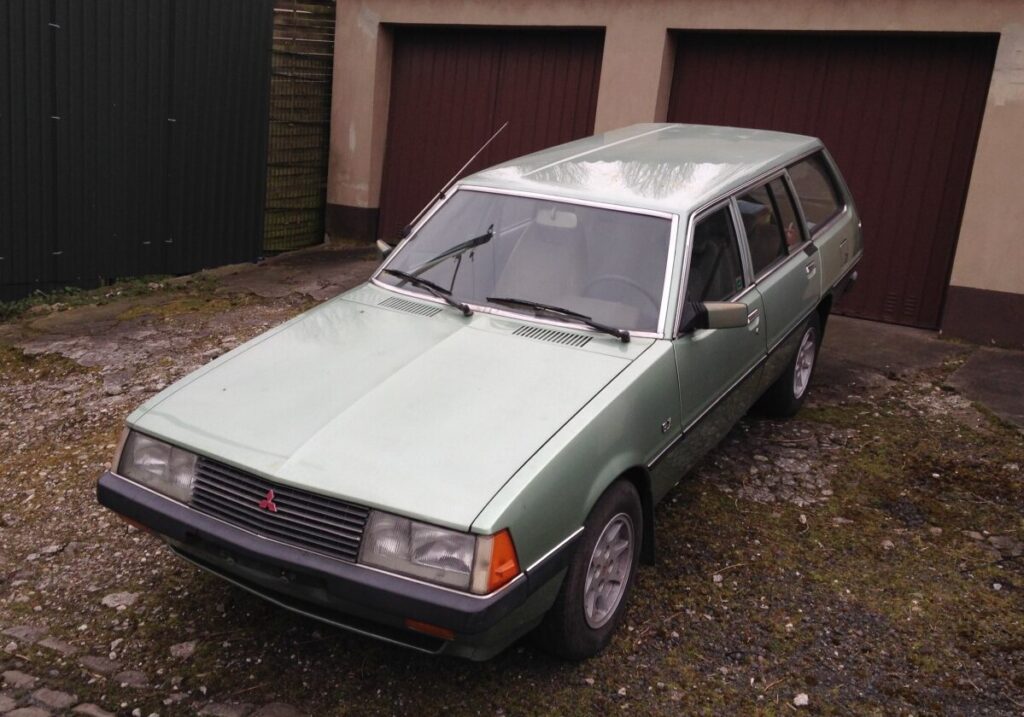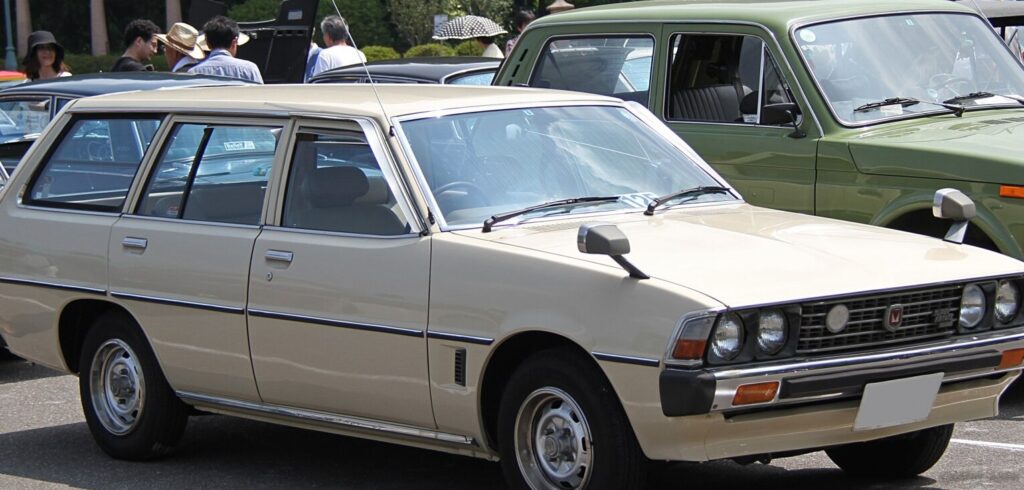
The Mitsubishi Galant III Wagon 1.6 GL, produced between 1979 and 1980, represents a relatively uncommon variant within the broader Galant III lineage. This station wagon, powered by a 1.6-liter gasoline engine producing 75 horsepower, occupied a specific niche in Mitsubishi’s lineup during a period of increasing demand for practical family vehicles. It was part of the third generation of the Galant (A120 series), which saw the introduction of a wagon body style to cater to a wider range of customer needs. While the Galant sedan was more prevalent in many markets, the wagon offered increased cargo capacity and versatility, particularly appealing to families and those requiring a vehicle for both personal and commercial use.
Technical Specifications
| Brand | Mitsubishi |
| Model | Galant |
| Generation | Galant III Wagon |
| Type | 1.6 GL (75 Hp) |
| Production Years | 1979-1980 |
| Body Type | Station Wagon (Estate) |
| Engine Type | Internal Combustion Engine, Petrol (Gasoline) |
| Engine Displacement | 1.6 Liters |
| Power Output | 75 Horsepower |
| Engine Aspiration | Naturally Aspirated |
Powertrain & Engine Architecture
The heart of the Galant III Wagon 1.6 GL is a 1.6-liter, inline-four cylinder gasoline engine. While specific engine codes varied depending on the market, this engine generally featured a single overhead camshaft (SOHC) valvetrain. Fuel delivery was managed by a carburetor, a common technology for the time, rather than fuel injection. This carburetor system, while simpler and less expensive than injection, contributed to the engine’s modest power output and relatively lower fuel efficiency compared to later designs. The engine’s design prioritized reliability and ease of maintenance over outright performance. The 75 horsepower was achieved at approximately 5,200 rpm, and peak torque, though not widely publicized, was likely around 95 lb-ft. The engine was paired with a three-speed automatic transmission, a popular choice for drivers seeking convenience, especially in a family-oriented vehicle. This automatic transmission was not known for its sporty characteristics; instead, it focused on smooth shifts and ease of use.
Driving Characteristics
The driving experience in the Galant III Wagon 1.6 GL was characterized by its practicality and comfort rather than its performance. The 75 horsepower engine, coupled with the three-speed automatic, provided adequate, but not exhilarating, acceleration. The wagon’s weight, naturally higher than the sedan due to its larger body, further impacted performance. Real-world driving involved a focus on smooth cruising and efficient transportation. The automatic transmission’s gear ratios were geared towards fuel economy and relaxed driving, meaning quick acceleration required a significant amount of throttle input. Compared to a manual transmission version (if available in certain markets), the automatic would have resulted in a noticeable decrease in both acceleration and fuel economy. It also lacked the driver engagement offered by a manual gearbox. The suspension, tuned for comfort, absorbed bumps reasonably well, but the wagon’s handling was not particularly sharp or responsive.
Equipment & Trim Levels
The 1.6 GL trim level represented a mid-range offering within the Galant III Wagon lineup. Standard equipment typically included cloth upholstery, basic instrumentation (speedometer, fuel gauge, temperature gauge), and a two-spoke steering wheel. Features considered optional extras could include a radio, upgraded interior trim, and potentially, air conditioning depending on the market. The dashboard layout was functional and straightforward, prioritizing ease of use over aesthetic flair. The interior space was a key selling point, offering ample room for passengers and cargo. The rear seats could be folded down to further expand the cargo area, enhancing the wagon’s versatility. Exterior features generally included chrome bumpers, relatively simple steel wheels with hubcaps, and basic exterior trim.
Chassis & Braking
The Galant III Wagon utilized a body-on-frame construction, a common practice for station wagons of that era. The suspension consisted of independent front suspension with MacPherson struts and a solid rear axle with leaf springs. This setup prioritized ride comfort and load-carrying capacity over precise handling. The braking system was relatively basic, featuring drum brakes on all four wheels. Power-assisted braking was not standard on all models, and the braking performance was adequate for the vehicle’s weight and power, but not particularly strong by modern standards. Steering was typically accomplished via a recirculating ball steering system, which provided a somewhat vague and indirect feel.
Market Reception & Comparison
The Mitsubishi Galant III Wagon 1.6 GL was generally well-received as a practical and reliable family vehicle. Critics acknowledged its spacious interior and comfortable ride, but often noted its modest performance. Compared to other wagons available at the time, such as those from Toyota or Nissan, the Galant offered a competitive level of equipment and a reasonable price point. However, it often lagged behind in terms of engine refinement and overall performance. The 1.6-liter engine, while adequate for everyday driving, was noticeably less powerful than the larger engines offered in some competing models. Fuel economy was typical for the era, around 22-26 mpg, but lower than more modern vehicles. The automatic transmission, while convenient, contributed to lower fuel efficiency compared to a manual transmission.
Legacy
The Mitsubishi Galant III Wagon 1.6 GL, while not a particularly rare or highly sought-after classic today, represents an important chapter in Mitsubishi’s history. It demonstrated the company’s commitment to offering a diverse range of vehicles to meet the needs of different customers. The 1.6-liter engine, while not known for its longevity, proved to be reasonably reliable with proper maintenance. Finding well-maintained examples today can be challenging, as many have succumbed to rust or have been scrapped. However, those that remain are appreciated by enthusiasts for their simplicity, practicality, and nostalgic appeal. The Galant III Wagon, in general, is remembered as a solid and dependable vehicle that provided years of service to many families. Its influence can be seen in subsequent Mitsubishi wagon models, which continued to prioritize practicality and versatility.