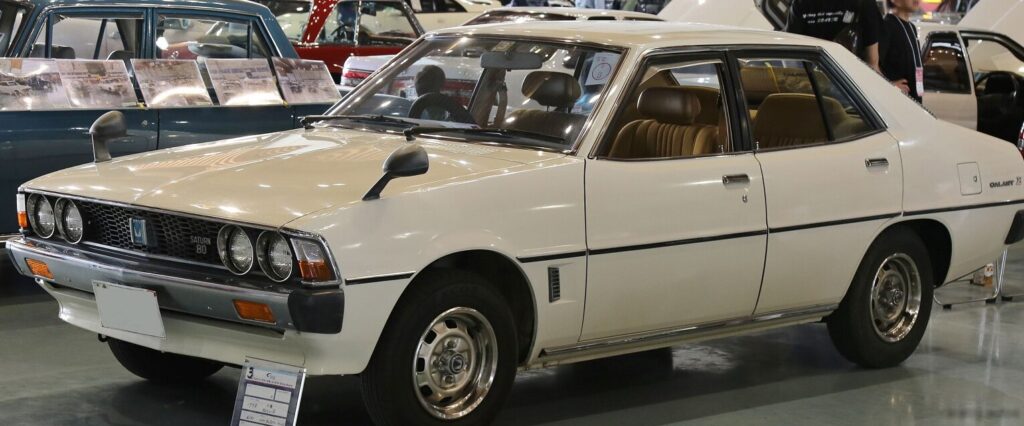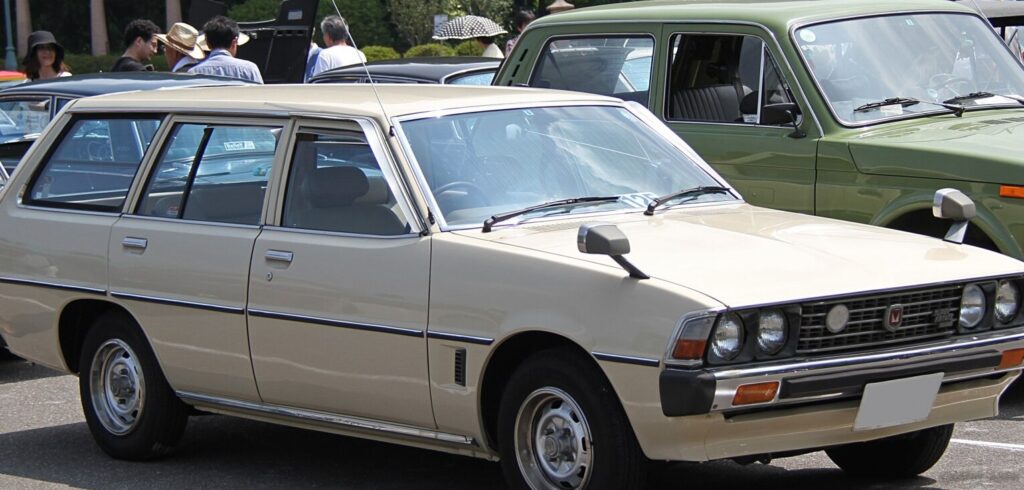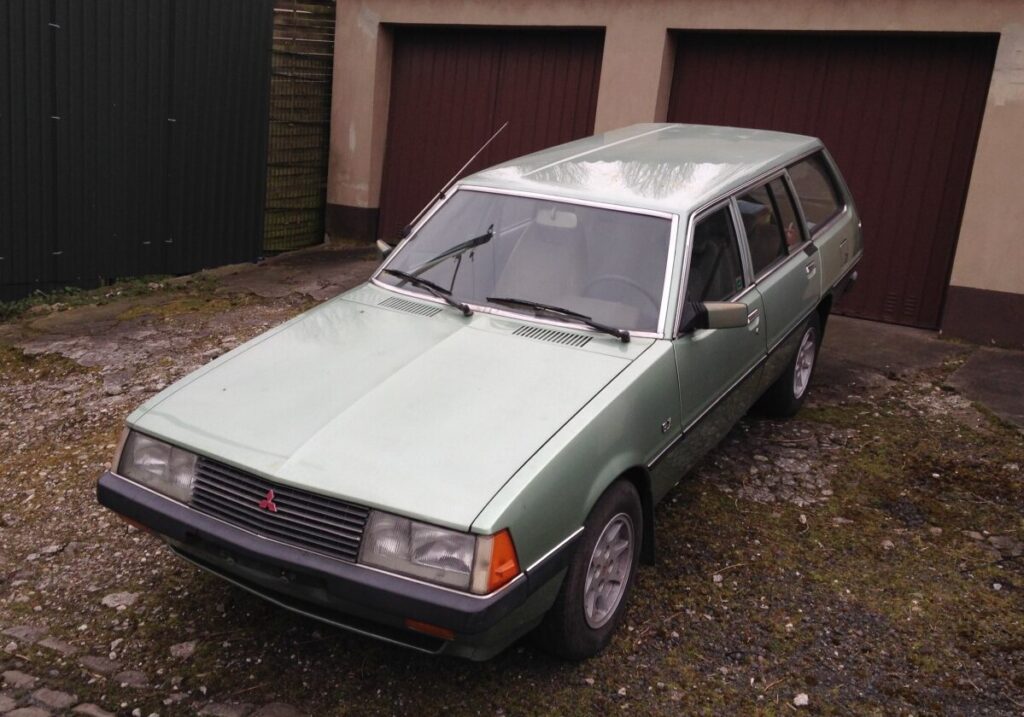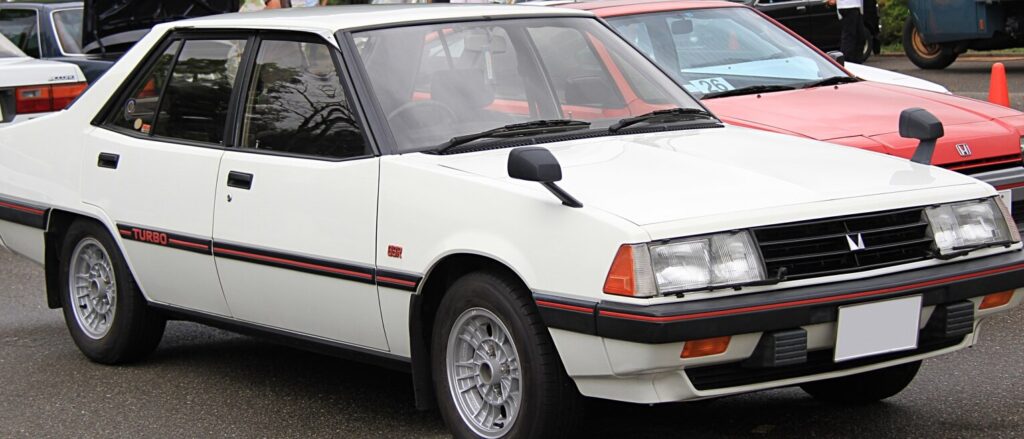
The Mitsubishi Galant IV 1.6 GLX (A161A), produced between 1980 and 1984, represented an entry-level offering within the fourth generation of Mitsubishi’s Galant sedan. This model, built upon the A161A chassis code, served as a more affordable and fuel-conscious alternative to the higher-performance and larger-engined variants available during its production run. The Galant IV, as a whole, aimed to provide a comfortable and reliable mid-size family car, and the 1.6 GLX specifically targeted buyers prioritizing economy and practicality over outright speed. It was a key part of Mitsubishi’s strategy to broaden the Galant’s appeal in a competitive market.
The 1.6 GLX was powered by a 1.6-liter, naturally aspirated four-cylinder engine. While specific engine codes varied slightly depending on the market, it generally featured a single overhead camshaft (SOHC) valvetrain and a two-barrel carburetor. This configuration produced 75 horsepower. The engine, while not particularly powerful by contemporary standards, was known for its relative simplicity and durability. Fuel delivery was managed by a carburetor, a common feature for vehicles of this era, and ignition was typically handled by a distributor-based system. The engine’s design prioritized fuel efficiency and ease of maintenance over high-output performance. The engine block was cast iron, contributing to its robustness, while the cylinder head was aluminum, helping to reduce overall weight. The automatic transmission paired with this engine was a three-speed unit, designed for smooth, if not particularly rapid, gear changes. It was a conventional hydraulic automatic, lacking the electronic controls found in later transmissions.
Driving the 1.6 GLX automatic was characterized by smooth, predictable performance. Acceleration was modest, with the car prioritizing comfortable cruising rather than spirited driving. The three-speed automatic transmission had relatively widely spaced gear ratios, meaning the engine would rev relatively high during acceleration before shifting. This resulted in a noticeable delay in response when overtaking or climbing hills. Compared to the manual transmission versions of the 1.6, or the larger-engined Galants (such as the 2.0-liter models), the 1.6 GLX automatic felt noticeably slower. However, it offered a more relaxed driving experience, particularly in urban traffic. The power delivery was linear, making it easy to modulate the throttle and maintain control. The automatic transmission contributed to a more forgiving driving experience, especially for less experienced drivers.
The 1.6 GLX trim level offered a reasonable level of standard equipment for its time. Interiors typically featured cloth upholstery, often in muted colors. The dashboard layout was functional and straightforward, with basic instrumentation including a speedometer, fuel gauge, and temperature gauge. Power steering was not always standard, and air conditioning was often an optional extra. Other available options included a radio, upgraded sound system, and occasionally, power windows. The GLX designation generally indicated a slightly higher level of trim compared to the base models, with features like a more comfortable steering wheel and upgraded interior trim materials. The overall interior ambiance was focused on practicality and durability rather than luxury.
The Galant IV’s chassis utilized a conventional front-engine, rear-wheel-drive layout. Suspension consisted of independent front suspension with MacPherson struts and a live rear axle with leaf springs. Braking was typically accomplished with disc brakes on the front wheels and drum brakes on the rear. Steering was a recirculating ball system, providing a relatively heavy but precise feel. Stabilizer bars were often included, particularly on models equipped with the automatic transmission, to reduce body roll during cornering. The suspension tuning was geared towards providing a comfortable ride, absorbing bumps and imperfections in the road surface effectively. The braking system, while adequate for normal driving conditions, lacked the stopping power of more modern systems.
Contemporary reviews of the Galant IV 1.6 GLX automatic generally praised its fuel economy and comfortable ride. Critics noted its lack of outright performance, but acknowledged that it was not intended to be a sports sedan. The car was seen as a sensible and reliable choice for families and commuters. Compared to other trims in the Galant lineup, the 1.6 GLX offered the best fuel economy, making it an attractive option for budget-conscious buyers. However, it lagged behind the higher-powered models in terms of acceleration and overall driving enjoyment. Reliability was generally considered good, with the 1.6-liter engine proving to be durable and relatively trouble-free.
| Body Type | Sedan |
| Engine Type | Internal Combustion Engine (Petrol/Gasoline) |
| Engine Displacement | 1.6 Liters |
| Engine Configuration | Inline-4 Cylinder |
| Valve Configuration | SOHC |
| Fuel System | Carbureted |
| Horsepower | 75 hp |
| Transmission | 3-Speed Automatic |
| Drivetrain | Rear-Wheel Drive |
| Production Years | 1980-1984 |
Today, the Mitsubishi Galant IV 1.6 GLX automatic holds a niche position in the classic car market. While not highly sought after by collectors, it represents an affordable and relatively simple classic car. The 1.6-liter engine and three-speed automatic transmission are known for their durability, but parts availability can be a challenge. Regular maintenance is crucial to keep these vehicles running reliably. The car’s simplicity makes it relatively easy to work on for experienced DIY mechanics. Overall, the Galant IV 1.6 GLX automatic remains a testament to Mitsubishi’s commitment to building practical and reliable family cars during the early 1980s.