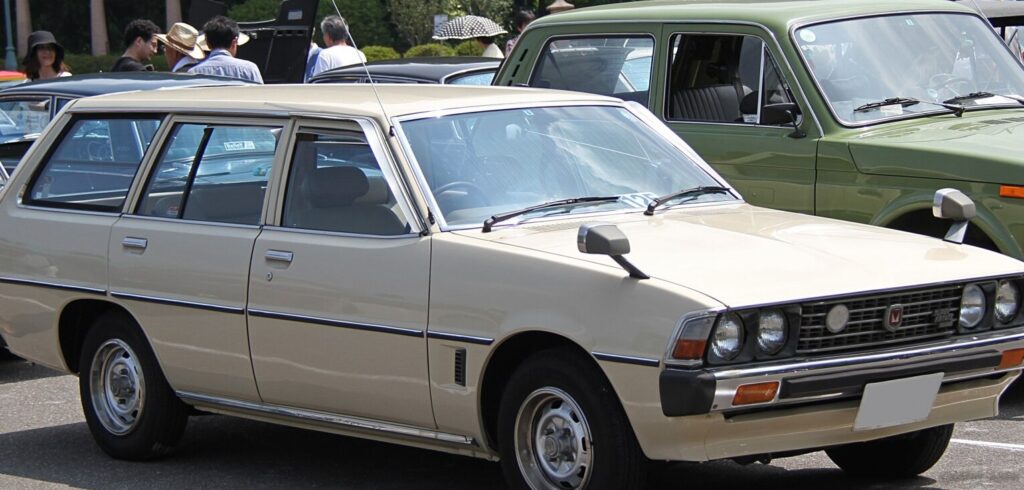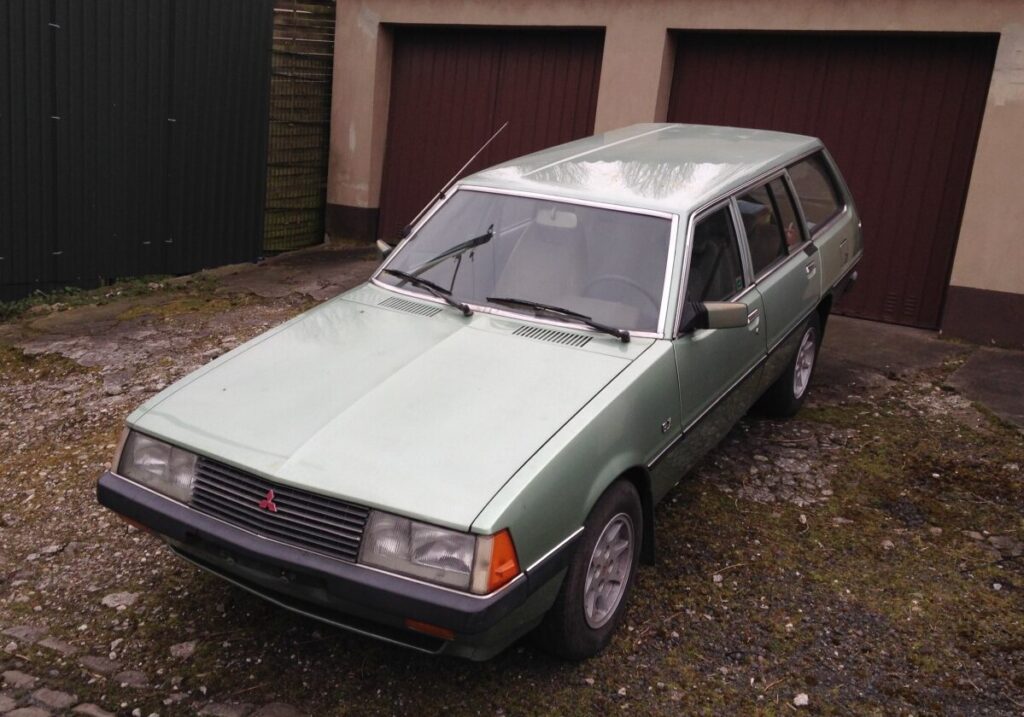
The Mitsubishi Galant IV Wagon 2.0 GLX (A163V), produced between 1980 and 1983, represented a practical and family-oriented offering within the fourth generation of the Mitsubishi Galant. This station wagon variant, distinguished by its A163V chassis code and 102 horsepower output, served as a mid-range trim level, positioned above the base models and below the more luxurious or performance-oriented Galant options available during its production run. The Galant IV, built on the A160 series platform, aimed to provide a blend of comfort, reliability, and affordability in the competitive Japanese automotive market, and the wagon body style further enhanced its practicality.
The 2.0 GLX Wagon was powered by Mitsubishi’s 4G32 engine, a 1,997 cc (121.7 cu in) inline-four cylinder gasoline engine. This engine featured a single overhead camshaft (SOHC) valvetrain and utilized a carburetor for fuel delivery. While not a particularly advanced engine by the standards of the early 1980s, the 4G32 was known for its durability and relatively simple maintenance requirements. The 102 hp output was achieved at 5,500 rpm, with peak torque of approximately 118 lb-ft at 3,000 rpm. The A163V was exclusively offered with a three-speed automatic transmission, designed to provide smooth and convenient operation for everyday driving. This transmission was a typical torque converter automatic of the era, prioritizing comfort over outright performance.
Driving the Galant IV Wagon 2.0 GLX Automatic provided a comfortable, if not particularly exhilarating, experience. The automatic transmission, while smooth, resulted in somewhat leisurely acceleration. The gear ratios were optimized for fuel economy and ease of driving rather than sporty performance. Compared to the available manual transmission options or the potential for higher-output engines in other Galant trims, the 2.0 GLX Automatic was noticeably slower. However, it excelled in providing a relaxed and effortless driving experience, particularly well-suited for commuting and family transportation. The focus was on usability and practicality, making it a popular choice for those prioritizing convenience over speed.
The 2.0 GLX trim level offered a reasonable level of equipment for its time. Standard features typically included cloth upholstery, a basic AM/FM radio, and a heater/defroster system. The interior was designed with practicality in mind, offering ample space for passengers and cargo. Optional extras could include upgraded audio systems, power windows, and a sunroof. The dashboard layout was functional and straightforward, with clearly marked gauges and controls. The wagon body style itself was a key feature, providing a large cargo area accessible through a rear tailgate. Interior trim levels were generally modest, reflecting the car’s positioning as a mid-range offering.
The Galant IV Wagon utilized a conventional chassis layout with independent front suspension using MacPherson struts and a solid rear axle with leaf springs. Braking was accomplished via disc brakes on the front wheels and drum brakes on the rear. Steering was of the recirculating ball type, providing a relatively indirect feel. The suspension was tuned for comfort, prioritizing a smooth ride over sharp handling. Stabilizer bars were typically fitted to the front to reduce body roll, but the overall handling characteristics were geared towards everyday driving rather than spirited performance. The braking system, while adequate for normal use, lacked the sophistication of more modern systems.
Contemporary reviews of the Galant IV Wagon 2.0 GLX Automatic generally praised its practicality, reliability, and comfortable ride. Critics noted that the automatic transmission and 2.0-liter engine combination resulted in modest performance, but acknowledged that this was not the primary focus of the vehicle. Fuel economy was considered reasonable for the time, although not exceptional. Compared to other trims in the Galant lineup, the 2.0 GLX Automatic offered a good balance of features and affordability. It was often seen as a sensible choice for families and those seeking a reliable and practical vehicle for everyday use. The manual transmission versions and those with larger engines offered more engaging driving experiences, but at a higher price point.
| Brand | Mitsubishi |
| Model | Galant |
| Generation | Galant IV Wagon |
| Type | 2.0 GLX (A163V) (102 Hp) |
| Start of production | 1980 |
| End of production | 1983 |
| Body type | Station wagon (estate) |
| Engine Type | Internal Combustion engine (Petrol/Gasoline) |
| Engine Displacement | 1,997 cc (121.7 cu in) |
| Engine Power | 102 Hp @ 5,500 rpm |
| Engine Torque | 118 lb-ft @ 3,000 rpm |
| Engine Aspiration | Naturally aspirated |
| Valvetrain | SOHC |
| Fuel System | Carburetor |
| Transmission | 3-speed Automatic |
Today, the Mitsubishi Galant IV Wagon 2.0 GLX Automatic is a relatively rare sight. Its long-term reliability has contributed to a small but dedicated following among enthusiasts of classic Japanese cars. While not highly sought after as a performance vehicle, its practicality and durability make it a viable option for those seeking a unique and reliable vintage station wagon. Parts availability can be a challenge, but the relatively simple mechanical design of the 4G32 engine and automatic transmission makes it easier to maintain than more complex vehicles of the era. The A163V represents a charming and functional piece of automotive history, offering a glimpse into the family car market of the early 1980s.