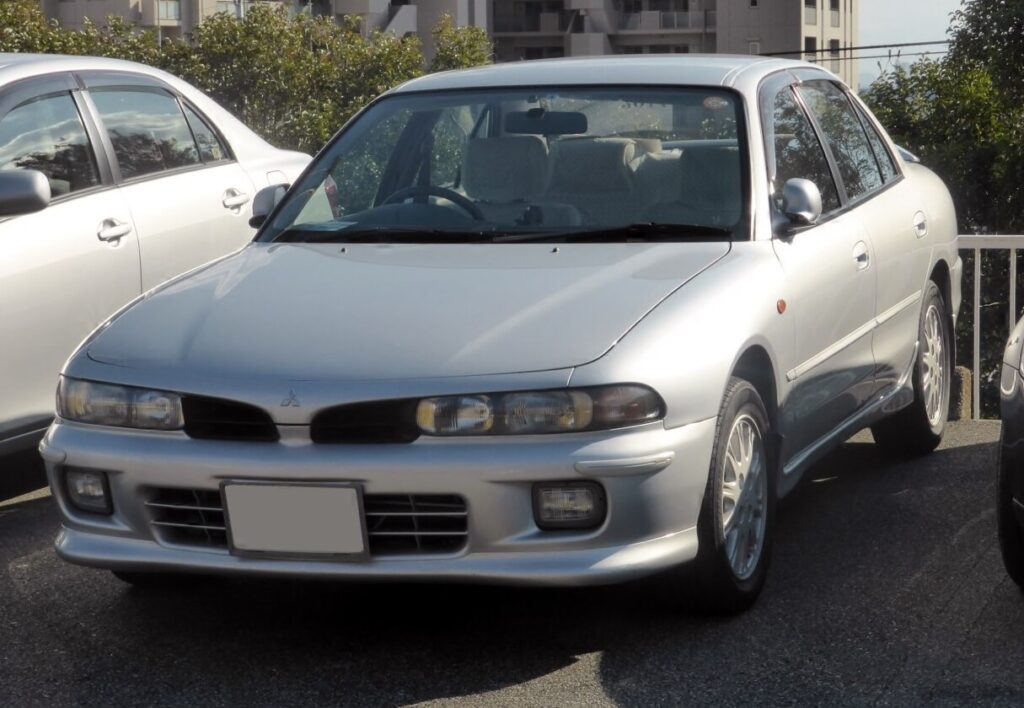
The Mitsubishi Galant VII 1.8 GLSI (E52A), produced between 1992 and 1996, represented a significant evolution in Mitsubishi’s mid-size sedan offerings. Part of the seventh generation of the Galant (E52A chassis), this variant occupied a middle ground within the lineup, offering a balance between affordability, fuel efficiency, and acceptable performance. It served as a stepping stone for buyers who found the base models underpowered but weren’t seeking the higher costs and performance of the VR-4 or 2.0-liter variants. The 1.8 GLSI was primarily aimed at family buyers and commuters seeking a reliable and comfortable sedan.
Powertrain & Engine Architecture
The heart of the Galant VII 1.8 GLSI is the 4G60 inline-four cylinder engine, specifically tuned to produce 126 horsepower at 6000 rpm and 161 Nm (118.75 lb-ft) of torque at 4500 rpm. This engine featured a 9.5:1 compression ratio and utilized a multi-port fuel injection system for improved fuel atomization and efficiency. The engine’s valvetrain employed a single overhead camshaft (OHC) design, a common configuration for engines of this era, balancing simplicity with adequate performance. The 1834 cc (111.92 cu. in.) displacement provided a reasonable power output for its time, though it wasn’t considered particularly sporty.
While a five-speed manual transmission was available on some Galant VII models, the 1.8 GLSI was most commonly equipped with a four-speed automatic transmission. This automatic was a conventional hydraulic control unit, offering smooth, if not particularly quick, shifts. The gear ratios were optimized for fuel economy and comfortable cruising rather than aggressive acceleration. First gear was relatively tall, prioritizing smooth take-offs, while the top gear (fourth) was designed for efficient highway driving. The automatic transmission contributed to the GLSI’s appeal to a broader audience, particularly those prioritizing ease of use over driver engagement.
Engine Codes and Variations
The 4G60 engine family saw several variations throughout its production run. While the 1.8 GLSI primarily used a specific tuning of the 4G60, slight differences in components and calibrations could exist depending on the specific production year and market. These variations were generally minor and didn’t significantly impact overall performance or reliability.
Driving Characteristics
The Galant VII 1.8 GLSI with the automatic transmission delivered a comfortable and predictable driving experience. Acceleration from 0 to 60 mph was achieved in approximately 9.5 to 10 seconds, and the car had a top speed of around 124 mph (200 km/h). However, the automatic transmission did detract from the engine’s potential, resulting in a noticeable difference in responsiveness compared to the manual transmission equipped models. Overtaking maneuvers required careful planning, and the engine could feel strained when pushed hard. The focus was clearly on providing a smooth and refined ride, rather than exhilarating performance.
The steering was light and easy, making it well-suited for city driving. The suspension, while not particularly sporty, provided a comfortable ride over most road surfaces. The car felt stable and predictable in corners, but body roll was noticeable. Overall, the driving experience was geared towards practicality and comfort, making it a suitable choice for daily commuting and family transportation.
Equipment & Trim Levels
The 1.8 GLSI trim level offered a reasonable level of standard equipment for its price point. Standard features typically included power steering, air conditioning, a basic audio system, and cloth upholstery. Power windows and door locks were often included, though their availability could vary depending on the specific market. The interior design was functional and straightforward, with a focus on ergonomics and ease of use. The dashboard layout was clean and uncluttered, with clearly labeled controls.
Optional extras available for the 1.8 GLSI included upgraded audio systems, alloy wheels, and a sunroof. Some markets also offered options such as cruise control and leather upholstery, though these were less common on this particular trim level. The GLSI trim aimed to provide a good balance of features and affordability, making it an attractive option for buyers who didn’t need the luxury appointments of the higher-end trims.
Chassis & Braking
The Galant VII utilized a front-engine, front-wheel-drive layout. The suspension system consisted of a double wishbone setup at the front and a spring strut arrangement at the rear. This configuration provided a comfortable ride and adequate handling characteristics. The front brakes were discs, offering good stopping power, while the rear brakes were typically discs as well, providing balanced braking performance.
Anti-lock braking system (ABS) was often included as standard equipment, enhancing safety by preventing wheel lockup during hard braking. The steering system employed a rack and pinion design with hydraulic power assistance, providing light and precise steering control. The standard tire size was 185/70 R14, offering a good balance of grip and ride comfort.
Market Reception & Comparison
The Mitsubishi Galant VII 1.8 GLSI was generally well-received by automotive critics as a practical and reliable family sedan. It was praised for its comfortable ride, spacious interior, and reasonable fuel economy. However, it was also criticized for its lack of sporty performance and somewhat bland styling. Compared to the higher-output 2.0-liter and VR-4 models, the 1.8 GLSI offered significantly less power and excitement. However, it was also more affordable and fuel-efficient, making it a more sensible choice for many buyers.
In terms of reliability, the 4G60 engine proved to be a durable and long-lasting unit. The automatic transmission, while not known for its speed, was generally reliable if properly maintained. Overall, the Galant VII 1.8 GLSI offered a good value proposition, providing a comfortable and reliable transportation solution at a reasonable price.
Technical Specifications
| Body Type | Sedan, 4 Doors, 5 Seats |
| Engine Type | Inline-4, Petrol (Gasoline) |
| Engine Displacement | 1.8 l (1834 cm3 / 111.92 cu. in.) |
| Power Output | 126 Hp @ 6000 rpm |
| Torque Output | 161 Nm (118.75 lb-ft) @ 4500 rpm |
| Compression Ratio | 9.5:1 |
| Fuel Injection | Multi-port Fuel Injection |
| Transmission | 4-Speed Automatic |
| Drivetrain | Front-Wheel Drive |
| 0-60 mph | 9.5 sec (Calculated) |
| 0-100 km/h | 10 sec |
| Top Speed | 200 km/h (124.27 mph) |
| Length | 4620 mm (181.89 in) |
| Width | 1730 mm (68.11 in) |
| Height | 1405 mm (55.31 in) |
| Wheelbase | 2635 mm (103.74 in) |
| Fuel Tank Capacity | 64 l (16.91 US gal / 14.08 UK gal) |
| Trunk Space (min/max) | 660 l / 1130 l (23.31 cu. ft / 39.91 cu. ft) |
Legacy
The Mitsubishi Galant VII 1.8 GLSI, while not the most exciting variant in the lineup, has proven to be a surprisingly durable and reliable vehicle. Many examples are still on the road today, a testament to the quality of its construction and the robustness of the 4G60 engine. In the used car market, these Galants are often sought after by buyers looking for an affordable and dependable transportation option. Parts availability is generally good, and maintenance costs are relatively low. While the car may lack the modern features and performance of newer vehicles, it remains a viable choice for those seeking a classic and reliable sedan.
The 4G60 engine, in particular, has earned a reputation for its longevity and ease of maintenance. It’s a relatively simple engine design, making it accessible to amateur mechanics. The automatic transmission, while not known for its sportiness, has also proven to be reasonably durable with proper servicing. The Galant VII 1.8 GLSI represents a solid example of Japanese automotive engineering from the early 1990s, offering a blend of practicality, reliability, and affordability.