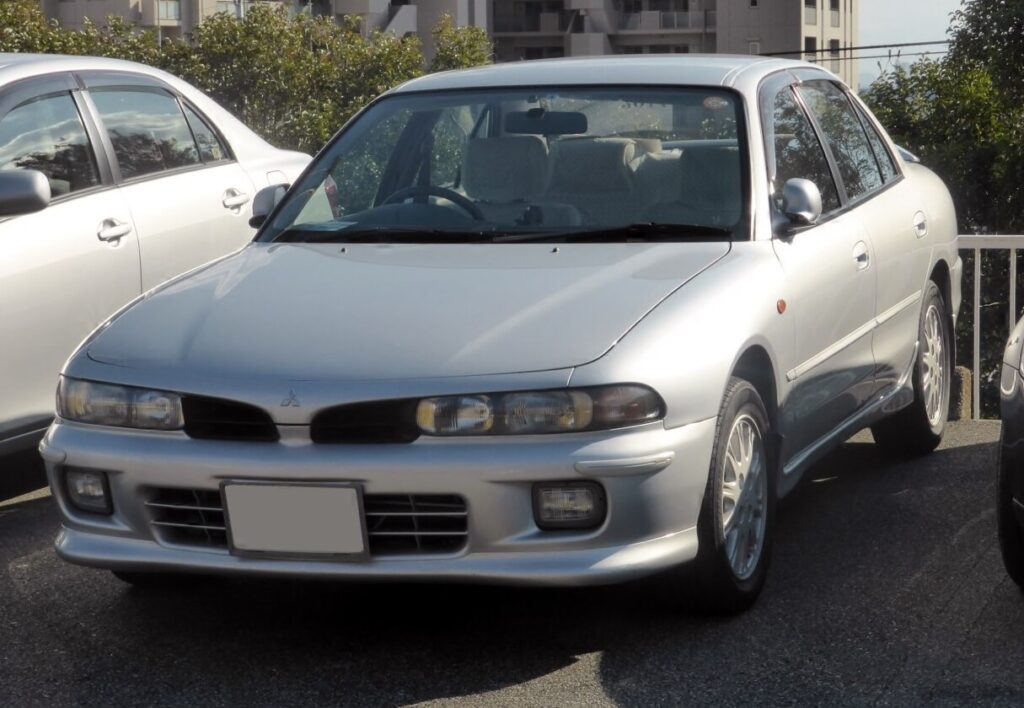
The Mitsubishi Galant VII 1.8 GLSI (E52A), produced between 1992 and 1996, represented a significant evolution in Mitsubishi’s mid-size sedan offerings. Part of the broader Galant VII generation (E52A chassis), this variant occupied a middle ground within the lineup, offering a balance between affordability, comfort, and reasonable performance. It was positioned as a step up from the base models, providing more features and a slightly more powerful engine, while remaining more accessible than the higher-performance trims like the VR-4. The 1.8 GLSI Automatic was aimed at buyers seeking a comfortable and reliable family sedan with the convenience of an automatic transmission.
Powertrain & Engine Architecture
The heart of the Galant VII 1.8 GLSI was the 4G63 inline-four cylinder engine, specifically tuned to produce 126 horsepower at 6000 rpm and 161 Nm (118.75 lb-ft) of torque at 4500 rpm. This engine featured a 9.5:1 compression ratio and utilized a multi-port fuel injection system for improved efficiency and responsiveness. The engine’s configuration was front-mounted and transversely positioned, a common layout for front-wheel-drive vehicles of the era. The 4G63 engine, while a relatively simple design, was known for its durability and ease of maintenance. It employed an Overhead Cam (OHC) valvetrain with four valves per cylinder, contributing to its respectable power output for its displacement.
Paired with the 1.8L engine was a four-speed automatic transmission. This transmission was designed to provide smooth and convenient shifting, catering to the preferences of drivers who prioritized ease of use over outright performance. While not known for its sportiness, the automatic transmission offered a comfortable driving experience, particularly in city traffic. The transmission’s gear ratios were optimized for fuel efficiency and everyday drivability, rather than aggressive acceleration.
Engine Codes and Variations
While the core 4G63 engine was used across several Galant VII trims, the 1.8 GLSI variant was specifically tuned for a balance of power and economy. Different engine codes existed within the 4G63 family, but the E52A 1.8 GLSI primarily utilized configurations optimized for the automatic transmission. These configurations often included slight adjustments to the fuel mapping and torque converter characteristics to ensure smooth operation with the automatic gearbox.
Driving Characteristics
The Galant VII 1.8 GLSI Automatic delivered a comfortable, if not particularly exhilarating, driving experience. Acceleration from 0 to 60 mph was achieved in approximately 9.5 seconds, and 0-100 km/h in around 10 seconds, with a top speed of 200 km/h (124.27 mph). Compared to the manual transmission versions of the 1.8L engine, the automatic suffered a slight performance penalty due to the inherent inefficiencies of the torque converter and the transmission’s shift programming. However, the automatic provided a smoother and more relaxed driving experience, especially in urban environments.
The automatic transmission’s gear ratios were spaced to prioritize fuel economy and drivability. First gear provided adequate launch power, while the higher gears allowed for comfortable cruising at highway speeds. The transmission’s shift points were calibrated to balance performance and fuel efficiency, resulting in a generally smooth and predictable driving experience. Compared to the more powerful VR-4 trim, the 1.8 GLSI Automatic lacked the sharp handling and responsive acceleration, but it offered a more refined and comfortable ride.
Equipment & Trim Levels
The 1.8 GLSI trim level offered a good level of standard equipment for its time. Standard features typically included power windows, power door locks, air conditioning, and an AM/FM stereo. Interior upholstery was typically cloth, with a relatively simple and functional dashboard layout. The GLSI trim also often included features like a tilt steering wheel and a basic trip computer.
Optional extras available for the 1.8 GLSI included alloy wheels, a sunroof, and upgraded audio systems. Some models also offered features like cruise control and leather upholstery, although these were less common. The overall interior design was focused on practicality and comfort, rather than luxury or sportiness.
Chassis & Braking
The Galant VII 1.8 GLSI utilized a front-wheel-drive layout with a double wishbone suspension in the front and a spring strut suspension in the rear. This suspension setup provided a comfortable ride quality, absorbing bumps and irregularities in the road surface effectively. The front suspension geometry was tuned for stable handling, while the rear suspension focused on ride comfort. The car’s weight distribution was relatively balanced, contributing to its predictable handling characteristics.
Braking duties were handled by disc brakes on all four wheels, providing adequate stopping power for everyday driving. An Anti-lock Braking System (ABS) was often included as standard equipment, enhancing safety by preventing wheel lockup during hard braking. The steering system was a rack and pinion setup with hydraulic power steering, providing light and responsive steering feel. Tire size was typically 185/70 R14.
Market Reception & Comparison
The Mitsubishi Galant VII 1.8 GLSI Automatic was generally well-received by critics as a practical and reliable family sedan. It was praised for its comfortable ride, spacious interior, and reasonable fuel economy. However, it was also criticized for its lack of sporty handling and its relatively modest performance compared to some of its competitors.
Compared to other trims in the Galant VII lineup, the 1.8 GLSI Automatic offered a good balance between price and features. The base models were more affordable but lacked many of the convenience features found in the GLSI. The higher-performance VR-4 trim offered significantly more power and sharper handling, but at a considerably higher price point. In terms of fuel economy, the 1.8L engine generally offered better mileage than the larger engines in the lineup, making it a practical choice for daily commuting.
Technical Specifications
| Body Type | Sedan, 4 Doors, 5 Seats |
| Engine Type | Inline-4, Petrol (Gasoline) |
| Engine Displacement | 1834 cm3 (111.92 cu. in.) |
| Power | 126 Hp @ 6000 rpm |
| Torque | 161 Nm (118.75 lb.-ft.) @ 4500 rpm |
| Compression Ratio | 9.5:1 |
| Fuel Injection | Multi-port Fuel Injection |
| Transmission | 4-speed Automatic |
| Drivetrain | Front-Wheel Drive |
| Length | 4620 mm (181.89 in.) |
| Width | 1730 mm (68.11 in.) |
| Height | 1405 mm (55.31 in.) |
| Wheelbase | 2635 mm (103.74 in.) |
| Fuel Tank Capacity | 64 l (16.91 US gal | 14.08 UK gal) |
| Trunk Space (min/max) | 660 – 1130 l (23.31 – 39.91 cu. ft.) |
| 0-60 mph | 9.5 sec (Calculated) |
| 0-100 km/h | 10 sec |
| Top Speed | 200 km/h (124.27 mph) |
Legacy
The Mitsubishi Galant VII 1.8 GLSI Automatic, while not a particularly rare or collectible vehicle today, remains a reasonably reliable and affordable option in the used car market. The 4G63 engine is known for its durability, and with proper maintenance, it can provide many years of service. However, like any vehicle of its age, it is susceptible to wear and tear, and potential buyers should be aware of common issues such as oil leaks and corrosion. The automatic transmission, while generally reliable, may require servicing or rebuilding after extended use. Overall, the Galant VII 1.8 GLSI Automatic represents a solid and dependable choice for those seeking a classic Japanese sedan.
The 4G63 engine itself has gained a cult following among enthusiasts, due to its potential for modification and its robust construction. While the 1.8L version is not as highly regarded as the turbocharged variants used in the VR-4, it still offers a good foundation for performance upgrades. The Galant VII, in general, is remembered as a comfortable and practical family car that offered a good value for its price.