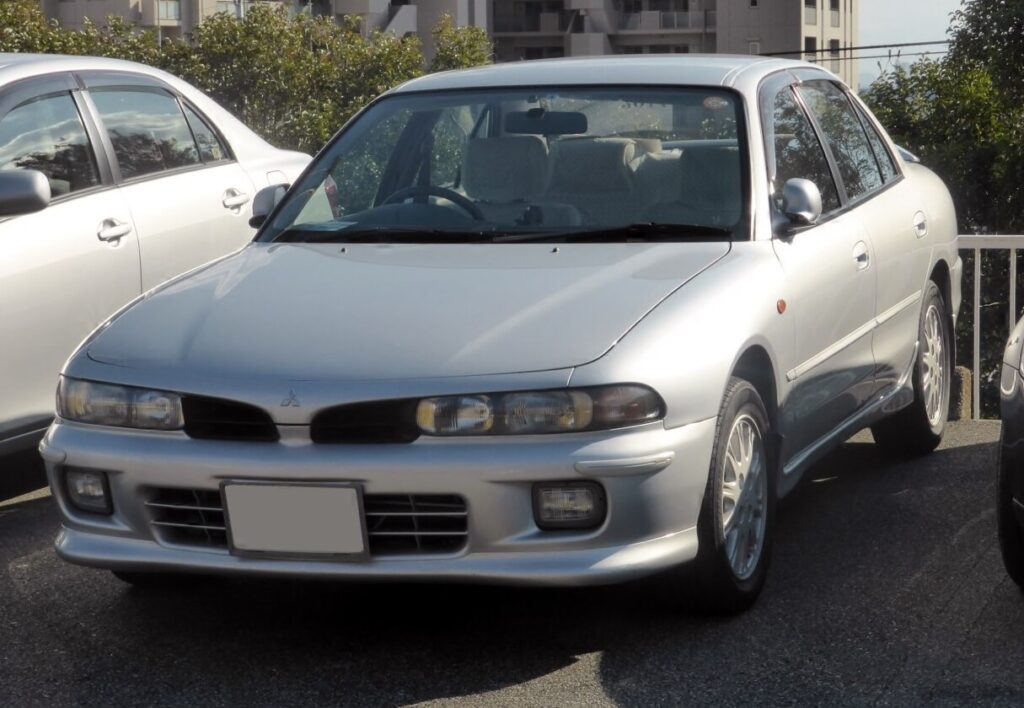
The Mitsubishi Galant VII 2.0 24V V6 T, produced between 1992 and 1996, represented a performance-oriented variant within the seventh generation (1992-1996) of Mitsubishi’s Galant mid-size sedan. This model, distinguished by its turbocharged 2.0-liter V6 engine, occupied the upper echelon of the Galant VII lineup, offering a significant performance upgrade over the naturally aspirated engine options. It was positioned as a sporty, premium offering, appealing to drivers seeking a blend of comfort and spirited driving dynamics. The Galant VII itself was based on the 1HX0 platform, a front-engine, front-wheel-drive (though this variant was all-wheel drive) architecture common to several Mitsubishi models of the era.
Powertrain & Engine Architecture
The heart of the Galant VII 2.0 24V V6 T is its 6A12 2.0-liter DOHC 24-valve V6 engine, equipped with a turbocharger and intercooler. This engine, designated as the 6A12-T, produced 240 horsepower at 6000 rpm and 309 Nm (227.91 lb-ft) of torque at 3500 rpm. The engine featured a cast iron block and an aluminum cylinder head, contributing to its durability and relatively lightweight construction. Fuel delivery was managed by a multi-port fuel injection system, ensuring precise fuel metering for optimal performance and efficiency. The compression ratio was set at 8.5:1, a compromise between performance and reliability when used with forced induction. The valvetrain employed double overhead camshafts (DOHC), allowing for precise control of valve timing and lift, maximizing volumetric efficiency.
Unlike many of its contemporaries, the Galant VII 2.0 24V V6 T was equipped with a 5-speed manual transmission as standard. This transmission was chosen to handle the increased power output of the turbocharged engine and provide drivers with greater control. The transmission featured robust internal components and a precise shift feel. The drivetrain was all-wheel drive (4×4), providing enhanced traction and stability, particularly in adverse weather conditions. This all-wheel-drive system was a key differentiator for this performance variant.
Engine Specifications
The 6A12-T engine’s turbocharger was a key component in its performance capabilities. It utilized a turbine and compressor to force more air into the engine cylinders, increasing power output. The intercooler, positioned between the turbocharger and the intake manifold, cooled the compressed air, further increasing its density and improving combustion efficiency. This combination resulted in a significant power boost compared to the naturally aspirated 2.0-liter V6 offered in other Galant VII models.
Driving Characteristics
The Galant VII 2.0 24V V6 T offered a noticeably more engaging driving experience than its naturally aspirated counterparts. The turbocharger provided a surge of power in the mid-range, delivering strong acceleration. While not instantaneous, the turbo lag was relatively minimal, providing a responsive and predictable power delivery. The all-wheel-drive system enhanced cornering grip and stability, inspiring confidence in spirited driving. The 5-speed manual transmission allowed drivers to fully exploit the engine’s power band, providing precise control over gear selection. The car’s weight of 1430 kg (3152.61 lbs) meant the power-to-weight ratio of 6 kg/hp was respectable for the early 1990s, resulting in a 0-60 mph time estimated around 6.5 seconds. Compared to the standard Galant models, the 2.0 24V V6 T felt significantly more powerful and capable, offering a more refined and sporty driving experience.
Equipment & Trim Levels
The Galant VII 2.0 24V V6 T was typically equipped with a higher level of standard features than the base models. These included power windows, power locks, air conditioning, and a premium sound system. Interior upholstery typically consisted of cloth or leather, depending on optional packages. The dashboard featured a comprehensive instrument cluster with gauges for engine temperature, oil pressure, and turbo boost. Optional extras included a sunroof, upgraded audio systems, and alloy wheels. The trim level was generally considered the highest available for the Galant VII, reflecting its performance-oriented nature and premium features.
Chassis & Braking
The Galant VII 2.0 24V V6 T featured a double wishbone front suspension and a spring strut rear suspension. This suspension setup provided a good balance between ride comfort and handling performance. The front suspension incorporated stabilizer bars to reduce body roll during cornering. The braking system consisted of ventilated discs on the front wheels and discs on the rear wheels. An Anti-lock Braking System (ABS) was standard, enhancing braking performance and safety. The tires were typically 205/60 R15, providing adequate grip for both dry and wet conditions. The steering system was a rack and pinion setup with hydraulic power steering, offering precise and responsive steering feel.
Market Reception & Comparison
The Galant VII 2.0 24V V6 T was generally well-received by automotive critics, who praised its performance, handling, and overall refinement. It was often compared to other sporty sedans of the era, such as the Honda Accord and Toyota Camry, but offered a more distinctive and powerful driving experience. Fuel economy was a compromise, with urban consumption rated at 16 l/100 km (14.7 US mpg) and extra-urban consumption at 8 l/100 km (29.4 US mpg). Reliability was generally good, although the turbocharger and associated components required more frequent maintenance than the naturally aspirated engines. Compared to the standard Galant models, the 2.0 24V V6 T was more expensive to purchase and maintain, but offered a significantly more rewarding driving experience.
Technical Specifications
| Brand | Mitsubishi |
| Model | Galant |
| Generation | Galant VII |
| Type (Engine) | 2.0 24 V V6 T (240 Hp) |
| Start of production | 1992 |
| End of production | 1996 |
| Body type | Sedan |
| Seats | 5 |
| Doors | 4 |
| Fuel consumption (urban) | 16 l/100 km (14.7 US mpg) |
| Fuel consumption (extra urban) | 8 l/100 km (29.4 US mpg) |
| Fuel Type | Petrol (Gasoline) |
| Maximum speed | 210 km/h (130.49 mph) |
| Kerb Weight | 1430 kg (3152.61 lbs) |
| Trunk (boot) space (minimum) | 450 l (15.89 cu. ft.) |
| Trunk (boot) space (maximum) | 660 l (23.31 cu. ft.) |
| Fuel tank capacity | 64 l (16.91 US gal) |
| Length | 4620 mm (181.89 in.) |
| Width | 1730 mm (68.11 in.) |
| Height | 1395 mm (54.92 in.) |
| Wheelbase | 2635 mm (103.74 in.) |
| Engine displacement | 1998 cm3 (121.93 cu. in.) |
| Number of cylinders | 6 |
| Power | 240 Hp @ 6000 rpm |
| Torque | 309 Nm @ 3500 rpm (227.91 lb.-ft. @ 3500 rpm) |
| Number of gears and type of gearbox | 5 gears, manual transmission |
| Drive wheel | All wheel drive (4×4) |
Legacy
The Mitsubishi Galant VII 2.0 24V V6 T remains a sought-after model among enthusiasts today. Its turbocharged engine, all-wheel-drive system, and sporty handling characteristics make it a desirable classic. While finding well-maintained examples can be challenging, the Galant VII 2.0 24V V6 T offers a unique and rewarding driving experience. The 6A12-T engine, when properly maintained, is known for its durability and reliability. However, age-related issues such as turbocharger wear and fuel system problems are common. In the used car market, prices for well-preserved examples have been steadily increasing, reflecting the growing appreciation for this performance-oriented sedan.