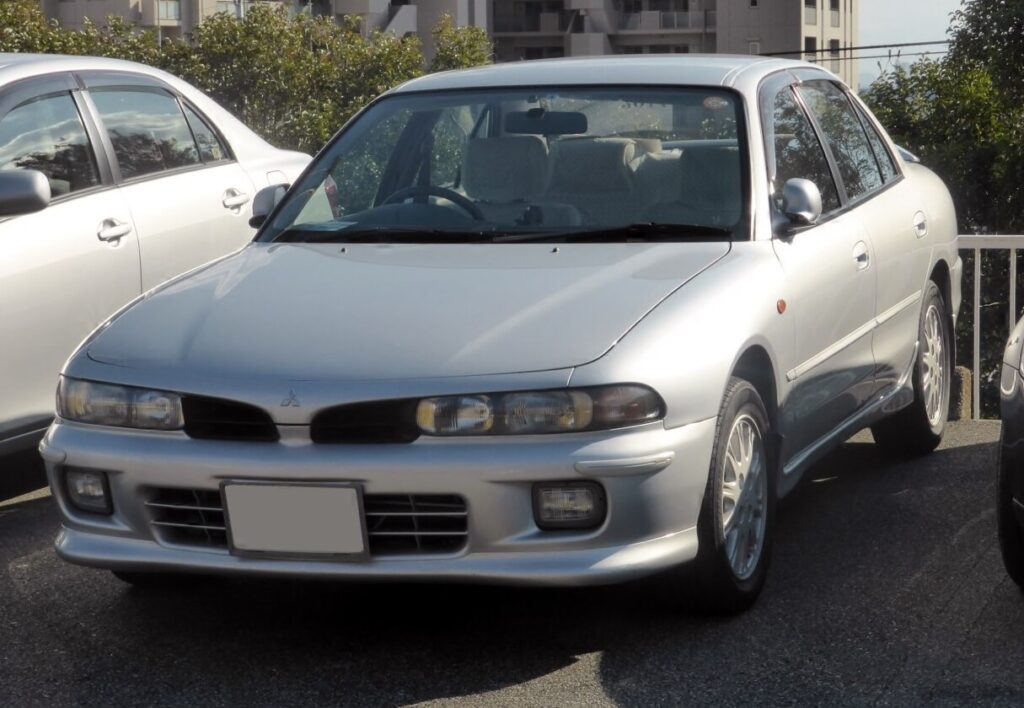
The Mitsubishi Galant VII, produced between 1992 and 1996, represented a significant evolution in Mitsubishi’s mid-size sedan offerings. The seventh generation (E88A chassis) saw a move towards more sophisticated styling and technology, and a broader range of engine options. Within this generation, the 2.5 V6-24 4×4 variant, producing 170 horsepower, occupied a premium position, offering a blend of performance and all-weather capability. This model was positioned as the flagship Galant VII, appealing to buyers seeking a more refined and powerful driving experience than the base four-cylinder models.
Mitsubishi Galant VII 2.5 V6-24 4×4 (E88A) Overview
The E88A Galant VII was a departure from its predecessors, featuring a more aerodynamic design and a larger interior. It was sold primarily as a four-door sedan, though limited markets received a hatchback version. The 2.5 V6-24 4×4 model was distinguished by its larger displacement engine, all-wheel drive system, and generally higher level of standard equipment. Production spanned from 1992 to 1996, with minor revisions occurring throughout the production run. The Galant VII was a key model for Mitsubishi, showcasing their engineering capabilities and design direction during the early 1990s.
Powertrain & Engine Architecture
At the heart of the 2.5 V6-24 4×4 was the 6A12 engine, a 2.5-liter (2497 cc) naturally aspirated V6. This engine featured a 60-degree V-angle, four valves per cylinder (24 valves total) operated by a double overhead camshaft (DOHC) valvetrain, and multi-port fuel injection. The engine produced 170 hp at 6000 rpm and 216 Nm (159.31 lb-ft) of torque at 4000 rpm. The 6A12 engine was known for its relatively smooth operation and decent power output for its time. The engine’s bore and stroke measured 83.5 mm x 76 mm, respectively, and it had a compression ratio of 10:1.
The transmission was a 5-speed manual, providing drivers with full control over the engine’s power. The all-wheel drive system was a viscous coupling type, automatically distributing torque between the front and rear axles as needed to maintain traction. This system provided enhanced stability and grip, particularly in adverse weather conditions. The engine was transversely mounted in the front of the vehicle, contributing to a more balanced weight distribution.
Driving Characteristics
The 2.5 V6-24 4×4 Galant VII offered a noticeably more spirited driving experience compared to the base models. Acceleration from 0 to 100 km/h (0-62 mph) took approximately 8.8 seconds, and 0 to 60 mph was achieved in around 8.4 seconds. Top speed was electronically limited to 216 km/h (134.22 mph). The V6 engine delivered a smooth and linear power delivery, making it easy to drive in everyday situations. The all-wheel drive system provided excellent traction, inspiring confidence in corners and on slippery surfaces. While not a sports car, the Galant VII 2.5 V6-24 4×4 offered a comfortable and capable driving experience, suitable for both commuting and longer journeys.
Equipment & Trim Levels
The 2.5 V6-24 4×4 typically came well-equipped, reflecting its position as the top-of-the-line Galant VII model. Standard features often included power windows, power locks, air conditioning, and a decent audio system. Higher trim levels added features such as leather upholstery, a sunroof, and upgraded sound systems. The interior design was generally conservative but functional, with a focus on ergonomics and comfort. The dashboard layout was straightforward, with easy-to-read gauges and well-placed controls. Optional extras could include alloy wheels, a rear spoiler, and upgraded suspension components.
Chassis & Braking
The Galant VII utilized a double wishbone suspension setup at the front and a spring strut arrangement at the rear. This suspension configuration provided a good balance between ride comfort and handling. The 2.5 V6-24 4×4 model typically featured thicker stabilizer bars compared to the base models, further improving handling stability. Braking duties were handled by ventilated discs on all four wheels, providing ample stopping power. An Anti-lock Braking System (ABS) was standard, enhancing safety by preventing wheel lockup during hard braking. The steering system was a rack and pinion type with hydraulic power assistance, offering precise and responsive steering feel. The vehicle rode on 205/60 R15 tires.
Market Reception & Comparison
The Mitsubishi Galant VII 2.5 V6-24 4×4 was generally well-received by automotive critics. It was praised for its smooth engine, comfortable ride, and all-weather capability. However, some critics noted that its styling was somewhat conservative compared to some of its rivals. In terms of fuel economy, the 2.5 V6-24 4×4 was not particularly efficient, consuming around 10.5 liters per 100 kilometers (22.4 US mpg). Compared to the base four-cylinder models, the V6 offered significantly more power and refinement, but at the cost of increased fuel consumption. Compared to competitors like the Honda Accord and Toyota Camry, the Galant VII offered a unique blend of features and performance, often at a competitive price point.
Technical Specifications
| Brand | Mitsubishi |
| Model | Galant |
| Generation | Galant VII |
| Type | 2.5 V6-24 4×4 (E88A) (170 Hp) |
| Start of production | 1992 |
| End of production | 1996 |
| Engine Type | Internal Combustion engine |
| Body Type | Sedan |
| Seats | 5 |
| Doors | 4 |
| Fuel Consumption (Combined) | 10.5 l/100 km |
| Fuel Consumption (US mpg) | 22.4 |
| Fuel Consumption (UK mpg) | 26.9 |
| Fuel Type | Petrol (Gasoline) |
| Acceleration 0-100 km/h | 8.8 sec |
| Acceleration 0-62 mph | 8.8 sec |
| Acceleration 0-60 mph | 8.4 sec |
| Maximum Speed | 216 km/h (134.22 mph) |
| Weight-to-Power Ratio | 8.9 kg/Hp |
| Power | 170 Hp @ 6000 rpm |
| Torque | 216 Nm @ 4000 rpm (159.31 lb.-ft. @ 4000 rpm) |
| Engine Layout | Front, Transverse |
| Engine Displacement | 2497 cm3 (152.38 cu. in.) |
| Number of Cylinders | 6 |
| Engine Configuration | V-engine |
| Cylinder Bore | 83.5 mm (3.29 in.) |
| Piston Stroke | 76 mm (2.99 in.) |
| Compression Ratio | 10:1 |
| Number of Valves per Cylinder | 4 |
| Fuel Injection System | Multi-port manifold injection |
| Engine Aspiration | Naturally aspirated |
| Valvetrain | DOHC |
| Kerb Weight | 1505 kg (3317.96 lbs.) |
| Max. Weight | 1945 kg (4287.99 lbs.) |
| Max Load | 440 kg (970.03 lbs.) |
| Trunk Space (min) | 450 l (15.89 cu. ft.) |
| Trunk Space (max) | 660 l (23.31 cu. ft.) |
| Fuel Tank Capacity | 64 l (16.91 US gal | 14.08 UK gal) |
| Length | 4620 mm (181.89 in.) |
| Width | 1730 mm (68.11 in.) |
| Height | 1405 mm (55.31 in.) |
| Wheelbase | 2635 mm (103.74 in.) |
| Drive Wheel | All wheel drive (4×4) |
| Number of Gears | 5 |
| Gearbox Type | Manual Transmission |
Legacy
The Mitsubishi Galant VII 2.5 V6-24 4×4, while not a common sight today, holds a place as a well-engineered and capable sedan from the early 1990s. The 6A12 V6 engine proved to be relatively reliable, although regular maintenance is crucial for longevity. In the used car market, these Galants are often sought after by enthusiasts who appreciate their unique combination of performance, all-wheel drive, and relative affordability. Parts availability can be a challenge, but a dedicated community of owners and online resources help to keep these vehicles on the road. The Galant VII 2.5 V6-24 4×4 remains a testament to Mitsubishi’s engineering prowess and a reminder of a time when mid-size sedans offered a compelling blend of practicality and driving enjoyment.