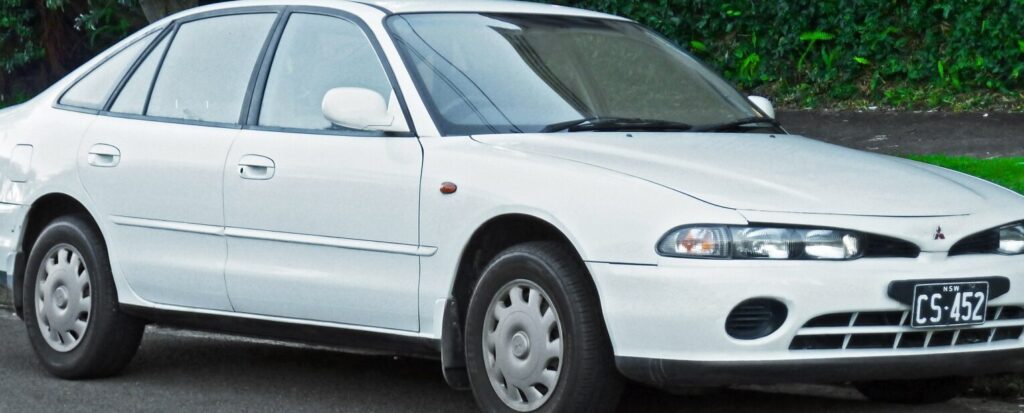
The Mitsubishi Galant VII, produced between 1994 and 2000, represented a significant evolution in Mitsubishi’s mid-size offering. Available in both sedan and hatchback body styles, the seventh generation Galant (chassis code E52A) aimed to blend practicality, comfort, and a degree of sporting appeal. The 1.8-liter (E52A) variant, producing 116 horsepower, occupied a crucial position in the lineup as the entry-level engine option, particularly in European and Asian markets. It served as a more affordable alternative to the higher-performance 2.0-liter and V6 models, targeting buyers prioritizing fuel efficiency and everyday usability over outright speed.
The 1.8L Galant Hatchback: Positioning and Overview
The 1.8L hatchback version of the Galant VII was specifically designed to appeal to buyers seeking a versatile and practical vehicle. The hatchback configuration offered increased cargo capacity compared to the sedan, making it suitable for families or individuals with active lifestyles. Within the Galant VII range, this trim level was positioned as the base model, offering a balance between affordability and features. It was typically equipped with a more modest level of standard equipment compared to the 2.0-liter and V6 variants, but provided a solid foundation for those seeking a reliable and economical mode of transportation. The 1.8L engine was often paired with either a 5-speed manual transmission or a 4-speed automatic transmission, the latter being a popular choice for drivers prioritizing ease of use.
Powertrain & Engine Architecture
The heart of the 1.8L Galant was the 4G60 engine, a 1834cc (111.92 cubic inches) inline-four cylinder powerplant. This engine featured a cast iron block and an aluminum cylinder head, a common configuration for Mitsubishi engines of the era. The 4G60 in this application utilized a multi-port fuel injection system, delivering fuel directly to each cylinder for improved efficiency and responsiveness. The engine employed a double overhead camshaft (DOHC) valvetrain with four valves per cylinder, contributing to its respectable power output for its displacement. Compression ratio was set at 10:1. The engine produced 116 hp at 6000 rpm and 162 Nm (119.49 lb-ft) of torque at 3000 rpm.
The automatic transmission offered with the 1.8L Galant was typically a four-speed unit. While not known for its cutting-edge technology, it provided smooth and reliable shifting for everyday driving. Gear ratios were optimized for fuel economy and comfortable cruising, rather than aggressive acceleration. The transmission’s programming prioritized smooth transitions and minimized harshness, making it well-suited for urban driving conditions. The manual transmission, a five-speed unit, offered drivers more control and a slightly more engaging driving experience.
Driving Characteristics
The 1.8L Galant hatchback, particularly when equipped with the automatic transmission, offered a comfortable and predictable driving experience. Acceleration was adequate for everyday driving, with a 0-60 mph time of approximately 9.6 seconds and a 0-100 km/h time of 10.1 seconds. However, it was noticeably slower than the higher-powered variants. The engine’s torque curve was relatively flat, providing usable power across a wide range of engine speeds. The automatic transmission’s shift points were programmed to prioritize fuel efficiency, which sometimes resulted in the engine feeling slightly strained during overtaking maneuvers. The front-wheel-drive configuration provided decent traction in most conditions, but lacked the all-weather capability of an all-wheel-drive system.
Compared to the 2.0-liter and V6 models, the 1.8L Galant felt less responsive and lacked the same level of outright performance. However, it offered a more fuel-efficient and affordable alternative. The manual transmission version provided a more engaging driving experience, allowing drivers to better utilize the engine’s available power. The suspension, tuned for comfort, absorbed bumps and imperfections in the road well, providing a smooth ride for both driver and passengers.
Equipment & Trim Levels
The standard equipment level for the 1.8L Galant hatchback varied depending on the market. Generally, it included features such as power steering, central locking, electric windows, and an AM/FM radio. Air conditioning was often an optional extra. Interior upholstery was typically cloth, with a relatively simple and functional dashboard layout. Higher trim levels, often denoted by specific package names, could add features such as alloy wheels, a sunroof, upgraded audio systems, and more luxurious interior trim. Safety features typically included ABS (Anti-lock Braking System) as standard or optional equipment.
Chassis & Braking
The Galant VII utilized a front independent suspension with double wishbones, providing a comfortable ride and decent handling characteristics. The rear suspension employed a spring strut setup. Braking duties were handled by ventilated discs on the front wheels and discs on the rear, providing adequate stopping power for the vehicle’s weight and performance. The steering system was a rack and pinion type with hydraulic power assistance, offering precise and responsive steering feel. Tire size was typically 185/70 R14.
Market Reception & Comparison
The 1.8L Galant hatchback was generally well-received by critics as a practical and affordable family car. It was praised for its comfortable ride, spacious interior, and fuel efficiency. However, it was often criticized for its lack of outright performance compared to its rivals and higher-powered siblings. In terms of fuel economy, the 1.8L Galant offered competitive figures, achieving approximately 7.5 l/100 km (31.4 US mpg) in combined driving conditions. Reliability was generally good, although some owners reported minor issues with the fuel injection system and automatic transmission over the long term. Compared to other cars in its class, such as the Ford Mondeo and Opel Vectra, the Galant offered a unique blend of Japanese reliability and practicality.
Technical Specifications
| Brand | Mitsubishi |
| Model | Galant |
| Generation | Galant VII Hatchback |
| Type (Engine) | 1.8 (E52A) (116 Hp) |
| Start of production | 1994 |
| End of production | 2000 |
| Powertrain Architecture | Internal Combustion engine |
| Body type | Hatchback |
| Seats | 5 |
| Doors | 5 |
| Fuel consumption (combined) | 7.5 l/100 km |
| Fuel Type | Petrol (Gasoline) |
| Acceleration 0 – 100 km/h | 10.1 sec |
| Acceleration 0 – 62 mph | 10.1 sec |
| Acceleration 0 – 60 mph | 9.6 sec |
| Maximum speed | 195 km/h (121.17 mph) |
| Weight-to-power ratio | 10.9 kg/Hp |
| Power | 116 Hp @ 6000 rpm |
| Torque | 162 Nm @ 3000 rpm (119.49 lb.-ft. @ 3000 rpm) |
| Engine layout | Front, Transverse |
| Engine displacement | 1834 cm3 (111.92 cu. in.) |
| Number of cylinders | 4 |
| Engine configuration | Inline |
| Cylinder Bore | 81 mm (3.19 in.) |
| Piston Stroke | 89 mm (3.5 in.) |
| Compression ratio | 10:1 |
| Number of valves per cylinder | 4 |
| Fuel injection system | Multi-port manifold injection |
| Engine aspiration | Naturally aspirated |
| Valvetrain | DOHC |
| Kerb Weight | 1261 kg (2780.03 lbs.) |
| Max. weight | 1745 kg (3847.07 lbs.) |
| Max load | 484 kg (1067.04 lbs.) |
| Trunk (boot) space – minimum | 450 l (15.89 cu. ft.) |
| Trunk (boot) space – maximum | 660 l (23.31 cu. ft.) |
| Fuel tank capacity | 64 l (16.91 US gal | 14.08 UK gal) |
| Length | 4620 mm (181.89 in.) |
| Width | 1730 mm (68.11 in.) |
| Height | 1395 mm (54.92 in.) |
| Wheelbase | 2635 mm (103.74 in.) |
| Front track | 1510 mm (59.45 in.) |
| Rear track | 1505 mm (59.25 in.) |
| Drivetrain Architecture | Front wheel drive |
| Number of gears | 5 (manual) / 4 (automatic) |
| Front suspension | Double wishbone |
| Rear suspension | Spring Strut |
| Front brakes | Ventilated discs |
| Rear brakes | Disc |
| Tires size | 185/70 R14 |
Legacy
The 1.8L Galant VII, while not the most powerful or sought-after variant, remains a reasonably reliable and affordable used car option today. The 4G60 engine is known for its durability, and with proper maintenance, can provide many years of service. However, potential buyers should be aware of potential issues with the fuel injection system and automatic transmission. The hatchback body style continues to appeal to those seeking a practical and versatile vehicle. The Galant VII, in all its trims, represents a significant chapter in Mitsubishi’s history, showcasing the company’s commitment to building well-rounded and dependable automobiles.