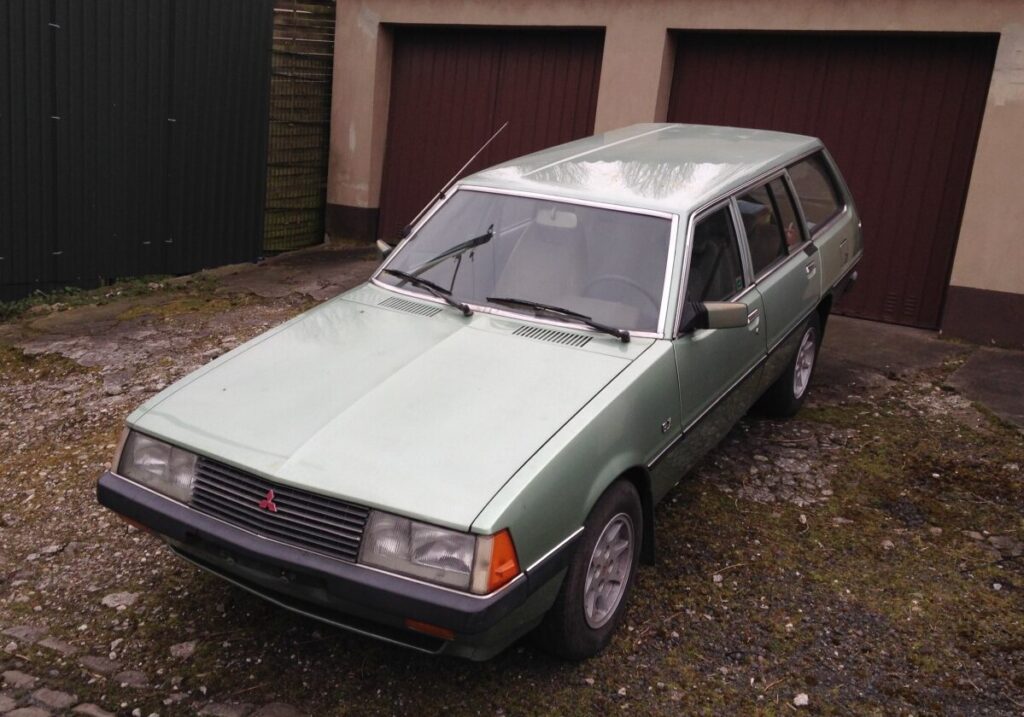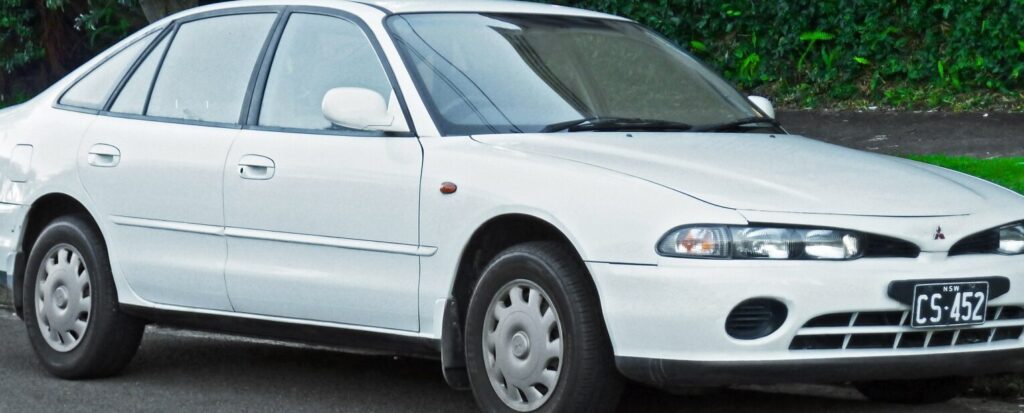
The Mitsubishi Galant VII, produced between 1992 and 2000, represented a significant evolution in Mitsubishi’s mid-size offerings. Available in both sedan and hatchback body styles, the seventh-generation Galant (chassis code E54A) aimed to blend sporty handling with family-friendly practicality. Within the range, the 2.0-liter V6-24 variant, producing 150 horsepower, occupied a middle ground, offering a step up in performance from the base four-cylinder models while remaining more accessible than the higher-performance turbocharged or 2.5-liter V6 options. This particular configuration was primarily aimed at buyers seeking a refined and capable vehicle for daily commuting and occasional longer journeys.
The 2.0 V6-24 (E54A) Galant: A Detailed Overview
The 2.0 V6-24 model was a key component of the Galant VII lineup, particularly in markets where larger engines were favored. It provided a balance between performance and fuel efficiency, making it a popular choice for those who wanted a more engaging driving experience than the base models offered, without the higher price tag and potential maintenance costs associated with the more powerful trims. The “24” in the name refers to the engine’s four valves per cylinder configuration, contributing to its improved breathing and power output.
Powertrain & Engine Architecture
At the heart of the 2.0 V6-24 Galant lies the 6A12 engine, a 1999cc (121.99 cubic inches) naturally aspirated V6. This engine featured a 60-degree V-angle, contributing to a smoother power delivery and reduced vibrations. Bore and stroke dimensions were 78.4mm (3.09 inches) and 69mm (2.72 inches) respectively, resulting in a compression ratio of 10:1. The engine utilized a multi-port fuel injection system, delivering fuel directly to each intake port for optimized combustion. The valvetrain employed a Double Overhead Camshaft (DOHC) design, further enhancing the engine’s breathing efficiency and contributing to its 150 hp output at 6750 rpm and 179 Nm (132.02 lb-ft) of torque at 4000 rpm. The engine’s power-to-liter ratio was a respectable 75 hp/liter.
While the 2.0 V6 was available with both manual and automatic transmissions, this article focuses on the 5-speed automatic variant. This transmission, while not known for being particularly sporty, provided smooth and convenient gear changes, making it ideal for everyday driving. The automatic transmission’s gear ratios were tuned for a balance of acceleration and fuel economy, prioritizing comfortable cruising over outright performance.
Driving Characteristics
The 2.0 V6-24 automatic Galant offered a comfortable and refined driving experience. Acceleration from 0-60 mph was achieved in approximately 8.6 seconds, and 0-100 km/h in 9.1 seconds, making it reasonably quick for its time. Top speed was rated at 215 km/h (133.59 mph). However, the automatic transmission did slightly diminish the engine’s potential compared to the 5-speed manual version. The automatic’s shift points were programmed to prioritize fuel efficiency, sometimes resulting in a slight delay in response during aggressive acceleration. The weight-to-power ratio of 9.2 kg/hp and weight-to-torque ratio of 7.7 kg/Nm indicated a reasonably balanced vehicle, though not as nimble as the lighter, four-cylinder models or the more powerful V6 variants.
Equipment & Trim Levels
The 2.0 V6-24 Galant typically came equipped with a respectable level of standard features. These generally included power windows, power locks, air conditioning, and an AM/FM stereo. Higher trim levels, often denoted by specific packages or designations, could add features such as alloy wheels, a sunroof, upgraded upholstery, and a more sophisticated audio system. Interior upholstery was typically cloth, though leather options were available on some trims. Dashboard configurations were generally straightforward and functional, prioritizing ease of use over elaborate styling. Optional extras often included cruise control, a CD player, and upgraded sound systems.
Chassis & Braking
The Galant VII utilized a front-engine, front-wheel-drive layout. The suspension system employed a double wishbone configuration at the front, providing good handling and ride comfort. The rear suspension utilized a spring strut setup. Braking duties were handled by ventilated discs at the front and solid discs at the rear, providing adequate stopping power for the vehicle’s weight and performance. An Anti-lock Braking System (ABS) was often included as standard equipment, enhancing safety and control during emergency braking situations. Steering was provided by a hydraulic power steering rack and pinion system, offering a good balance of assistance and feedback. The Galant VII typically rode on 195/60 R15 tires.
Market Reception & Comparison
The 2.0 V6-24 Galant was generally well-received by automotive critics as a competent and well-rounded mid-size vehicle. It was praised for its comfortable ride, refined engine, and spacious interior. However, some critics noted that the automatic transmission could feel somewhat sluggish compared to the manual version. Compared to the base four-cylinder models, the V6 offered a significant improvement in performance and refinement. In contrast to the more powerful 2.5-liter V6 and turbocharged variants, the 2.0 V6-24 offered a more affordable entry point into the Galant range, with lower running costs and potentially better long-term reliability. Fuel economy was rated at 8.9 l/100 km (26.4 US mpg, 31.7 UK mpg, 11.2 km/l), which was competitive for a V6 engine of this displacement in the early 1990s.
Technical Specifications
| Brand | Mitsubishi |
| Model | Galant |
| Generation | Galant VII Hatchback |
| Type (Engine) | 2.0 V6-24 (E54A) (150 Hp) |
| Start of production | 1992 |
| End of production | 2000 |
| Body type | Hatchback |
| Seats | 5 |
| Doors | 5 |
| Fuel consumption (combined) | 8.9 l/100 km |
| Fuel consumption (US mpg) | 26.4 |
| Fuel consumption (UK mpg) | 31.7 |
| Fuel Type | Petrol (Gasoline) |
| Acceleration 0 – 100 km/h | 9.1 sec |
| Acceleration 0 – 62 mph | 9.1 sec |
| Acceleration 0 – 60 mph | 8.6 sec |
| Maximum speed | 215 km/h (133.59 mph) |
| Weight-to-power ratio | 9.2 kg/Hp |
| Weight-to-torque ratio | 7.7 kg/Nm |
| Power | 150 Hp @ 6750 rpm |
| Power per litre | 75 Hp/l |
| Torque | 179 Nm @ 4000 rpm (132.02 lb.-ft. @ 4000 rpm) |
| Engine layout | Front, Transverse |
| Engine displacement | 1999 cm3 (121.99 cu. in.) |
| Number of cylinders | 6 |
| Engine configuration | V-engine |
| Cylinder Bore | 78.4 mm (3.09 in.) |
| Piston Stroke | 69 mm (2.72 in.) |
| Compression ratio | 10:1 |
| Number of valves per cylinder | 4 |
| Fuel injection system | Multi-port manifold injection |
| Engine aspiration | Naturally aspirated |
| Valvetrain | DOHC |
| Kerb Weight | 1378 kg (3037.97 lbs.) |
| Max. weight | 1880 kg (4144.69 lbs.) |
| Max load | 502 kg (1106.72 lbs.) |
| Trunk (boot) space – minimum | 450 l (15.89 cu. ft.) |
| Trunk (boot) space – maximum | 660 l (23.31 cu. ft.) |
| Fuel tank capacity | 64 l (16.91 US gal | 14.08 UK gal) |
| Length | 4620 mm (181.89 in.) |
| Width | 1730 mm (68.11 in.) |
| Height | 1395 mm (54.92 in.) |
| Wheelbase | 2635 mm (103.74 in.) |
| Front track | 1510 mm (59.45 in.) |
| Rear track | 1505 mm (59.25 in.) |
| Drivetrain Architecture | Front wheel drive |
| Number of gears and type of gearbox | 5 gears, automatic transmission |
| Front suspension | Double wishbone |
| Rear suspension | Spring Strut |
| Front brakes | Ventilated discs |
| Rear brakes | Disc |
| Assisting systems | ABS (Anti-lock braking system) |
| Steering type | Steering rack and pinion |
| Power steering | Hydraulic Steering |
| Tires size | 195/60 R15 |
Legacy
The 2.0 V6-24 automatic Galant, while not the most sought-after variant today, remains a reasonably reliable and affordable used car option. The 6A12 engine is known for its durability, provided it has been properly maintained. Common issues include oil leaks and occasional sensor failures, but these are generally not prohibitively expensive to repair. The automatic transmission, while not as robust as some other units, can provide years of service with regular fluid changes. Today, these Galants are increasingly appreciated by enthusiasts for their classic styling, comfortable ride, and relatively simple mechanicals. They represent a unique blend of 1990s Japanese engineering and design, offering a nostalgic driving experience for those seeking an alternative to more common vehicles of the era.