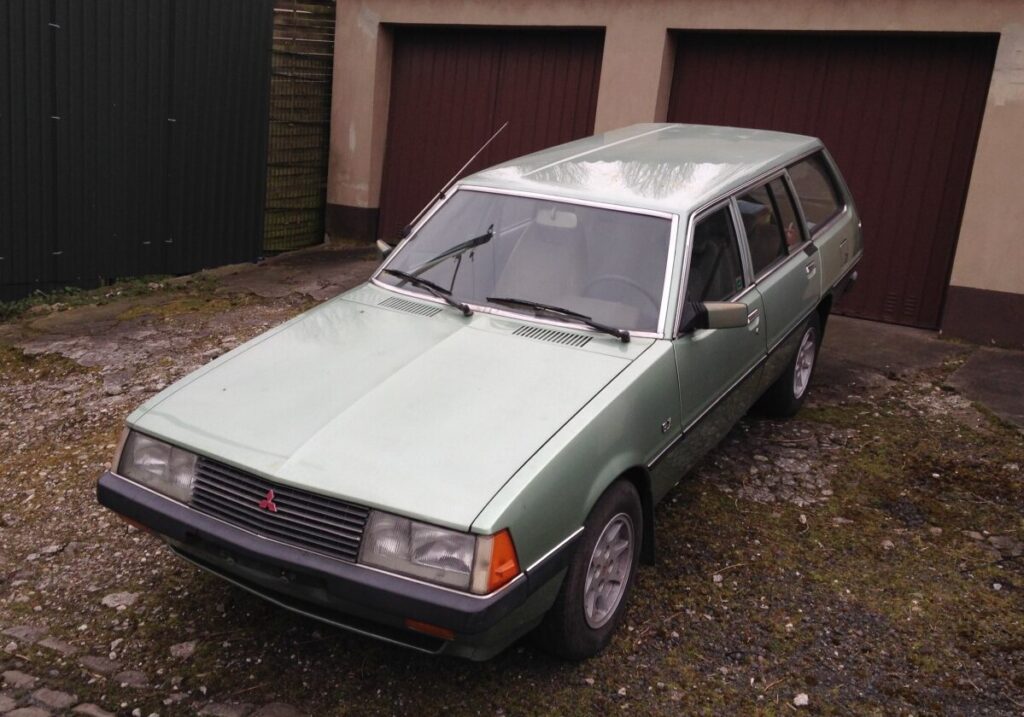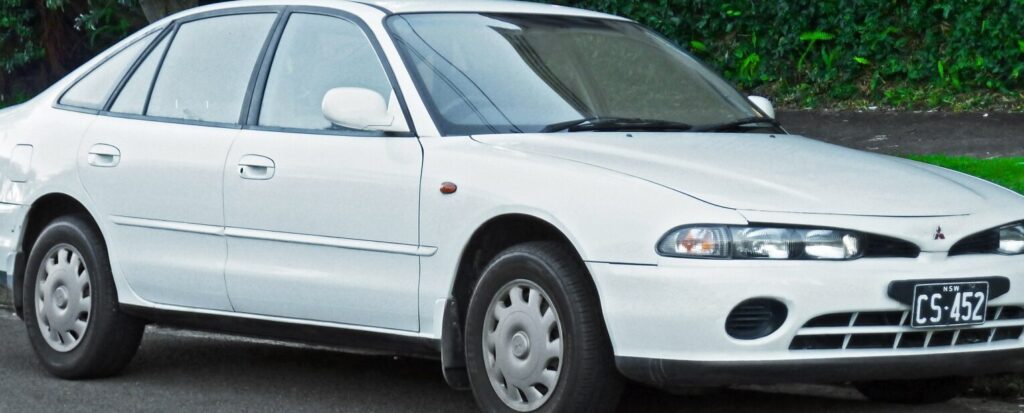
The Mitsubishi Galant VII, produced between 1992 and 2000, represented a significant evolution in Mitsubishi’s mid-size offerings. Available in both sedan and hatchback body styles, the seventh generation Galant (internally designated E88A) aimed to blend sporty handling with family-friendly practicality. Within the range, the 2.5 V6-24 4×4 variant, producing 170 horsepower, occupied a premium position, offering all-wheel drive capability and a more powerful engine option compared to the base models. This model was positioned as a performance-oriented choice within the Galant lineup, appealing to buyers seeking enhanced traction and acceleration.
Mitsubishi Galant VII 2.5 V6-24 4×4 (E88A): An Overview
The E88A Galant was built upon the stretched and refined platform of its predecessor, offering increased interior space and improved ride quality. The 2.5 V6-24 4×4 model specifically catered to markets where all-weather capability was highly valued. It distinguished itself from the standard Galant models through its more potent engine, sophisticated all-wheel-drive system, and often, a higher level of standard equipment. Production spanned from 1992 through 2000, with minor updates occurring throughout the production run to address market demands and regulatory changes.
Powertrain & Engine Architecture
At the heart of the Galant 2.5 V6-24 4×4 lies the 6A13 engine, a 2.5-liter (2497 cc) naturally aspirated V6. This engine featured a 60-degree V-angle, contributing to a smoother power delivery and reduced vibrations. The “24” in the model designation refers to the four valves per cylinder (DOHC – Double Overhead Camshaft) configuration. Fuel delivery was managed by a multi-port fuel injection system, optimizing combustion efficiency and responsiveness. Bore and stroke dimensions were 83.5 mm x 76 mm, resulting in a compression ratio of 10:1. The engine produced 170 hp at 6000 rpm and 216 Nm (159.31 lb-ft) of torque at 4000 rpm. The engine’s transverse mounting within the front engine bay contributed to a more balanced weight distribution.
The powertrain was paired with a 5-speed manual transmission as standard. This transmission was chosen to complement the engine’s power output and provide a more engaging driving experience. The all-wheel-drive system employed a viscous coupling to distribute torque between the front and rear axles, providing enhanced traction in slippery conditions. The system was primarily front-wheel drive under normal conditions, automatically engaging the rear wheels when wheel slip was detected.
Driving Characteristics
The Galant 2.5 V6-24 4×4 offered a noticeable performance advantage over the lower-displacement, front-wheel-drive Galant models. Acceleration from 0 to 100 km/h (0-62 mph) was achieved in approximately 8.9 seconds, with a 0-60 mph time of around 8.5 seconds. Top speed was electronically limited to 216 km/h (134.22 mph). The V6 engine provided a broad torque curve, making it responsive in a variety of driving situations. The all-wheel-drive system significantly improved grip, particularly on loose surfaces or in inclement weather. While not a dedicated sports car, the Galant 2.5 V6-24 4×4 offered a confident and capable driving experience. The 5-speed manual transmission allowed for precise gear selection and maximized engine performance. Compared to potential automatic transmission equipped models (not standard for this trim), the manual offered a more direct connection to the engine and improved fuel efficiency.
Equipment & Trim Levels
The 2.5 V6-24 4×4 trim typically included a generous array of standard features. These often included power windows, power door locks, air conditioning, and a quality audio system. Interior upholstery was typically cloth, although leather options were often available as upgrades. The dashboard layout was functional and driver-focused, with clear instrumentation and logically placed controls. Optional extras could include a sunroof, upgraded audio systems, and alloy wheels. The level of standard equipment varied depending on the specific market and year of production. Generally, this trim level was considered well-equipped for its time, offering a comfortable and convenient driving experience.
Chassis & Braking
The Galant VII utilized a double wishbone suspension setup at the front, providing responsive handling and a comfortable ride. The rear suspension employed a spring strut configuration. This combination aimed to balance handling precision with ride comfort. The 2.5 V6-24 4×4 model featured ventilated disc brakes on all four wheels, providing ample stopping power. An Anti-lock Braking System (ABS) was standard, enhancing safety and control during emergency braking maneuvers. Steering was provided by a hydraulic power steering rack and pinion system, offering precise and responsive steering feel. The vehicle rode on 205/60 R15 tires, providing a good balance of grip and ride comfort. Stabilizer bars were fitted to both the front and rear axles to reduce body roll during cornering.
Market Reception & Comparison
The Mitsubishi Galant VII 2.5 V6-24 4×4 was generally well-received by automotive critics. It was praised for its powerful engine, all-wheel-drive capability, and comfortable ride. Fuel economy, however, was a common criticism, with combined fuel consumption averaging around 10.5 l/100 km (22.4 US mpg). Compared to the base Galant models, the 2.5 V6-24 4×4 offered a significant performance upgrade, but at a higher price point. It competed with other mid-size sedans and hatchbacks, such as the Honda Accord, Toyota Camry, and Mazda 626. The Galant’s all-wheel-drive system provided a unique selling point, differentiating it from many of its competitors. Reliability was generally considered good, although some owners reported issues with the fuel injection system and the all-wheel-drive components over the long term.
Technical Specifications
| Brand | Mitsubishi |
| Model | Galant |
| Generation | Galant VII Hatchback |
| Type | 2.5 V6-24 4×4 (E88A) (170 Hp) |
| Start of production | 1992 |
| End of production | 2000 |
| Engine Type | Internal Combustion engine |
| Body Type | Hatchback |
| Seats | 5 |
| Doors | 5 |
| Fuel Consumption (Combined) | 10.5 l/100 km |
| Fuel Consumption (US mpg) | 22.4 |
| Fuel Consumption (UK mpg) | 26.9 |
| Fuel Type | Petrol (Gasoline) |
| Acceleration 0-100 km/h | 8.9 sec |
| Acceleration 0-62 mph | 8.9 sec |
| Acceleration 0-60 mph | 8.5 sec |
| Maximum Speed | 216 km/h (134.22 mph) |
| Weight-to-Power Ratio | 9.1 kg/Hp |
| Weight-to-Torque Ratio | 7.2 kg/Nm |
| Power | 170 Hp @ 6000 rpm |
| Torque | 216 Nm @ 4000 rpm (159.31 lb.-ft. @ 4000 rpm) |
| Engine Layout | Front, Transverse |
| Engine Displacement | 2497 cm3 (152.38 cu. in.) |
| Number of Cylinders | 6 |
| Engine Configuration | V-engine |
| Cylinder Bore | 83.5 mm (3.29 in.) |
| Piston Stroke | 76 mm (2.99 in.) |
| Compression Ratio | 10:1 |
| Valves per Cylinder | 4 |
| Fuel Injection System | Multi-port manifold injection |
| Engine Aspiration | Naturally aspirated |
| Valvetrain | DOHC |
| Kerb Weight | 1545 kg (3406.14 lbs.) |
| Max. Weight | 1985 kg (4376.18 lbs.) |
| Max Load | 440 kg (970.03 lbs.) |
| Trunk Space (min) | 450 l (15.89 cu. ft.) |
| Trunk Space (max) | 660 l (23.31 cu. ft.) |
| Fuel Tank Capacity | 64 l (16.91 US gal | 14.08 UK gal) |
| Length | 4620 mm (181.89 in.) |
| Width | 1730 mm (68.11 in.) |
| Height | 1405 mm (55.31 in.) |
| Wheelbase | 2635 mm (103.74 in.) |
| Front Track | 1510 mm (59.45 in.) |
| Rear Track | 1505 mm (59.25 in.) |
| Drive Wheel | All wheel drive (4×4) |
| Number of Gears | 5 |
| Gearbox Type | Manual Transmission |
| Front Suspension | Double wishbone |
| Rear Suspension | Spring Strut |
| Front Brakes | Ventilated discs |
| Rear Brakes | Ventilated discs |
| Assisting Systems | ABS (Anti-lock braking system) |
| Steering Type | Steering rack and pinion |
| Power Steering | Hydraulic |
| Tire Size | 205/60 R15 |
Legacy
The Mitsubishi Galant VII 2.5 V6-24 4×4, while not a high-volume seller, holds a respected position among enthusiasts. The 6A13 engine, when properly maintained, proved to be relatively durable. However, the all-wheel-drive system can require more extensive maintenance as the vehicle ages. Today, well-maintained examples are becoming increasingly rare and sought after by collectors and those seeking a unique and capable classic car. The Galant VII represents a period of innovation and ambition for Mitsubishi, and the 2.5 V6-24 4×4 variant stands as a testament to the brand’s commitment to performance and all-weather capability.