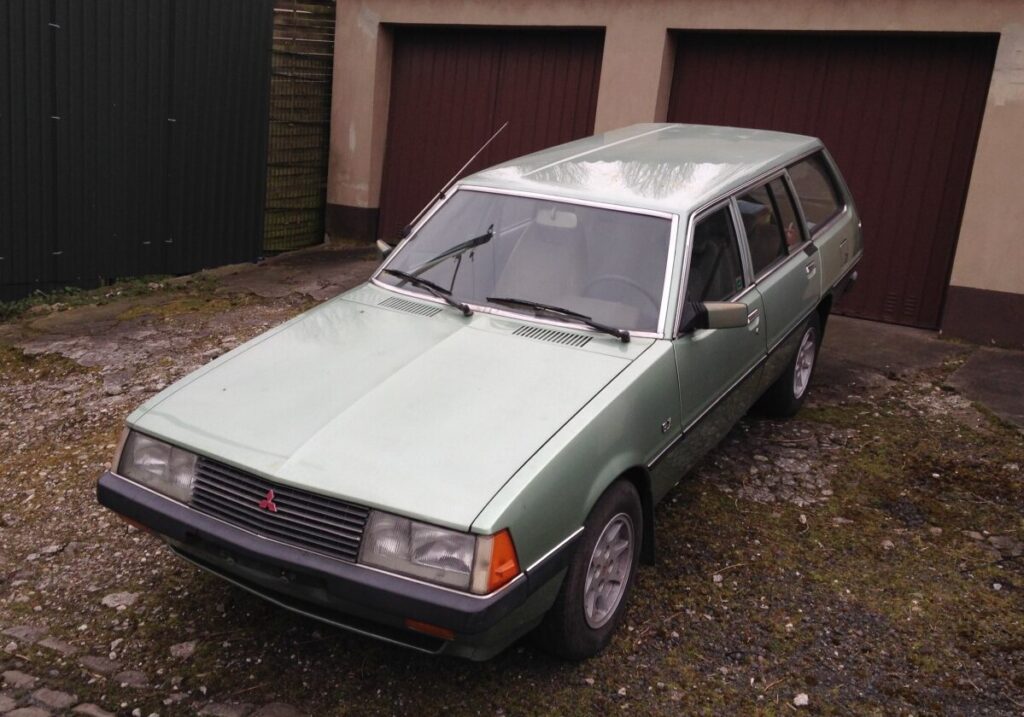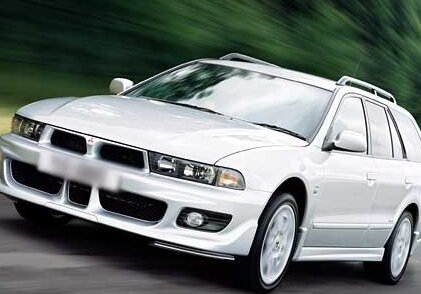
The Mitsubishi Galant VII Wagon 2.0 (136 hp) was a station wagon produced by Mitsubishi Motors from 1996 to 2002. Part of the seventh generation of the Galant (1996–2003), this variant offered a practical, family-oriented alternative to the sedan body style. Positioned as a mid-range offering within the Galant VII lineup, it provided a balance between performance, fuel economy, and cargo capacity. The Galant VII series, built on the DS platform (also known as the 1HX0/A3 platform), represented a significant redesign for the model, incorporating more contemporary styling and improved mechanical components compared to its predecessor.
Powertrain & Engine Architecture
The Galant VII Wagon 2.0 was powered by the 4G63 2.0-liter inline-four cylinder gasoline engine. This engine produced 136 horsepower at 6000 rpm and 178 Nm (131.29 lb-ft) of torque at 4500 rpm. The engine featured a cast iron block and an aluminum cylinder head, utilizing a single overhead camshaft (SOHC) valvetrain with four valves per cylinder. Fuel delivery was managed by a multi-port fuel injection system, contributing to improved efficiency and responsiveness. The compression ratio was set at 10:1. Bore and stroke dimensions were 85 mm (3.35 in) and 88 mm (3.46 in) respectively, resulting in a displacement of 1997 cm³ (121.86 cu. in). The engine was transversely mounted in the front of the vehicle.
The 2.0-liter engine was typically paired with a five-speed manual transmission. While an automatic transmission was offered in other Galant VII variants, the 2.0-liter wagon was primarily sold with the manual gearbox in many markets. This configuration prioritized driver engagement and fuel efficiency. The transmission sent power to the front wheels, as the Galant VII Wagon was exclusively front-wheel drive.
Engine Codes and Variations
While the core 4G63 engine remained consistent, minor variations existed depending on the specific market. These variations primarily concerned emissions control equipment and engine management tuning. However, the fundamental engine architecture and performance characteristics remained largely unchanged across different regions.
Driving Characteristics
The Galant VII Wagon 2.0 with the five-speed manual transmission offered a reasonably engaging driving experience. Acceleration from 0 to 100 km/h (0-62 mph) took approximately 10 seconds, while 0-60 mph was achieved in around 9.5 seconds. The maximum speed was rated at 200 km/h (124.27 mph). The engine delivered usable power throughout the rev range, making it suitable for everyday driving and occasional highway cruising. The five-speed manual transmission allowed drivers to maintain optimal engine speed for various driving conditions.
Compared to the higher-performance Galant variants equipped with the V6 engine, the 2.0-liter wagon offered less outright acceleration. However, it provided better fuel economy and a lighter feel. The manual transmission also offered a more direct connection to the engine than the available automatic transmissions in other trims. The weight-to-power ratio of 9.6 kg/hp and weight-to-torque ratio of 7.4 kg/Nm reflected a balanced, if not particularly sporty, performance profile.
Equipment & Trim Levels
The Galant VII Wagon 2.0 typically came equipped with a range of standard features designed to enhance comfort and convenience. These included power windows, power door locks, and a basic audio system. Air conditioning was often standard, though its availability could vary depending on the market. Interior upholstery was typically cloth, with options for upgraded materials in some regions. The dashboard layout was functional and straightforward, prioritizing ease of use.
Optional extras available for the Galant VII Wagon 2.0 included an upgraded audio system, alloy wheels, a sunroof, and anti-lock braking system (ABS). The availability of these options varied depending on the specific market and trim level. Higher trim levels often included additional features such as automatic climate control and leather upholstery.
Chassis & Braking
The Galant VII Wagon featured a MacPherson strut front suspension and a multi-link rear suspension, providing a comfortable ride and predictable handling. Coil springs were used at both the front and rear. The front suspension incorporated a stabilizer bar to reduce body roll during cornering. The chassis was designed to provide a balance between ride comfort and handling precision.
Braking duties were handled by ventilated discs at the front and solid discs at the rear. ABS was often an optional extra, providing enhanced braking performance and stability in emergency situations. The steering system utilized a rack and pinion setup with hydraulic power steering, offering precise and responsive steering feel. The Galant VII Wagon 2.0 was equipped with 195/65 R14 tires, providing a good balance between grip and ride comfort.
Market Reception & Comparison
The Mitsubishi Galant VII Wagon 2.0 was generally well-received by automotive critics as a practical and affordable family vehicle. It was praised for its spacious interior, comfortable ride, and reasonable fuel economy. However, some critics noted that its performance was not as exciting as that of the V6-powered Galant variants. The 2.0-liter engine was considered adequate for everyday driving, but it lacked the punch needed for more spirited performance.
In terms of fuel economy, the Galant VII Wagon 2.0 offered competitive figures for its class. Urban fuel consumption was rated at 11.4 l/100 km (20.6 US mpg), while extra-urban fuel consumption was 6.4 l/100 km (36.8 US mpg). Compared to the V6-powered Galant, the 2.0-liter wagon offered significantly better fuel economy. Reliability was generally considered good, although some owners reported minor issues with the fuel injection system and electrical components.
Technical Specifications
| Brand | Mitsubishi |
| Model | Galant |
| Generation | Galant VII Wagon |
| Type (Engine) | 2.0 (136 Hp) |
| Start of production | 1996 |
| End of production | 2002 |
| Body type | Station wagon (estate) |
| Seats | 5 |
| Doors | 5 |
| Fuel consumption (urban) | 11.4 l/100 km (20.6 US mpg) |
| Fuel consumption (extra urban) | 6.4 l/100 km (36.8 US mpg) |
| Fuel Type | Petrol (Gasoline) |
| Acceleration 0 – 100 km/h | 10 sec |
| Acceleration 0 – 62 mph | 10 sec |
| Acceleration 0 – 60 mph | 9.5 sec |
| Maximum speed | 200 km/h (124.27 mph) |
| Weight-to-power ratio | 9.6 kg/Hp |
| Weight-to-torque ratio | 7.4 kg/Nm |
| Power | 136 Hp @ 6000 rpm |
| Torque | 178 Nm @ 4500 rpm (131.29 lb.-ft. @ 4500 rpm) |
| Engine layout | Front, Transverse |
| Engine displacement | 1997 cm3 (121.86 cu. in.) |
| Number of cylinders | 4 |
| Engine configuration | Inline |
| Cylinder Bore | 85 mm (3.35 in.) |
| Piston Stroke | 88 mm (3.46 in.) |
| Compression ratio | 10:1 |
| Number of valves per cylinder | 4 |
| Fuel injection system | Multi-port manifold injection |
| Engine aspiration | Naturally aspirated |
| Valvetrain | OHC |
| Kerb Weight | 1310 kg (2888.06 lbs.) |
| Max. weight | 1905 kg (4199.81 lbs.) |
| Max load | 595 kg (1311.75 lbs.) |
| Trunk (boot) space – minimum | 420 l (14.83 cu. ft.) |
| Trunk (boot) space – maximum | 1400 l (49.44 cu. ft.) |
| Fuel tank capacity | 64 l (16.91 US gal | 14.08 UK gal) |
| Length | 4680 mm (184.25 in.) |
| Width | 1740 mm (68.5 in.) |
| Height | 1445 mm (56.89 in.) |
| Wheelbase | 2635 mm (103.74 in.) |
| Front track | 1510 mm (59.45 in.) |
| Rear track | 1505 mm (59.25 in.) |
| Drivetrain Architecture | Front wheel drive |
| Number of gears and type of gearbox | 5 gears, manual transmission |
| Front suspension | Coil spring |
| Rear suspension | Coil spring |
| Front brakes | Ventilated discs |
| Rear brakes | Disc |
| Assisting systems | ABS (optional) |
| Steering type | Steering rack and pinion |
| Power steering | Hydraulic |
| Tires size | 195/65 R14 |
Legacy
The Mitsubishi Galant VII Wagon 2.0, while not the most powerful or technologically advanced vehicle of its era, remains a respected choice among enthusiasts and practical car buyers. The 4G63 engine is known for its durability and relatively simple maintenance requirements. Used examples are still relatively common, and well-maintained vehicles can provide reliable transportation for many years. The Galant VII Wagon 2.0 represents a practical and affordable option for those seeking a spacious and versatile station wagon from the late 1990s and early 2000s. Its blend of comfort, fuel efficiency, and reasonable performance has ensured its continued presence on roads today.