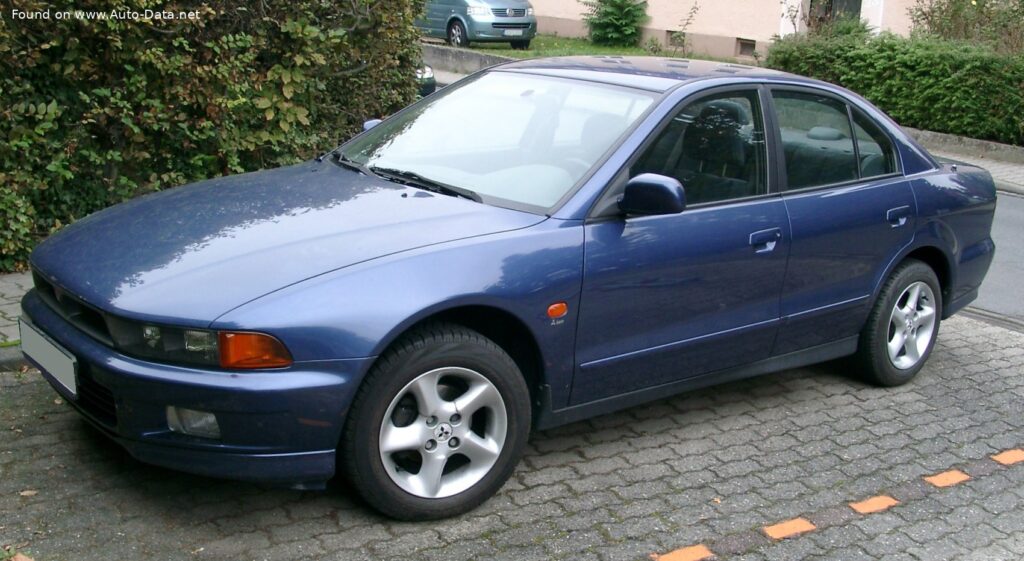
The Mitsubishi Galant VIII 2.0 GDi 16V (136 hp) was a variant of the eighth-generation Mitsubishi Galant, produced between 2000 and 2002. This model represented a mid-cycle offering within the Galant VIII range (introduced in 1996 and running through 2002), positioned as a balance between affordability and performance. It utilized Mitsubishi’s GDi (Gasoline Direct Injection) technology, aiming to provide improved fuel efficiency and power output compared to traditional multi-point injection systems. The Galant VIII, built on the DS platform, was a significant model for Mitsubishi, representing their attempt to compete in the mid-size sedan segment against established rivals like the Honda Accord and Toyota Camry.
Powertrain & Engine Architecture
The heart of the Galant VIII 2.0 GDi was the 4G94 inline-four cylinder engine, displacing 1,999 cc (121.99 cubic inches). This engine was a key feature of the model, employing Mitsubishi’s GDi technology. GDi, introduced in the late 1990s, involved direct injection of fuel into the combustion chamber at high pressure, allowing for more precise fuel control and a higher compression ratio of 11:1. This resulted in increased power and improved fuel economy. The engine featured a double overhead camshaft (DOHC) valvetrain with four valves per cylinder, contributing to its breathing efficiency.
The 4G94 engine produced 136 horsepower at 5,700 rpm and 191 Nm (140.87 lb-ft) of torque at 3,750 rpm. While the GDi system offered advantages, it also presented some challenges. Early GDi engines were known to be susceptible to carbon buildup on the intake valves, as the direct injection system didn’t wash the back of the valves like traditional port fuel injection. This could lead to reduced performance over time. The engine was transversely mounted in the front of the vehicle.
The Galant VIII 2.0 GDi was primarily offered with a 5-speed manual transmission. However, a 4-speed automatic transmission was also available, though less common. The automatic transmission was designed to provide smooth shifts and ease of driving, catering to a broader range of drivers. The gear ratios were optimized for a balance of acceleration and fuel efficiency, but the automatic version generally resulted in slightly slower acceleration times compared to the manual.
Fuel Injection System Details
The GDi system utilized a high-pressure fuel pump capable of delivering up to 12 MPa (1740 psi) of fuel pressure. The injectors themselves were solenoid-operated and precisely metered the fuel quantity based on engine load, speed, and other parameters. The engine control unit (ECU) played a crucial role in managing the GDi system, constantly adjusting fuel injection timing and quantity to optimize performance and emissions.
Driving Characteristics
The Galant VIII 2.0 GDi offered a reasonably refined driving experience. The 136 hp engine provided adequate power for everyday driving, with a noticeable improvement in responsiveness compared to lower-powered Galant variants. Acceleration from 0 to 60 mph was approximately 9.2 seconds, and the car could reach a top speed of 215 km/h (133.59 mph). The GDi engine delivered a linear power curve, making it predictable and easy to control.
The manual transmission version offered a more engaging driving experience, allowing drivers to fully utilize the engine’s power. The automatic transmission, while convenient, resulted in some power loss due to the torque converter. The suspension, consisting of coil springs all around, provided a comfortable ride, absorbing bumps and imperfections in the road. However, it wasn’t particularly sporty, with a noticeable amount of body roll during cornering. Steering was provided by a hydraulic rack and pinion system, offering reasonable precision and feedback.
Equipment & Trim Levels
The Galant VIII 2.0 GDi typically came equipped with a range of standard features, including air conditioning, power windows, power locks, and an AM/FM stereo. Higher trim levels offered additional features such as alloy wheels, a sunroof, and upgraded interior upholstery. Interior materials were generally of good quality for the price point, with a focus on durability and comfort. The dashboard layout was functional and straightforward, with easy-to-read gauges and controls. Optional extras included a CD player, cruise control, and leather seats.
Chassis & Braking
The Galant VIII featured a front-wheel-drive layout. The front suspension utilized coil springs and MacPherson struts, while the rear suspension employed coil springs and multi-link setup. This configuration provided a good balance of ride comfort and handling. Braking duties were handled by ventilated discs at the front and solid discs at the rear. An anti-lock braking system (ABS) was standard, enhancing safety by preventing wheel lockup during hard braking. Tire size was typically 225/50 R16.
Market Reception & Comparison
The Mitsubishi Galant VIII 2.0 GDi was generally well-received by automotive critics. It was praised for its fuel efficiency, smooth engine, and comfortable ride. However, some critics noted that the interior design was somewhat dated compared to its rivals. Compared to other Galant trims, the 2.0 GDi offered a noticeable performance upgrade over the base 2.0-liter non-GDi engine, while remaining more affordable than the higher-performance V6 models. Fuel economy was a strong point, achieving approximately 19.6 US mpg in the city and 35.1 US mpg on the highway. Reliability was generally good, although the potential for carbon buildup on the intake valves of the GDi engine was a concern.
Technical Specifications
| Brand | Mitsubishi |
| Model | Galant |
| Generation | Galant VIII |
| Type (Engine) | 2.0 GDi 16V (136 Hp) |
| Start of production | 2000 year |
| End of production | 2002 year |
| Powertrain Architecture | Internal Combustion engine |
| Body type | Sedan |
| Seats | 5 |
| Doors | 4 |
| Fuel consumption (urban) | 12 l/100 km (19.6 US mpg) |
| Fuel consumption (extra urban) | 6.7 l/100 km (35.1 US mpg) |
| Fuel Type | Petrol (Gasoline) |
| Acceleration 0 – 100 km/h | 9.7 sec |
| Acceleration 0 – 62 mph | 9.7 sec |
| Acceleration 0 – 60 mph | 9.2 sec |
| Maximum speed | 215 km/h (133.59 mph) |
| Weight-to-power ratio | 9.5 kg/Hp |
| Power | 136 Hp @ 5700 rpm |
| Torque | 191 Nm @ 3750 rpm (140.87 lb.-ft. @ 3750 rpm) |
| Engine layout | Front, Transverse |
| Engine Model/Code | 4G94 |
| Engine displacement | 1999 cm3 (121.99 cu. in.) |
| Number of cylinders | 4 |
| Engine configuration | Inline |
| Cylinder Bore | 81.5 mm (3.21 in.) |
| Piston Stroke | 95.8 mm (3.77 in.) |
| Compression ratio | 11:1 |
| Number of valves per cylinder | 4 |
| Fuel injection system | Direct injection |
| Engine aspiration | Naturally aspirated engine |
| Valvetrain | DOHC |
| Kerb Weight | 1290 kg (2843.96 lbs.) |
| Max. weight | 1400 kg (3086.47 lbs.) |
| Trunk (boot) space | 470 l (16.6 cu. ft.) |
| Fuel tank capacity | 60 l (15.85 US gal) |
| Length | 4630 mm (182.28 in.) |
| Width | 1740 mm (68.5 in.) |
| Height | 1415 mm (55.71 in.) |
| Wheelbase | 2635 mm (103.74 in.) |
Legacy
The Mitsubishi Galant VIII 2.0 GDi 16V, while not the most iconic version of the Galant, remains a reasonably popular choice in the used car market. The 4G94 GDi engine, when properly maintained, can offer good reliability. However, potential buyers should be aware of the possibility of carbon buildup on the intake valves and ensure that the engine has received regular maintenance, including fuel system cleaning. The Galant VIII, in general, is appreciated for its comfortable ride, spacious interior, and relatively affordable price point. It represents a solid, if somewhat understated, mid-size sedan from the early 2000s.