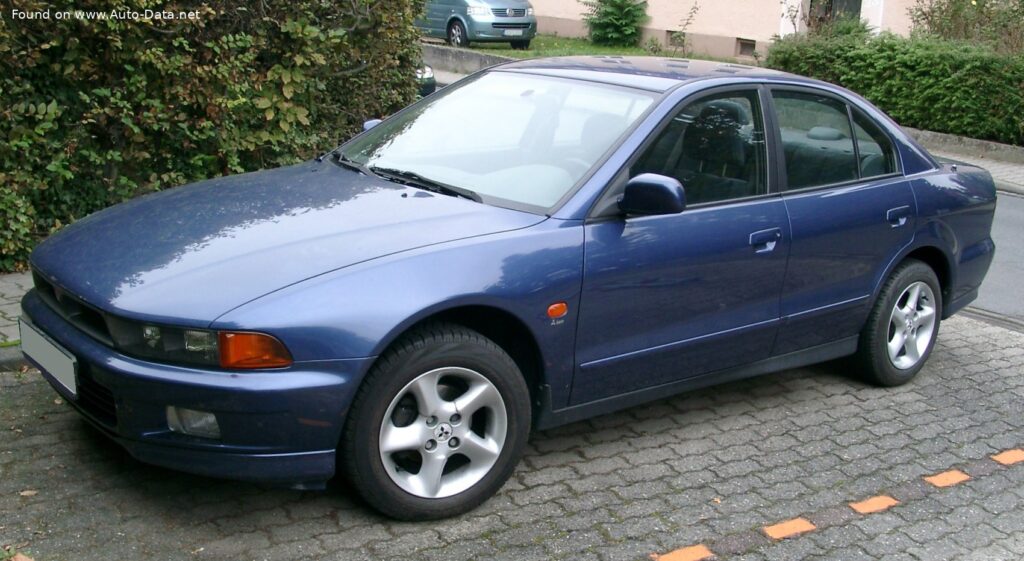
The Mitsubishi Galant VIII 2.0 GDi 16V Automatic, produced between 2000 and 2002, represented a mid-range offering within the eighth generation (2000-2008) of Mitsubishi’s long-running Galant sedan. Positioned above the base 2.0-liter SOHC engine and below the more powerful 2.5-liter V6 models, the 2.0 GDi aimed to balance performance with fuel efficiency and affordability. This variant was part of the 1HX0/A3 platform, a front-wheel-drive configuration shared with other Mitsubishi and Chrysler/Dodge models of the era. The introduction of GDi (Gasoline Direct Injection) technology was a key feature, intended to improve both power and economy compared to traditional multi-point fuel injection systems.
Mitsubishi Galant VIII 2.0 GDi: An Overview
The Galant VIII, launched in 1999, marked a significant departure from previous generations, adopting a more modern and aerodynamic design. The 2.0 GDi Automatic was a popular choice for buyers seeking a comfortable and well-equipped mid-size sedan. It offered a step up in refinement and technology compared to the base models, while remaining more accessible than the flagship V6 variants. The GDi engine was a key selling point, promising improved fuel economy and a more responsive driving experience. This model competed with other mid-size sedans like the Honda Accord, Toyota Camry, and Nissan Maxima.
Powertrain & Engine Architecture
At the heart of the Galant VIII 2.0 GDi Automatic lies the 4G94 inline-four cylinder engine. This 1,999 cc (121.99 cubic inches) engine utilizes Gasoline Direct Injection (GDi) technology, a relatively advanced feature for its time. GDi involves injecting fuel directly into the combustion chamber, rather than into the intake manifold, allowing for more precise fuel control, increased compression ratios, and improved combustion efficiency. The engine boasts a compression ratio of 11:1 and features a double overhead camshaft (DOHC) valvetrain with four valves per cylinder. This configuration contributes to its respectable power output of 136 horsepower at 5700 rpm and 191 Nm (140.87 lb-ft) of torque at 3750 rpm.
The engine is paired with a four-speed automatic transmission. While not as sophisticated as some contemporary transmissions, it was a reliable unit designed for smooth operation and ease of use. The transmission’s gear ratios were tuned for a balance between acceleration and fuel economy, prioritizing comfortable cruising over outright performance. The 4G94 engine, while generally robust, was known to require regular maintenance, particularly regarding the GDi fuel injectors, which could become clogged over time if lower-quality fuel was used.
Driving Characteristics
The 2.0 GDi Automatic offered a comfortable and refined driving experience. Acceleration from 0 to 60 mph was achieved in approximately 9.2-9.7 seconds, and it had a top speed of 215 km/h (133.59 mph). While not a sports sedan, the engine provided adequate power for everyday driving and highway merging. The automatic transmission shifted smoothly, although it could sometimes feel hesitant during quick acceleration. Compared to the manual transmission versions of the 2.0 GDi, the automatic offered less driver engagement but greater convenience. The V6 models, with their significantly higher horsepower and torque figures, provided a much more spirited driving experience, but at the cost of increased fuel consumption.
The weight-to-power ratio of 9.5 kg/hp and weight-to-torque ratio of 6.8 kg/Nm indicated a reasonable balance between power and weight. The front-wheel-drive configuration provided predictable handling, although it lacked the all-weather capability of an all-wheel-drive system. The steering was light and easy to use, making it well-suited for city driving.
Equipment & Trim Levels
The Galant VIII 2.0 GDi Automatic typically came standard with a respectable array of features. These included air conditioning, power windows and locks, a CD player, and alloy wheels. Higher trim levels offered additional features such as a sunroof, leather upholstery, upgraded audio systems, and automatic climate control. Interior upholstery was typically cloth, although leather was available as an option. The dashboard layout was functional and ergonomically designed, with easy-to-read gauges and intuitive controls. Optional extras often included side airbags and a traction control system, enhancing safety.
Chassis & Braking
The Galant VIII featured a MacPherson strut front suspension and a multi-link rear suspension, providing a comfortable ride and decent handling characteristics. The front suspension utilized coil springs, while the rear also employed coil springs. The braking system consisted of ventilated discs on the front wheels and solid discs on the rear wheels. Anti-lock Braking System (ABS) was standard, enhancing braking performance and stability, particularly in adverse conditions. The steering system was a rack-and-pinion setup with hydraulic power steering, providing a responsive and precise steering feel. The standard tire size was 225/50 R16, mounted on 16-inch alloy wheels.
Market Reception & Comparison
The Mitsubishi Galant VIII 2.0 GDi Automatic was generally well-received by automotive critics. It was praised for its comfortable ride, spacious interior, and fuel-efficient engine. The GDi technology was seen as a positive step forward, although some reviewers noted that the engine lacked the punch of the V6 models. Fuel economy was a strong point, with figures of approximately 12 l/100 km (19.6 US mpg) in urban driving and 6.7 l/100 km (35.1 US mpg) on the highway. Compared to the 2.5-liter V6, the 2.0 GDi offered better fuel economy but significantly less power. Reliability was generally good, although the GDi fuel injectors required periodic cleaning to prevent clogging. The Galant VIII faced stiff competition from established rivals like the Honda Accord and Toyota Camry, but it offered a compelling alternative with its unique GDi engine and attractive styling.
Technical Specifications
| Brand | Mitsubishi |
| Model | Galant |
| Generation | Galant VIII |
| Type | 2.0 GDi 16V Automatic |
| Start of production | 2000 |
| End of production | 2002 |
| Engine Displacement | 1999 cm3 (121.99 cu. in.) |
| Number of Cylinders | 4, Inline |
| Power | 136 Hp @ 5700 rpm |
| Torque | 191 Nm @ 3750 rpm (140.87 lb.-ft. @ 3750 rpm) |
| Fuel Injection | Direct Injection |
| Valvetrain | DOHC |
| Transmission | 4-speed Automatic |
| Drive Wheels | Front Wheel Drive |
| Kerb Weight | 1290 kg (2843.96 lbs.) |
| Max. Weight | 1400 kg (3086.47 lbs.) |
| Fuel Tank Capacity | 60 l (15.85 US gal | 13.2 UK gal) |
| Trunk Space | 470 l (16.6 cu. ft.) |
| Acceleration 0-100 km/h | 9.7 sec |
| Maximum Speed | 215 km/h (133.59 mph) |
Legacy
The Mitsubishi Galant VIII 2.0 GDi Automatic, while no longer in production, remains a reasonably popular choice in the used car market. The 4G94 engine, when properly maintained, is known for its durability and reliability. However, potential buyers should be aware of the need to periodically clean the GDi fuel injectors to prevent performance issues. The Galant VIII’s comfortable ride, spacious interior, and relatively fuel-efficient engine continue to appeal to buyers seeking an affordable and practical mid-size sedan. Parts availability is generally good, although some specific components may be becoming increasingly difficult to find. The 2.0 GDi Automatic represents a solid and dependable option for those seeking a well-rounded and reasonably priced used car.