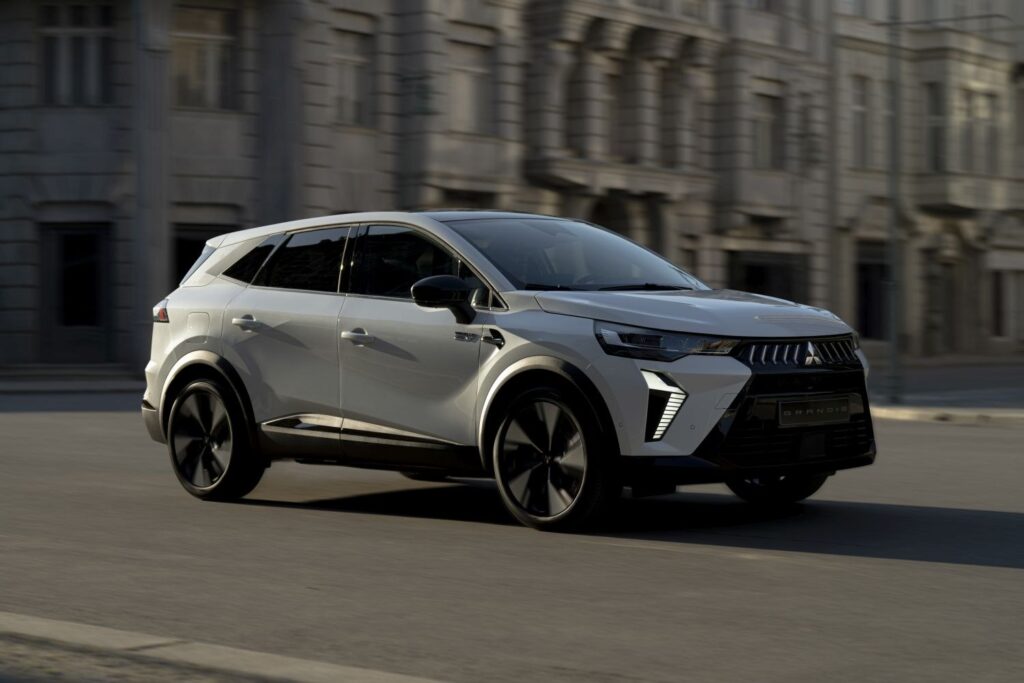
The Mitsubishi Grandis (2025) 1.3 (141 hp) Mild Hybrid DCT represents Mitsubishi’s entry into the modern, fuel-efficient SUV market. Introduced in October 2025, this variant is positioned as the base model within the redesigned Grandis lineup, offering a balance of practicality, technology, and affordability. It’s built on Mitsubishi’s contemporary platform, aiming to compete with other compact SUVs emphasizing fuel economy and ease of driving. The Grandis, in its 2025 iteration, represents a significant departure from previous generations, focusing on a more refined driving experience and incorporating mild-hybrid technology for improved efficiency.
Powertrain & Engine Architecture
At the heart of the Grandis 1.3 MHEV DCT lies a 1.3-liter, turbocharged inline-four cylinder gasoline engine, designated internally by Mitsubishi as part of their new engine family. This engine produces 141 horsepower at 5000-5500 rpm and 245 Nm (180.7 lb-ft) of torque between 2500-3500 rpm. The engine features direct fuel injection and a sophisticated double overhead camshaft (DOHC) valvetrain, optimizing combustion efficiency and power delivery. The turbocharger, coupled with an intercooler, helps to mitigate turbo lag and provide a broader torque curve.
The “MHEV” designation indicates a mild hybrid electric vehicle system. This system utilizes a 12V electric motor and battery to provide power assistance during acceleration and enable a start/stop system to conserve fuel when idling. Unlike full hybrid systems, the electric motor cannot propel the vehicle on its own; it primarily assists the gasoline engine. The transmission is a 7-speed dual-clutch transmission (DCT), chosen for its quick shifts and contribution to fuel efficiency. The DCT offers both automatic and manual shift modes, allowing drivers to tailor the driving experience to their preferences. The engine also incorporates a particulate filter to reduce emissions, meeting stringent Euro 6e-bis-FCM standards.
Engine Specifications
The 1.3-liter engine boasts a bore of 72.2 mm (2.84 in) and a stroke of 81.3 mm (3.2 in), resulting in a displacement of 1333 cm³ (81.34 cu. in). The engine’s power-to-litre ratio is a respectable 105.8 hp/l, indicative of the effectiveness of the turbocharging and direct injection technologies.
Driving Characteristics
The Grandis 1.3 MHEV DCT delivers a comfortable and refined driving experience, geared towards urban and suburban commuting. Acceleration from 0 to 100 km/h (0-62 mph) takes 9.4 seconds, while 0-60 mph is achieved in approximately 8.9 seconds. While not a performance-oriented vehicle, the turbocharger provides adequate power for everyday driving situations, including highway merging and overtaking. The DCT transmission contributes to smooth and responsive gear changes, enhancing the overall driving feel. The mild hybrid system provides a subtle boost during acceleration, improving responsiveness without being overly intrusive. The front-wheel-drive configuration offers predictable handling, and the suspension is tuned for comfort rather than sporty dynamics. Compared to potential higher-output variants (if offered), the 1.3L engine prioritizes fuel efficiency over outright performance.
Equipment & Trim Levels
The base Grandis 1.3 MHEV DCT trim comes standard with a comprehensive suite of features designed to appeal to a broad range of buyers. Standard interior appointments include comfortable cloth upholstery, a modern dashboard layout with a touchscreen infotainment system, and air conditioning. Safety features such as ABS (Anti-lock Braking System), electronic stability control, and multiple airbags are standard. Optional extras include upgrades to leather upholstery, a larger touchscreen display with navigation, a panoramic sunroof, and advanced driver-assistance systems (ADAS) such as adaptive cruise control and lane departure warning. The standard audio system provides connectivity via Bluetooth and USB ports. Exterior features include alloy wheels, automatic headlights, and power-adjustable side mirrors.
Chassis & Braking
The Grandis 1.3 MHEV DCT utilizes an independent McPherson strut suspension system at the front and an independent multi-link suspension at the rear, providing a comfortable ride and good handling characteristics. The front brakes are ventilated discs, offering strong stopping power, while the rear brakes are solid discs. The electric power steering system provides light and precise steering feel. The vehicle rides on 215/55 R18 or 225/45 R19 tires, depending on the selected trim level. The curb weight of 1306 kg (2879.24 lbs) contributes to the vehicle’s nimble handling and fuel efficiency.
Market Reception & Comparison
Initial reviews of the Mitsubishi Grandis 1.3 MHEV DCT have been generally positive, with critics praising its fuel efficiency, comfortable ride, and well-equipped interior. The combined fuel consumption of 6.0-6.1 l/100 km (39.2-38.6 US mpg) is competitive within its segment. Compared to potential higher-trim Grandis models with larger engines, the 1.3L variant offers a more affordable entry point and superior fuel economy. However, some reviewers have noted that the engine can feel slightly underpowered when fully loaded or driving uphill. The mild hybrid system is seen as a positive step towards reducing emissions, but its impact on overall fuel savings is relatively modest. Competitors in this segment include the Nissan Qashqai, Kia Sportage, and Hyundai Tucson, all of which offer similar levels of practicality and fuel efficiency.
Technical Specifications
| Fuel consumption at Low speed (WLTP) | 7.5-7.6 l/100 km (31.4 – 30.9 US mpg) |
| Fuel consumption at Medium speed (WLTP) | 5.7-5.9 l/100 km (41.3 – 39.9 US mpg) |
| Fuel consumption at High speed (WLTP) | 5.2-5.3 l/100 km (45.2 – 44.4 US mpg) |
| Fuel consumption at Very High speed (WLTP) | 6.2-6.3 l/100 km (37.9 – 37.3 US mpg) |
| Combined fuel consumption (WLTP) | 6.0-6.1 l/100 km (39.2 – 38.6 US mpg) |
| CO2 emissions (WLTP) | 135-138 g/km |
| Fuel Type | Petrol (Gasoline) |
| Acceleration 0 – 100 km/h | 9.4 sec |
| Acceleration 0 – 62 mph | 9.4 sec |
| Acceleration 0 – 60 mph | 8.9 sec |
| Maximum speed | 180 km/h (111.85 mph) |
| Emission standard | Euro 6e-bis-FCM |
| Weight-to-power ratio | 9.3 kg/Hp |
| Weight-to-torque ratio | 5.3 kg/Nm |
| Battery voltage | 12 V |
| Power | 141 Hp @ 5000-5500 rpm |
| Torque | 245 Nm @ 2500-3500 rpm (180.7 lb.-ft. @ 2500-3500 rpm) |
| Engine layout | Front, Transverse |
| Engine displacement | 1333 cm3 (81.34 cu. in.) |
| Number of cylinders | 4 |
| Engine configuration | Inline |
| Cylinder Bore | 72.2 mm (2.84 in.) |
| Piston Stroke | 81.3 mm (3.2 in.) |
| Number of valves per cylinder | 4 |
| Fuel injection system | Direct injection |
| Engine aspiration | Turbocharger, Intercooler |
| Valvetrain | DOHC |
| Kerb Weight | 1306 kg (2879.24 lbs.) |
| Max. weight | 1840 kg (4056.51 lbs.) |
| Trunk (boot) space – minimum | 576-708 l (20.34 – 25 cu. ft.) |
| Trunk (boot) space – maximum | 1682 l (59.4 cu. ft.) |
| Fuel tank capacity | 48 l (12.68 US gal | 10.56 UK gal) |
| Length | 4413 mm (173.74 in.) |
| Width | 1797 mm (70.75 in.) |
| Height | 1575 mm (62.01 in.) |
| Wheelbase | 2638 mm (103.86 in.) |
| Number of gears and type of gearbox | 7 gears, automatic transmission DCT |
Legacy
The Mitsubishi Grandis 1.3 MHEV DCT powertrain is expected to offer good long-term reliability, benefiting from Mitsubishi’s experience in developing turbocharged engines and DCT transmissions. The mild hybrid system, being less complex than full hybrid systems, is also anticipated to be durable. However, as with any new model, long-term reliability data will only become available over time. On the used car market, this variant is likely to appeal to buyers seeking a fuel-efficient and affordable SUV with a modern feature set. Its relatively low running costs and comfortable driving experience should make it a popular choice among budget-conscious consumers. The integration of mild-hybrid technology may also enhance its resale value as environmental concerns continue to grow.