
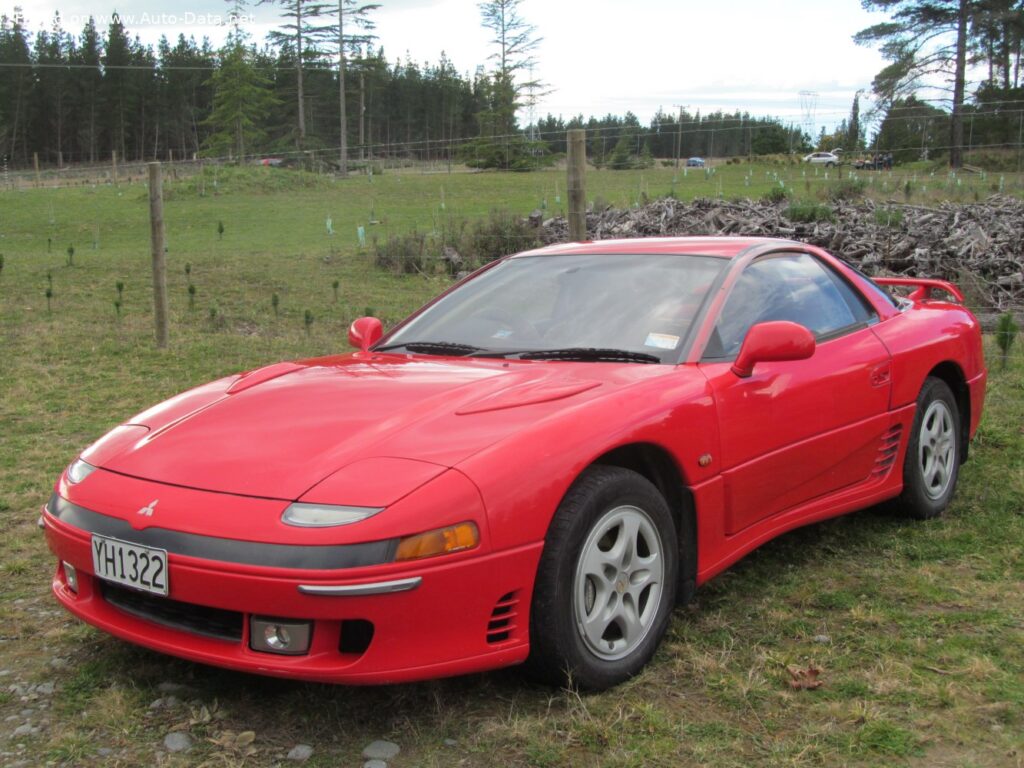
The Mitsubishi GTO (Z16), produced from 1990 to 2005, represents a significant chapter in Mitsubishi’s history as a grand touring coupe. This particular variant, the 3.0 i V6 4WD producing 225 horsepower, was a key offering within the Z16 generation, positioned as a performance-oriented model designed to compete with established sports coupes from Japan and Europe. The GTO, known as the 3000GT in North American markets, was built on the Diamond Star Motors (DSM) platform, a collaborative effort between Mitsubishi and Chrysler, and shared components with the Dodge Stealth. The Z16 chassis code designates the second generation of the GTO, introduced with significant revisions over the original.
Powertrain & Engine Architecture
At the heart of the GTO 3.0 i V6 4WD lies the 6A12 twin-turbocharged 3.0-liter V6 engine. While the base model GTO utilized a naturally aspirated version of this engine, the 225 hp variant featured a single turbocharger, significantly boosting performance. The engine code 6A12-TT designates the turbocharged configuration. This engine employed a multi-port fuel injection system, delivering fuel directly to each cylinder for optimized combustion. The valvetrain utilizes a double overhead camshaft (DOHC) design with four valves per cylinder, maximizing airflow and contributing to the engine’s power output.
The engine’s 60-degree V-angle provides a balance between smoothness and compactness. Bore and stroke dimensions are 91.1 mm (3.59 in) and 76 mm (2.99 in) respectively, resulting in a displacement of 2972 cm³ (181.36 cu. in.). A compression ratio of 10:1 was employed. The engine’s output of 225 hp at 6000 rpm and 275 Nm (202.83 lb-ft) of torque at 4500 rpm provided a substantial increase in performance over the naturally aspirated models. The engine is transversely mounted in the front of the vehicle.
Transmission
The 3.0 i V6 4WD GTO was primarily equipped with a 5-speed manual transmission. This transmission was designed to handle the engine’s torque output and provide precise gear changes. The manual transmission was favored by enthusiasts for its direct connection to the engine and enhanced driving experience. While an automatic transmission was offered in some markets, it was generally considered less desirable by performance drivers due to its slower shift times and reduced driver engagement.
Driving Characteristics
The GTO 3.0 i V6 4WD delivered a compelling driving experience characterized by strong acceleration and confident handling. The turbocharged engine provided a noticeable surge of power, making for brisk acceleration in all gears. The all-wheel-drive system, a key feature of this variant, enhanced traction and stability, particularly in adverse weather conditions. The 4WD system utilized a viscous coupling to distribute torque between the front and rear axles, providing a dynamic and responsive driving experience. The car’s weight of 1640 kg (3615.58 lbs) was noticeable, but the engine’s torque helped to overcome this, providing strong performance in real-world driving situations. Compared to the later, more powerful VR-4 models, the 225 hp GTO offered a more accessible and manageable power delivery, making it a suitable choice for drivers seeking a balance between performance and usability.
Equipment & Trim Levels
The GTO 3.0 i V6 4WD typically came equipped with a range of features designed to enhance comfort and convenience. Standard equipment included power windows, power locks, air conditioning, and a premium sound system. Interior upholstery was typically cloth, although leather options were available. The dashboard featured a sporty design with analog gauges and a central information display. Optional extras included a sunroof, upgraded audio systems, and various cosmetic enhancements. The trim level generally fell into a mid-range position within the GTO lineup, offering a good balance of features and performance without the higher price tag of the VR-4 models.
Chassis & Braking
The GTO’s chassis was designed to provide a rigid and stable platform for the high-performance engine and all-wheel-drive system. The front suspension utilized a strut-type design, while the rear suspension employed coil springs. This configuration provided a comfortable ride while maintaining good handling characteristics. The braking system featured ventilated discs on all four wheels, providing ample stopping power. An Anti-lock Braking System (ABS) was standard, enhancing safety and control during hard braking. The steering system was a rack and pinion type with hydraulic power assistance, offering precise and responsive steering feel. Tire size was typically 225/50 R17 V, providing a good balance of grip and ride comfort.
Market Reception & Comparison
The Mitsubishi GTO 3.0 i V6 4WD was generally well-received by automotive critics, who praised its performance, handling, and styling. However, some critics noted the car’s relatively high price and complex mechanical systems. Compared to other sports coupes of the era, such as the Toyota Supra and Nissan 300ZX, the GTO offered a unique combination of all-wheel-drive performance and Japanese reliability. Fuel economy was rated at 8.9 l/100 km (26.4 US mpg, 31.7 UK mpg, 11.2 km/l), which was reasonable for a high-performance coupe of its time. Reliability was generally good, although the complex turbocharged engine and all-wheel-drive system required regular maintenance. The 225 hp variant offered a more affordable entry point into the GTO lineup compared to the more expensive VR-4 models, making it a popular choice for buyers seeking a balance between performance and value.
Technical Specifications
| Brand | Mitsubishi |
| Model | GTO |
| Generation | GTO (Z16) |
| Type | 3.0 i V6 4WD (225 Hp) |
| Start of production | 1990 |
| End of production | 2005 |
| Powertrain Architecture | Internal Combustion engine |
| Body type | Coupe |
| Seats | 2 |
| Doors | 2 |
| Fuel consumption (combined) | 8.9 l/100 km (26.4 US mpg, 31.7 UK mpg, 11.2 km/l) |
| Maximum speed | 220 km/h (136.7 mph) |
| Weight-to-power ratio | 7.3 kg/Hp, 137.2 Hp/tonne |
| Weight-to-torque ratio | 6 kg/Nm, 167.7 Nm/tonne |
| Power | 225 Hp @ 6000 rpm |
| Power per litre | 75.7 Hp/l |
| Torque | 275 Nm @ 4500 rpm (202.83 lb.-ft. @ 4500 rpm) |
| Engine layout | Front, Transverse |
| Engine displacement | 2972 cm3 (181.36 cu. in.) |
| Number of cylinders | 6 |
| Engine configuration | V-engine |
| Cylinder Bore | 91.1 mm (3.59 in) |
| Piston Stroke | 76 mm (2.99 in) |
| Compression ratio | 10:1 |
| Number of valves per cylinder | 4 |
| Fuel injection system | Multi-port manifold injection |
| Engine aspiration | Naturally aspirated engine |
| Valvetrain | DOHC |
| Kerb Weight | 1640 kg (3615.58 lbs) |
| Fuel tank capacity | 75 l (19.81 US gal | 16.5 UK gal) |
| Length | 4575 mm (180.12 in) |
| Width | 1840 mm (72.44 in) |
| Height | 1285 mm (50.59 in) |
| Wheelbase | 2470 mm (97.24 in) |
| Front track | 1560 mm (61.42 in) |
| Rear track | 1580 mm (62.2 in) |
| Drive wheel | All wheel drive (4×4) |
| Number of gears and type of gearbox | 5 gears, manual transmission |
| Front suspension | Spring Strut |
| Rear suspension | Coil spring |
| Front brakes | Ventilated discs |
| Rear brakes | Ventilated discs |
| Assisting systems | ABS (Anti-lock braking system) |
| Steering type | Steering rack and pinion |
| Power steering | Hydraulic Steering |
| Tires size | 225/50 R17 V |
Legacy
The Mitsubishi GTO 3.0 i V6 4WD, while not as highly sought after as the VR-4 models, remains a desirable classic sports coupe. The 6A12 engine, when properly maintained, is known for its durability and reliability. However, as with any turbocharged engine, regular oil changes and careful monitoring of boost levels are essential. In the used car market, these GTOs are typically found in good condition, often owned by enthusiasts who have taken pride in their maintenance. The car’s unique styling, all-wheel-drive system, and strong performance continue to appeal to collectors and drivers alike, ensuring its place as a significant vehicle in Mitsubishi’s history.
