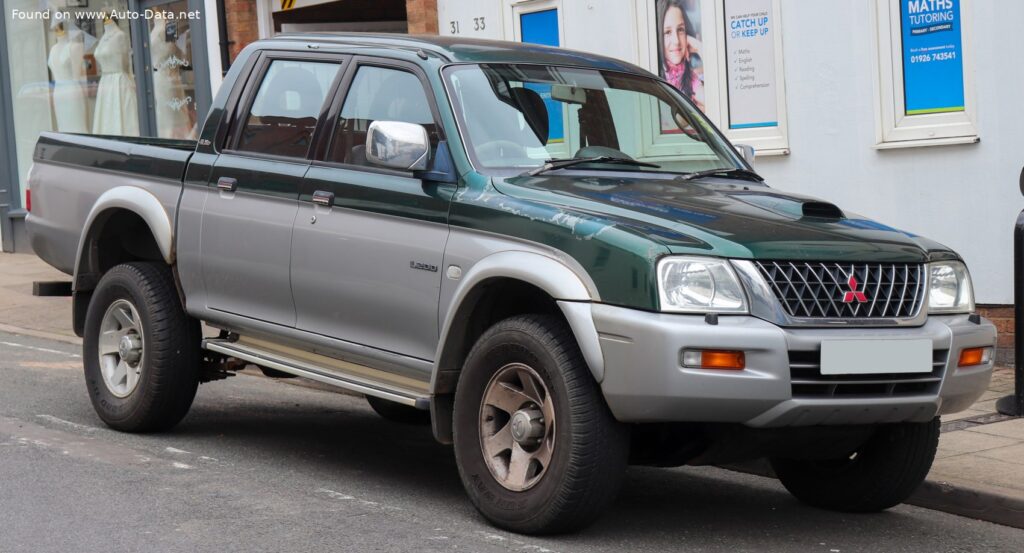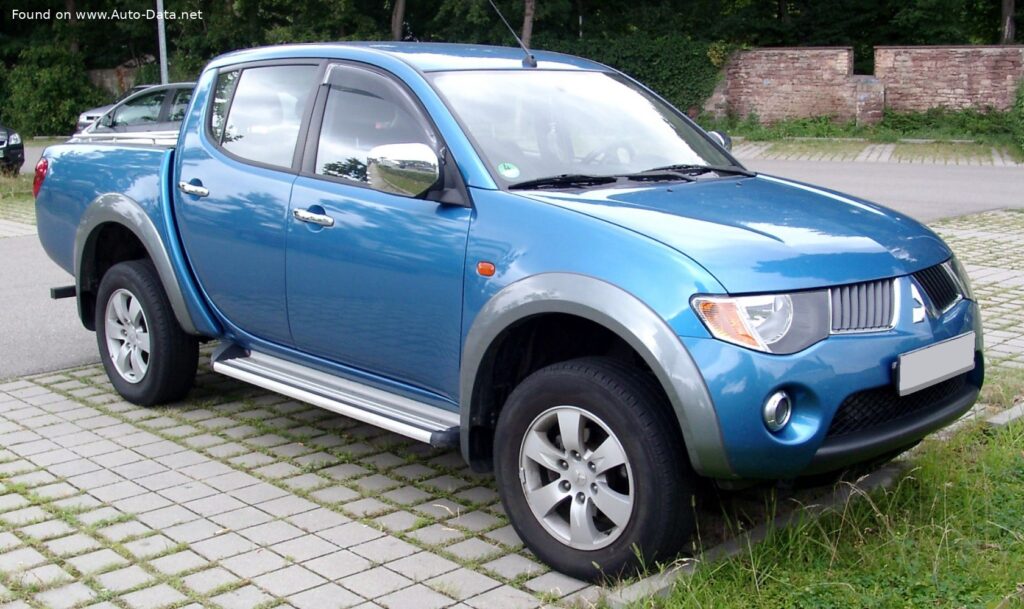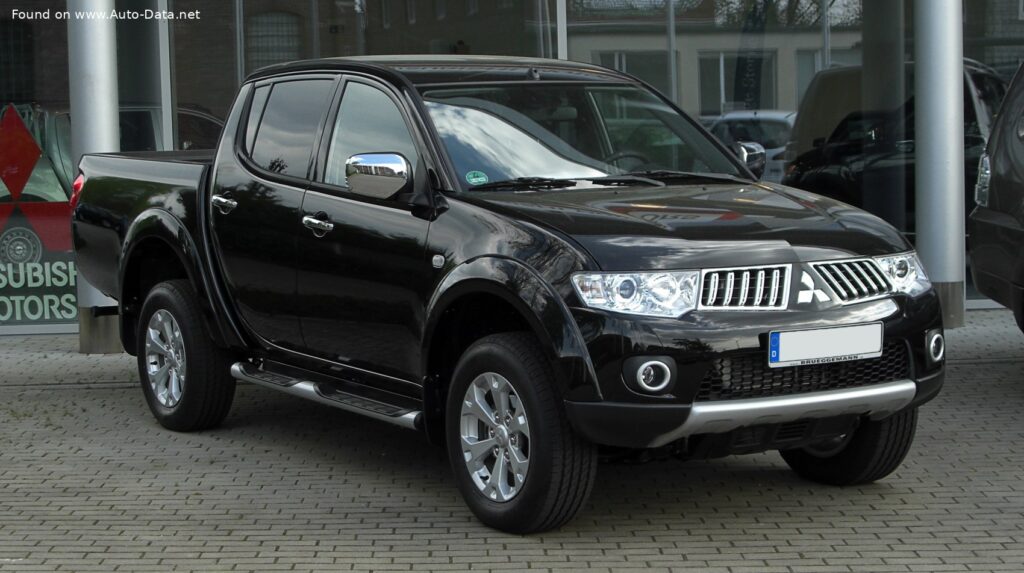
The Mitsubishi L200 V Club Cab (facelift 2019) 2.3d (150 Hp) 4WD represents a mid-cycle refresh of the fifth-generation L200 pickup truck, produced from September 2019 through 2023. This variant occupied a significant position within the L200 range, offering a balance between capability, fuel efficiency, and affordability. The facelift brought updated styling, improved technology, and refinements to the existing powertrain options. It was designed to appeal to both commercial users and private buyers seeking a versatile and robust vehicle. The L200, known as the Triton in some markets, is built on the robust platform designed for demanding work and off-road conditions.
Mitsubishi L200 2.3d (150 Hp) 4WD: Powertrain & Engine Architecture
At the heart of the 2019-2023 L200 V Club Cab 2.3d 4WD lies the 4N14 2.3-liter inline-four diesel engine. This engine is a turbocharged and intercooled common-rail direct injection (CRDI) unit, designed for both power and fuel economy. The 4N14 engine boasts a displacement of 2268 cm³ (138.4 cubic inches) with a bore of 86mm and a stroke of 97.6mm, resulting in a compression ratio of 14.4:1. The engine utilizes a double overhead camshaft (DOHC) valvetrain with four valves per cylinder, optimizing airflow for efficient combustion. The turbocharger and intercooler work in tandem to increase air density, boosting power output. The diesel commonrail fuel injection system delivers fuel at extremely high pressure, ensuring fine atomization and complete combustion. This particular engine produces 150 horsepower at 3500 rpm and 400 Nm (295.02 lb-ft) of torque at 2000 rpm. The engine also incorporates a particulate filter to meet stringent Euro 6d-Temp emission standards. The engine oil capacity is 6.6 liters (6.97 US quarts / 5.81 UK quarts) and requires a specific oil specification, while the cooling system holds 7.7 liters (8.14 US quarts / 6.78 UK quarts).
Transmission
The 2.3d (150 Hp) 4WD variant was primarily equipped with a 6-speed manual transmission. This transmission was chosen for its durability and efficiency, aligning with the L200’s work-oriented character. The gear ratios were optimized to provide a balance between low-end torque for hauling and towing, and higher-speed cruising capability. While an automatic transmission was available on other L200 trims, it was not typically paired with this specific engine and power output in most markets.
Driving Characteristics
The L200 2.3d (150 Hp) 4WD delivers a practical and capable driving experience. While not the fastest L200 variant, the 150 hp and 400 Nm of torque provide sufficient power for everyday driving and moderate towing duties. The engine’s peak torque, available from 2000 rpm, ensures strong pulling power without requiring frequent downshifts. The 6-speed manual transmission allows for precise control and engagement, enhancing the driving experience for those who prefer a more connected feel. Compared to higher-output versions of the L200, such as those with more powerful diesel engines, this variant offers a more economical driving experience, particularly in urban environments. The weight-to-power ratio of 12.9 kg/Hp and weight-to-torque ratio of 4.8 kg/Nm reflect a reasonable balance between performance and efficiency. The 4WD system provides enhanced traction on loose surfaces, making it suitable for off-road use and challenging weather conditions.
Equipment & Trim Levels
The V Club Cab configuration of the L200 features two doors and seating for four passengers, offering a compromise between the practicality of a single cab and the passenger capacity of a double cab. The facelifted 2019 models typically included standard features such as air conditioning, power windows, central locking, and an audio system with USB connectivity. Safety features included ABS (Anti-lock Braking System) and driver and passenger airbags. The interior upholstery was typically a durable cloth material, designed to withstand the rigors of commercial use. Optional extras available for this trim level included alloy wheels, a touchscreen infotainment system with navigation, rear parking sensors, and a bed liner for the cargo area. The dashboard layout was functional and straightforward, prioritizing ease of use and durability over luxurious aesthetics.
Chassis & Braking
The L200 V Club Cab 2.3d 4WD utilizes a robust chassis designed for heavy-duty applications. The front suspension consists of a double wishbone setup, providing a comfortable ride and good handling characteristics. The rear suspension employs a dependent suspension system with two longitudinal semi-elliptic leaf springs, offering excellent load-carrying capacity and durability. The braking system features ventilated discs on the front wheels (320mm diameter) and drum brakes on the rear wheels (295mm diameter). Hydraulic power steering provides responsive and precise steering control. The vehicle rides on 245/70 R16 tires mounted on 16-inch steel or alloy wheels. Ground clearance is a respectable 205mm (8.07 inches), enhancing its off-road capability.
Market Reception & Comparison
The Mitsubishi L200 V Club Cab 2.3d (150 Hp) 4WD was generally well-received by critics as a practical and reliable workhorse. It was praised for its fuel efficiency, particularly compared to larger and more powerful pickup trucks. Fuel consumption figures were rated at 8.8 l/100 km (26.7 US mpg / 32.1 UK mpg) combined (WLTP) and 7.6 l/100 km (30.9 US mpg / 37.2 UK mpg) (NEDC, WLTP equivalent). CO2 emissions were 231 g/km (WLTP) and 199 g/km (NEDC, WLTP equivalent). Compared to the higher-spec L200 variants with more powerful engines, this model offered a more affordable entry point into the L200 range. However, some critics noted that the 150 hp engine could feel underpowered when fully loaded or tackling steep inclines. Its main competitors included the Toyota Hilux, Nissan Navara, and Ford Ranger, all of which offered similar capabilities and price points.
Technical Specifications
| Brand | Mitsubishi |
| Model | L200 |
| Generation | L200 V Club Cab (facelift 2019) |
| Type (Engine) | 2.3d (150 Hp) 4WD |
| Start of production | September, 2019 |
| End of production | 2023 |
| Powertrain Architecture | Internal Combustion engine |
| Body type | Pick-up |
| Seats | 4 |
| Doors | 2 |
| Combined fuel consumption (WLTP) | 8.8 l/100 km (26.7 US mpg, 32.1 UK mpg, 11.4 km/l) |
| CO2 emissions (WLTP) | 231 g/km |
| Fuel consumption (NEDC) | 7.6 l/100 km (30.9 US mpg, 37.2 UK mpg, 13.2 km/l) |
| CO2 emissions (NEDC) | 199 g/km |
| Fuel Type | Diesel |
| Maximum speed | 174 km/h (108.12 mph) |
| Emission standard | Euro 6d-Temp |
| Weight-to-power ratio | 12.9 kg/Hp |
| Weight-to-torque ratio | 4.8 kg/Nm |
| Power | 150 Hp @ 3500 rpm |
| Torque | 400 Nm @ 2000 rpm (295.02 lb.-ft. @ 2000 rpm) |
| Engine layout | Front, Longitudinal |
| Engine Model/Code | 4N14 |
| Engine displacement | 2268 cm3 (138.4 cu. in.) |
| Number of cylinders | 4 |
| Engine configuration | Inline |
| Cylinder Bore | 86 mm (3.39 in.) |
| Piston Stroke | 97.6 mm (3.84 in.) |
| Compression ratio | 14.4:1 |
| Number of valves per cylinder | 4 |
| Fuel injection system | Diesel Commonrail |
| Engine aspiration | Turbocharger, Intercooler |
| Valvetrain | DOHC |
| Engine oil capacity | 6.6 l (6.97 US qt | 5.81 UK qt) |
| Coolant | 7.7 l (8.14 US qt | 6.78 UK qt) |
| Kerb Weight | 1935 kg (4265.94 lbs.) |
| Permitted trailer load with brakes (12%) | 3500 kg (7716.18 lbs.) |
| Length | 5295 mm (208.46 in.) |
| Width | 1815 mm (71.46 in.) |
| Height | 1780 mm (70.08 in.) |
| Wheelbase | 3000 mm (118.11 in.) |
| Front track | 1520 mm (59.84 in.) |
| Rear track | 1515 mm (59.65 in.) |
| Ride height (ground clearance) | 205 mm (8.07 in.) |
| Minimum turning circle | 11.8 m (38.71 ft.) |
| Number of gears | 6 |
| Gearbox type | Manual transmission |
Legacy
The Mitsubishi L200 2.3d (150 Hp) 4WD has proven to be a reliable and durable powertrain combination. The 4N14 engine, while not the most powerful in the L200 lineup, is known for its longevity and relatively low maintenance costs. On the used car market, these models represent a good value proposition for buyers seeking a capable and affordable pickup truck. Common issues are relatively minor, often related to wear and tear on components such as the clutch, suspension bushings, and brake pads. The robust 4WD system and durable chassis contribute to the L200’s long-term reliability, making it a popular choice for both work and recreational use. The availability of spare parts and a relatively straightforward mechanical design further enhance its appeal in the used vehicle market.