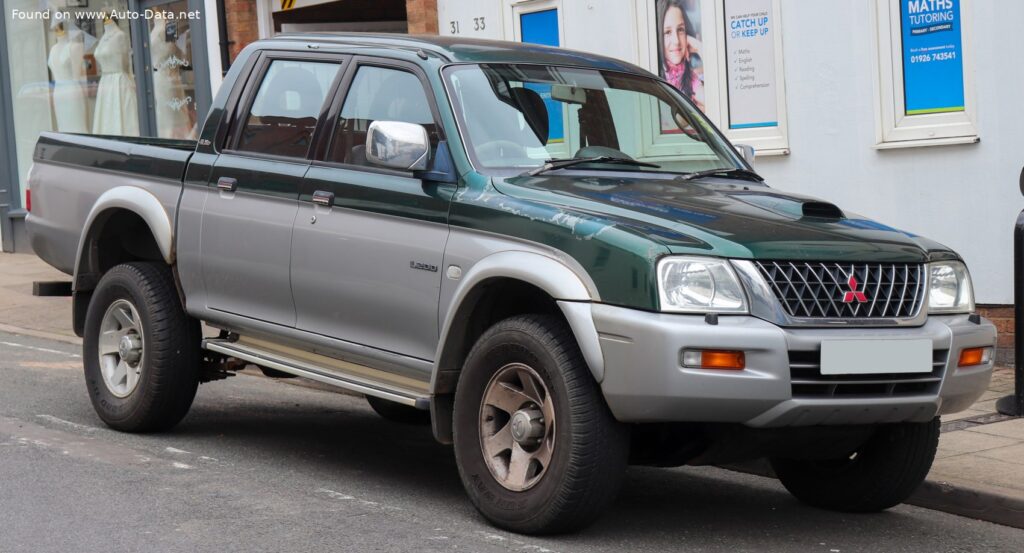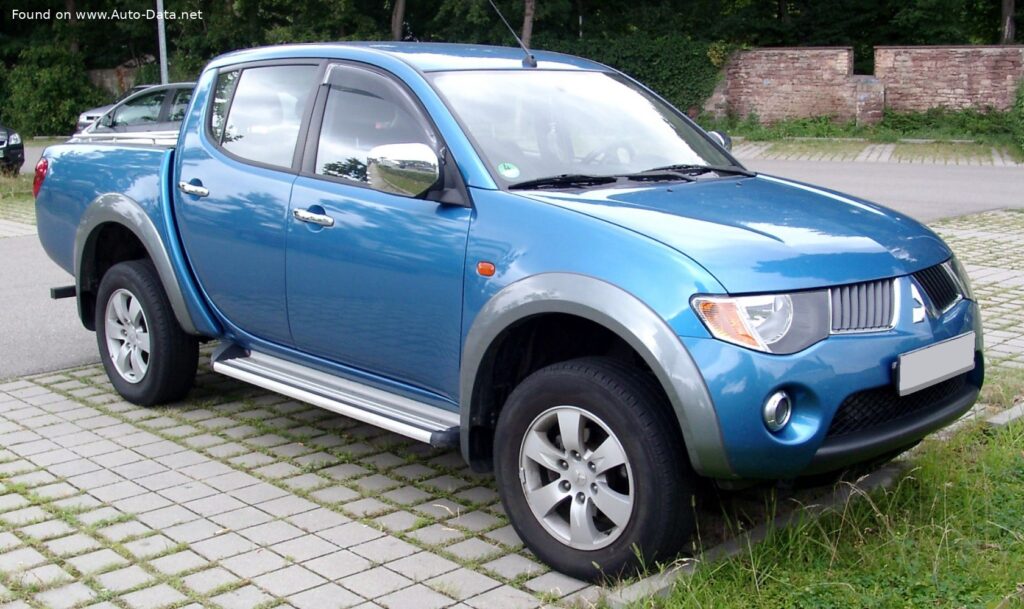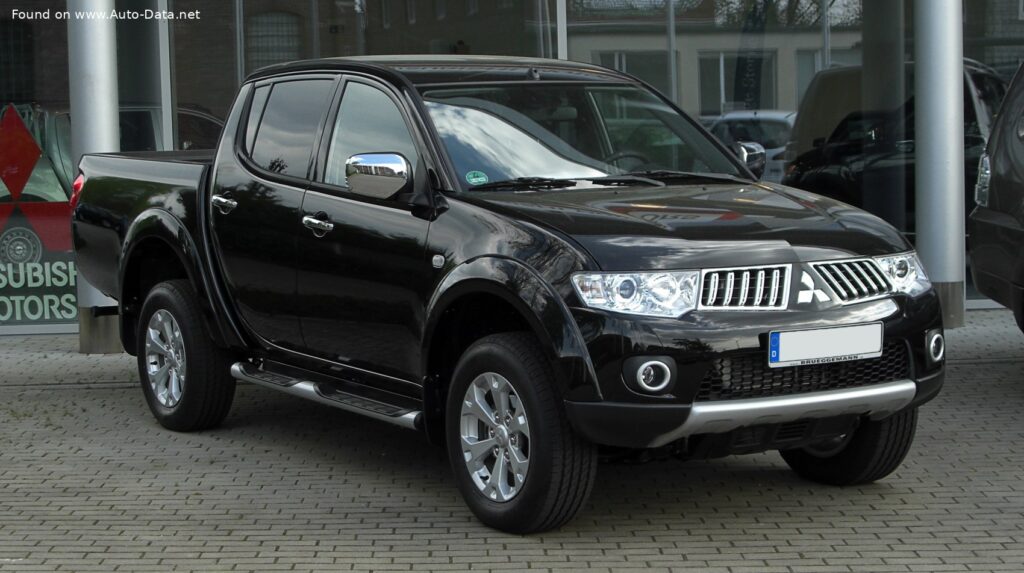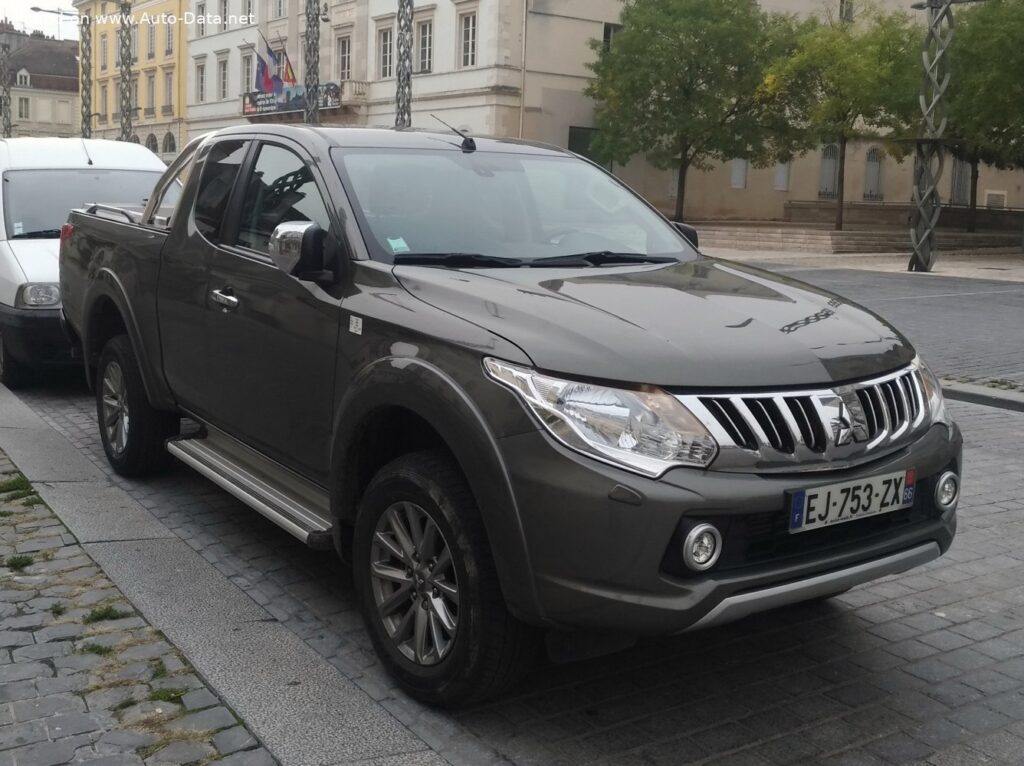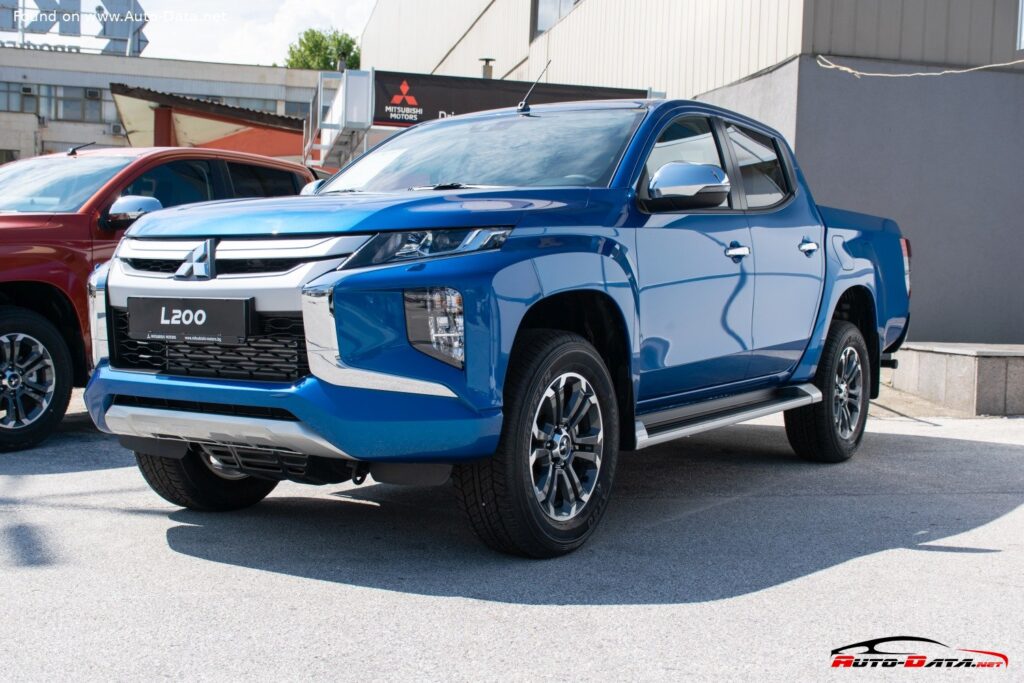
The Mitsubishi L200, known as the Mitsubishi Triton in many markets, is a cornerstone of Mitsubishi Motors’ global vehicle lineup, renowned for its enduring reliability and versatility. The fifth-generation L200, designated as the V generation, received a significant facelift in 2019, enhancing its aesthetic appeal and capabilities. This iteration, specifically the Mitsubishi L200 V Double Cab (facelift 2019) 2.4 MIVEC (181 Hp) Automatic, represents a key offering in the competitive mid-size pickup truck segment across Europe, Asia, Oceania, Africa, and South America. While not sold in the United States, where Mitsubishi’s pickup truck presence ended with the Raider, the L200 maintains a robust reputation internationally as a rugged workhorse capable of tackling diverse terrains and demanding tasks, while also serving as a practical family vehicle. This 2019 facelift model, produced until 2023, combines a potent 2.4-liter MIVEC diesel engine with a smooth automatic transmission, emphasizing both efficiency and performance.
Powertrain & Engine Architecture
At the heart of the Mitsubishi L200 V Double Cab (facelift 2019) 2.4 MIVEC (181 Hp) Automatic lies Mitsubishi’s 4N15 engine, a 2.4-liter (2442 cm³ or 149.02 cu. in.) MIVEC (Mitsubishi Innovative Valve timing Electronic Control) diesel powerplant. This inline-four, DOHC (Double Overhead Camshaft) engine is a product of modern diesel engineering, featuring a turbocharger and intercooler to optimize air intake and boost combustion efficiency. The MIVEC system, traditionally found in gasoline engines, is ingeniously applied here to a diesel, allowing for variable valve timing that contributes to a broader torque band, improved fuel economy, and reduced emissions – a critical factor in international markets.
The engine delivers 181 horsepower at 3500 rpm, providing ample power for both highway cruising and heavy-duty tasks. More impressively, it generates a substantial 317.15 lb.-ft. (430 Nm) of torque at a low 2500 rpm. This high torque output at a relatively low engine speed is crucial for a pickup truck, enabling strong acceleration from a standstill, effortless towing, and confident off-road performance. The engine’s layout is front, longitudinal, ensuring proper weight distribution and facilitating maintenance. With a high compression ratio of 14.9:1 and a common rail fuel injection system, the 4N15 engine is designed for both power and efficiency. Power is channeled through a smooth and responsive 6-speed automatic transmission, driving the rear wheels. While many L200 variants offer a sophisticated 4×4 system, this specific configuration highlights a rear-wheel-drive setup, often preferred for its simplicity, fuel efficiency, and lower cost in certain markets or for applications where all-wheel drive isn’t essential.
Driving Characteristics
The 181 hp and automatic transmission combination in the L200 V Double Cab provides a driving experience geared towards practicality and ease of use. Compared to manual transmission versions or higher-output trims like those with more powerful diesel engines, this setup prioritizes smooth operation over outright performance. The 6-speed automatic transmission is tuned for fuel efficiency and comfortable cruising, with gear changes generally occurring at lower RPMs to maximize economy. While acceleration isn’t particularly brisk, the substantial 317 lb-ft of torque provides ample pulling power for towing and hauling loads. The rear-wheel-drive configuration contributes to a slightly lighter feel and improved fuel economy compared to 4×4 models, but it also means traction can be limited on slippery surfaces. The automatic transmission eliminates the need for constant gear shifting, making it ideal for urban driving and long highway journeys. However, drivers seeking a more engaging and sporty driving experience might find the automatic transmission less responsive than a manual counterpart.
Equipment & Trim Levels
The Mitsubishi L200 V Double Cab (facelift 2019) 2.4 MIVEC (181 Hp) Automatic typically came equipped with a range of standard features designed to balance practicality with comfort. Standard interior features generally included air conditioning, power windows, power door locks, and a basic audio system with USB connectivity. Upholstery was typically a durable cloth material, although higher trim levels within the V generation offered leather options. The dashboard configuration was functional and straightforward, prioritizing ease of use over elaborate styling. Optional extras available for this trim often included alloy wheels, a touchscreen infotainment system with navigation, a rearview camera, parking sensors, and upgraded audio systems. Safety features typically included ABS (Anti-lock Braking System), airbags for the driver and front passenger, and seatbelt pretensioners. Depending on the specific market, additional safety features like stability control and traction control might also be included.
Chassis & Braking
The L200 V Double Cab’s chassis is built for ruggedness and durability. The front suspension utilizes a double wishbone setup, providing precise steering and a relatively comfortable ride. The rear suspension employs a dependent suspension system with two longitudinal semi-elliptic leaf springs, a proven design for carrying heavy loads and maintaining stability. This leaf spring setup, while not as refined as independent rear suspension, offers superior load-carrying capacity and durability. Braking is handled by ventilated discs at the front and drum brakes at the rear. The use of drum brakes on the rear was a cost-saving measure common in this class of vehicle, and while they provide adequate stopping power for most situations, they don’t offer the same level of performance as disc brakes. An Anti-lock Braking System (ABS) is standard, enhancing safety by preventing wheel lockup during hard braking. The steering system is a rack and pinion type with electric power steering, providing ease of maneuverability, especially in urban environments. The L200 offers a range of tire sizes, including 245/70 R16, 245/65 R17, and 265/60 R18, mounted on corresponding wheel rims.
Market Reception & Comparison
Critics generally viewed the Mitsubishi L200 V Double Cab (facelift 2019) 2.4 MIVEC (181 Hp) Automatic as a competent and reliable pickup truck, offering a good balance of performance, fuel economy, and practicality. The 2.4-liter diesel engine was praised for its torque output and relatively quiet operation, while the automatic transmission was appreciated for its smoothness and ease of use. Compared to other trims in the L200 lineup, this variant offered a more accessible price point and a more comfortable driving experience, making it appealing to buyers who didn’t require the ultimate in towing capacity or off-road capability. Fuel economy was generally competitive with other mid-size pickup trucks in its class, although it wasn’t class-leading. Reliability was a strong point, with the L200 consistently ranking well in reliability surveys. Compared to the higher-output diesel engines available in the L200 range, this 181 hp version offered a more affordable option, but it came at the expense of some performance. Against rivals like the Toyota Hilux and Ford Ranger, the L200 offered a compelling alternative, particularly in markets where Mitsubishi had a strong brand reputation.
Technical Specifications
| Category | Specification |
| General Information | |
| Brand | Mitsubishi |
| Model | L200 |
| Generation | L200 V Double Cab (facelift 2019) |
| Type (Engine) | 2.4 MIVEC (181 Hp) Automatic |
| Start of Production | 2019 year |
| End of Production | 2023 year |
| Powertrain Architecture | Internal Combustion engine |
| Body Type | Pick-up |
| Seats | 5 |
| Doors | 4 |
| Performance Specs | |
| Fuel Type | Diesel |
| Power | 181 Hp @ 3500 rpm |
| Torque | 430 Nm @ 2500 rpm |
| Engine Layout | Front, Longitudinal |
| Engine Model/Code | 4N15 |
| Engine Displacement | 2442 cm³ |
| Number of Cylinders | 4 |
| Engine Configuration | Inline |
| Compression Ratio | 14.9:1 |
| Fuel Injection System | Diesel Commonrail |
| Engine Aspiration | Turbocharger, Intercooler |
| Valvetrain | DOHC |
| Space, Volume and Weights | |
| Fuel Tank Capacity | 75 l |
| Dimensions | |
| Length | 5300 mm |
| Width | 1815 mm |
| Height | 1795-1780 mm |
| Wheelbase | 3000 mm |
| Drivetrain, Brakes and Suspension Specs | |
| Drivetrain Architecture | The Internal combustion engine (ICE) drives the rear wheels of the vehicle. |
| Drive Wheel | Rear wheel drive |
| Number of Gears and Type of Gearbox | 6 gears, automatic transmission |
| Front Suspension | Double wishbone |
| Rear Suspension | Dependent suspension of two longitudinal semi-elliptic leaf springs |
| Front Brakes | Ventilated discs |
| Rear Brakes | Drum |
Legacy
The Mitsubishi L200, under various names including Triton, has established a strong legacy as one of the most reliable and capable pickup trucks globally. Its reputation for durability and robust engineering makes it a preferred choice for commercial fleets, agricultural users, and adventure seekers across diverse international markets. The 2019-2023 iteration of the L200 V Double Cab, with its 2.4 MIVEC diesel engine and automatic transmission, continues to be a popular choice in the used car market. The 4N15 engine is generally considered to be a reliable unit, although regular maintenance is essential to ensure longevity. Common issues reported by owners include occasional turbocharger problems and wear and tear on the automatic transmission. However, these issues are not widespread and can often be prevented with proper servicing. The L200’s strong residual values in many markets are a testament to its perceived reliability and longevity. While the L200’s direct presence in the US market has been absent for some time, its global success underscores Mitsubishi’s engineering prowess in the utility vehicle segment, contributing significantly to the brand’s international sales and reputation as a maker of tough, dependable vehicles built to withstand the most challenging conditions.