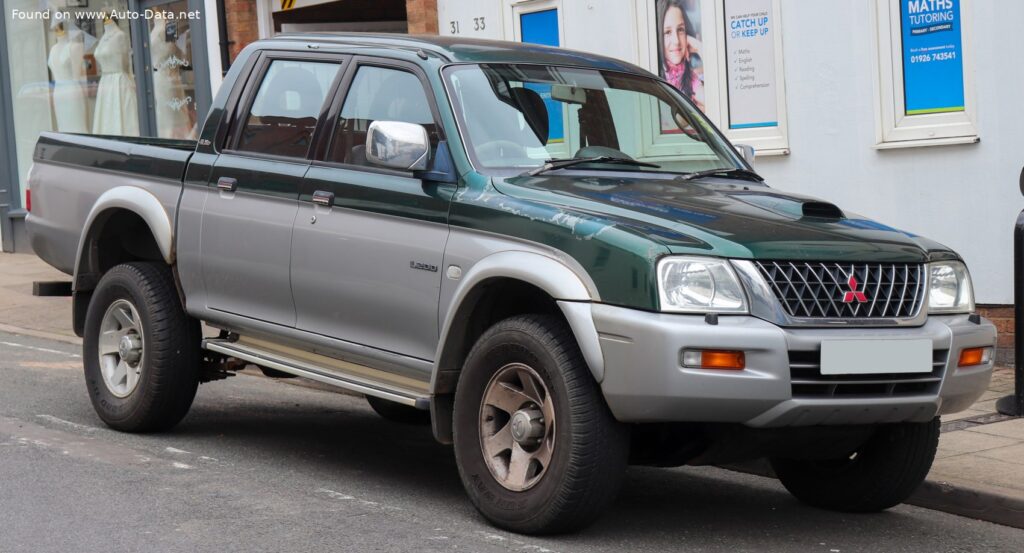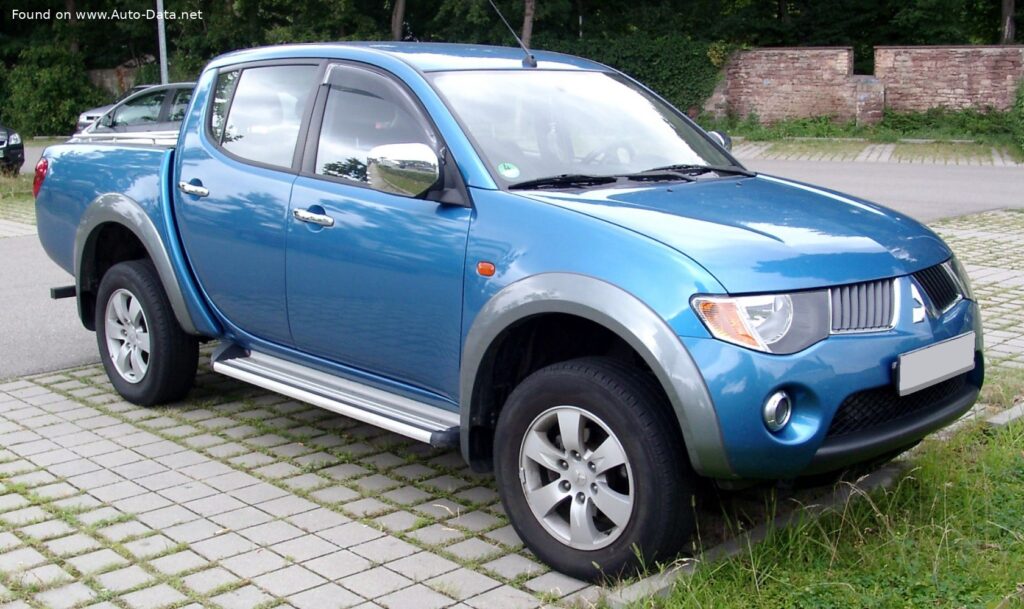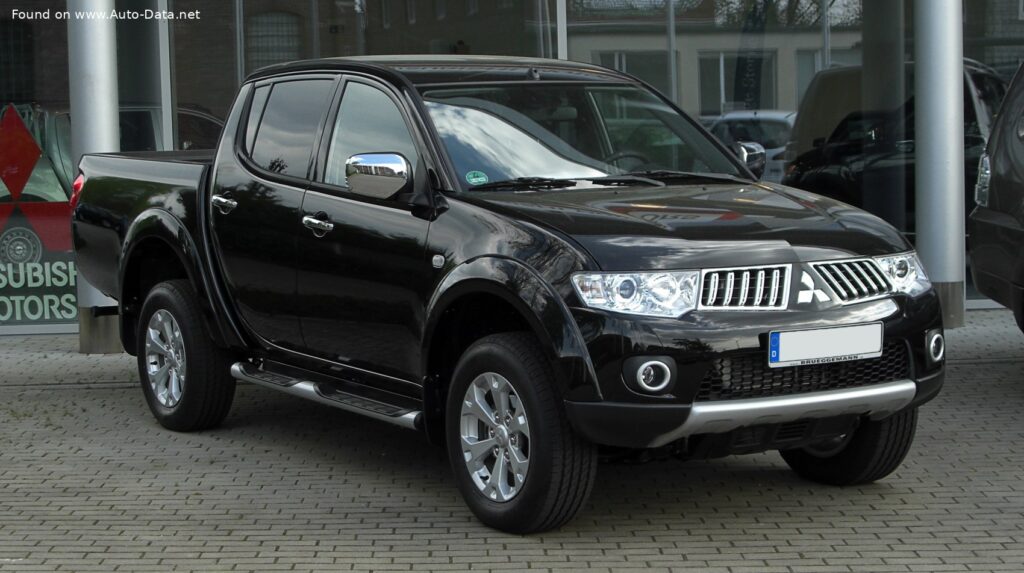
The Mitsubishi L200, known as the Triton in many markets, is a long-running series of robust and versatile pickup trucks from the Japanese automaker. The fifth generation, designated the L200 V, was introduced in 2014 and continued in production until 2018 for this particular single cab variant. The Mitsubishi L200 V Single Cab 2.4d (154 Hp) 4WD was specifically engineered as a dedicated workhorse, targeting commercial users, tradespeople, and adventurers who prioritize durability, utility, and off-road capability. While not sold in the United States, the L200 has established a significant presence across Europe, Asia, Australia, Africa, and South America, becoming a strong competitor in the mid-size pickup segment. This generation built upon its predecessors’ reputation for ruggedness while introducing advancements in efficiency, comfort, and safety.
Powertrain & Engine Architecture
The Mitsubishi L200 V Single Cab 2.4d (154 Hp) 4WD is powered by Mitsubishi’s 4N15 diesel engine, a 2.4-liter (2442 cm³ or 149.02 cu. in.) inline-four powerplant. This engine represents modern diesel engineering, featuring a DOHC (Double Overhead Camshaft) valvetrain with 4 valves per cylinder, a common rail fuel injection system, and forced induction via a turbocharger with an intercooler. These technologies combine to deliver 154 horsepower at 3500 rpm, a commendable output for a utility-focused diesel engine of this displacement. Crucially for a pickup truck, the engine produces 280.27 lb.-ft. of torque, available across a broad and usable rev range from 1500 to 2500 rpm. This low-end torque is vital for hauling heavy loads, towing, and navigating challenging off-road conditions.
Performance figures for the L200 V Single Cab 2.4d are practical rather than sporty. It accelerates from 0 to 60 mph in approximately 11.6 seconds, with a top speed of around 105 mph (169 km/h). These numbers underscore its design as a utilitarian vehicle, where reliability and load-carrying capacity are prioritized over outright speed. The powertrain architecture is a traditional front, longitudinal engine layout, paired with a robust 6-speed manual transmission. This combination allows the driver precise control over power delivery, particularly beneficial in towing or off-road scenarios. The standard all-wheel-drive (4WD) system further enhances its capability, providing excellent traction and stability across diverse terrains and weather conditions.
Fuel efficiency is a strong suit for this diesel workhorse, considering its 4WD capability and size. The combined fuel economy is rated at 34.1 US mpg (6.9 l/100 km), with urban consumption at 28.7 US mpg (8.2 l/100 km) and extra-urban at an impressive 38.6 US mpg (6.1 l/100 km). These figures are competitive within its segment and contribute to lower running costs for commercial operators. The engine meets the stringent Euro 6b emission standard, indicating a commitment to environmental responsibility through reduced CO2 emissions of 180 g/km and the inclusion of a particulate filter. The engine oil capacity is 8.4 liters (8.88 US quarts), and the cooling system holds 7.7 liters (8.14 US quarts), indicating robust engineering for sustained heavy use.
Driving Characteristics
The 154 hp 2.4d engine, coupled with the 6-speed manual transmission, provides a usable and predictable driving experience. While not offering the rapid acceleration of higher-output engines, the L200 V Single Cab delivers ample torque for everyday tasks and demanding work situations. The gear ratios are tuned for maximizing torque in the lower gears, making it well-suited for towing and off-road driving. Compared to potential higher-output versions (not widely available in single cab configuration), this variant prioritizes fuel efficiency and durability over outright performance. The manual transmission provides the driver with full control over gear selection, allowing for precise engine braking and optimal power delivery in various conditions. The 4WD system, selectable between 2H, 4H, and 4L modes, enhances traction and stability on loose surfaces, making it a capable off-road performer.
Equipment & Trim Levels
The Mitsubishi L200 V Single Cab 2.4d (154 Hp) 4WD was typically positioned as an entry-level or mid-range offering within the L200 lineup, focusing on functionality and value. Standard features generally included air conditioning, power steering, central locking, and an AM/FM radio with CD player. The interior upholstery was typically vinyl or a durable cloth material, designed for practicality and ease of cleaning. The dashboard configuration was functional and straightforward, prioritizing ergonomics and ease of use. Optional extras available for this trim could include power windows, power mirrors, a more advanced audio system, and alloy wheels. Safety features typically included ABS (Anti-lock Braking System) and driver and passenger airbags. The single cab configuration itself was a defining feature, offering two seats and a spacious cargo bed.
Chassis & Braking
The L200 V employs a chassis designed for durability and load-bearing. The front suspension features a double wishbone setup, providing a balance of ride comfort and handling precision. The rear suspension consists of a dependent suspension system with two longitudinal semi-elliptic leaf springs, optimized for carrying heavy loads and withstanding commercial use. Braking is handled by ventilated discs at the front for effective heat dissipation and consistent performance, while the rear utilizes durable drum brakes, common for utility vehicles due to their reliability and cost-effectiveness. An Anti-lock Braking System (ABS) is standard, enhancing safety by preventing wheel lock-up during hard braking. Steering is managed by a rack and pinion system, complemented by electric power steering, offering lighter steering effort at low speeds and more feedback at higher speeds. The L200 V rides on 205/80 R16 tires mounted on 6J x 16 wheel rims, a practical choice offering a balance of on-road comfort and off-road traction.
Market Reception & Comparison
Critics generally viewed the Mitsubishi L200 V Single Cab 2.4d (154 Hp) 4WD as a competent and reliable workhorse. Its fuel economy was praised, particularly for a 4WD pickup, and its durability was considered a strong point. Compared to other trims in the L200 lineup, this variant offered a more affordable entry point, making it attractive to budget-conscious buyers and fleet operators. While higher-output versions offered more performance, they also came with a higher price tag and potentially reduced fuel efficiency. Compared to competitors like the Toyota Hilux and Ford Ranger, the L200 often offered a more competitive price point and a comparable level of reliability. However, some critics noted that the interior was less refined than some of its rivals. Overall, the L200 V Single Cab 2.4d was well-regarded as a practical and dependable pickup truck for those prioritizing utility and value.
Technical Specifications
| Category | Specification |
| Brand | Mitsubishi |
| Model | L200 |
| Generation | L200 V Single Cab |
| Type (Engine) | 2.4d (154 Hp) 4WD |
| Start of Production | 2015 |
| End of Production | 2018 |
| Powertrain Architecture | Internal Combustion engine |
| Body type | Pick-up |
| Seats | 2 |
| Doors | 2 |
| Fuel consumption (economy) – urban | 28.7 US mpg (8.2 l/100 km) |
| Fuel consumption (economy) – extra urban | 38.6 US mpg (6.1 l/100 km) |
| Fuel consumption (economy) – combined | 34.1 US mpg (6.9 l/100 km) |
| CO2 emissions | 180 g/km |
| Fuel Type | Diesel |
| Acceleration 0 – 60 mph | 11.6 sec |
| Maximum speed | 105.01 mph (169 km/h) |
| Emission standard | Euro 6b |
| Weight-to-power ratio | 11.6 kg/Hp, 86 Hp/tonne |
| Weight-to-torque ratio | 4.7 kg/Nm, 212.3 Nm/tonne |
| Power | 154 Hp @ 3500 rpm |
| Power per liter | 63.1 Hp/l |
| Torque | 280.27 lb.-ft. @ 1500-2500 rpm (380 Nm) |
| Engine layout | Front, Longitudinal |
| Engine Model/Code | 4N15 |
| Engine displacement | 2.4 Liters (2442 cm³, 149.02 cu. in.) |
| Number of cylinders | 4 |
| Engine configuration | Inline |
| Cylinder Bore | 3.39 in. (86 mm) |
| Piston Stroke | 4.14 in. (105.1 mm) |
| Compression ratio | 15.5:1 |
| Number of valves per cylinder | 4 |
| Fuel injection system | Diesel Commonrail |
| Engine aspiration | Turbocharger, Intercooler |
| Valvetrain | DOHC |
| Engine oil capacity | 8.88 US qt (8.4 l) |
| Coolant | 8.14 US qt (7.7 l) |
| Engine systems | Particulate filter |
| Kerb Weight | 3946.27 lbs. (1790 kg) |
| Max. weight | 6283.17 lbs. (2850 kg) |
| Max load | 2336.9 lbs. (1060 kg) |
| Fuel tank capacity | 19.81 US gal (75 l) |
| Permitted trailer load with brakes (12%) | 7716.18 lbs. (3500 kg) |
| Permitted trailer load without brakes | 1653.47 lbs. (750 kg) |
| Permitted towbar download | 308.65 lbs. (140 kg) |
| Length | 200 in. (5080 mm) |
| Width | 70.28 in. (1785 mm) |
| Height | 70.08 in. (1780 mm) |
| Wheelbase | 118.11 in. (3000 mm) |
| Front track | 59.84 in. (1520 mm) |
| Rear (Back) track | 59.65 in. (1515 mm) |
| Front overhang | 34.06 in. (865 mm) |
| Rear overhang | 47.83 in. (1215 mm) |
| Ride height (ground clearance) | 7.87 in. (200 mm) |
| Approach angle | 30.0° |
| Departure angle | 27.0° |
| Ramp-over (brakeover) angle | 24.0° |
| Drive wheel | All wheel drive (4×4) |
| Number of gears and type of gearbox | 6 gears, manual transmission |
| Front suspension | Double wishbone |
| Rear suspension | Dependent suspension of two longitudinal semi-elliptic leaf springs |
| Front brakes | Ventilated discs |
| Rear brakes | Drum |
| Assisting systems | ABS (Anti-lock braking system) |
| Steering type | Steering rack and pinion |
| Power steering | Electric Steering |
| Tires size | 205/80 R16 |
| Wheel rims size | 6J x 16 |
Legacy
The Mitsubishi L200, including the V generation Single Cab, remains a pillar in Mitsubishi’s global vehicle lineup, with a heritage stretching back to 1978. It has consistently been one of the brand’s best-selling models outside of North America, earning a reputation for unwavering reliability, exceptional durability, and impressive off-road capability. The Mitsubishi L200 V Single Cab 2.4d (154 Hp) 4WD specifically reinforced this legacy by offering a modernized package that balanced traditional ruggedness with improved efficiency and contemporary features. In the used car market, these models are generally regarded as reliable and affordable work vehicles. The 4N15 diesel engine, while not without its potential maintenance needs (like any diesel engine, proper servicing is crucial), is generally considered durable. The availability of parts is good in most regions where the L200 was sold, making maintenance relatively straightforward. The single cab configuration, while limiting passenger capacity, continues to appeal to those who prioritize cargo space and utility.