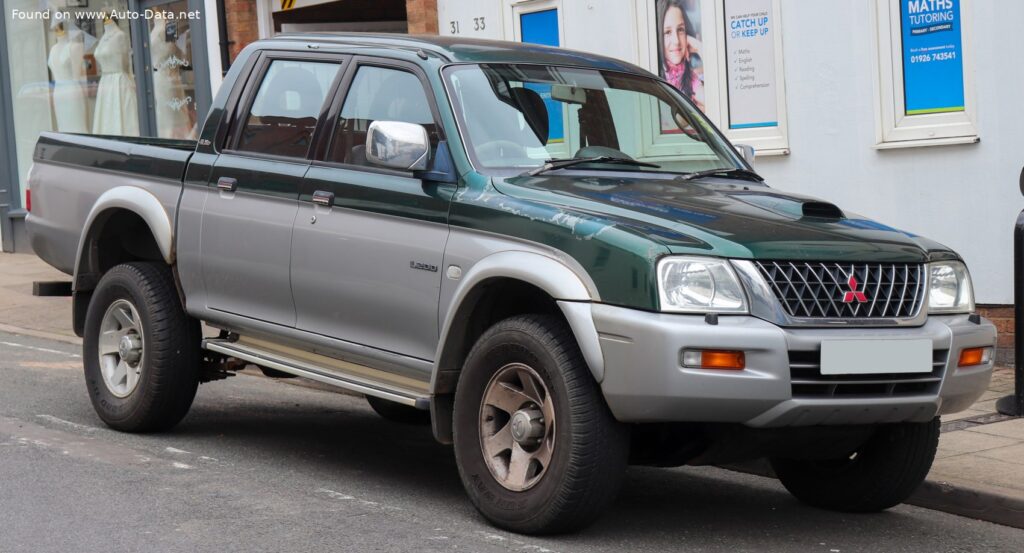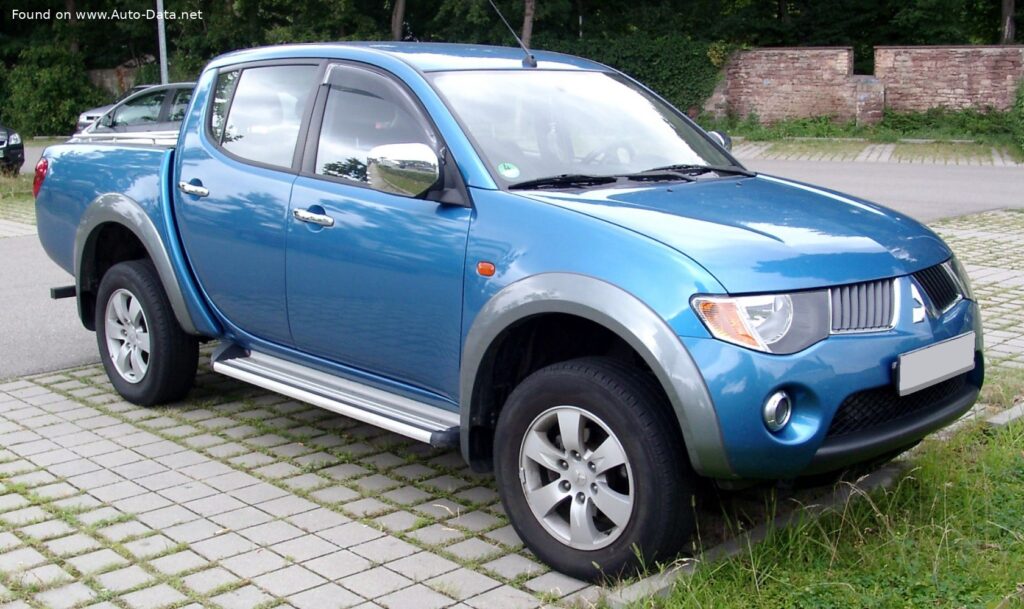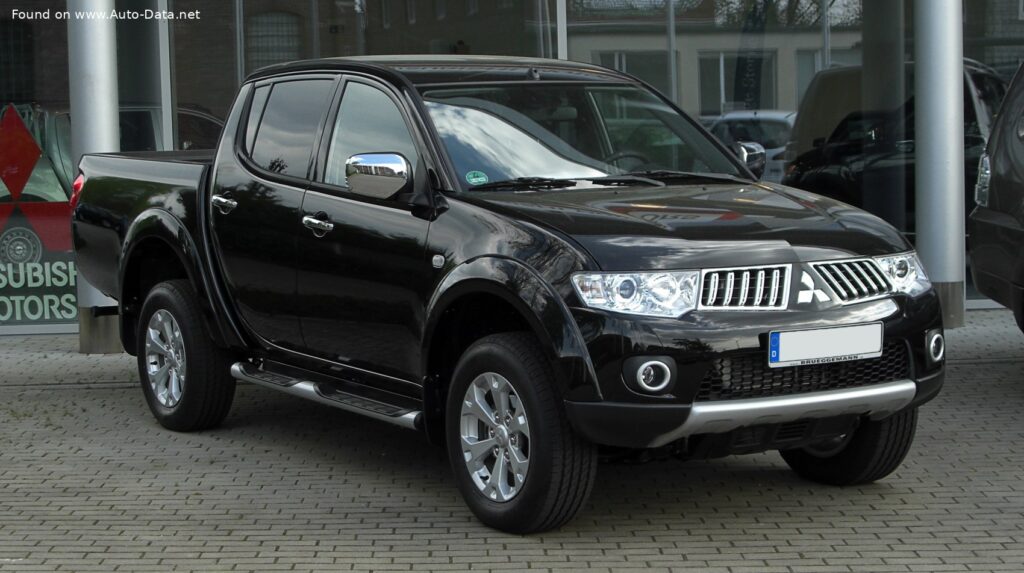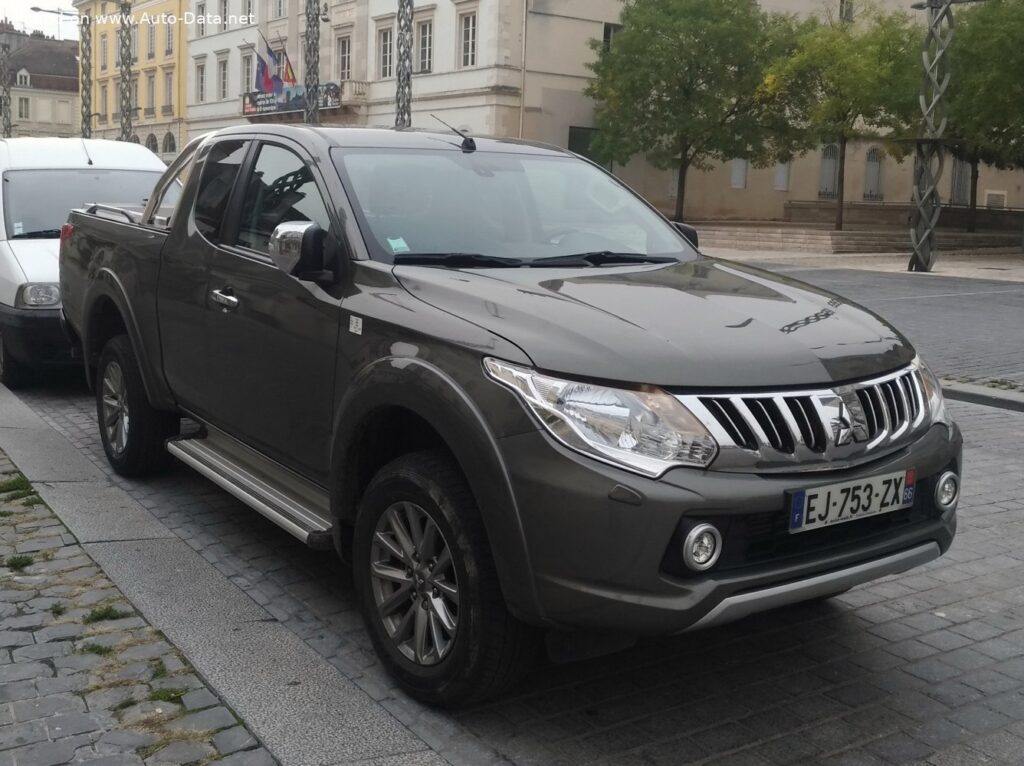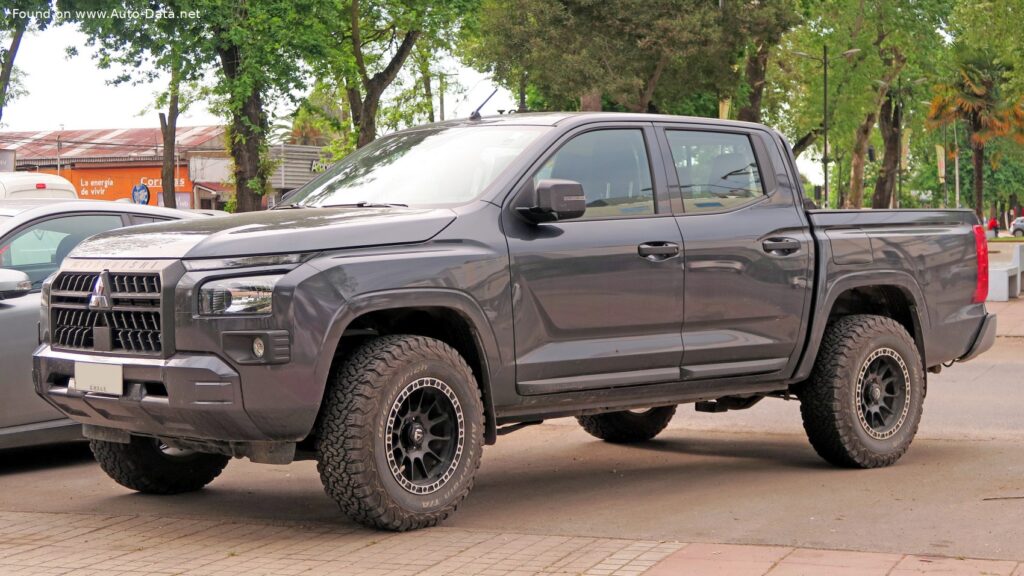
The 2023 Mitsubishi L200 VI Double Cab 2.4 MIVEC (150 Hp) 4WD represents the latest iteration of a globally significant mid-size pickup truck, known as the Triton in many international markets. Introduced for the 2023 model year, this sixth-generation L200 builds upon a long legacy of robust utility, enhanced performance, and modern features. The 2.4 MIVEC (150 Hp) 4WD variant specifically occupies a core position within the L200 VI lineup, designed to appeal to a broad range of customers – from commercial users requiring a dependable work vehicle to private buyers seeking a versatile family transport with off-road capability – across key markets in Europe, Asia, Australia, and beyond. While not sold in the United States, the L200 VI reflects global trends in pickup truck design, prioritizing durability, towing capacity, and fuel efficiency.
Powertrain & Engine Architecture
The heart of the Mitsubishi L200 VI Double Cab 2.4 MIVEC (150 Hp) 4WD is its 2.4-liter MIVEC (Mitsubishi Innovative Valve timing Electronic Control) diesel engine, internally designated as the 4N16. This inline four-cylinder engine exemplifies Mitsubishi’s commitment to efficient and reliable power delivery in its commercial vehicles. Displacing 2442 cm3 (149.02 cubic inches), the engine produces 150 horsepower at 3500 rpm. This output is coupled with a sophisticated common rail direct injection system and a turbocharger equipped with an intercooler, ensuring robust performance for both everyday driving and more demanding tasks.
Torque is a critical attribute for a pickup truck, and the 2.4 MIVEC engine delivers admirably in this regard. It generates 330 Nm (243.4 lb-ft) of torque across a broad and usable range, from 1500 to 3000 rpm. This wide torque band is essential for hauling heavy loads, towing trailers, and navigating challenging off-road conditions, providing ample pulling power even at low engine speeds. The engine’s design incorporates a double overhead camshaft (DOHC) valvetrain with four valves per cylinder, contributing to its efficiency and responsiveness. A relatively high compression ratio of 15.2:1 further optimizes diesel combustion.
Power is transmitted to the wheels through a durable 6-speed manual transmission, offering the driver precise control and maximizing the engine’s performance across various driving conditions. The L200 VI Double Cab utilizes an all-wheel-drive (4×4) powertrain architecture, a hallmark of Mitsubishi’s off-road expertise. Typically, the system operates in rear-wheel drive, engaging the front wheels as needed via an electrically or mechanically operated clutch. This selectable 4WD system enhances traction and control, making the L200 a reliable companion in adverse weather or challenging terrain.
Driving Characteristics
The 150 hp / 6-speed manual combination in the L200 VI Double Cab 2.4 MIVEC 4WD provides a balanced driving experience. While not offering the outright acceleration of higher-output variants, it delivers sufficient power for everyday tasks and moderate towing duties. The broad torque band ensures responsive performance in most situations, minimizing the need for frequent downshifts. Compared to a hypothetical gasoline engine of similar horsepower, the diesel engine provides superior low-end torque, making it more suitable for hauling and off-road driving. The 6-speed manual transmission allows for precise gear selection, enabling the driver to optimize engine performance for different conditions. Compared to automatic transmission options available on other L200 variants, the manual offers greater driver control and potentially improved fuel economy, though it requires more driver involvement.
Equipment & Trim Levels
The Mitsubishi L200 VI Double Cab 2.4 MIVEC (150 Hp) 4WD typically serves as a mid-range offering within the broader L200 lineup. Standard equipment generally includes air conditioning, power windows, power door locks, and a basic audio system with USB connectivity. Interior upholstery is typically a durable cloth material, designed to withstand the rigors of commercial use. The dashboard configuration is functional and straightforward, prioritizing ease of use. Optional extras commonly available for this trim level include alloy wheels, a touchscreen infotainment system with smartphone integration (Apple CarPlay and Android Auto), a rearview camera, and parking sensors. Higher trim levels offer more luxurious features such as leather upholstery, automatic climate control, and advanced driver-assistance systems (ADAS).
Chassis & Braking
The L200 VI Double Cab’s chassis is built for durability, employing a robust ladder frame construction. The front suspension utilizes a double wishbone setup with independent coil springs and a transverse stabilizer bar, designed to provide a comfortable ride and precise steering. The rear suspension, crucial for load-carrying capacity, features a rigid axle suspension with leaf springs – a proven configuration for heavy-duty applications. This combination allows the L200 to handle a substantial maximum payload capacity of 1075-1100 kg (2369.97 – 2425.08 lbs), with a gross vehicle weight of 3000 kg (6613.87 lbs). Braking is provided by ventilated discs at the front (290 mm) and drum brakes at the rear (295 mm), complemented by an Anti-lock Braking System (ABS) for enhanced safety and control during emergency stops. Hydraulic power steering, utilizing a rack and pinion system, provides direct feedback and manageable effort.
Market Reception & Comparison
The Mitsubishi L200 VI Double Cab 2.4 MIVEC (150 Hp) 4WD has generally received positive reviews for its blend of practicality, durability, and off-road capability. Critics have praised its robust construction, comfortable ride (for a pickup truck), and the efficiency of its diesel engine. Compared to higher-output L200 variants, the 150 hp version offers a more affordable entry point into the L200 range, making it attractive to budget-conscious buyers. Fuel economy is generally good for a vehicle of its size and type, although it may not match the efficiency of some smaller or lighter pickups. Reliability is a strong point for the L200, with Mitsubishi having a long-standing reputation for building durable and dependable vehicles. Compared to competitors like the Toyota Hilux and Ford Ranger, the L200 often offers a more competitive price point, although it may lack some of the more advanced features found in those models.
Technical Specifications
| General Information | |
| Brand | Mitsubishi |
| Model | L200 |
| Generation | L200 VI Double Cab |
| Type (Engine) | 2.4 MIVEC (150 Hp) 4WD |
| Start of Production | 2023 year |
| Powertrain Architecture | Internal Combustion engine |
| Body type | Pick-up |
| Seats | 5 |
| Doors | 4 |
| Performance Specs | |
| Fuel Type | Diesel |
| Weight-to-power ratio | 12.7 kg/Hp, 78.9 Hp/tonne |
| Weight-to-torque ratio | 5.8 kg/Nm, 173.7 Nm/tonne |
| Engine Specs | |
| Power | 150 Hp @ 3500 rpm. |
| Power per liter | 61.4 Hp/l |
| Torque | 330 Nm @ 1500-3000 rpm. (243.4 lb.-ft. @ 1500-3000 rpm.) |
| Engine layout | Front, Longitudinal |
| Engine Model/Code | 4N16 |
| Engine displacement | 2442 cm3 (149.02 cu. in.) |
| Number of cylinders | 4 |
| Engine configuration | Inline |
| Cylinder Bore | 86 mm (3.39 in.) |
| Piston Stroke | 105.1 mm (4.14 in.) |
| Compression ratio | 15.2:1 |
| Number of valves per cylinder | 4 |
| Fuel injection system | Diesel Commonrail |
| Engine aspiration | Turbocharger, Intercooler |
| Valvetrain | DOHC |
| Engine oil capacity | 6.7 l (7.08 US qt | 5.9 UK qt) |
| Coolant | 7.7 l (8.14 US qt | 6.78 UK qt) |
| Space, Volume and Weights | |
| Kerb Weight | 1900-1925 kg (4188.78 – 4243.9 lbs.) |
| Max. weight | 3000 kg (6613.87 lbs.) |
| Max load | 1075-1100 kg (2369.97 – 2425.08 lbs.) |
| Fuel tank capacity | 75 l (19.81 US gal | 16.5 UK gal) |
| Dimensions | |
| Length | 5320 mm (209.45 in.) |
| Width | 1865 mm (73.43 in.) |
| Height | 1775-1795 mm (69.88 – 70.67 in.) |
| Wheelbase | 3130 mm (123.23 in.) |
| Front track | 1570 mm (61.81 in.) |
| Rear (Back) track | 1565 mm (61.61 in.) |
| Front overhang | 890 mm (35.04 in.) |
| Rear overhang | 1300 mm (51.18 in.) |
| Ride height (ground clearance) | 203-228 mm (7.99 – 8.98 in.) |
| Minimum turning circle (turning diameter) | 12.4 m (40.68 ft.) |
| Approach angle | 28.9-30.4° |
| Departure angle | 21.9-22.8° |
| Ramp-over (brakeover) angle | 23.4° |
| Drivetrain, Brakes and Suspension Specs | |
| Drivetrain Architecture | The Internal combustion engine (ICE) drives the rear wheels permanently, and the front wheels are driven through an electrically or mechanically operated clutch if necessary. |
| Drive wheel | All-wheel drive (4×4) |
| Number of gears and type of gearbox | 6 gears, manual transmission |
| Front suspension | Double wishbone, Independent coil spring, Transverse stabilizer |
| Rear suspension | Rigid axle suspension, Leaf spring |
| Front brakes | Ventilated discs, 290 mm |
| Rear brakes | Drum, 295 mm |
| Assisting systems | ABS (Anti-lock braking system) |
| Steering type | Steering rack and pinion |
| Power steering | Hydraulic Steering |
| Tires size | 205/80 R16; 265/70 R16 |
| Wheel rims size | 6J x 16; 7.5J x 16 |
Legacy
The Mitsubishi L200, and by extension the L200 VI Double Cab 2.4 MIVEC (150 Hp) 4WD, benefits from the model’s established reputation for reliability and durability. The 4N16 engine, while not without its known maintenance considerations (such as potential issues with the diesel particulate filter in some regions), is generally considered a robust and long-lasting unit when properly maintained. On the used car market, L200s are often sought after for their value and practicality. The 2023 model, with its updated features and improved refinement, is expected to hold its value well. The long-term legacy of the L200 lies in its ability to consistently deliver a dependable and versatile pickup truck experience to customers around the globe, solidifying its position as a key player in the mid-size pickup segment.