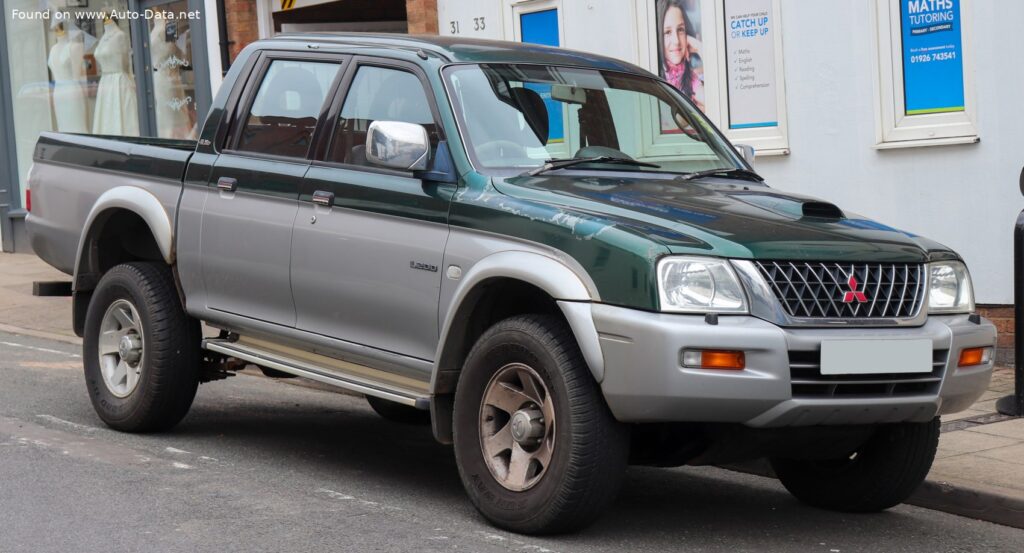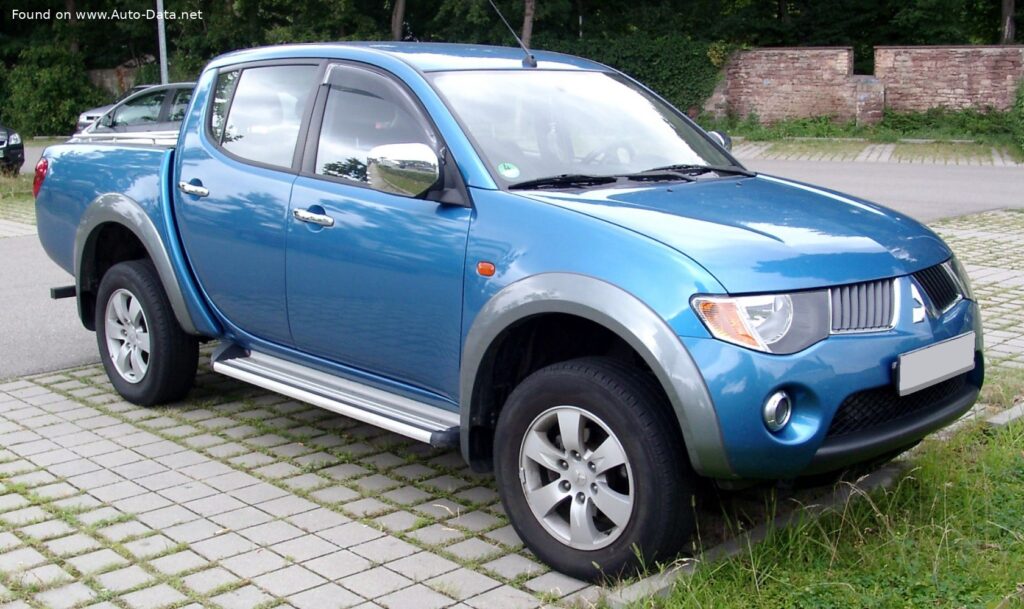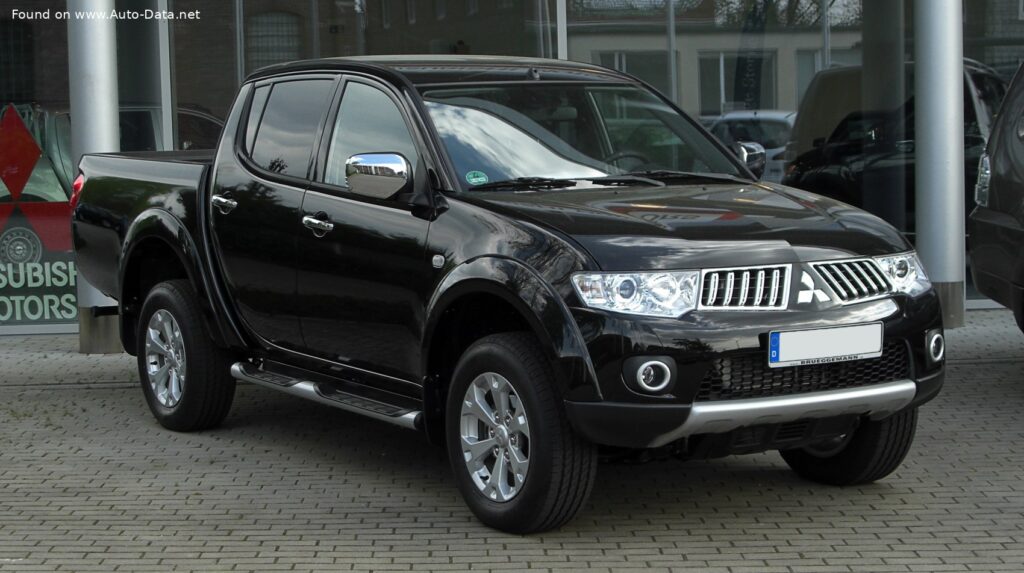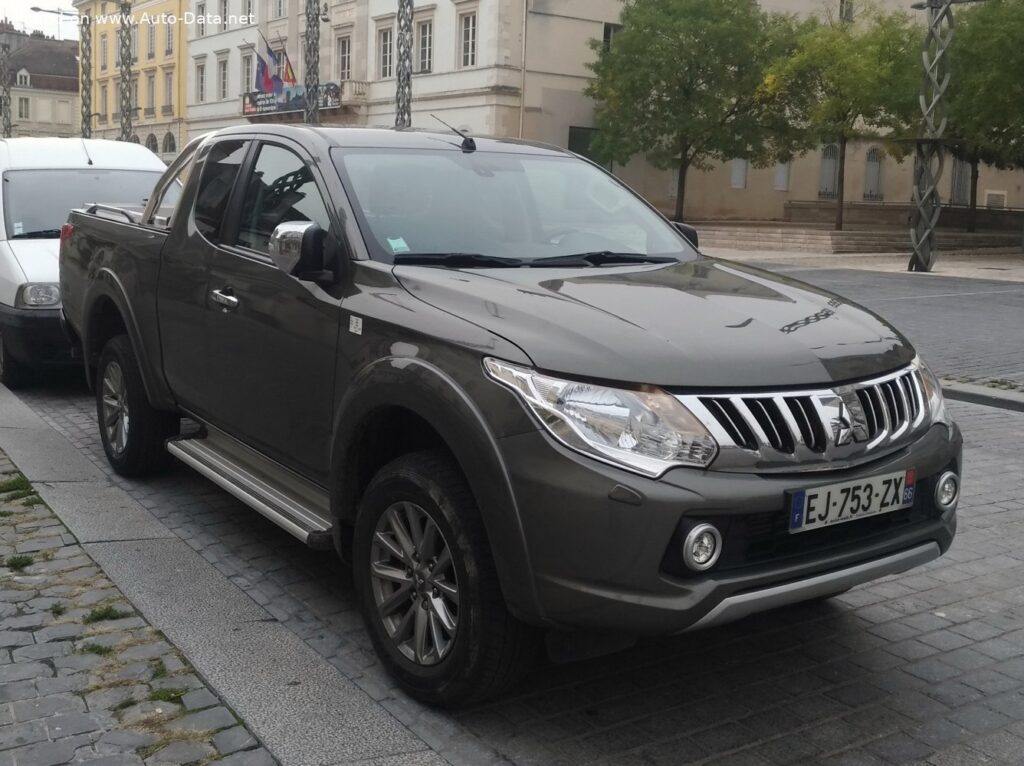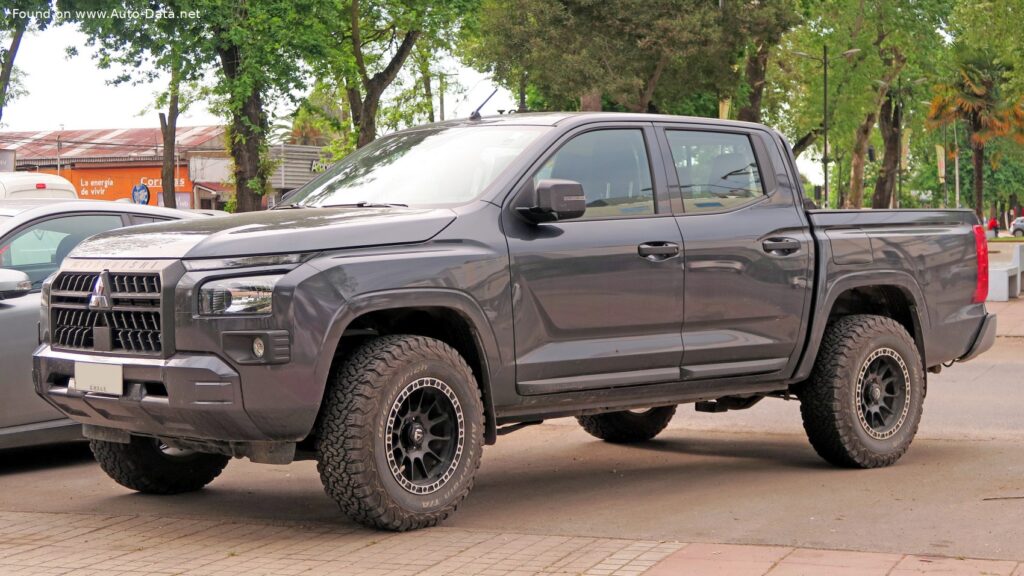
The Mitsubishi L200, known as the Triton in several markets, has long been a cornerstone of the global pickup truck segment, renowned for its rugged durability, off-road capability, and versatility. The sixth generation, specifically the Mitsubishi L200 VI Double Cab 2.4 MIVEC (150 Hp) 4WD Automatic, launched in 2023, represents the latest evolution of this venerable workhorse. This iteration builds upon a rich heritage while integrating modern technology, enhanced safety features, and improved efficiency to meet the demands of contemporary users across Europe, Asia, Australia, and other international markets where it serves as a crucial utility and lifestyle vehicle. While not available in the North American market, the L200 VI Double Cab plays a vital role as a robust and dependable competitor in its segment globally, offering a compelling blend of utility, comfort, and advanced powertrain options. This specific configuration, featuring a 2.4-liter MIVEC diesel engine, four-wheel drive, and an automatic transmission, positions it as a versatile option for both demanding professional use and adventurous personal travel.
Engine and Performance: The 2.4 MIVEC Powerplant
At the heart of the 2023 Mitsubishi L200 VI Double Cab lies the 2.4-liter MIVEC (Mitsubishi Innovative Valve timing Electronic Control system) diesel engine, a sophisticated powerplant designed for a balance of power, efficiency, and refined operation. Codenamed 4N16, this inline four-cylinder engine features a Double Overhead Camshaft (DOHC) valvetrain with four valves per cylinder, optimizing airflow for enhanced performance. Fuel delivery is managed by a common rail direct injection system, ensuring precise fuel metering and combustion efficiency. Further boosting its capabilities, the engine is equipped with a turbocharger and an intercooler, which significantly increase air density entering the cylinders, leading to greater power output and improved response across the rev range.
This 2.4-liter MIVEC unit generates a respectable 150 horsepower at 3500 rpm, translating to a power per liter output of 61.4 Hp/l, indicative of its efficient design. More importantly for a pickup truck, it delivers a substantial 330 lb.-ft. (330 Nm) of torque, available across a broad and usable band from 1500 to 3000 rpm. This low-end torque is crucial for towing, hauling heavy loads, and navigating challenging off-road terrain, providing the necessary grunt without excessive revving. The engine’s compression ratio of 15.2:1 is optimized for diesel combustion, contributing to its fuel efficiency. Paired with a smooth 6-speed automatic transmission, the power is delivered seamlessly, allowing for effortless cruising on highways and precise control during intricate maneuvers. The drivetrain architecture ensures constant power to the rear wheels, with the front wheels engaging via an electrically or mechanically operated clutch when the all-wheel-drive system is activated, offering flexibility and traction in varied conditions.
Design and Features of the Mitsubishi L200 VI Double Cab
The 2023 Mitsubishi L200 VI Double Cab presents a contemporary and assertive design, reflecting its capabilities. As a double cab pickup, it offers the practicality of a four-door configuration with seating for five occupants, making it suitable for both family use and work crews. Its robust exterior styling is characterized by a commanding presence, with a length of 209.45 inches (5320 mm), a width of 73.43 inches (1865 mm), and a height ranging from 69.88 to 70.67 inches (1775-1795 mm), depending on the specific trim and suspension setup. The substantial wheelbase of 123.23 inches (3130 mm) contributes to both cabin space and ride stability.
Designed for utility, the L200 VI Double Cab offers a generous maximum payload capacity ranging from 2226.67 to 2380.99 lbs. (1010-1080 kg), making it a formidable hauler. Its off-road prowess is underscored by impressive ground clearance, varying from 7.99 to 8.98 inches (203-228 mm), along with favorable approach (28.9-30.4°), departure (21.9-22.8°), and ramp-over (23.4°) angles. These attributes enable it to tackle challenging landscapes with confidence. The suspension system comprises an independent double wishbone setup with coil springs and a transverse stabilizer at the front, providing a comfortable ride and precise steering. The rear features a rigid axle with robust leaf springs, a time-tested configuration optimized for heavy loads and durability.
Safety and control are paramount in modern vehicles, and the L200 VI is equipped with ventilated disc brakes (320 mm) at the front and drum brakes (295 mm) at the rear, complemented by an Anti-lock Braking System (ABS) for enhanced stopping power and stability. Hydraulic power steering ensures responsive and manageable steering, whether navigating tight urban spaces or rugged trails. The vehicle offers a range of tire sizes, including 205/80 R16, 265/70 R16, and 265/60 R18, mounted on corresponding wheel rims, allowing for customization based on intended use and aesthetic preference. The 19.81 US gallon (75-liter) fuel tank capacity ensures an adequate driving range for long journeys or extended work periods.
Mitsubishi L200 VI Double Cab: Variant Positioning and Comparison
The 2.4 MIVEC (150 Hp) 4WD Automatic variant of the L200 VI Double Cab occupies a mid-range position within the broader lineup. It’s designed to appeal to buyers seeking a balance between capability, comfort, and affordability. Compared to lower-trim models, this configuration typically includes more standard features and a more refined interior. Conversely, higher-end trims often boast more powerful engine options (potentially larger displacement or higher output versions of the 2.4 MIVEC), upgraded suspension components, and premium interior appointments.
Compared to potential higher-output diesel variants, the 150 hp engine prioritizes fuel efficiency and a more relaxed driving experience. While it may not offer the same level of outright performance for heavy towing or aggressive off-roading, it provides ample power for everyday tasks and moderate workloads. The automatic transmission, while convenient, may not offer the same level of control or fuel economy as a manual transmission, but it caters to drivers who prefer ease of use, particularly in urban environments or challenging terrain. Maintenance on the 2.4 MIVEC engine is generally considered straightforward, although diesel engines typically require more diligent servicing (oil changes, fuel filter replacements) than gasoline counterparts. The target audience for this variant includes both commercial users needing a reliable work vehicle and individuals seeking a versatile pickup for personal use, combining practicality with a degree of comfort and convenience.
Chassis & Braking
The L200 VI Double Cab utilizes a robust ladder-frame chassis, a traditional construction method for pickup trucks known for its strength and durability. This chassis provides a solid foundation for handling heavy loads and navigating rough terrain. The front suspension features independent double wishbones with coil springs and a stabilizer bar, contributing to improved ride comfort and handling precision. The rear suspension employs a leaf spring setup, optimized for load-carrying capacity and durability.
Braking duties are handled by ventilated disc brakes at the front, providing strong stopping power, and drum brakes at the rear, which are a cost-effective solution for less demanding braking tasks. The inclusion of an Anti-lock Braking System (ABS) enhances safety by preventing wheel lockup during hard braking, maintaining steering control. The braking system is tuned to provide reliable performance even when the vehicle is heavily loaded or operating on uneven surfaces. The steering system is a hydraulic power-assisted rack and pinion setup, offering responsive and precise steering control.
Market Reception & Comparison
The Mitsubishi L200 VI Double Cab, including the 2.4 MIVEC (150 Hp) 4WD Automatic variant, has generally received positive reviews from automotive critics. Praise is often directed towards its robust build quality, comfortable ride (for a pickup truck), and capable 4WD system. The 2.4-liter diesel engine is recognized for its balance of power and fuel efficiency, although some reviewers note that it may not be as refined or powerful as some of its competitors.
Fuel economy is a strong point for this variant, typically achieving respectable figures for a vehicle of its size and capability. Reliability is another key strength, with Mitsubishi having a long-standing reputation for producing durable and dependable vehicles. Compared to other trims in the L200 lineup, the 150 hp automatic version offers a compelling value proposition, providing a good balance of features, performance, and affordability. Against competitors like the Toyota Hilux and Ford Ranger, the L200 often stands out for its comfortable ride and spacious cabin, although it may not match the outright performance or brand recognition of some rivals.
Technical Specifications
| Attribute | Specification |
| General Information | |
| Brand | Mitsubishi |
| Model | L200 |
| Generation | L200 VI Double Cab |
| Type (Engine) | 2.4 MIVEC (150 Hp) 4WD Automatic |
| Start of Production | 2023 year |
| Powertrain Architecture | Internal Combustion engine |
| Body type | Pick-up |
| Seats | 5 |
| Doors | 4 |
| Performance Specs | |
| Fuel Type | Diesel |
| Weight-to-power ratio | 12.8 kg/Hp, 78.1 Hp/tonne |
| Weight-to-torque ratio | 5.8 kg/Nm, 171.9 Nm/tonne |
| Engine Specs | |
| Power | 150 Hp @ 3500 rpm. |
| Power per liter | 61.4 Hp/l |
| Torque | 330 Nm @ 1500-3000 rpm (243.4 lb.-ft. @ 1500-3000 rpm) |
| Engine layout | Front, Longitudinal |
| Engine Model/Code | 4N16 |
| Engine displacement | 2442 cm3 (149.02 cu. in. / 2.4 Liters) |
| Number of cylinders | 4 |
| Engine configuration | Inline |
| Cylinder Bore | 86 mm (3.39 in.) |
| Piston Stroke | 105.1 mm (4.14 in.) |
| Compression ratio | 15.2:1 |
| Number of valves per cylinder | 4 |
| Fuel injection system | Diesel Commonrail |
| Engine aspiration | Turbocharger, Intercooler |
| Valvetrain | DOHC |
| Engine oil capacity | 6.7 l (7.08 US qt) |
| Coolant | 7.7 l (8.14 US qt) |
| Space, Volume and Weights | |
| Kerb Weight | 1920-1990 kg (4232.88 – 4387.2 lbs.) |
| Max. weight | 3000 kg (6613.87 lbs.) |
| Max load | 1010-1080 kg (2226.67 – 2380.99 lbs.) |
| Fuel tank capacity | 75 l (19.81 US gal) |
| Dimensions | |
| Length | 5320 mm (209.45 in.) |
| Width | 1865 mm (73.43 in.) |
| Height | 1775-1795 mm (69.88 – 70.67 in.) |
| Wheelbase | 3130 mm (123.23 in.) |
| Front track | 1570 mm (61.81 in.) |
| Rear (Back) track | 1565 mm (61.61 in.) |
| Front overhang | 890 mm (35.04 in.) |
| Rear overhang | 1300 mm (51.18 in.) |
| Ride height (ground clearance) | 203-228 mm (7.99 – 8.98 in.) |
| Minimum turning circle (turning diameter) | 12.4 m (40.68 ft.) |
| Approach angle | 28.9-30.4° |
| Departure angle | 21.9-22.8° |
| Ramp-over (brakeover) angle | 23.4° |
| Drivetrain, Brakes and Suspension Specs | |
| Drivetrain Architecture | The Internal combustion engine (ICE) drives the rear wheels permanently, and the front wheels are driven through an electrically or mechanically operated clutch if necessary. |
| Drive wheel | All wheel drive (4×4) |
| Number of gears and type of gearbox | 6 gears, automatic transmission |
| Front suspension | Double wishbone, Independent coil spring, Transverse stabilizer |
| Rear suspension | Rigid axle suspension, Leaf spring |
| Front brakes | Ventilated discs, 320 mm |
| Rear brakes | Drum, 295 mm |
| Assisting systems | ABS (Anti-lock braking system) |
| Steering type | Steering rack and pinion |
| Power steering | Hydraulic Steering |
| Tires size | 205/80 R16; 265/70 R16; 265/60 R18 |
| Wheel rims size | 6J x 16; 7.5J x 16; 7.5J x 18 |
Legacy
The Mitsubishi L200 series boasts a formidable legacy as one of the most enduring and globally recognized pickup trucks. Since its inception, it has consistently delivered on its promise of reliability, utility, and off-road capability, earning a reputation as a true workhorse across diverse industries and terrains. The L200 VI Double Cab continues this tradition, adapting to modern demands without compromising its core strengths. The 4N16 2.4 MIVEC diesel engine, while relatively new to the L200 lineup, is based on a proven engine family and is expected to offer good long-term reliability with proper maintenance.
In the used car market, earlier generations of L200s are known for their durability and affordability, making them popular choices for buyers seeking a dependable work vehicle. The L200 VI Double Cab, with its modern features and improved refinement, is expected to hold its value well. Regular servicing, including oil changes, fuel filter replacements, and attention to the turbocharger and common rail injection system, will be crucial for maintaining the longevity of this powertrain. Overall, the Mitsubishi L200 VI Double Cab 2.4 MIVEC (150 Hp) 4WD Automatic represents a compelling option for buyers seeking a versatile, reliable, and capable pickup truck outside the North American market.