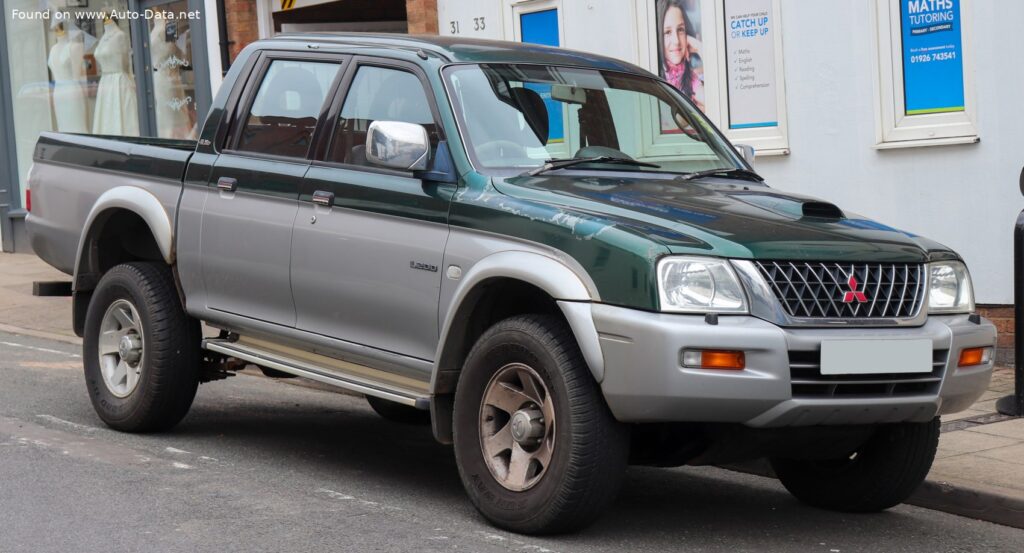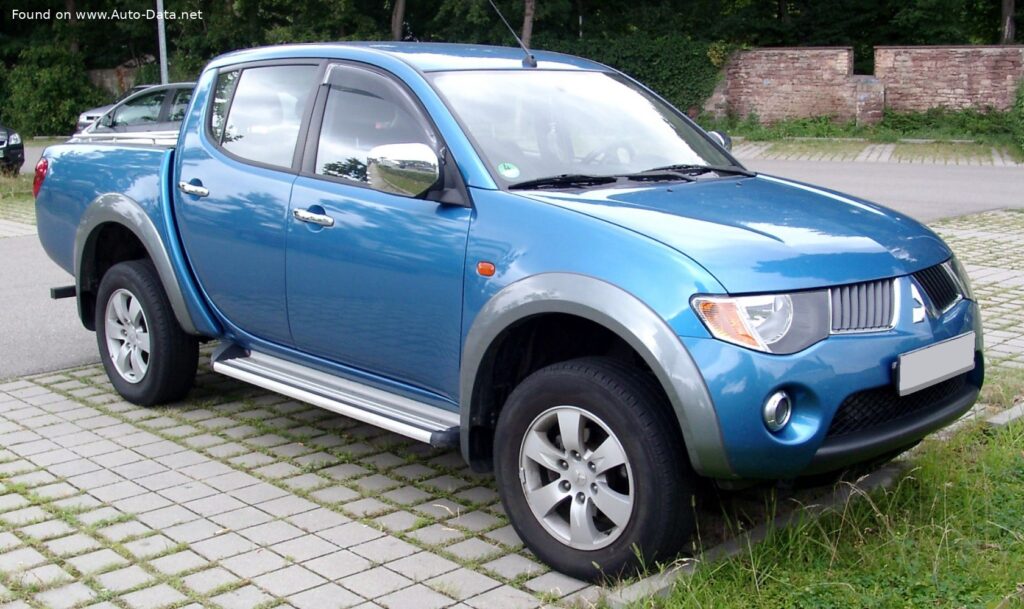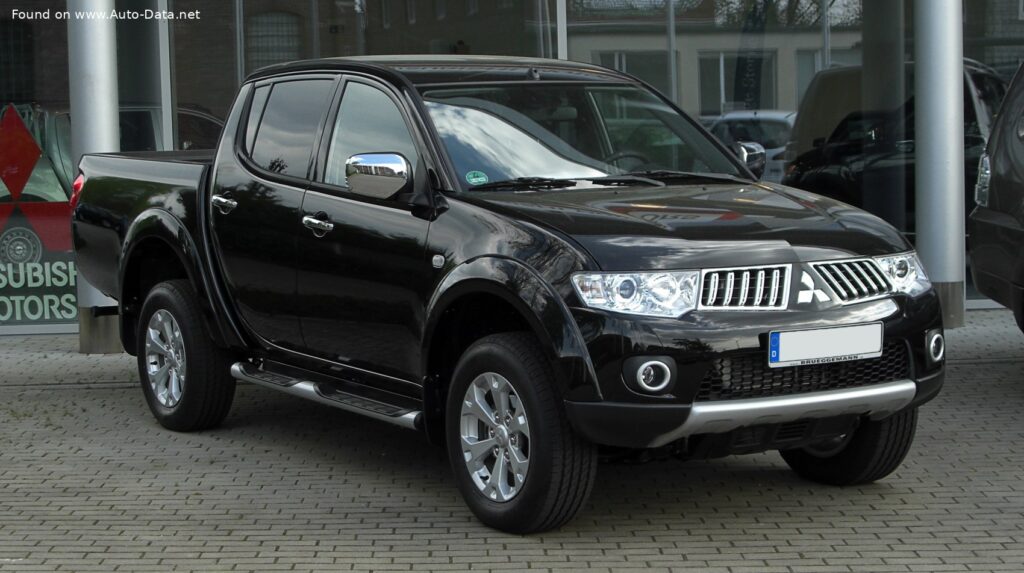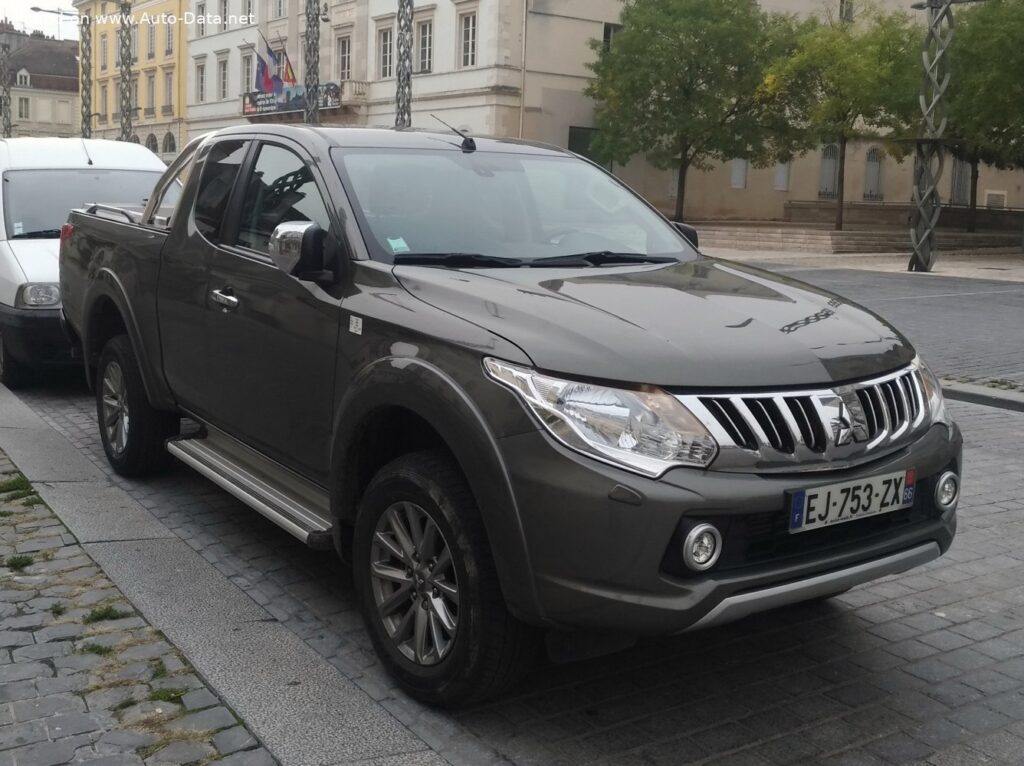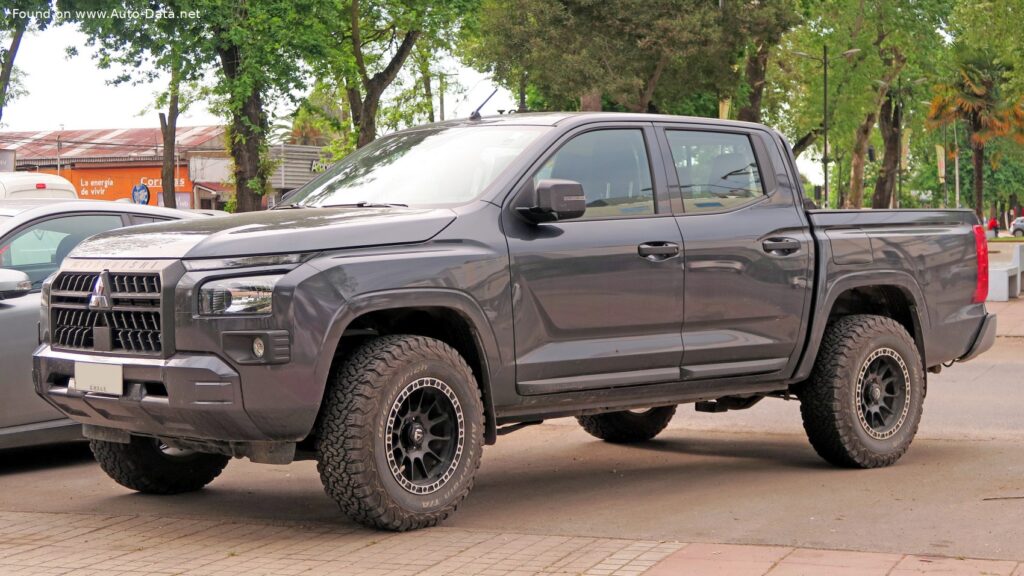
The Mitsubishi L200 VI Double Cab 2.4 MIVEC (201 Hp) represents the sixth generation of Mitsubishi’s highly successful mid-size pickup truck, a vehicle renowned globally for its rugged durability, versatility, and robust performance. Introduced in 2023, this iteration of the L200 (also known as the Triton in various markets such as Australia and Thailand) continues Mitsubishi’s legacy in the competitive pickup segment. While not officially sold in the United States, the L200 VI Double Cab plays a crucial role in numerous international markets, including Europe, Asia, Oceania, and Africa, where it serves as both a dependable work vehicle and a capable lifestyle truck. This specific variant, featuring the 2.4-liter MIVEC diesel engine producing 201 horsepower, targets customers who demand a blend of power, efficiency, and modern amenities in a practical four-door, five-seat pickup configuration.
Powertrain & Engine Architecture
At the heart of the Mitsubishi L200 VI Double Cab 2.4 MIVEC (201 Hp) lies a sophisticated 2.4-liter (2442 cm3 or 149.02 cu. in.) 4N16 inline-four diesel engine. This powerplant utilizes Mitsubishi’s Innovative Valve timing Electronic Control (MIVEC) system, a technology traditionally associated with gasoline engines but adapted here for diesel applications to optimize valve timing for improved fuel efficiency and power delivery across the RPM range. Further boosting its output and efficiency, the engine is equipped with a BiTurbocharger and an intercooler, ensuring a robust and responsive driving experience.
This refined diesel engine generates a substantial 201 horsepower at 3500 rpm, providing ample power for hauling, towing, and navigating various driving conditions. More impressively for a utility vehicle, it delivers a peak torque of 470 Nm (346.65 lb.-ft.) available across a broad rev band, from 1500 to 2750 rpm. This wide torque plateau is critical for strong acceleration from a standstill and effortless pulling power, whether carrying a heavy payload or towing a substantial trailer. The common rail direct fuel injection system and DOHC (Double Overhead Camshaft) valvetrain further contribute to the engine’s efficiency and clean combustion, helping it meet the stringent Euro 6 emission standards.
Power is channeled to the rear wheels via a durable 6-speed manual transmission, a choice that emphasizes driver engagement and control, particularly favored in markets where manual transmissions remain popular for their robustness and perceived efficiency. The powertrain architecture for this specific variant is rear-wheel drive, indicating its focus on payload capacity and on-road efficiency, though L200 models are widely available with advanced four-wheel-drive systems in other configurations. Fuel economy figures underscore the engine’s efficiency, with a combined rating of 30.9 – 29 US mpg (7.6-8.1 l/100 km), making it an economical choice for daily operations and long-distance travel. The vehicle also features a Start & Stop System and a Particulate Filter to further reduce emissions and fuel consumption.
Driving Characteristics
The 2.4 MIVEC (201 Hp) engine, paired with the 6-speed manual transmission in this rear-wheel-drive configuration, delivers a driving experience geared towards practicality and efficiency. Compared to higher-output L200 variants, or those equipped with four-wheel drive, this setup prioritizes fuel economy and on-road refinement. The broad torque band ensures responsive acceleration in everyday driving situations, and the manual transmission allows for precise control over gear selection, particularly useful when carrying a load or navigating hilly terrain. While not offering the outright performance of the more powerful engine options, the 201 hp variant provides sufficient power for most typical pickup truck duties.
The gear ratios are tuned to maximize fuel efficiency and provide a comfortable cruising experience. Lower gears offer ample torque for starting from a standstill or climbing steep inclines, while higher gears allow for relaxed highway driving. Compared to a comparable automatic transmission, the manual gearbox offers a more direct connection to the engine, enhancing driver engagement. However, it requires more driver input, especially in stop-and-go traffic. The rear-wheel-drive configuration contributes to a slightly lower overall weight, further enhancing fuel economy and handling on paved roads.
Equipment & Trim Levels
The Mitsubishi L200 VI Double Cab 2.4 MIVEC (201 Hp) typically serves as a mid-range offering within the L200 lineup, positioned above base models and below the more premium trims with higher horsepower engines and advanced features. Standard equipment generally includes air conditioning, power windows and locks, a basic audio system with USB connectivity, and a driver and passenger airbag system. The double cab configuration provides seating for five occupants, with a relatively spacious cabin for its class.
Interior upholstery is typically a durable cloth material, with vinyl or leather options available as upgrades. The dashboard layout is functional and straightforward, prioritizing ease of use over elaborate styling. Optional extras often include alloy wheels, a touchscreen infotainment system with smartphone integration, a rearview camera, parking sensors, and advanced driver-assistance systems (ADAS) such as lane departure warning and automatic emergency braking. Specific trim levels and available options vary depending on the target market.
Chassis & Braking
The Mitsubishi L200 VI Double Cab features a robust chassis designed to withstand the rigors of pickup truck use. The front suspension utilizes an independent double wishbone system with coil springs and a transverse stabilizer, providing a comfortable ride and precise handling. The rear suspension employs a rigid axle with leaf springs, a proven design choice for pickup trucks known for its durability and ability to handle heavy loads. This configuration ensures that the L200 can confidently tackle challenging terrains and substantial payloads, with a maximum load capacity ranging from 2118.64 to 2204.62 lbs (961-1000 kg).
Braking is handled by ventilated discs at the front (290 mm) and drum brakes at the rear (295 mm), complemented by an Anti-lock Braking System (ABS) for enhanced safety during aggressive braking. The steering system is a rack and pinion setup with electric power steering, offering light and responsive handling, especially at lower speeds. The vehicle rides on 265/70 R16 tires mounted on 7.5J x 16 wheel rims, providing a good balance of on-road comfort and off-road grip. The inclusion of an AdBlue tank (4.49 US gal / 17 l) highlights its commitment to modern diesel emission standards.
Market Reception & Comparison
The Mitsubishi L200 VI Double Cab 2.4 MIVEC (201 Hp) has generally received positive reviews in markets where it is sold, praised for its blend of practicality, durability, and fuel efficiency. Critics have noted its comfortable ride quality, spacious cabin, and capable diesel engine. However, some reviewers have pointed out that the 201 hp variant lacks the outright performance of higher-output models. Compared to its rivals, such as the Toyota Hilux and Ford Ranger, the L200 offers a competitive package with a focus on value and reliability.
In terms of fuel economy, the 2.4 MIVEC engine delivers respectable figures, typically ranging from 30.9 to 29 US mpg (7.6-8.1 l/100 km). This is comparable to other diesel-powered pickups in its class. Reliability is a key strength of the L200, with a long-standing reputation for durability and low maintenance costs. The rear-wheel-drive configuration of this specific variant contributes to lower running costs compared to four-wheel-drive models, as it reduces tire wear and mechanical complexity.
Technical Specifications
| Category | Specification |
| General Information | |
| Brand | Mitsubishi |
| Model | L200 VI Double Cab |
| Type (Engine) | 2.4 MIVEC (201 Hp) |
| Start of Production | 2023 year |
| Powertrain Architecture | Internal Combustion engine |
| Body Type | Pick-up |
| Seats | 5 |
| Doors | 4 |
| Performance Specs | |
| Fuel Consumption (Urban) | 9.6-10.2 l/100 km (24.5 – 23.1 US mpg) |
| Fuel Consumption (Extra Urban) | 6.5-6.6 l/100 km (36.2 – 35.6 US mpg) |
| Fuel Consumption (Combined) | 7.6-8.1 l/100 km (30.9 – 29 US mpg) |
| Fuel Type | Diesel |
| Emission Standard | Euro 6 |
| Weight-to-Power Ratio | 10 kg/Hp (100.5 Hp/tonne) |
| Weight-to-Torque Ratio | 4.3 kg/Nm (235 Nm/tonne) |
| Engine Specs | |
| Power | 201 Hp @ 3500 rpm |
| Power per Liter | 82.3 Hp/l |
| Torque | 470 Nm (346.65 lb.-ft.) @ 1500-2750 rpm |
| Engine Layout | Front, Longitudinal |
| Engine Model/Code | 4N16 |
| Engine Displacement | 2442 cm3 (149.02 cu. in.) |
| Number of Cylinders | 4 |
| Engine Configuration | Inline |
| Cylinder Bore | 86 mm (3.39 in.) |
| Piston Stroke | 105.1 mm (4.14 in.) |
| Compression Ratio | 15.2:1 |
| Number of Valves per Cylinder | 4 |
| Fuel Injection System | Diesel Commonrail |
| Engine Aspiration | BiTurbo, Intercooler |
| Valvetrain | DOHC |
| Engine Oil Capacity | 6.7 l (7.08 US qt) |
| Engine Oil Specification | Not specified |
| Coolant Capacity | 7.7 l (8.14 US qt) |
| Engine Systems | Start & Stop System, Particulate filter |
| Space, Volume and Weights | |
| Kerb Weight | 2000-2039 kg (4409.25 – 4495.23 lbs.) |
| Max. Weight (GVWR) | 3000 kg (6613.87 lbs.) |
| Max Load | 961-1000 kg (2118.64 – 2204.62 lbs.) |
| Fuel Tank Capacity | 75 l (19.81 US gal) |
| AdBlue Tank Capacity | 17 l (4.49 US gal) |
| Permitted Trailer Load with Brakes (12%) | 3500 kg (7716.18 lbs.) |
| Permitted Trailer Load without Brakes | 750 kg (1653.47 lbs.) |
| Dimensions | |
| Length | 5320 mm (209.45 in.) |
| Width | 1865 mm (73.43 in.) |
| Height | 1795 mm (70.67 in.) |
| Wheelbase | 3130 mm (123.23 in.) |
| Front Track | 1570 mm (61.81 in.) |
| Rear (Back) Track | 1565 mm (61.61 in.) |
| Front Overhang | 890 mm (35.04 in.) |
| Rear Overhang | 1300 mm (51.18 in.) |
| Ride Height (Ground Clearance) | 228 mm (8.98 in.) |
| Minimum Turning Circle (Turning Diameter) | 12.6 m (41.34 ft.) |
| Approach Angle | 30.4° |
| Departure Angle | 22.8° |
| Ramp-over (Brakeover) Angle | 23.4° |
| Drivetrain, Brakes and Suspension Specs | |
| Drivetrain Architecture | Internal Combustion engine (ICE) drives the rear wheels. |
| Drive Wheel | Rear wheel drive |
| Number of Gears and Type of Gearbox | 6 gears, manual transmission |
| Front Suspension | Double wishbone, Independent coil spring, Transverse stabilizer |
| Rear Suspension | Rigid axle suspension, Leaf spring |
| Front Brakes | Ventilated discs, 290 mm |
| Rear Brakes | Drum, 295 mm |
| Assisting Systems | ABS (Anti-lock braking system) |
| Steering Type | Steering rack and pinion |
| Power Steering | Electric Steering |
| Tires Size | 265/70 R16 |
| Wheel Rims Size | 7.5J x 16 |
Legacy
The Mitsubishi L200, and specifically the 4N16 engine family, has proven to be a durable and reliable powertrain in numerous applications. While long-term reliability data for the latest VI generation is still emerging, the preceding generations have established a strong track record for longevity and relatively low maintenance costs. The 2.4 MIVEC engine, with its BiTurbocharger and advanced fuel injection system, is expected to continue this trend. In the used car market, L200 models are generally sought after for their robustness and practicality, holding their value reasonably well, particularly in regions where pickup trucks are essential for work and lifestyle purposes. The rear-wheel-drive configuration of this specific variant may appeal to buyers seeking a more affordable and fuel-efficient option, while still benefiting from the L200’s overall reputation for dependability.