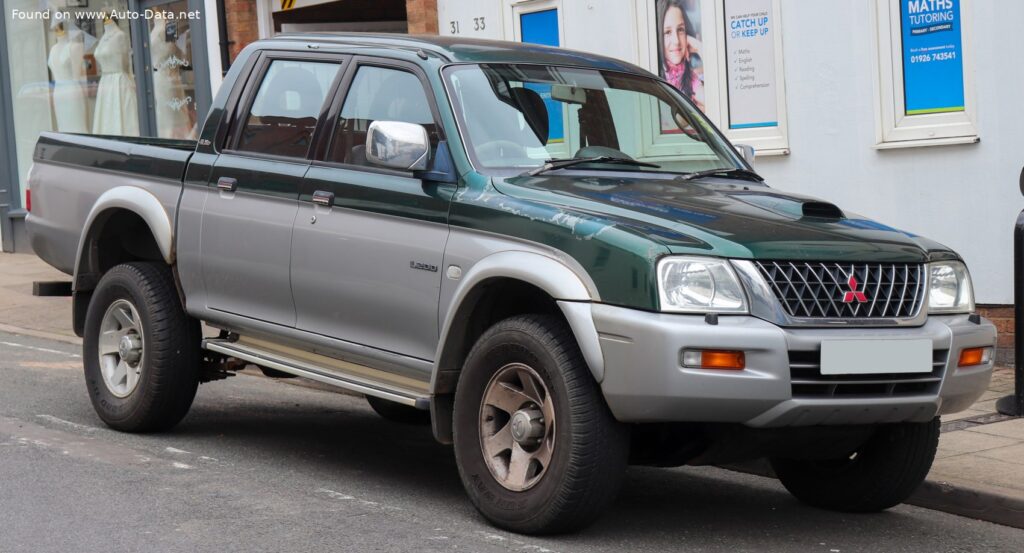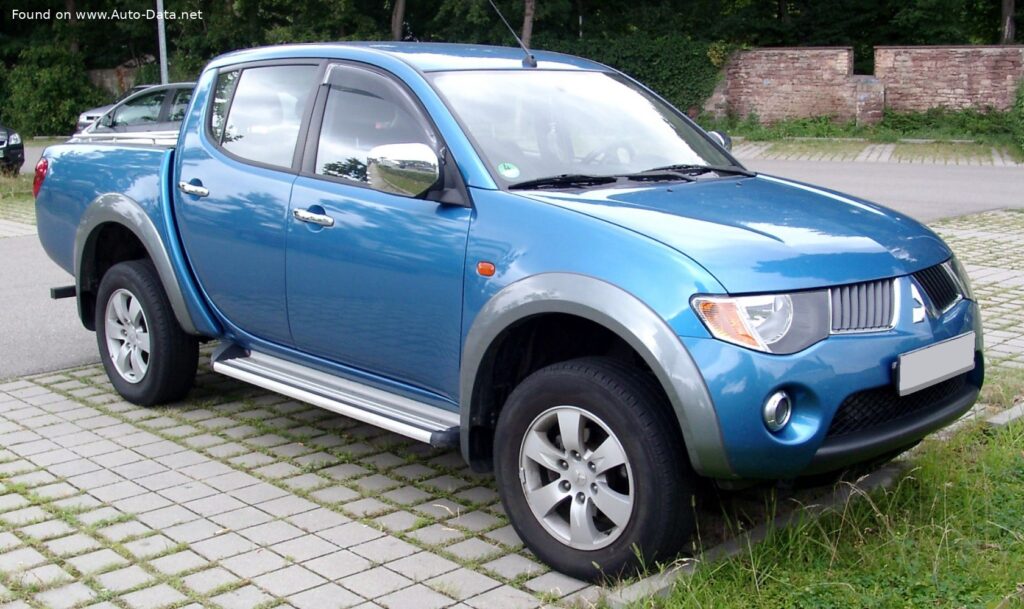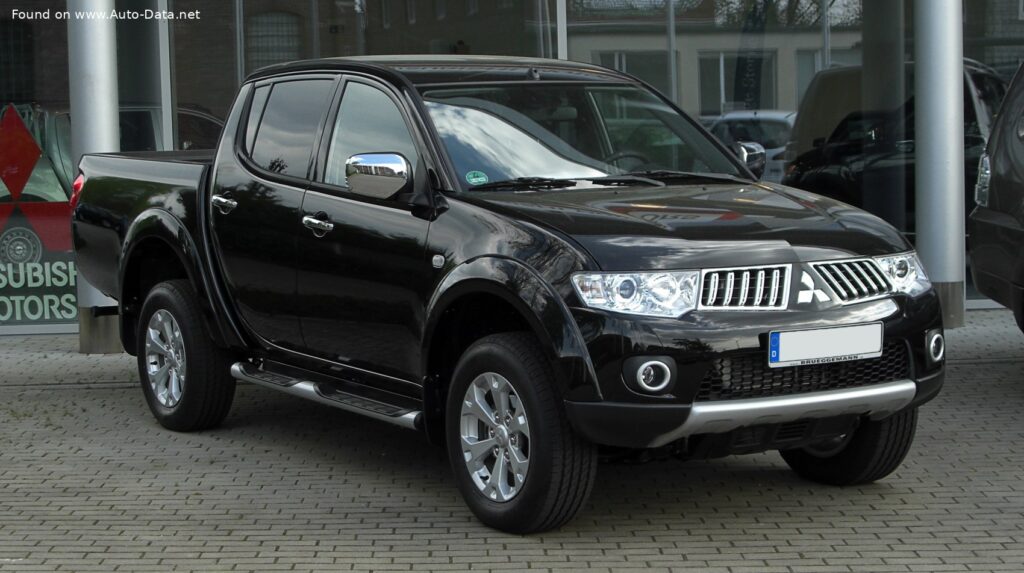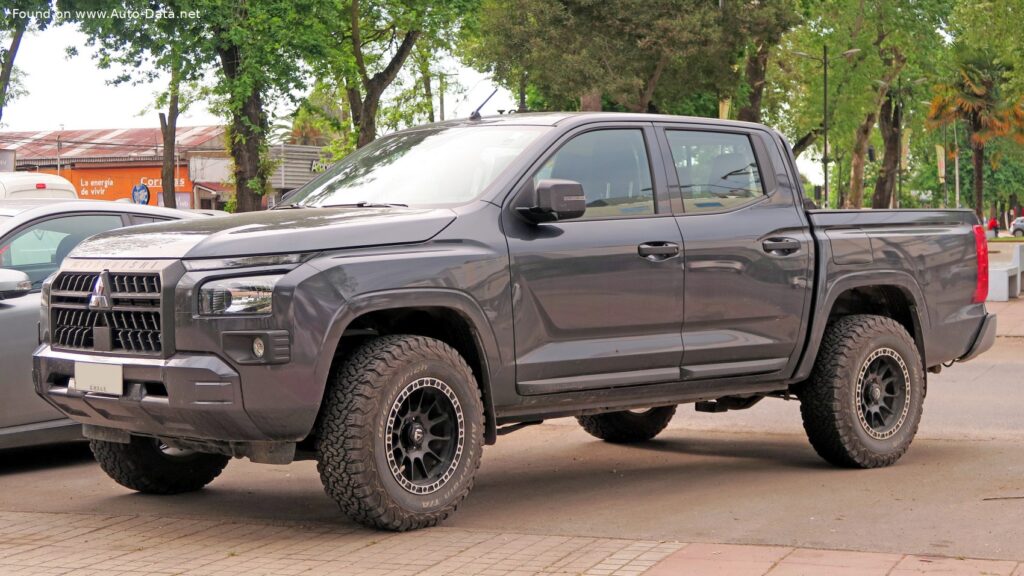
The Mitsubishi L200 VI Double Cab 2.4 MPI (128 Hp), introduced in 2023, represents the latest iteration of Mitsubishi’s long-standing and highly successful mid-size pickup truck. Known globally as the L200 (or Triton in some markets), this sixth-generation model continues to build on a legacy of durability, versatility, and off-road capability that has made it a staple in numerous markets outside of the United States. While not officially sold in the North American market, the L200 is a critical player in Europe, Southeast Asia, Australia, and parts of Africa and South America, where it serves a dual role as both a rugged utility vehicle for commercial and agricultural use and a dependable family hauler. This specific variant, featuring a 2.4-liter Multi-Point Injection (MPI) gasoline engine and a Double Cab configuration, is designed to offer a balance of power, efficiency, and passenger comfort, catering to a broad spectrum of consumer needs in its primary markets. Its robust construction and proven powertrain architecture underscore Mitsubishi’s commitment to delivering reliable transportation solutions for a global audience.
Powertrain & Engine Architecture
Powering this iteration of the Mitsubishi L200 VI Double Cab is a 2.4-liter (2351 cm3 or 143.47 cu. in.) naturally aspirated inline-four gasoline engine, designated with the model code Sirius / 4G64. This Multi-Point Injection (MPI) powerplant delivers a respectable 128 horsepower at 5250 rpm and 143.09 lb.-ft. (194 Nm) of torque at 4000 rpm. While these figures might appear modest compared to some turbocharged alternatives, they are well-suited for the L200’s intended purpose: reliable, accessible performance for daily driving, hauling, and light-duty off-road excursions. The engine’s configuration, with a bore of 86.5 mm and a piston stroke of 100 mm, combined with a 9:1 compression ratio and a DOHC (Double Overhead Camshaft) valvetrain with 4 valves per cylinder, emphasizes smooth power delivery and durability.
The powertrain architecture in this specific variant involves the internal combustion engine driving the rear wheels, paired with a 5-speed manual transmission. This classic rear-wheel-drive setup is ideal for load-carrying and provides a straightforward, robust driving experience. The vehicle’s weight-to-power ratio stands at 12.8 kg/Hp (78 Hp/tonne), and its weight-to-torque ratio is 8.5 kg/Nm (118.3 Nm/tonne), indicating a focus on utility and endurance rather than outright speed. With a fuel tank capacity of 19.81 US gallons (75 liters), the L200 VI Double Cab offers a decent cruising range, making it practical for extended journeys or remote work sites where fuel stops might be infrequent. The engine’s simplicity, with multi-port manifold injection and natural aspiration, contributes to its perceived reliability and ease of maintenance, crucial factors for owners in developing markets and those who demand a no-nonsense work truck.
Driving Characteristics
The 128 hp 2.4 MPI engine, coupled with the 5-speed manual transmission, delivers a driving experience geared towards practicality and dependability rather than sporty performance. Acceleration is adequate for everyday driving, but it won’t offer the briskness of higher-output engines or those equipped with turbocharging. The engine’s torque curve is relatively flat, providing usable power across a broad rpm range, which is beneficial for hauling loads or navigating challenging terrain. The 5-speed manual transmission offers a good balance between fuel efficiency and driver control. Gear ratios are tuned for maximizing torque at lower speeds, making it easier to manage heavy loads or climb steep inclines. Compared to potential higher-output variants (which are market-dependent), this configuration prioritizes fuel economy and reduced mechanical complexity. The rear-wheel-drive configuration provides a more traditional truck feel, offering good traction when loaded but requiring careful driving on slippery surfaces. It lacks the all-weather capability of a four-wheel-drive system, but this contributes to a lower overall vehicle weight and cost.
Equipment & Trim Levels
The Mitsubishi L200 VI Double Cab 2.4 MPI typically comes with a standard equipment list focused on functionality and durability. Base models generally include features such as air conditioning, power steering, a basic audio system (often with AM/FM radio and USB connectivity), and steel wheels. Safety features typically include Anti-lock Braking System (ABS) and driver and passenger airbags. Interior upholstery is usually a durable, easy-to-clean vinyl or cloth material. Dashboard configuration is straightforward and utilitarian, prioritizing ease of use and visibility. Optional extras available for this trim level often include alloy wheels, upgraded audio systems with touchscreen displays, rear parking sensors, and a limited-slip differential. Higher trim levels may add features like automatic climate control, leather upholstery, and more advanced safety systems. The Double Cab configuration provides seating for five passengers, with a reasonably spacious rear seat for a mid-size pickup truck.
Chassis & Braking
The Mitsubishi L200 VI Double Cab utilizes a robust ladder-frame chassis construction, providing a solid foundation for its load-carrying capabilities and off-road performance. The front suspension is an independent double wishbone setup with coil springs and a transverse stabilizer, offering a degree of ride comfort and handling precision. The rear suspension employs a rigid axle with leaf springs, designed to handle heavy loads and provide a stable platform for towing. Braking performance is handled by ventilated discs at the front (275 mm) and drum brakes at the rear (254 mm), a common and effective setup for pickups in this segment. The use of drum brakes on the rear helps to keep costs down and simplifies maintenance. An Anti-lock Braking System (ABS) is included as a standard safety feature, enhancing braking control during emergency situations. Steering is managed by a hydraulic rack and pinion system, providing direct feedback and ease of control, especially when navigating tight spots or hauling heavy loads.
Market Reception & Comparison
The Mitsubishi L200 VI Double Cab 2.4 MPI has generally received positive reviews for its durability, practicality, and value for money. Critics have praised its robust construction, comfortable ride (for a pickup truck), and capable off-road performance. However, the 128 hp engine has been noted as being somewhat underpowered compared to some of its competitors, particularly those equipped with turbocharged engines. Fuel economy is generally considered to be reasonable, but not exceptional. In terms of reliability, the L200 has a strong reputation for being a dependable vehicle, with relatively low maintenance costs. Compared to other trims in the L200 lineup, the 2.4 MPI variant represents the entry-level option, offering a more affordable price point but sacrificing some performance. Compared to the diesel variants (where available), the gasoline engine offers lower torque but potentially lower maintenance costs and a quieter engine operation. Against competitors like the Toyota Hilux and Ford Ranger, the L200 often positions itself as a more value-oriented option, offering a comparable level of functionality at a lower price.
Technical Specifications
| Category | Specification |
| Brand | Mitsubishi |
| Model | L200 |
| Generation | L200 VI Double Cab |
| Type (Engine) | 2.4 MPI (128 Hp) |
| Start of Production | 2023 year |
| Powertrain Architecture | Internal Combustion engine |
| Body Type | Pick-up |
| Seats | 5 |
| Doors | 4 |
| Fuel Type | Petrol (Gasoline) |
| Power | 128 Hp @ 5250 rpm. |
| Power per liter | 54.4 Hp/l |
| Torque | 194 Nm @ 4000 rpm (143.09 lb.-ft. @ 4000 rpm) |
| Engine Layout | Front, Longitudinal |
| Engine Model/Code | Sirius / 4G64 |
| Engine Displacement | 2351 cm3 (143.47 cu. in.) |
| Number of Cylinders | 4 |
| Engine Configuration | Inline |
| Cylinder Bore | 86.5 mm (3.41 in.) |
| Piston Stroke | 100 mm (3.94 in.) |
| Compression Ratio | 9:1 |
| Number of Valves per Cylinder | 4 |
| Fuel Injection System | Multi-port manifold injection |
| Engine Aspiration | Naturally aspirated engine |
| Valvetrain | DOHC |
| Engine Oil Capacity | 4.3 l (4.54 US qt | 3.78 UK qt) |
| Coolant Capacity | 7 l (7.4 US qt | 6.16 UK qt) |
| Kerb Weight | 1640-1700 kg (3615.58 – 3747.86 lbs.) |
| Max. Weight (GVWR) | 2570-2600 kg (5665.88 – 5732.02 lbs.) |
| Max Load Capacity | 900-930 kg (1984.16 – 2050.3 lbs.) |
| Fuel Tank Capacity | 75 l (19.81 US gal | 16.5 UK gal) |
| Permitted Trailer Load with Brakes (12%) | 1800 kg (3968.32 lbs.) |
| Length | 5320 mm (209.45 in.) |
| Width | 1865 mm (73.43 in.) |
| Height | 1710-1795 mm (67.32 – 70.67 in.) |
| Wheelbase | 3130 mm (123.23 in.) |
| Front Track | 1570 mm (61.81 in.) |
| Rear Track | 1565 mm (61.61 in.) |
| Front Overhang | 890 mm (35.04 in.) |
| Rear Overhang | 1300 mm (51.18 in.) |
| Ride Height (Ground Clearance) | 200-228 mm (7.87 – 8.98 in.) |
| Minimum Turning Circle (Turning Diameter) | 12.6 m (41.34 ft.) |
| Approach Angle | 23.5-30.4° |
| Departure Angle | 18.8-22.8° |
| Ramp-over (Brakeover) Angle | 23.4° |
| Drivetrain Architecture | The Internal combustion engine (ICE) drives the rear wheels of the vehicle. |
| Drive Wheel | Rear wheel drive |
| Number of Gears and Type of Gearbox | 5 gears, manual transmission |
| Front Suspension | Double wishbone, Independent coil spring, Transverse stabilizer |
| Rear Suspension | Rigid axle suspension, Leaf spring |
| Front Brakes | Ventilated discs, 275 mm |
| Rear Brakes | Drum, 254 mm |
| Assisting Systems | ABS (Anti-lock braking system) |
| Steering Type | Steering rack and pinion |
| Power Steering | Hydraulic Steering |
| Tires Size | 195/80 R15; 265/70 R16 |
| Wheel Rims Size | 6J x 15; 7.5J x 16 |
Legacy
The Mitsubishi L200, including the 2.4 MPI variant, is expected to maintain a reputation for long-term reliability, particularly in markets where it is commonly used as a work vehicle. The relatively simple engine design and robust construction contribute to its durability. In the used car market, these models are likely to be sought after by buyers looking for an affordable and dependable pickup truck. While the 128 hp engine may not be the most powerful option, its simplicity and lower maintenance requirements could make it an attractive choice for those prioritizing practicality and cost-effectiveness. The availability of spare parts and a well-established service network will also contribute to its continued appeal in the used car market. However, potential buyers should be aware of the limitations of the rear-wheel-drive configuration and the relatively modest power output compared to some of its competitors.