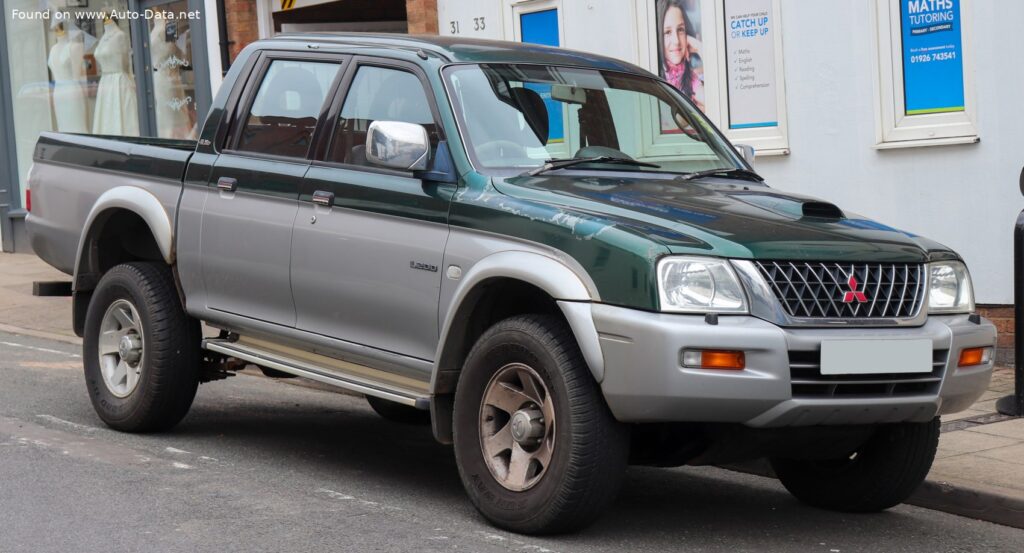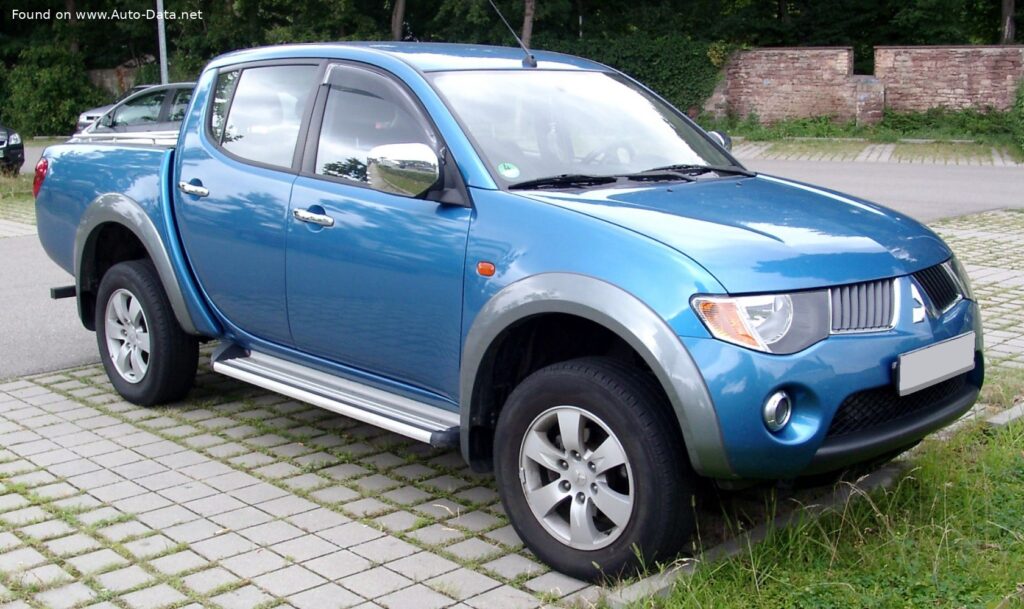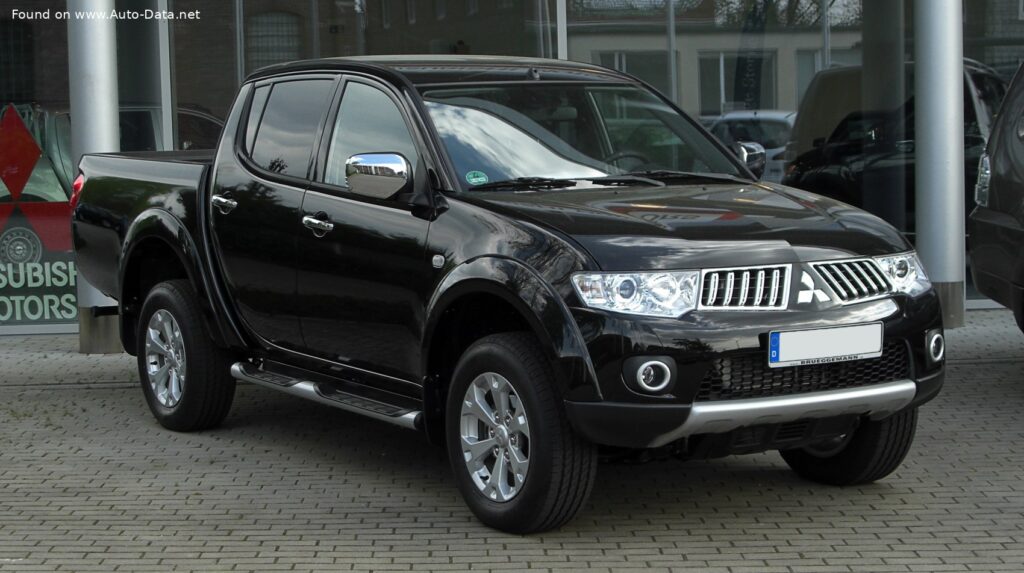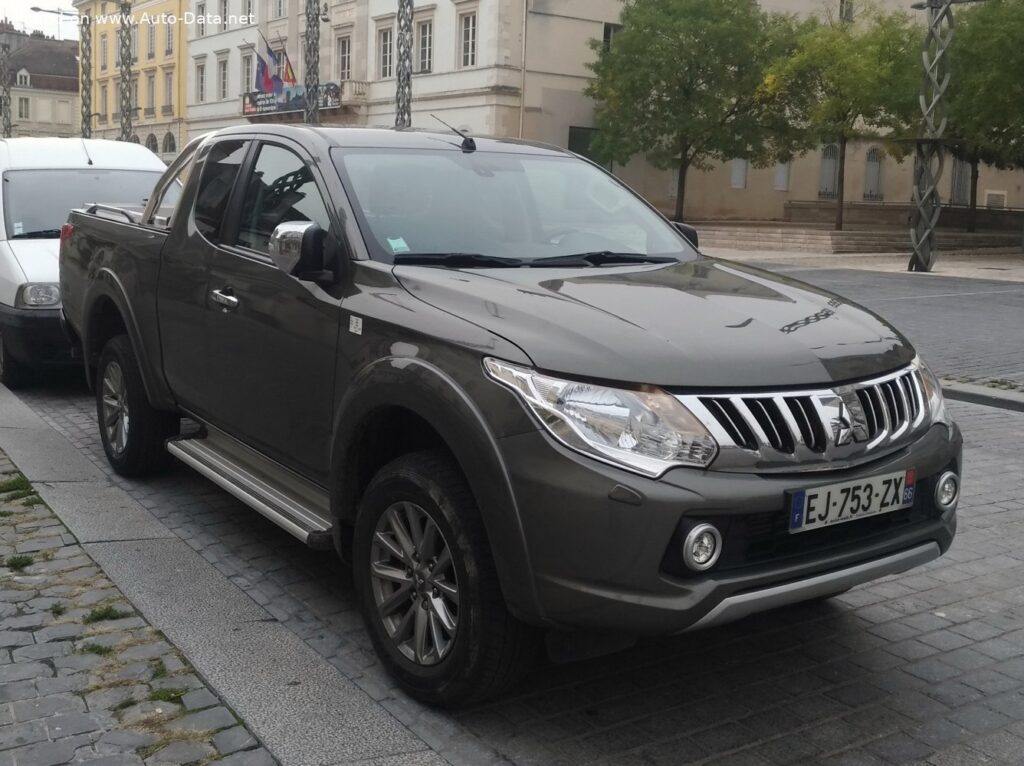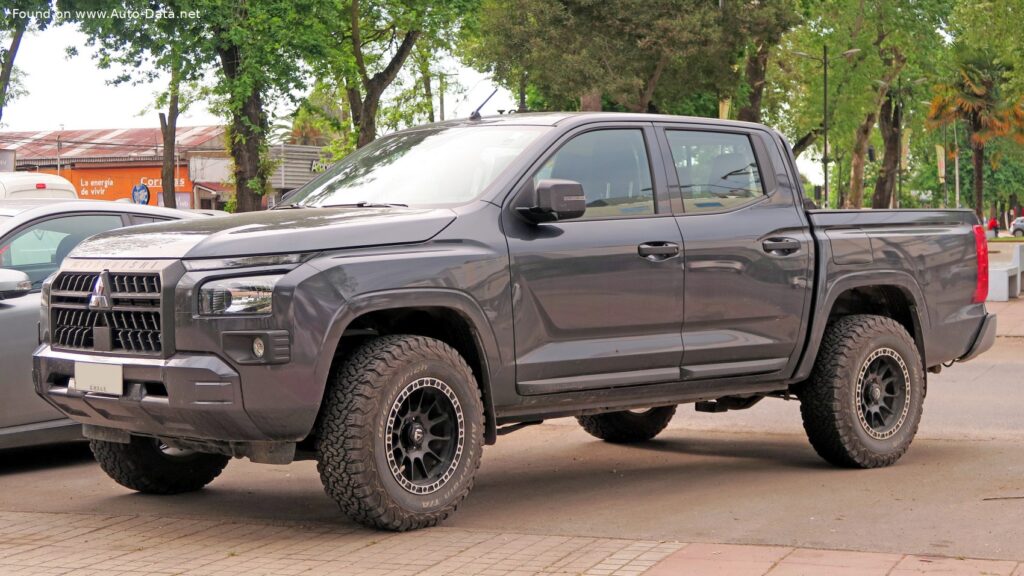
The Mitsubishi L200, known as the Triton in some markets and the Strada in others, is a cornerstone of Mitsubishi’s global vehicle lineup, particularly within the competitive mid-size pickup truck segment. The L200 has established a strong reputation as a rugged, reliable, and versatile workhorse, capable of handling demanding tasks both on and off-road. This specific iteration, the Mitsubishi L200 VI Double Cab 2.4 MPI (128 Hp) 4WD, introduced in 2023, is part of the sixth generation of this pickup, building upon decades of engineering and user-focused design. While the L200 nameplate isn’t sold in the United States, where Mitsubishi previously offered models like the Mighty Max, its global presence is substantial. The L200 VI Double Cab primarily targets markets in Southeast Asia, Australia, Europe, and other regions where robust and capable pickups are essential for commercial and recreational use. The Double Cab configuration provides the practicality of a four-door, five-seat passenger compartment combined with a functional cargo bed, making it suitable for families, tradespeople, and adventurers.
Powertrain & Engine Architecture
The 2023 Mitsubishi L200 VI Double Cab 2.4 MPI (128 Hp) 4WD is powered by a 2.4-liter (2351 cm3 or 143.47 cu. in.) naturally aspirated gasoline engine. Designated with the engine code Sirius / 4G64, this inline-four cylinder unit features a Double Overhead Camshaft (DOHC) valvetrain with four valves per cylinder. This configuration is known for its balance of power delivery, fuel efficiency, and long-term reliability, crucial for a vehicle designed for demanding use.
The engine produces 128 horsepower at 5250 rpm, providing sufficient power for daily driving, hauling, and light off-roading. Torque output is 194 Nm (143.09 lb.-ft.) at 4000 rpm, ensuring robust pulling power and responsiveness, especially when navigating challenging terrain or carrying heavy loads. A multi-port manifold injection system ensures precise fuel delivery, contributing to the engine’s efficiency and smooth operation. The compression ratio of 9:1 is designed for consistent performance across various operating conditions.
Power is transmitted through a 5-speed manual transmission, offering direct driver engagement and control. The drivetrain is a part-time all-wheel-drive (4×4) system, where the engine permanently drives the rear wheels, and the front wheels can be engaged through an electrically or mechanically operated clutch when additional traction is required. This allows switching between two-wheel drive for improved fuel economy on paved roads and four-wheel drive for enhanced grip on loose surfaces or during off-road excursions. The weight-to-power ratio is 14.1 kg/Hp (71.1 Hp/tonne), and the weight-to-torque ratio is 9.3 kg/Nm (107.8 Nm/tonne), highlighting its utilitarian design optimized for carrying and pulling.
Driving Characteristics
The 90 hp / Automatic setup delivers a driving experience focused on practicality and fuel efficiency rather than outright performance. Compared to higher-output versions or manual transmissions, the 2.4 MPI feels less responsive, particularly when accelerating or climbing hills. The 5-speed manual transmission is geared for economy, meaning lower gears are relatively short, and higher gears prioritize fuel consumption at cruising speeds. This results in a need for frequent downshifting when encountering inclines or overtaking. While not a sporty vehicle, the L200 VI Double Cab 2.4 MPI provides adequate power for everyday tasks and light off-road work. The part-time 4WD system, when engaged, provides enhanced traction on slippery surfaces, but lacks the sophistication of more advanced full-time systems found in some competitors.
Equipment & Trim Levels
The Mitsubishi L200 VI Double Cab 2.4 MPI (128 Hp) 4WD typically serves as an entry-level or mid-range trim within the L200 lineup, depending on the specific market. Standard features generally include air conditioning, power windows, power door locks, and a basic audio system. Interior upholstery is typically vinyl or a durable cloth material. The dashboard configuration is functional and straightforward, prioritizing ease of use over luxury. Optional extras often include alloy wheels, a more advanced audio system with Bluetooth connectivity, a rear-view camera, and upgraded interior trim. Safety features typically include ABS brakes and driver/passenger airbags, though the availability of advanced safety systems like electronic stability control may vary by market.
Chassis & Braking
The L200 employs a robust suspension system designed for durability and load-bearing. The front features an independent double wishbone setup with coil springs and a transverse stabilizer, providing a comfortable ride and precise steering. The rear utilizes a rigid axle suspension with leaf springs, a time-tested configuration known for its strength and ability to handle heavy payloads. Braking is handled by ventilated discs at the front (290 mm) and drum brakes at the rear (295 mm), complemented by an Anti-lock Braking System (ABS) for enhanced safety during emergency stops. The steering system is a hydraulic rack-and-pinion setup, offering tactile feedback and reliability. Standard tire sizes include 205/80 R16 or 265/70 R16, mounted on 6J x 16 or 7.5J x 16 wheel rims, providing a balance of on-road handling and off-road traction.
Market Reception & Comparison
Critics generally view the Mitsubishi L200 VI Double Cab 2.4 MPI (128 Hp) 4WD as a practical and reliable workhorse, but acknowledge its relatively modest performance compared to more powerful trims. Fuel economy is considered reasonable for a vehicle of its size and capability, but not class-leading. Reliability is a strong point, with the 4G64 engine having a proven track record. Compared to diesel-powered L200 variants, the 2.4 MPI offers lower torque and potentially higher running costs due to gasoline’s typically higher price. Compared to higher-horsepower gasoline or turbocharged options, the 2.4 MPI provides a more affordable entry point into the L200 range, appealing to buyers prioritizing value and dependability over outright performance. It competes with similar entry-level trims from Toyota Hilux, Ford Ranger, Isuzu D-Max, and Nissan Navara.
Technical Specifications
| Category | Specification |
| General Information | |
| Brand | Mitsubishi |
| Model | L200 |
| Generation | L200 VI Double Cab |
| Type (Engine) | 2.4 MPI (128 Hp) 4WD |
| Start of production | 2023 year |
| Powertrain Architecture | Internal Combustion engine |
| Body type | Pick-up |
| Seats | 5 |
| Doors | 4 |
| Performance Specs | |
| Fuel Type | Petrol (Gasoline) |
| Weight-to-power ratio | 14.1 kg/Hp, 71.1 Hp/tonne |
| Weight-to-torque ratio | 9.3 kg/Nm, 107.8 Nm/tonne |
| Engine Specs | |
| Power | 128 Hp @ 5250 rpm. |
| Power per liter | 54.4 Hp/l |
| Torque | 194 Nm (143.09 lb.-ft.) @ 4000 rpm. |
| Engine layout | Front, Longitudinal |
| Engine Model/Code | Sirius / 4G64 |
| Engine displacement | 2351 cm3 (2.4 l, 143.47 cu. in.) |
| Number of cylinders | 4 |
| Engine configuration | Inline |
| Cylinder Bore | 86.5 mm (3.41 in.) |
| Piston Stroke | 100 mm (3.94 in.) |
| Compression ratio | 9:1 |
| Number of valves per cylinder | 4 |
| Fuel injection system | Multi-port manifold injection |
| Engine aspiration | Naturally aspirated engine |
| Valvetrain | DOHC |
| Engine oil capacity | 4.3 l (4.54 US qt) |
| Coolant | 7 l (7.4 US qt) |
| Space, Volume and Weights | |
| Kerb Weight | 1800-1920 kg (3968.32 – 4232.88 lbs.) |
| Max. weight (Gross Vehicle Weight) | 2700-3000 kg (5952.48 – 6613.87 lbs.) |
| Max load (Payload) | 900-1080 kg (1984.16 – 2380.99 lbs.) |
| Fuel tank capacity | 75 l (19.81 US gal) |
| Dimensions | |
| Length | 5320 mm (209.45 in.) |
| Width | 1865 mm (73.43 in.) |
| Height | 1775-1795 mm (69.88 – 70.67 in.) |
| Wheelbase | 3130 mm (123.23 in.) |
| Front track | 1570 mm (61.81 in.) |
| Rear (Back) track | 1565 mm (61.61 in.) |
| Front overhang | 890 mm (35.04 in.) |
| Rear overhang | 1300 mm (51.18 in.) |
| Ride height (ground clearance) | 221-240 mm (8.7 – 9.45 in.) |
| Minimum turning circle (turning diameter) | 12.4 m (40.68 ft.) |
| Approach angle | 28.9-30.4° |
| Departure angle | 21.9-22.8° |
| Ramp-over (brakeover) angle | 23.4° |
| Drivetrain, Brakes and Suspension Specs | |
| Drivetrain Architecture | The Internal combustion engine (ICE) drives the rear wheels permanently, and the front wheels are driven through an electrically or mechanically operated clutch if necessary. |
| Drive wheel | All wheel drive (4×4) |
| Number of gears and type of gearbox | 5 gears, manual transmission |
| Front suspension | Double wishbone, Independent coil spring, Transverse stabilizer |
| Rear suspension | Rigid axle suspension, Leaf spring |
| Front brakes | Ventilated discs, 290 mm |
| Rear brakes | Drum, 295 mm |
| Assisting systems | ABS (Anti-lock braking system) |
| Steering type | Steering rack and pinion |
| Power steering | Hydraulic Steering |
| Tires size | 205/80 R16; 265/70 R16 |
| Wheel rims size | 6J x 16; 7.5J x 16 |
Legacy
The Mitsubishi L200, under its various names, has cultivated a formidable legacy as a global leader in the mid-size pickup segment. The L200 VI Double Cab 2.4 MPI (128 Hp) 4WD continues this tradition, reinforcing Mitsubishi’s commitment to producing highly capable and durable vehicles for diverse international markets. Its reputation as a rugged workhorse is well-earned, built on decades of reliable service in demanding environments. The 4G64 engine, while not the most powerful option, is known for its longevity and relatively simple maintenance requirements. On the used car market, these models are generally considered a good value, offering a dependable and practical vehicle at a reasonable price. However, potential buyers should be aware of the age-related wear and tear common to any vehicle, and a thorough inspection is recommended before purchase. The L200 VI Double Cab 2.4 MPI (128 Hp) 4WD represents a solid and dependable choice for those seeking a practical and affordable pickup truck.