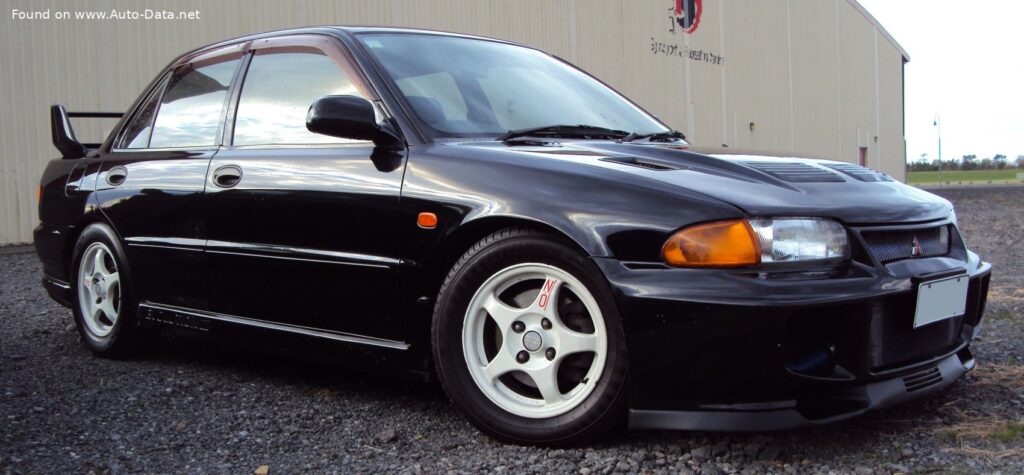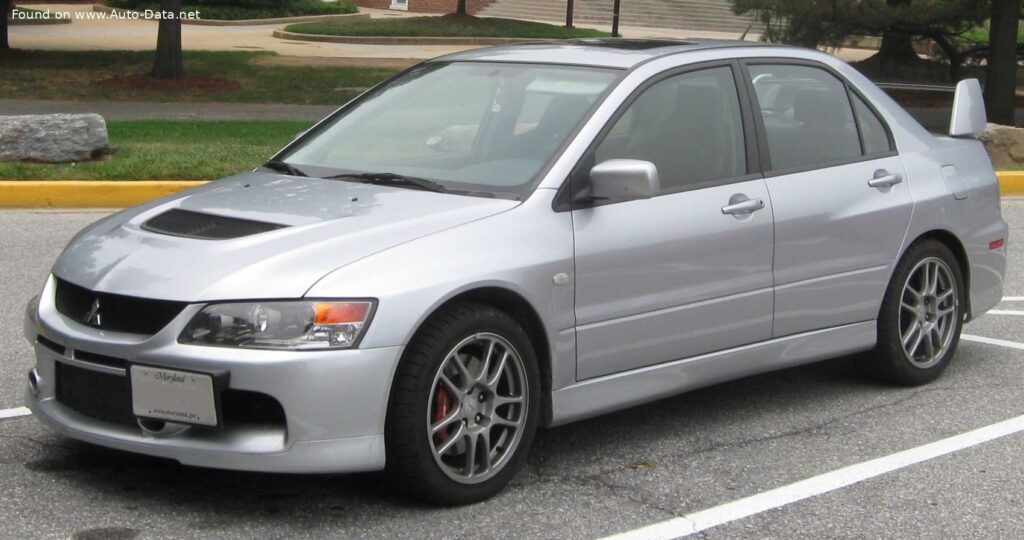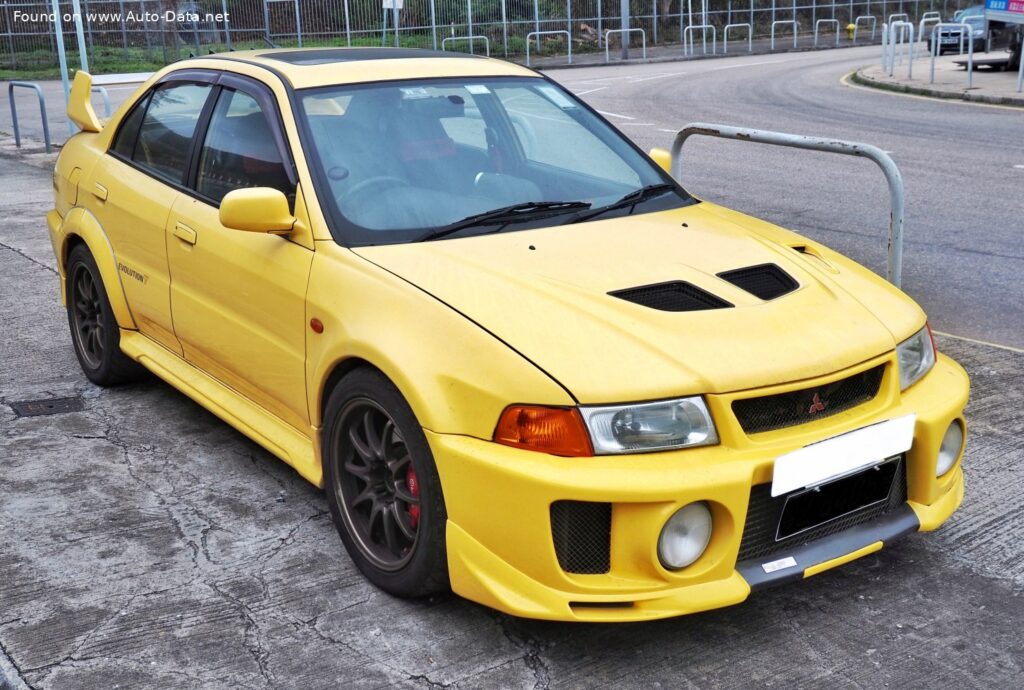
The Mitsubishi Lancer Evolution IV, produced from 1996 to 1998, represents a significant evolution in Mitsubishi’s rally-bred performance sedan lineage. As the fourth iteration of the Lancer Evolution series, affectionately known as “Evo” by enthusiasts, this model cemented its reputation as a formidable competitor in the World Rally Championship (WRC) and a cult icon among performance car aficionados. Primarily a Japanese Domestic Market (JDM) vehicle with limited official availability elsewhere, the Evolution IV embodied Mitsubishi’s engineering prowess, translating rally technology into a road-legal package. It built upon the successes of its predecessors, introducing advancements in chassis rigidity, engine output, and all-wheel-drive sophistication, establishing a benchmark for high-performance compact sedans of its era. The Evo IV was built on the CN9A Lancer platform.
Powertrain & Engine Architecture
At the heart of the Mitsubishi Lancer Evolution IV lay the legendary 4G63T engine. This 2.0-liter (1997 cm³ or 121.86 cubic inches) inline-four powerplant, featuring a DOHC (Dual Overhead Camshaft) design with 16 valves (four per cylinder), was a masterpiece of turbocharged engineering. The 4G63T in the Evolution IV delivered an impressive 280 horsepower at 6500 rpm, a figure adhering to the “gentleman’s agreement” among Japanese manufacturers at the time. This translated to a phenomenal power-per-liter ratio of 140.2 horsepower per liter. Torque figures peaked at 260.36 lb-ft (353 Nm) at 3000 rpm, providing a broad powerband and responsive throttle crucial for both rally stages and spirited driving.
The engine was transversely mounted and featured a multi-port fuel injection system, combined with a turbocharger and intercooler, ensuring optimal air-fuel mixture and charge cooling. A compression ratio of 8.8:1 was designed to withstand the stresses of forced induction. Power was channeled through a precise 5-speed manual transmission, offering direct driver engagement. The Evolution IV did *not* offer an automatic transmission option; it was exclusively available with a manual gearbox.
Driving Characteristics
The Mitsubishi Lancer Evolution IV, equipped with the 4G63T engine and 5-speed manual transmission, delivered a raw and engaging driving experience. Compared to potential future iterations or theoretical versions with an automatic transmission, the manual gearbox allowed for complete driver control over the engine’s power delivery. The 5-speed manual’s gear ratios were optimized for both acceleration and maintaining speed on winding roads. First gear provided strong off-the-line acceleration, while fifth gear allowed for comfortable cruising at highway speeds. The turbocharger provided a noticeable surge of power as boost built, requiring skillful clutch and throttle control to maximize performance. The permanent all-wheel-drive system, coupled with the car’s relatively lightweight construction, provided exceptional traction and cornering stability, allowing drivers to confidently attack corners at high speeds. Compared to the later, more refined Evolutions, the IV offered a more visceral and direct connection to the road, prioritizing driver involvement over outright comfort.
Equipment & Trim Levels
The Mitsubishi Lancer Evolution IV was relatively sparsely equipped compared to contemporary luxury sedans, reflecting its focus on performance. Standard features included Recaro bucket seats, providing excellent support during spirited driving. The interior featured a minimalist dashboard layout with clear, easy-to-read gauges, including a boost gauge monitoring turbocharger pressure. Air conditioning was standard, but other amenities like power windows and central locking were often optional extras. The steering wheel was typically leather-wrapped, and the shift knob was aluminum. The Evolution IV was available in several trim levels, primarily differentiated by the inclusion of features like Active Yaw Control (AYC), a sophisticated torque-vectoring system that enhanced cornering performance. AYC-equipped models were considered the premium trim level. Exterior color options were limited, typically including shades of white, black, silver, and red.
Chassis & Braking
The Evolution IV’s chassis was a key component of its exceptional handling. The CN9A Lancer platform provided a significantly more rigid foundation compared to previous generations. The front suspension utilized an independent McPherson strut design with a transverse stabilizer bar, while the rear employed an independent multi-link suspension, also with a stabilizer bar. This setup minimized body roll and maximized tire contact with the road. Braking duties were handled by ventilated disc brakes on all four wheels – 227×24 mm at the front and 237×20 mm at the rear – complemented by an Anti-lock Braking System (ABS) for enhanced stopping power and control. The car’s wide track and relatively short wheelbase contributed to its agile handling characteristics.
Market Reception & Comparison
The Mitsubishi Lancer Evolution IV received overwhelmingly positive reviews from automotive journalists and enthusiasts. Critics praised its exceptional handling, potent engine, and overall performance capabilities. It was often compared to its arch-rival, the Subaru Impreza WRX STI, with the Evo IV generally being lauded for its sharper handling and more responsive engine. However, the STI was often considered to have a more refined interior and a slightly more forgiving driving experience. Fuel economy, at 13.5 US mpg (17.4 l/100 km) combined, was typical for a high-performance vehicle of its era. Reliability was generally good, although the turbocharged engine and complex all-wheel-drive system required regular maintenance. The Evo IV’s limited official availability outside of Japan contributed to its desirability and inflated resale values, particularly in grey import markets.
Mitsubishi Lancer Evolution IV: Technical Specifications
| Category | Specification |
| General Information | |
| Brand | Mitsubishi |
| Model | Lancer Evolution |
| Generation | Lancer Evolution IV |
| Type (Engine) | 2.0 (280 Hp) 4WD |
| Start of Production | 1996 year |
| End of Production | 1998 year |
| Powertrain Architecture | Internal Combustion engine |
| Body type | Sedan |
| Seats | 5 |
| Doors | 4 |
| Performance Specs | |
| Fuel Consumption (combined) | 13.5 US mpg (17.4 l/100 km) |
| Fuel Type | Petrol (Gasoline) |
| Maximum Speed | 111.85 mph (180 km/h) |
| Weight-to-Power Ratio | 4.5 kg/Hp, 222.2 Hp/tonne |
| Weight-to-Torque Ratio | 3.6 kg/Nm, 280.2 Nm/tonne |
| Engine Specs | |
| Power | 280 Hp @ 6500 rpm |
| Power per Liter | 140.2 Hp/l |
| Torque | 260.36 lb.-ft. @ 3000 rpm (353 Nm @ 3000 rpm) |
| Engine Layout | Front, Transverse |
| Engine Model/Code | 4G63T |
| Engine Displacement | 121.86 cu. in. (1997 cm³) |
| Number of Cylinders | 4 |
| Engine Configuration | Inline |
| Cylinder Bore | 3.35 in. (85 mm) |
| Piston Stroke | 3.46 in. (88 mm) |
| Compression Ratio | 8.8:1 |
| Number of Valves per Cylinder | 4 |
| Fuel Injection System | Multi-port manifold injection |
| Engine Aspiration | Turbocharger, Intercooler |
| Valvetrain | DOHC |
| Engine Oil Capacity | 5.39 US qt (5.1 l) |
| Coolant Capacity | 6.34 US qt (6 l) |
| Space, Volume and Weights | |
| Kerb Weight | 2777.82 lbs. (1260 kg) |
| Max. Weight (GVWR) | 3384.1 lbs. (1535 kg) |
| Max Load | 606.27 lbs. (275 kg) |
| Fuel Tank Capacity | 13.21 US gal (50 l) |
| Dimensions | |
| Length | 170.47 in. (4330 mm) |
| Width | 66.54 in. (1690 mm) |
| Height | 55.71 in. (1415 mm) |
| Wheelbase | 98.82 in. (2510 mm) |
| Front Track | 57.87 in. (1470 mm) |
| Rear (Back) Track | 57.87 in. (1470 mm) |
| Front Overhang | 30.91 in. (785 mm) |
| Rear Overhang | 35.43 in. (900 mm) |
| Ride Height (Ground Clearance) | 6.1 in. (155 mm) |
| Minimum Turning Circle | 36.09 ft. (11 m) |
| Climb Angle | 51° |
| Drivetrain, Brakes and Suspension Specs | |
| Drivetrain Architecture | The Internal combustion engine (ICE) drives permanently the four wheels of the vehicle. |
| Drive Wheel | All wheel drive (4×4) |
| Number of Gears and Type of Gearbox | 5 gears, manual transmission |
| Front Suspension | Independent type McPherson, Transverse stabilizer |
| Rear Suspension | Independent multi-link suspension, Transverse stabilizer, Trailing arm |
| Front Brakes | Ventilated discs 227×24 mm |
| Rear Brakes | Ventilated discs 237×20 mm |
| Assisting Systems | ABS (Anti-lock braking system) |
| Steering Type | Steering rack and pinion |
| Power Steering | Hydraulic Steering |
| Tires Size | 205/60 R15; 205/50 R16 |
| Wheel Rims Size | 6J x 15; 6.5J x 16 |
Legacy
The Mitsubishi Lancer Evolution IV remains a highly sought-after vehicle among enthusiasts. Its combination of performance, handling, and rally pedigree has cemented its status as a modern classic. Well-maintained examples command premium prices in the used car market. The 4G63T engine is renowned for its durability and tunability, making it a popular choice for performance modifications. While age and mileage can present maintenance challenges, the Evo IV’s robust construction and readily available parts supply ensure that it can be kept on the road for years to come. The Evo IV’s influence can be seen in subsequent generations of the Lancer Evolution, as well as in other high-performance vehicles. It represents a pivotal moment in Mitsubishi’s history, showcasing the company’s engineering capabilities and its commitment to building exciting, engaging automobiles.