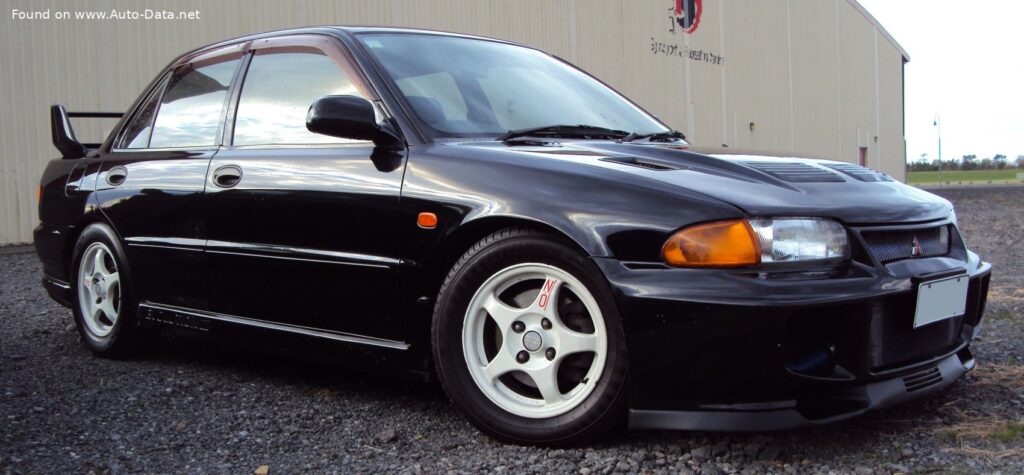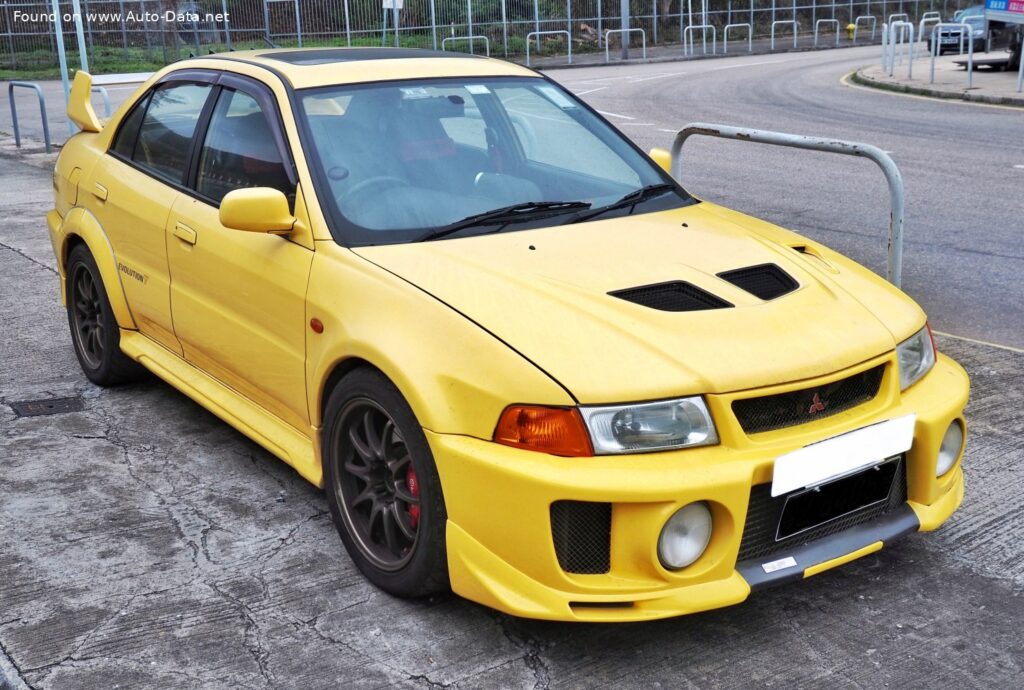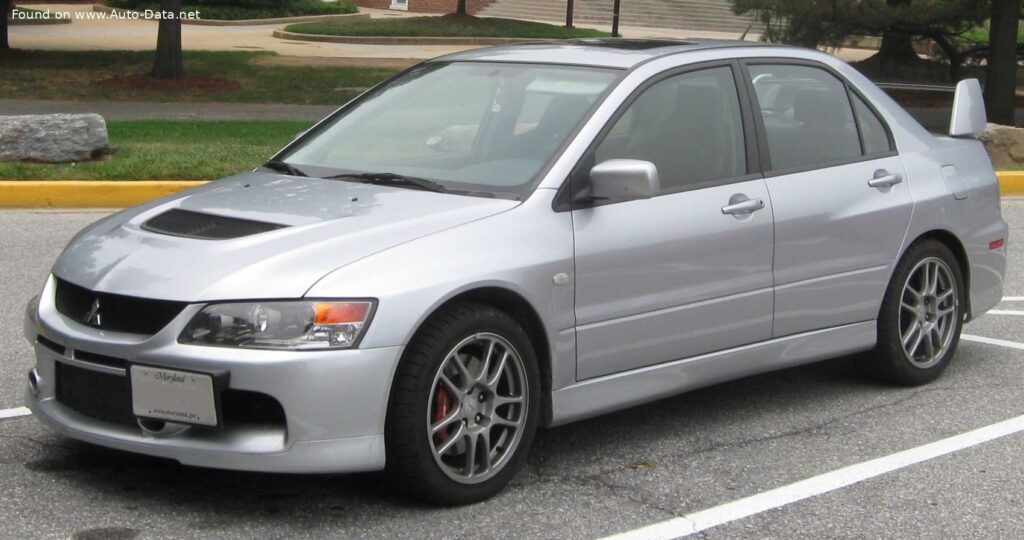
The Mitsubishi Lancer Evolution IX 2.0 MIVEC (280 Hp) 4WD, commonly known as the Evo IX, represents a high point in Mitsubishi’s lineage of rally-bred performance sedans. Produced from 2005 to 2007, this ninth iteration of the Lancer Evolution series refined the platform’s strengths, particularly for enthusiasts who appreciated the iconic 4G63T engine. While not widely sold in the United States as a new vehicle in this specific configuration, the Evo IX gained a dedicated following among American enthusiasts through grey market imports and its motorsport reputation. It was primarily aimed at the Japanese Domestic Market (JDM) and European markets, offering a blend of high-performance engineering, advanced all-wheel-drive, and practical sedan usability.
Powertrain & Engine Architecture
The heart of the Evo IX is the 4G63T engine, a 2.0-liter (1997 cm3) inline-four. This version marked the introduction of Mitsubishi Innovative Valve timing Electronic Control (MIVEC) on the intake camshaft. MIVEC optimized engine breathing across the RPM range, improving throttle response, broadening the powerband, and enhancing fuel efficiency compared to earlier non-MIVEC 4G63T engines. The engine features a DOHC valvetrain with four valves per cylinder and is transversely mounted.
The 4G63T utilizes a turbocharger and intercooler to achieve a robust 280 horsepower at 6500 rpm, resulting in a power-per-liter figure of 140.2 hp/l. Torque peaks at 261.83 lb-ft (355 Nm) at 3500 rpm, providing strong mid-range pull. The engine has an 8.8:1 compression ratio. Power is managed by a permanent all-wheel-drive (4WD) system, incorporating Mitsubishi’s Active Center Differential (ACD) and Active Yaw Control (AYC) for exceptional grip and agility. The Evo IX was exclusively offered with a 6-speed manual transmission.
Driving Characteristics
The Evo IX 2.0 MIVEC Automatic was not a factory option. All Evo IX models were equipped with a 6-speed manual transmission. The 6-speed manual transmission provides precise gear changes and allows the driver to fully exploit the engine’s powerband. The gear ratios are closely spaced, keeping the engine within its optimal power range during spirited driving. Compared to the earlier Evolution models, the Evo IX offers a more refined driving experience, with improved NVH (noise, vibration, and harshness) levels. However, it still retains the raw, mechanical feel that enthusiasts appreciate. The ACD and AYC systems contribute to exceptional handling, allowing the car to rotate and maintain grip through corners with remarkable precision. The 4WD system provides confidence-inspiring traction in various conditions, making it a capable performer on both dry pavement and slippery surfaces.
Equipment & Trim Levels
The Evo IX was offered in several trim levels, varying by market. The base model typically included features such as Recaro bucket seats, a Momo steering wheel, and a comprehensive suite of gauges displaying boost pressure, oil temperature, and coolant temperature. Higher trim levels, such as the RS (Rally Sport) version, often featured stripped-down interiors to reduce weight, focusing on track performance. Optional extras included a premium sound system, leather upholstery, and a sunroof. The interior layout is driver-focused, with all controls positioned for easy access during performance driving. The dashboard features a turbine-style design, reflecting the car’s performance-oriented nature.
Chassis & Braking
The Evo IX’s chassis is based on the Lancer platform, but extensively reinforced to handle the increased power and stresses of high-performance driving. It features an independent McPherson strut suspension at the front and an independent multi-link suspension at the rear, both with transverse stabilizers to minimize body roll. The suspension is tuned for a balance between ride comfort and handling precision. Braking performance is provided by large ventilated discs measuring 320 mm at the front and 300 mm at the rear, coupled with an Anti-lock Braking System (ABS). The hydraulic rack and pinion steering offers direct feedback and a connected feel to the driver. The car rides on 235/45 R17 tires mounted on 8J x 17-inch wheels, providing ample grip.
Market Reception & Comparison
The Evo IX received positive reviews from automotive critics, who praised its performance, handling, and advanced all-wheel-drive system. It was consistently compared to its arch-rival, the Subaru Impreza WRX STI. While the STI often offered a more raw and aggressive driving experience, the Evo IX was lauded for its more sophisticated chassis and advanced electronic aids. In terms of fuel economy, the Evo IX achieved a combined fuel consumption of 22.2 US mpg (10.6 l/100 km), which was respectable for a high-performance car of its caliber. However, urban consumption was higher at 16.1 US mpg (14.6 l/100 km). Reliability was generally good, although the turbocharger and other performance components required regular maintenance. The Evo IX met Euro 4 emission standards, with CO2 emissions rated at 251 g/km.
Technical Specifications
| Brand | Mitsubishi |
| Model | Lancer Evolution IX |
| Generation | Lancer Evolution IX |
| Type (Engine) | 2.0 MIVEC (280 Hp) 4WD |
| Production Start | 2005 year |
| Production End | 2007 year |
| Body Type | Sedan |
| Seats | 5 |
| Doors | 4 |
| Fuel Type | Petrol (Gasoline) |
| Engine Model/Code | 4G63T |
| Engine Layout | Front, Transverse |
| Engine Configuration | Inline 4 |
| Engine Displacement | 1997 cm3 (121.86 cu. in.) |
| Cylinder Bore | 85 mm (3.35 in.) |
| Piston Stroke | 88 mm (3.46 in.) |
| Compression Ratio | 8.8:1 |
| Number of Valves per Cylinder | 4 |
| Valvetrain | DOHC |
| Fuel Injection System | Multi-port manifold injection |
| Engine Aspiration | Turbocharger, Intercooler |
| Power | 280 Hp @ 6500 rpm |
| Power per Liter | 140.2 Hp/l |
| Torque | 261.83 lb.-ft. (355 Nm) @ 3500 rpm |
| Acceleration 0-60 mph | 5.4 sec |
| Acceleration 0-100 km/h | 5.7 sec |
| Maximum Speed | 155.34 mph (250 km/h) |
| Fuel Consumption (Combined NEDC) | 22.2 US mpg (10.6 l/100 km) |
| Fuel Consumption (Urban NEDC) | 16.1 US mpg (14.6 l/100 km) |
| Fuel Consumption (Extra Urban NEDC) | 28.7 US mpg (8.2 l/100 km) |
| CO2 Emissions (NEDC) | 251 g/km |
| Emission Standard | Euro 4 |
| Drivetrain Architecture | All-Wheel Drive (4×4) |
| Transmission | 6 gears, manual transmission |
| Front Suspension | Independent McPherson, Transverse stabilizer |
| Rear Suspension | Independent multi-link, Transverse stabilizer |
| Front Brakes | Ventilated discs, 320 mm |
| Rear Brakes | Ventilated discs, 300 mm |
| Assisting Systems | ABS (Anti-lock braking system) |
| Steering Type | Steering rack and pinion |
| Power Steering | Hydraulic Steering |
| Tires Size | 235/45 R17 |
| Wheel Rims Size | 8J x 17 |
| Kerb Weight | 3395.12 lbs (1540 kg) |
| Max. Weight | 4155.71 lbs (1885 kg) |
| Max Load | 760.59 lbs (345 kg) |
| Trunk (Boot) Space – minimum | 15.19 cu. ft. (430 l) |
| Fuel Tank Capacity | 14.53 US gal (55 l) |
| Length | 176.77 in. (4490 mm) |
| Width | 69.69 in. (1770 mm) |
| Height | 57.09 in. (1450 mm) |
| Wheelbase | 103.35 in. (2625 mm) |
Legacy
The Mitsubishi Lancer Evolution IX is highly regarded by enthusiasts and collectors. It is considered by many to be the last “true” Evolution, due to its retention of the 4G63T engine. The engine’s durability and tuning potential have made it a favorite among performance enthusiasts. On the used car market, Evo IXs in good condition command premium prices. The car’s legacy is also cemented by its success in rallying and other motorsport disciplines. The Evo IX remains a benchmark for performance sedans, offering a unique blend of performance, handling, and practicality. Its enduring appeal ensures that it will continue to be celebrated by automotive enthusiasts for years to come.