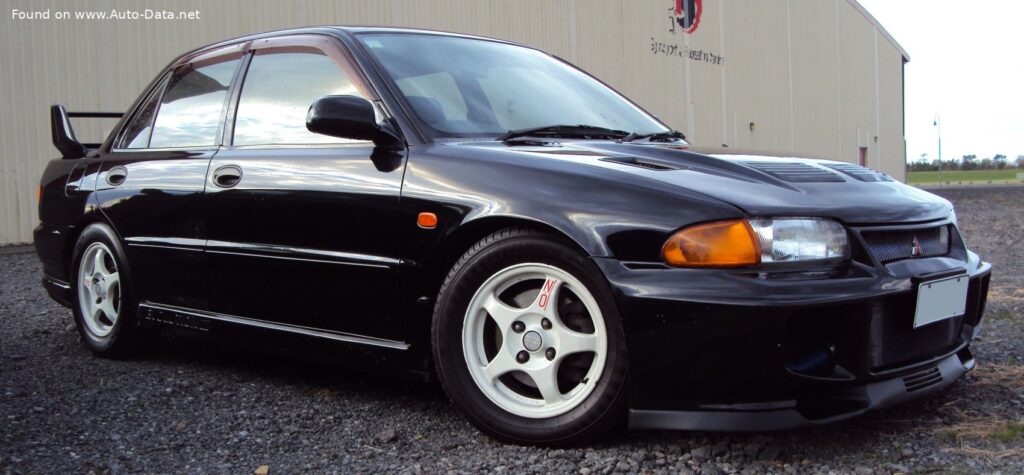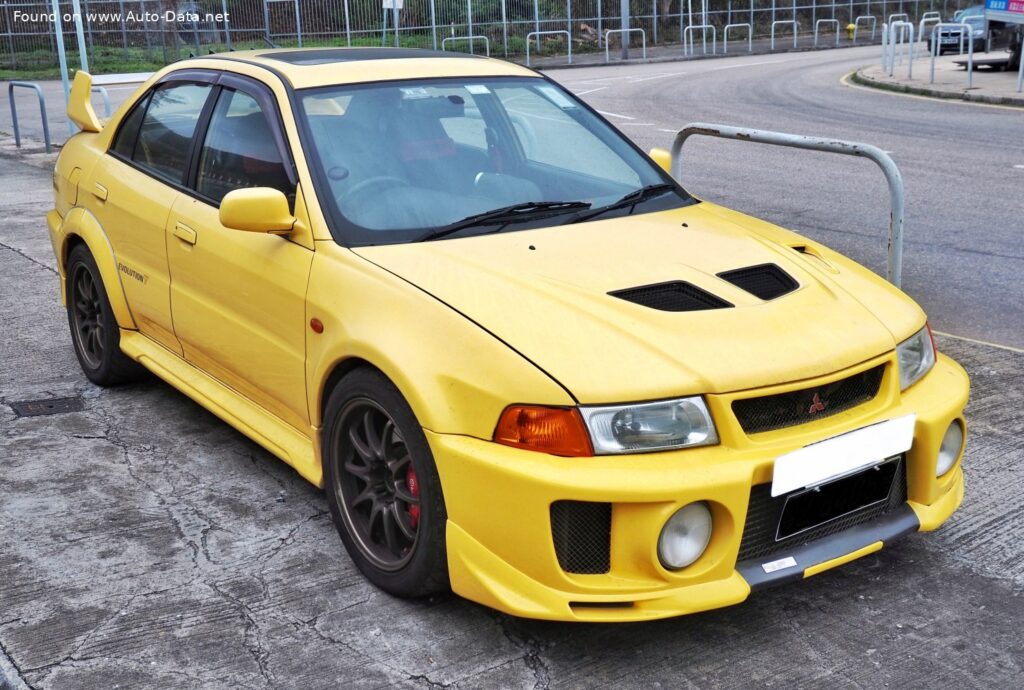
The Mitsubishi Lancer Evolution IX 2.0 MIVEC FQ-300 (305 Hp) 4WD represents a pinnacle in the illustrious history of Mitsubishi’s rally-bred performance sedan, the Lancer Evolution. Produced between 2005 and 2007, the Evolution IX was the penultimate iteration of the legendary ‘Evo’ series, building upon a rich heritage of World Rally Championship (WRC) success and street-legal performance. While the Lancer Evolution IX was available in various markets globally, including a strong presence in the United States, the FQ-300 variant was a special, high-performance model specifically developed for the United Kingdom market. These ‘FQ’ models, short for ‘F***ing Quick,’ were renowned for their enhanced power outputs and aggressive tuning, making them some of the most formidable factory-tuned vehicles of their era. The FQ-300, with its 305 horsepower engine and sophisticated all-wheel-drive system, solidified the Evo IX’s reputation as a true driver’s car, capable of blistering acceleration and unparalleled handling dynamics, especially on challenging roads.
Engine and Performance of the Mitsubishi Lancer Evolution IX 2.0 MIVEC FQ-300
At the heart of the Mitsubishi Lancer Evolution IX 2.0 MIVEC FQ-300 lies the revered 4G63T engine, a turbocharged 2.0-liter (121.86 cubic inches) inline-four powerplant that had been the backbone of the Lancer Evolution series since its inception. For the Evo IX, Mitsubishi introduced its MIVEC (Mitsubishi Innovative Valve timing Electronic Control) system, a variable valve timing technology applied to the intake camshaft. This crucial upgrade optimized valve overlap and lift across the RPM range, resulting in a broader powerband, improved throttle response, and a slight enhancement in fuel efficiency compared to previous generations, without sacrificing the raw power for which the Evo was known.
In the FQ-300 tune, the 4G63T engine delivered an impressive 305 horsepower at 6950 RPM, translating to a substantial 152.7 horsepower per liter. Torque figures were equally compelling, peaking at 297.24 lb-ft at 4400 RPM, providing immense pulling power from the mid-range. This robust powertrain was mated to a precise 6-speed manual transmission, allowing the driver direct control over its formidable output. The FQ-300’s performance metrics were staggering for a sedan of its time: it could sprint from 0 to 60 mph in a mere 4.5 seconds (calculated by Auto-Data.net), and its top speed was electronically limited to 157.21 mph (253 km/h).
Fuel economy, while not the primary concern for such a performance-oriented vehicle, was rated at an estimated 17 US mpg combined. The engine’s architecture featured a transverse front layout, a compression ratio of 8.8:1, and a multi-port manifold injection system, all working in concert with a potent turbocharger and intercooler to deliver consistent, high-level performance. The advanced all-wheel-drive (AWD) architecture, a hallmark of the Lancer Evolution, permanently distributed power to all four wheels, ensuring exceptional traction and handling in various conditions, a direct benefit of Mitsubishi’s extensive rally experience.
FQ-300 Positioning and Comparison
The FQ-300 occupied the top-tier performance position within the UK-market Evolution IX lineup. It was significantly more potent than the standard Evo IX models available in the UK, and represented a substantial upgrade over even the earlier FQ variants (FQ-200, FQ-260). Compared to the standard Evo IX, the FQ-300 benefited from enhanced turbocharger specifications, revised engine mapping, and often, upgraded components in the drivetrain to handle the increased power. It was aimed at the discerning enthusiast who demanded the ultimate in performance and handling.
In contrast to other Evo IX variants, the FQ-300 wasn’t intended for mass-market appeal. The standard Evo IX, while still a capable performance car, was more balanced for everyday usability. The FQ-300 prioritized outright speed and track performance, making it a less forgiving daily driver. Compared to potential alternatives like the Subaru Impreza WRX STI, the FQ-300 often offered a more raw and direct driving experience, with a reputation for being more tunable and responsive. The STI, while also highly capable, was often perceived as more refined and comfortable.
Design and Features
The design of the Mitsubishi Lancer Evolution IX maintained the aggressive, functional aesthetic that defined the series. As a four-door sedan, it offered practical seating for five, though its true purpose was immediately evident through its aerodynamic enhancements and muscular stance. Key exterior features included a large rear spoiler, a functional hood scoop for the intercooler, and prominent fender flares that accommodated wider tires and increased track width. The FQ-300 variant often came with specific badging and, in some cases, unique wheel designs or interior accents that differentiated it from standard Evo IX models.
Inside, the Evolution IX was a driver-focused cockpit. Sport seats provided excellent bolstering for spirited driving, while the straightforward dashboard layout prioritized functionality. Instrumentation was clear and concise, with an emphasis on performance-critical information. Despite its hardcore performance credentials, the Evo IX included essential features for daily usability, such as air conditioning and a capable audio system. The FQ-300 often featured unique interior trim, such as Recaro seats and special badging, to further distinguish it from lesser models.
Chassis & Braking
Underpinning its dynamic capabilities were a sophisticated suspension and braking system. The front suspension utilized an independent McPherson strut design with a transverse stabilizer, while the rear featured an independent multi-link setup, also with a transverse stabilizer. This configuration provided a fine balance between ride comfort and precise handling. Stopping power was handled by large ventilated disc brakes, measuring 320 mm (12.6 inches) at the front and 300 mm (11.8 inches) at the rear, coupled with an anti-lock braking system (ABS) for enhanced safety and control under hard braking. The hydraulic power steering system offered direct feedback, crucial for a performance car of this caliber. The car rode on 235/45 R17 tires mounted on 8J x 17-inch wheel rims, providing ample grip.
Equipment & Trim Levels
The FQ-300 was generally well-equipped, though the focus remained on performance. Standard features included air conditioning, power windows and locks, and a basic audio system. However, the FQ-300 often included upgrades not found on base models, such as Recaro sport seats, a Momo steering wheel, and upgraded interior trim. Optional extras could include a premium audio system, navigation, and various cosmetic enhancements. The FQ-300 was not typically offered with a wide range of customization options, as it was already positioned as a high-performance, largely complete package.
Market Reception & Comparison
Critics lauded the Mitsubishi Lancer Evolution IX FQ-300 for its exceptional performance and handling. Automotive publications consistently praised its powerful engine, responsive chassis, and tenacious all-wheel-drive system. The FQ-300 was often compared favorably to rivals like the Subaru Impreza WRX STI and high-performance versions of the Honda Civic Type R. While the STI offered a more refined driving experience, the FQ-300 was often considered the more raw and engaging option. Fuel economy was not a strong point, with real-world figures often falling below the official 17 US mpg combined rating. Reliability was generally good, though the high-performance engine and drivetrain required diligent maintenance.
Technical Specifications: Mitsubishi Lancer Evolution IX 2.0 MIVEC FQ-300 (305 Hp) 4WD
| Category | Specification |
| General Information | |
| Brand | Mitsubishi |
| Model | Lancer Evolution IX |
| Type (Engine) | 2.0 MIVEC FQ-300 (305 Hp) 4WD |
| Production Start | 2005 |
| Production End | 2007 |
| Powertrain Architecture | Internal Combustion Engine (ICE) |
| Body Type | Sedan |
| Seats | 5 |
| Doors | 4 |
| Performance Specs | |
| Fuel Consumption (Urban) | 13.9 US mpg (16.9 l/100 km) |
| Fuel Consumption (Extra Urban) | 19.6 US mpg (12 l/100 km) |
| Fuel Consumption (Combined) | 17 US mpg (13.8 l/100 km) |
| CO2 Emissions | 334 g/km |
| Fuel Type | Petrol (Gasoline) |
| Acceleration 0-60 mph | 4.5 sec (Calculated by Auto-Data.net) |
| Acceleration 0-62 mph (0-100 km/h) | 4.7 sec |
| Maximum Speed | 157.21 mph (253 km/h), Electronically limited |
| Weight-to-Power Ratio | 4.6 kg/Hp, 217.9 Hp/tonne |
| Weight-to-Torque Ratio | 3.5 kg/Nm, 287.9 Nm/tonne |
| Engine Specs | |
| Power | 305 Hp @ 6950 rpm |
| Power per Liter | 152.7 Hp/l |
| Torque | 297.24 lb-ft @ 4400 rpm (403 Nm) |
| Engine Layout | Front, Transverse |
| Engine Model/Code | 4G63T |
| Engine Displacement | 121.86 cu. in. (1997 cm3) |
| Number of Cylinders | 4 |
| Engine Configuration | Inline |
| Cylinder Bore | 3.35 in. (85 mm) |
| Piston Stroke | 3.46 in. (88 mm) |
| Compression Ratio | 8.8:1 |
| Valves per Cylinder | 4 |
| Fuel Injection System | Multi-port manifold injection |
| Engine Aspiration | Turbocharger, Intercooler |
| Valvetrain | DOHC (Dual Overhead Camshaft) |
| Engine Oil Capacity | 5.6 US qt (5.3 l) |
| Coolant Capacity | 6.34 US qt (6 l) |
| Space, Volume, and Weights | |
| Kerb Weight | 3086.47 lbs (1400 kg) |
| Trunk (Boot) Space – Minimum | 15.19 cu. ft. (430 l) |
| Fuel Tank Capacity | 14.53 US gal (55 l) |
| Dimensions | |
| Length | 176.77 in. (4490 mm) |
| Width | 69.69 in. (1770 mm) |
| Height | 57.09 in. (1450 mm) |
| Wheelbase | 103.35 in. (2625 mm) |
| Front Track | 59.65 in. (1515 mm) |
| Rear Track | 59.65 in. (1515 mm) |
| Front Overhang | 36.61 in. (930 mm) |
| Rear Overhang | 36.81 in. (935 mm) |
| Ride Height (Ground Clearance) | 5.51 in. (140 mm) |
| Minimum Turning Circle | 38.71 ft. (11.8 m) |
| Drivetrain, Brakes, and Suspension Specs | |
| Drivetrain Architecture | Permanent All-Wheel Drive (AWD) |
| Drive Wheel | All-Wheel Drive (4×4) |
| Number of Gears/Gearbox Type | 6-speed, Manual Transmission |
| Front Suspension | Independent McPherson, Transverse Stabilizer |
| Rear Suspension | Independent Multi-link, Transverse Stabilizer |
| Front Brakes | Ventilated Discs, 12.6 in. (320 mm) |
| Rear Brakes | Ventilated Discs, 11.8 in. (300 mm) |
| Assisting Systems | ABS (Anti-lock Braking System) |
| Steering Type | Steering rack and pinion |
| Power Steering | Hydraulic Steering |
| Tire Size | 235/45 R17 |
| Wheel Rims Size | 8J x 17 |
Legacy
The Mitsubishi Lancer Evolution series, and particularly the Evolution IX, holds a hallowed place in automotive history, largely due to its direct lineage from rally racing and its consistent ability to deliver supercar-baiting performance at a relatively accessible price point. The Mitsubishi Lancer Evolution IX 2.0 MIVEC FQ-300, as a specialized variant for the UK market, amplified this reputation further. In a region with a strong appreciation for performance cars and challenging road networks, the FQ series became legendary for its brutal acceleration and tenacious grip.
The Evo IX FQ-300’s primary competitor in its market segment was undoubtedly the Subaru Impreza WRX STI, a rivalry that fueled decades of innovation and passionate debate among enthusiasts. While both cars offered turbocharged all-wheel-drive performance, the Evo was often lauded for its more aggressive, sharper handling and its highly tunable 4G63T engine. The FQ-300’s unique positioning as a factory-enhanced model meant it offered a level of performance that even many modified cars struggled to match, right out of the showroom.
Historically, the Lancer Evolution IX, especially its FQ variants, represents a high-water mark for Mitsubishi’s performance division. It was one of the last iterations to feature the iconic 4G63T engine, which had powered the Evo from its first generation. The introduction of MIVEC on the Evo IX was a significant technological step, demonstrating Mitsubishi’s commitment to refining an already potent package. Its blend of raw power, rally-proven drivetrain technology, and practical sedan body style made it incredibly versatile, equally at home on a track day, a winding back road, or even the daily commute for the truly dedicated.
Today, the Lancer Evolution IX FQ-300 is a highly sought-after collector’s item, particularly in the UK and among international enthusiasts who appreciate its rarity and extreme performance. Its legacy is one of uncompromising engineering, a testament to Mitsubishi’s golden era of performance cars, and a reminder of the thrilling rivalry that defined a generation of Japanese high-performance sedans. It remains a benchmark for what a focused, rally-inspired road car can achieve.