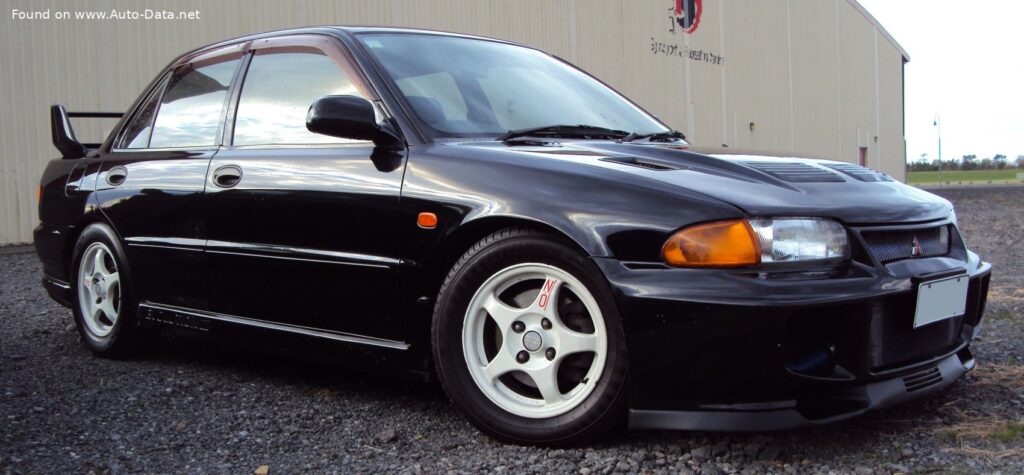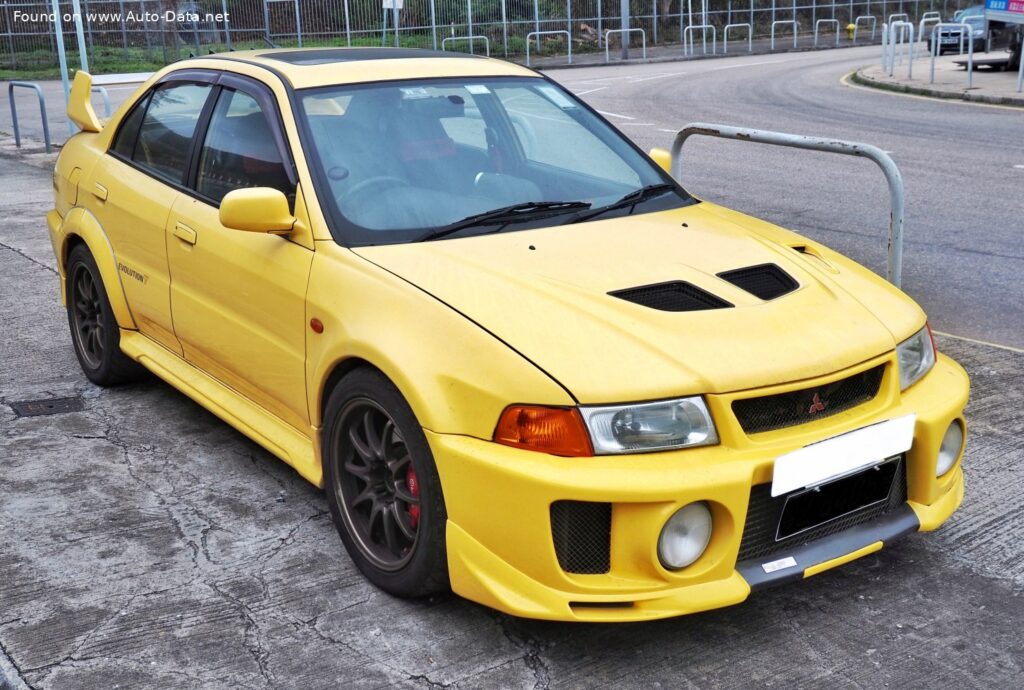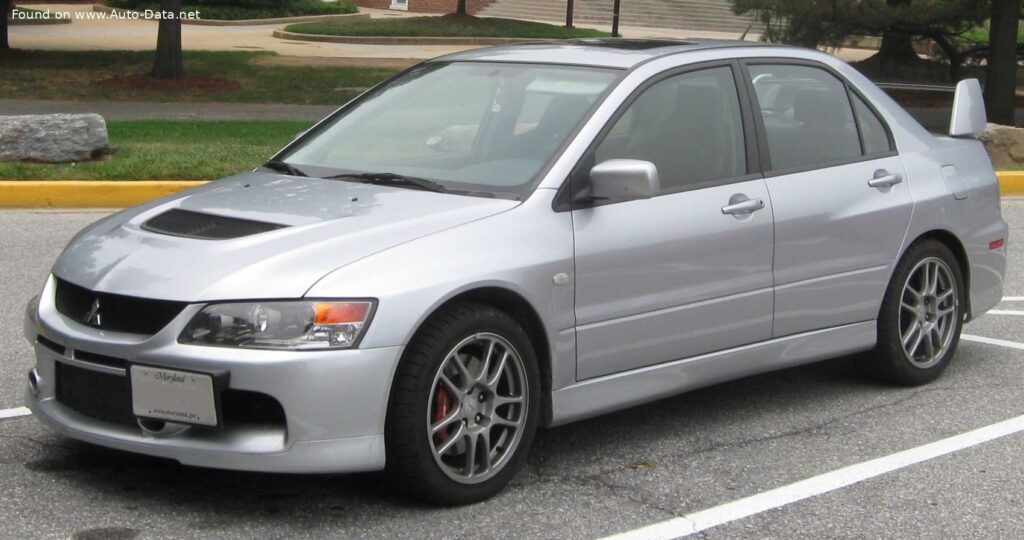
The Mitsubishi Lancer Evolution IX 2.0 MIVEC FQ-340 (345 Hp) 4WD represents a pinnacle in the lineage of rally-bred performance sedans, manufactured by Mitsubishi Motors from 2005 to 2007. As the ninth iteration of the iconic Lancer Evolution series, it built upon a rich heritage of motorsport success, primarily in the World Rally Championship (WRC). While the standard Lancer Evolution IX was a formidable machine globally, the FQ-340 variant was a special, high-performance edition primarily available in the United Kingdom, signifying a dealer-tuned, factory-backed upgrade that pushed the boundaries of the platform. This particular model, a four-door sedan with seating for five, firmly cemented its place in the sport compact segment, offering unparalleled performance and sophisticated all-wheel-drive technology in a practical package. It was a direct competitor to the Subaru Impreza WRX STI, a rivalry that defined an era of enthusiast driving.
Powertrain & Engine Architecture
At the core of the Mitsubishi Lancer Evolution IX 2.0 MIVEC FQ-340 (345 Hp) 4WD lies the legendary 4G63T engine, a 1997 cm³ (121.86 cu. in.) inline four-cylinder unit. This generation of the 4G63T was significant as it incorporated Mitsubishi’s MIVEC (Mitsubishi Innovative Valve timing Electronic Control) system, a variable valve timing technology applied to the intake camshaft. This addition refined the engine’s power delivery, improving both low-end torque and high-rpm breathing compared to previous Evolution models, enhancing its flexibility and responsiveness across the rev range.
The engine’s configuration is front, transverse, with a DOHC (Double Overhead Camshaft) valvetrain and four valves per cylinder. Key internal dimensions include an 85 mm (3.35 in.) cylinder bore and an 88 mm (3.46 in.) piston stroke, contributing to its robust and durable design. Fuel is delivered via a multi-port manifold injection system, and the engine’s formidable output is largely thanks to a turbocharger coupled with an intercooler, forcing a dense charge of air into the cylinders. With a compression ratio of 8.8:1, the engine is optimized for high boost pressures, characteristic of its rally-derived pedigree.
In the FQ-340 tune, the 4G63T engine produced an impressive 345 horsepower at 6800 rpm, translating to a remarkable power per liter output of 172.8 Hp/l. Torque figures were equally compelling, peaking at 435 Nm (320.84 lb.-ft.) at 4600 rpm. This substantial power and torque, combined with a kerb weight of 1400 kg (3086.47 lbs.), resulted in an exceptional weight-to-power ratio of 4.1 kg/Hp (246.4 Hp/tonne) and a weight-to-torque ratio of 3.2 kg/Nm (310.7 Nm/tonne). The engine is mated to a precise 6-speed manual transmission.
Driving Characteristics
The FQ-340 variant delivered breathtaking acceleration. The car could sprint from 0 to 60 mph in a mere 4.1 seconds, and 0 to 100 km/h (62 mph) in 4.3 seconds. Its top speed was electronically limited to 253 km/h (157.21 mph). The 6-speed manual transmission provided direct control over the engine’s output. The sophisticated all-wheel-drive (4WD) drivetrain architecture, a hallmark of the Lancer Evolution, permanently distributed power to all four wheels, ensuring maximum traction and stability. The FQ-340’s specific differential setup was part of its specialized tuning package, designed to optimize grip and handling. Compared to the standard Evolution IX, the FQ-340 offered a significantly more aggressive power delivery and a more responsive throttle. Lower trims, particularly those with the standard 280 hp engine, felt noticeably less urgent, especially in the mid-range. The manual transmission in the FQ-340 was geared for acceleration, with close ratios that kept the engine in its powerband. This contrasted with some lower-spec models that prioritized fuel economy with taller gearing.
Equipment & Trim Levels
The Mitsubishi Lancer Evolution IX FQ-340 was positioned as a premium, high-performance variant within the Evolution IX lineup. It was not an option package, but a distinct model with specific enhancements. Standard features included Recaro sports seats, designed to hold occupants firmly during aggressive driving. While not opulent, the interior was well-appointed for its segment, featuring essential creature comforts and a driver-centric cockpit layout. The steering wheel and gear shifter were ergonomically designed for precise control. Exterior features included flared wheel arches, a prominent rear spoiler (often carbon fiber), and a large front grille designed for optimal airflow. Unique badging and lighter wheels further differentiated it from the standard Evolution IX. Optional extras were limited, as the FQ-340 was already comprehensively equipped. However, some dealers offered bespoke interior trim options and upgraded audio systems.
Chassis & Braking
The Lancer Evolution IX featured an independent McPherson strut front suspension with a transverse stabilizer and an independent multi-link rear suspension, also with a transverse stabilizer. This setup provided excellent handling and control. Steering was handled by a hydraulic power-assisted rack and pinion system, providing excellent feedback to the driver. The car rode on 235/45 R17 tires mounted on 8J x 17-inch wheel rims, a setup carefully chosen for optimal grip and handling balance. The braking system comprised 320 mm ventilated discs at the front and 300 mm ventilated discs at the rear, complemented by ABS (Anti-lock Braking System). The FQ-340 often received upgraded brake pads and potentially larger rotors to cope with the increased power and performance.
Market Reception & Comparison
Critics lauded the Mitsubishi Lancer Evolution IX FQ-340 for its exceptional performance, handling, and overall driving experience. It was consistently praised for its responsive engine, precise steering, and tenacious grip. Compared to the standard Evolution IX, the FQ-340 was considered a significant step up in terms of performance and refinement. Fuel economy was not a strong point, typical for a high-performance vehicle of this type. The FQ-340’s fuel consumption was comparable to other high-output turbocharged engines of the era. Reliability was generally good, although the high-boost engine required diligent maintenance. Compared to the Subaru Impreza WRX STI, the Evo IX FQ-340 was often favored by drivers who preferred a more direct and engaging driving experience. The STI, with its boxer engine, offered a different character, but the Evo IX FQ-340 consistently impressed with its overall balance and performance.
Technical Specifications
| General Information | |
| Brand | Mitsubishi |
| Model | Lancer Evolution |
| Generation | Lancer Evolution IX |
| Type (Engine) | 2.0 MIVEC FQ-340 (345 Hp) 4WD |
| Production Start | 2005 year |
| Production End | 2007 year |
| Powertrain Architecture | Internal Combustion Engine |
| Body Type | Sedan |
| Seats | 5 |
| Doors | 4 |
| Performance Specifications | |
| Fuel Type | Petrol (Gasoline) |
| Acceleration 0 – 60 mph | 4.1 sec |
| Acceleration 0 – 100 km/h (0 – 62 mph) | 4.3 sec |
| Maximum Speed | 253 km/h (157.21 mph), Electronically Limited |
| Weight-to-Power Ratio | 4.1 kg/Hp (246.4 Hp/tonne) |
| Weight-to-Torque Ratio | 3.2 kg/Nm (310.7 Nm/tonne) |
| Engine Specifications | |
| Power | 345 Hp @ 6800 rpm |
| Power per Liter | 172.8 Hp/l |
| Torque | 435 Nm (320.84 lb.-ft.) @ 4600 rpm |
| Engine Layout | Front, Transverse |
| Engine Model/Code | 4G63T |
| Engine Displacement | 1997 cm³ (121.86 cu. in.) |
| Number of Cylinders | 4 |
| Engine Configuration | Inline |
| Cylinder Bore | 85 mm (3.35 in.) |
| Piston Stroke | 88 mm (3.46 in.) |
| Compression Ratio | 8.8:1 |
| Valves per Cylinder | 4 |
| Fuel Injection System | Multi-port manifold injection |
| Engine Aspiration | Turbocharger, Intercooler |
| Valvetrain | DOHC |
| Engine Oil Capacity | 5.3 l (5.6 US qt) |
| Coolant Capacity | 6 l (6.34 US qt) |
| Space, Volume and Weights | |
| Kerb Weight | 1400 kg (3086.47 lbs.) |
| Trunk (Boot) Space – Minimum | 430 l (15.19 cu. ft.) |
| Fuel Tank Capacity | 55 l (14.53 US gal) |
| Dimensions | |
| Length | 4490 mm (176.77 in.) |
| Width | 1770 mm (69.69 in.) |
| Height | 1450 mm (57.09 in.) |
| Wheelbase | 2625 mm (103.35 in.) |
| Front Track | 1515 mm (59.65 in.) |
| Rear Track | 1515 mm (59.65 in.) |
| Front Overhang | 930 mm (36.61 in.) |
| Rear Overhang | 935 mm (36.81 in.) |
| Ride Height (Ground Clearance) | 140 mm (5.51 in.) |
| Minimum Turning Circle (Turning Diameter) | 11.8 m (38.71 ft.) |
| Drivetrain, Brakes and Suspension Specifications | |
| Drivetrain Architecture | The Internal combustion engine (ICE) drives permanently the four wheels of the vehicle. |
| Drive Wheel | All-wheel drive (4×4) |
| Number of Gears and Type of Gearbox | 6 gears, manual transmission |
| Front Suspension | Independent type McPherson, Transverse stabilizer |
| Rear Suspension | Independent multi-link suspension, Transverse stabilizer |
| Front Brakes | Ventilated discs, 320 mm |
| Rear Brakes | Ventilated discs, 300 mm |
| Assisting Systems | ABS (Anti-lock braking system) |
| Steering Type | Steering rack and pinion |
| Power Steering | Hydraulic Steering |
| Tire Size | 235/45 R17 |
| Wheel Rims Size | 8J x 17 |
Legacy
The Mitsubishi Lancer Evolution IX, particularly models like the FQ-340, holds a revered position among performance car enthusiasts worldwide. While FQ models were primarily a UK phenomenon, their reputation for extreme performance and razor-sharp handling resonated globally. The Evolution series, and the Evo IX in particular, was the embodiment of Mitsubishi’s rally heritage, offering a direct link between the brutal efficiency of a WRC car and a street-legal vehicle. Its relatively short production run from 2005 to 2007, coupled with the limited availability of FQ models, has contributed to its collector status today. The FQ-340, with its staggering performance and specialized tuning, stands as a particularly potent symbol of the era when rally homologation cars ruled the enthusiast landscape, delivering supercar-level acceleration and handling in a relatively unassuming sedan body. Its impact continues to be felt in the aftermarket tuning scene and among collectors who cherish its raw, unadulterated driving experience. The 4G63T engine, while no longer in production, remains highly sought after for its durability and tuning potential. Well-maintained Evo IX FQ-340s command premium prices in the used car market, reflecting their rarity and iconic status.