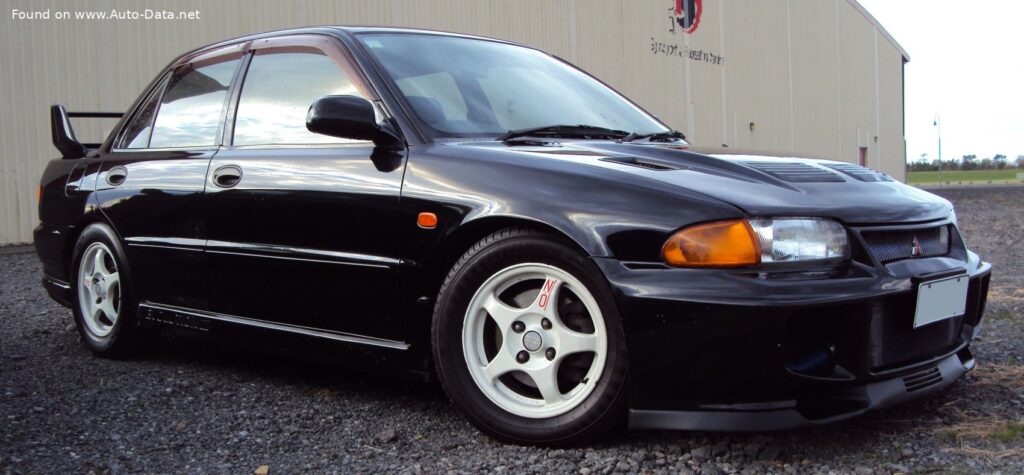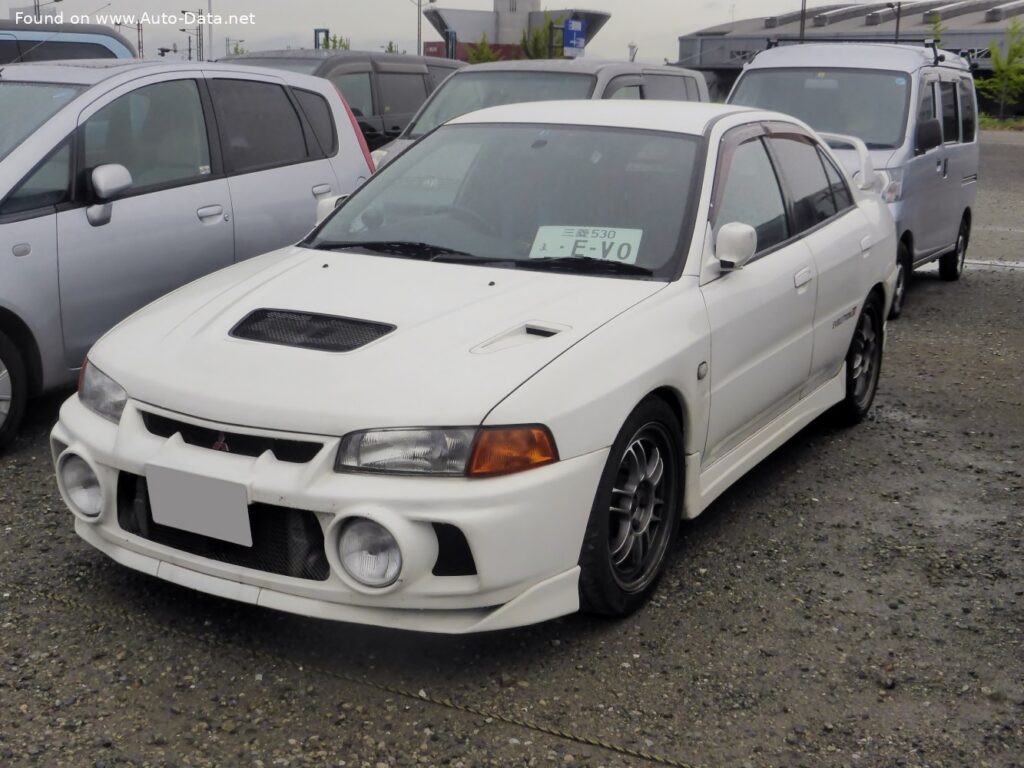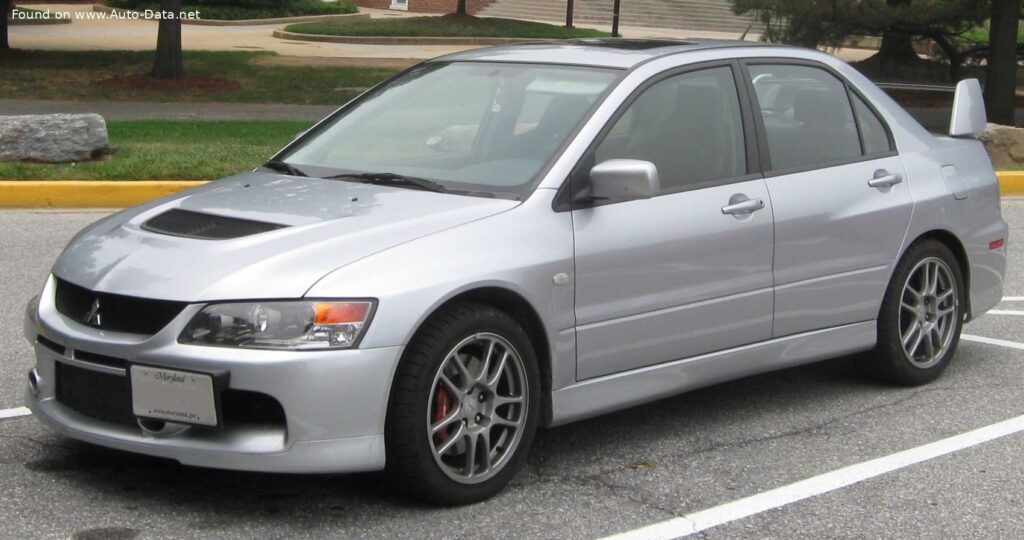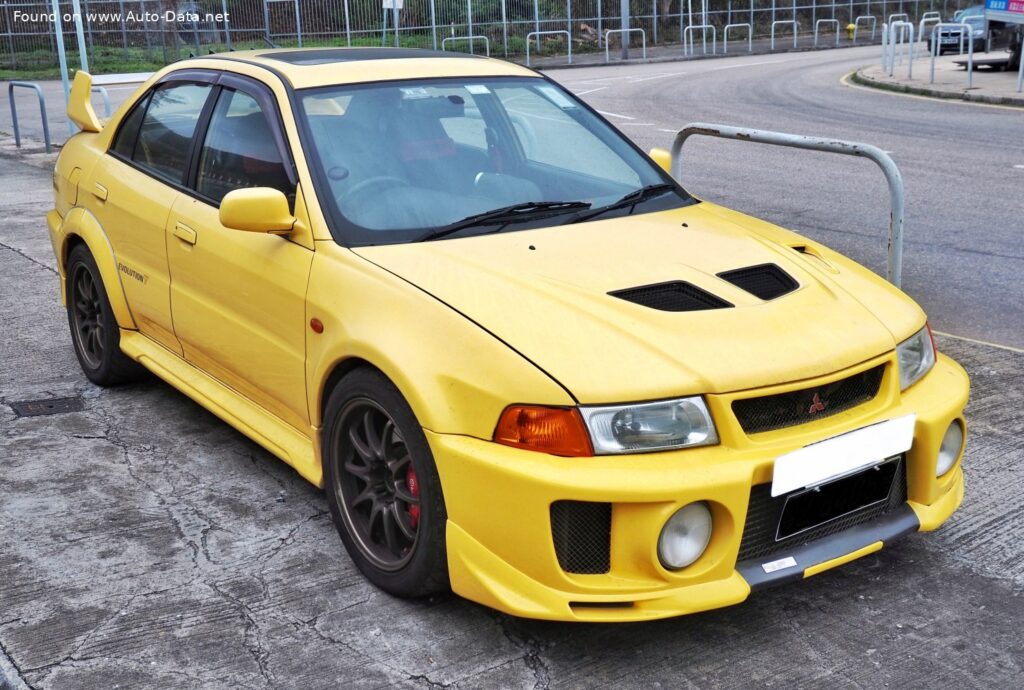
The Mitsubishi Lancer Evolution V, produced from 1998 to 1999, represents a crucial evolution in Mitsubishi’s legendary rally-bred performance sedan lineage. Building upon the successes of previous Evolution models, the V refined the aggressive styling, advanced powertrain, and sophisticated all-wheel-drive system that had established the series as a dominant force in motorsport and a favorite among automotive enthusiasts. This generation was a direct response to Mitsubishi’s ongoing pursuit of victory in the World Rally Championship (WRC), requiring continuous development to meet homologation standards and maximize performance. The Evolution V occupied a premium position within the Lancer lineup, representing the pinnacle of performance available at the time.
The 2.0L Turbocharged 4WD Automatic: A Unique Evolution V Configuration
While the Lancer Evolution V is most often associated with its five-speed manual transmission, a four-speed automatic transmission was offered as an option, albeit a less common one. This configuration, paired with the 2.0-liter turbocharged engine, presented a different driving experience compared to its manual counterpart. It catered to a buyer seeking the performance and all-wheel-drive capability of the Evolution V, but with the convenience of an automatic gearbox. This variant was primarily targeted towards the Japanese Domestic Market (JDM) and select international markets, and was not officially sold in the United States during its original production run, adding to its exclusivity.
Powertrain & Engine Architecture
The heart of the Mitsubishi Lancer Evolution V is the 4G63T engine, a 2.0-liter (1997 cc) inline-four, dual overhead camshaft (DOHC) powerplant. This engine is renowned for its robustness and exceptional tuning potential. In the Evolution V, it produced 280 horsepower at 6500 rpm, adhering to the “gentlemen’s agreement” among Japanese manufacturers to limit horsepower figures. However, the engine’s true potential was widely believed to be significantly higher. The engine’s specific output was an impressive 140.2 hp per liter.
Torque output was equally noteworthy, delivering 282.49 lb-ft (383 Nm) at 3500 rpm, providing a broad and accessible powerband. The 4G63T featured a multi-point fuel injection system and a turbocharger with an intercooler, ensuring efficient fuel delivery and forced induction. Key engine specifications included an 8.8:1 compression ratio, four valves per cylinder, an 85 mm bore, and an 88 mm stroke. The engine’s design prioritized high-revving performance and durability.
The four-speed automatic transmission used in this variant, while offering convenience, differed significantly from the more common five-speed manual. It featured electronically controlled hydraulic actuation and was designed to handle the engine’s substantial torque output. While not as engaging for performance driving as the manual, it provided smoother shifts and reduced driver fatigue, appealing to a different segment of the market.
Transmission Details
The automatic transmission in the Evolution V was not a particularly modern design by today’s standards, but it was robust and capable. Gear ratios were optimized for acceleration and highway cruising, though it lacked the close ratios of the manual transmission. The transmission’s programming prioritized smooth shifts and drivability over outright performance, resulting in a slightly less responsive feel compared to the manual version.
Driving Characteristics
The Evolution V with the automatic transmission offered a unique driving experience. While it retained the all-wheel-drive system’s exceptional grip and stability, the automatic gearbox altered the car’s character. Acceleration from 0 to 60 mph was achieved in approximately 4.7 seconds, and the top speed reached 136.7 mph (220 km/h). However, the automatic transmission resulted in a slight performance deficit compared to the manual version, primarily due to power losses within the transmission and less precise gear selection. The automatic transmission did offer a more relaxed driving experience, particularly in city traffic, making it a more practical option for daily use.
The all-wheel-drive system, a hallmark of the Evolution series, provided exceptional traction in all conditions. The Active Center Differential (ACD) allowed for variable torque distribution between the front and rear axles, optimizing grip based on driving conditions. This system, combined with the robust suspension, resulted in a car that felt planted and secure, even when pushed to its limits.
Equipment & Trim Levels
The Evolution V, regardless of transmission choice, was well-equipped for a performance sedan of its era. Standard features included power windows, power locks, air conditioning, and a high-quality audio system. The interior featured supportive bucket seats upholstered in a combination of cloth and leather. The dashboard layout was functional and driver-focused, with clear instrumentation and easy-to-reach controls. Optional extras included a sunroof, upgraded audio systems, and various cosmetic enhancements.
The automatic transmission variant often came with slightly different interior trim options compared to the manual version, sometimes featuring woodgrain accents or different seat materials. However, the core features remained consistent across both models.
Chassis & Braking
The Evolution V featured a robust chassis designed for spirited driving. The suspension system utilized coil springs and dampers at all four corners, tuned for a firm yet communicative ride. The front suspension employed MacPherson struts, while the rear utilized a multi-link setup. Stabilizer bars were fitted to both the front and rear axles to reduce body roll. The braking system consisted of ventilated disc brakes on all four wheels, complemented by an Anti-lock Braking System (ABS) for enhanced safety and control. The car rode on 225/45 ZR17 tires, providing ample grip.
The automatic transmission variant did not receive any significant changes to the chassis or braking system compared to the manual version. The suspension tuning remained consistent, prioritizing handling and stability.
Market Reception & Comparison
The Mitsubishi Lancer Evolution V, including the automatic transmission variant, received positive reviews from automotive critics. It was praised for its exceptional performance, handling, and all-wheel-drive system. However, the automatic transmission was often criticized for being less engaging than the manual gearbox. Compared to other trims in the Evolution lineup, the automatic version offered a more comfortable and convenient driving experience, but at the expense of some performance. Its primary competitor was the Subaru Impreza WRX STI, which also offered a similar blend of performance and all-wheel-drive capability.
Fuel economy for the automatic Evolution V was rated at approximately 18 mpg city and 24 mpg highway. Reliability was generally good, although the turbocharged engine and complex all-wheel-drive system required regular maintenance.
Technical Specifications
| Category | Specification |
| Brand | Mitsubishi |
| Model | Lancer Evolution V |
| Generation | Lancer Evolution V |
| Type (Engine) | 2.0 (280 Hp) 4WD Automatic |
| Start of Production | 1998 |
| End of Production | 1999 |
| Powertrain Architecture | Internal Combustion Engine |
| Body Type | Sedan |
| Seats | 5 |
| Doors | 4 |
| Fuel Type | Petrol (Gasoline) |
| Acceleration 0 – 60 mph | 4.7 seconds |
| Maximum Speed | 136.7 mph (220 km/h) |
| Weight-to-power ratio | 4.5 kg/Hp, 222.2 Hp/tonne |
| Power | 280 Hp @ 6500 rpm |
| Power per liter | 140.2 Hp/l |
| Torque | 282.49 lb.-ft. (383 Nm) @ 3500 rpm |
| Engine Layout | Front, Transverse |
| Engine Displacement | 2.0 liters (1997 cm3 / 121.86 cu. in.) |
| Number of Cylinders | 4 |
| Engine Configuration | Inline |
| Cylinder Bore | 3.35 in. (85 mm) |
| Piston Stroke | 3.46 in. (88 mm) |
| Compression Ratio | 8.8:1 |
| Number of Valves per Cylinder | 4 |
| Fuel Injection System | Multi-port manifold injection |
| Engine Aspiration | Turbocharger |
| Valvetrain | DOHC |
| Curb Weight | 2777.82 lbs (1260 kg) |
| Fuel Tank Capacity | 13.21 US gal (50 l) |
| Length | 171.26 in. (4350 mm) |
| Width | 69.69 in. (1770 mm) |
| Height | 55.71 in. (1415 mm) |
| Wheelbase | 98.82 in. (2510 mm) |
| Drive Wheel | All-wheel drive (4×4) |
| Number of Gears and Gearbox Type | 4 gears, automatic transmission |
Legacy
The Mitsubishi Lancer Evolution V, even in its less common automatic transmission guise, remains a highly sought-after vehicle among enthusiasts. Its robust engine, sophisticated all-wheel-drive system, and aggressive styling have cemented its place in automotive history. While the automatic transmission may not be as desirable as the manual version, it offers a unique driving experience and appeals to a different segment of the market. Today, well-maintained Evolution V models command high prices in the used car market, reflecting their rarity and iconic status. The 4G63T engine continues to be revered for its durability and tuning potential, and the Evolution V’s legacy as a street-legal rally car endures.