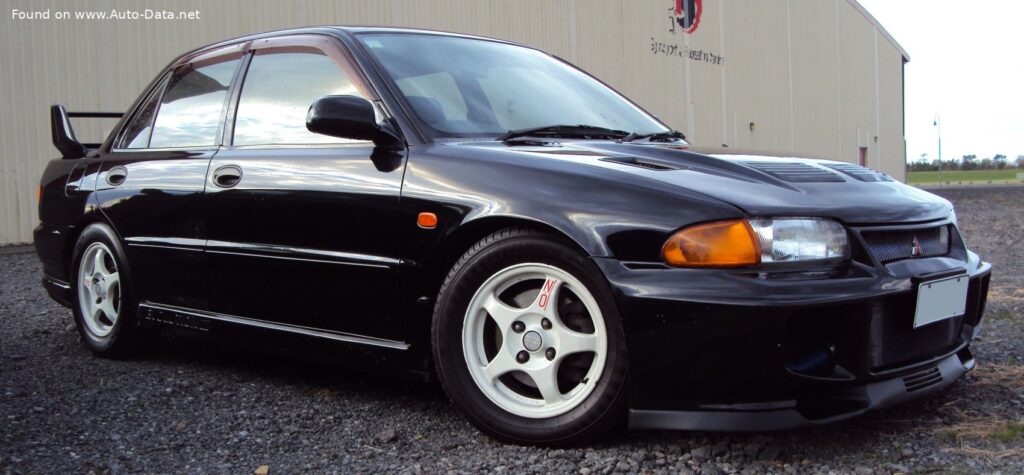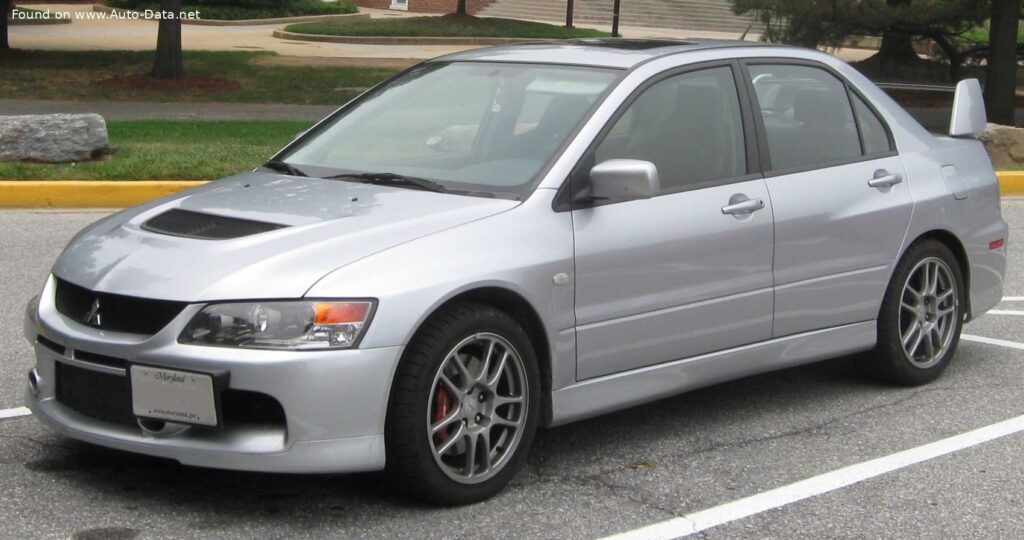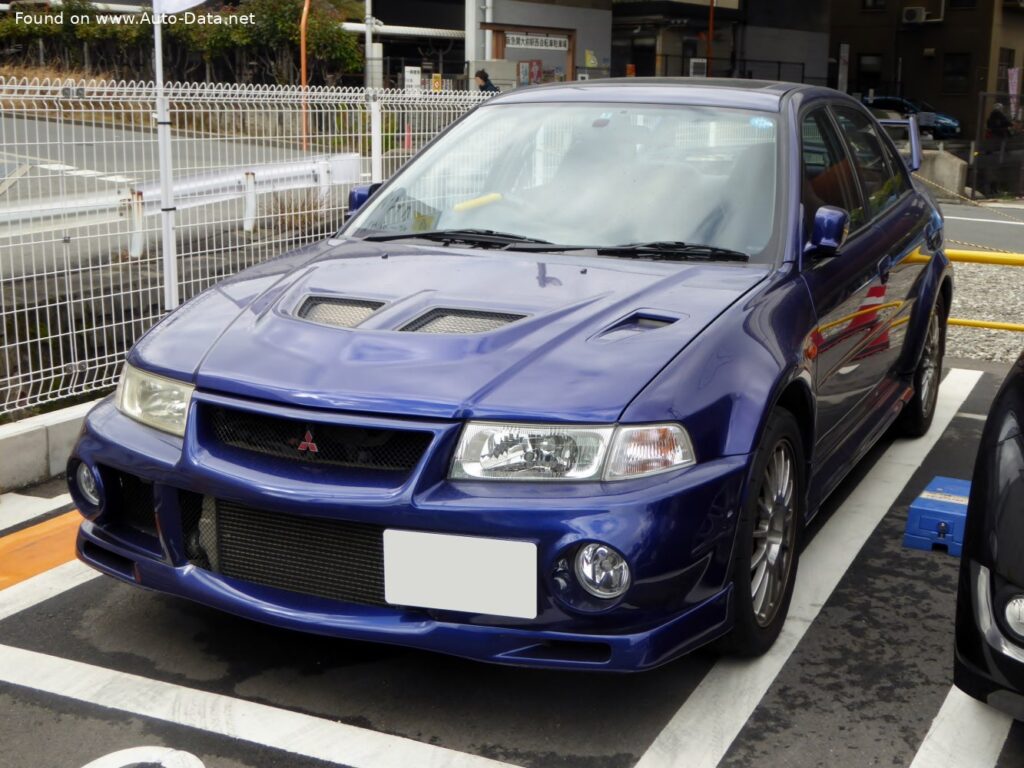
The Mitsubishi Lancer Evolution VI, often referred to simply as the Evo VI, represents a pivotal chapter in the history of high-performance, rally-bred sedans. Produced by Mitsubishi Motors between 1999 and 2001, this sixth iteration of the Lancer Evolution series continued the tradition of homologation specials designed for competition in the World Rally Championship (WRC). While never officially sold through Mitsubishi dealerships in the United States, the Evo VI gained a legendary reputation in Japan and Europe, becoming a highly desirable vehicle for enthusiasts globally. It epitomized Mitsubishi’s engineering capabilities during a golden age of rally racing, combining a powerful turbocharged engine with a sophisticated all-wheel-drive system in a compact, four-door sedan. The Evo VI was built on the 1HX0/A3 platform, sharing its basic architecture with the standard Lancer but receiving extensive performance-focused modifications.
The 1999-2001 Mitsubishi Lancer Evolution VI: A Mid-Range Performance Icon
The Evolution VI occupied a mid-range position within the broader Lancer lineup of the time. While not the most luxurious or technologically advanced Lancer variant, it was positioned as the performance flagship, offering a significant step up in capability compared to the standard Lancer models and even the lower-spec Evolution variants. It served as the gateway to the Evo experience for many enthusiasts, offering a compelling blend of performance, practicality, and relative affordability compared to the higher-spec models like the Tommi Mäkinen Edition.
Powertrain & Engine Architecture
At the heart of the Evo VI lies the 4G63T, a 2.0-liter (1997 cc) inline-four cylinder engine. This engine, a cornerstone of the Evolution series, featured a durable cast iron block and aluminum cylinder head. The engine utilized a dual overhead camshaft (DOHC) valvetrain with four valves per cylinder, optimizing airflow for increased power output. Fuel delivery was managed by a multi-point fuel injection system, ensuring precise fuel metering. A large Garrett turbocharger, typically a GT28RS, and an intercooler were employed to provide forced induction, significantly boosting power. The compression ratio was set at 8.8:1, a common compromise between power and reliability in turbocharged engines.
The 4G63T in the Evo VI was officially rated at 280 horsepower at 6500 rpm and 275 lb-ft (373 Nm) of torque at 2750 rpm, adhering to the “gentleman’s agreement” among Japanese manufacturers to limit advertised power figures. However, independent dyno tests often revealed actual output closer to 300 hp. The engine’s robust construction allowed for significant tuning potential, with many owners modifying their Evo VIs to achieve substantially higher power levels. The Evo VI was primarily offered with a 5-speed manual transmission, providing precise gear changes and a direct connection to the engine. While an automatic transmission was available in some markets, it was less common and generally considered less desirable by enthusiasts due to its impact on performance and driving feel.
Driving Characteristics
The Evo VI with the 5-speed manual transmission delivered a thrilling driving experience characterized by responsive acceleration and exceptional handling. The turbocharger provided a noticeable boost in power, creating a surge of acceleration in the mid-range. The 4G63T engine was known for its strong bottom-end torque, making it surprisingly tractable even at lower speeds. The all-wheel-drive system, coupled with the Active Yaw Control (AYC), provided remarkable grip and stability, allowing the Evo VI to corner with confidence. Compared to the manual transmission versions, the automatic transmission models offered a more relaxed driving experience, but at the expense of responsiveness and driver engagement. The automatic transmission, while reliable, had slower shift times and a less direct feel, diminishing the car’s overall performance potential. The gear ratios were optimized for acceleration and mid-range power, rather than outright top speed.
Equipment & Trim Levels
The Evo VI was relatively spartan in terms of luxury features, prioritizing performance over comfort. Standard equipment typically included Recaro sport seats, a Momo steering wheel, and a basic audio system. Air conditioning was often standard, but power windows and central locking were not always included, depending on the specific trim level and market. The interior was functional and driver-focused, with a clear and concise instrument cluster. Optional extras included upgraded audio systems, sunroofs, and various cosmetic enhancements. The Tommi Mäkinen Edition (TME) offered a more comprehensive set of upgrades, including a unique front bumper, rear wing, and a titanium turbocharger. The standard interior upholstery was typically a combination of cloth and leather, with a dark color scheme. The dashboard layout was straightforward and functional, with a focus on providing the driver with essential information.
Chassis & Braking
The Evo VI featured a reinforced chassis and a sophisticated suspension system designed to maximize handling performance. The front suspension utilized MacPherson struts, while the rear suspension employed a multi-link setup. Both ends of the suspension were equipped with transverse stabilizers to minimize body roll. The braking system consisted of ventilated disc brakes on all four wheels, providing ample stopping power. Anti-lock Braking System (ABS) was standard. The Evo VI’s suspension was tuned for a firm ride, prioritizing handling precision over comfort. The car rode on 17-inch alloy wheels, typically fitted with 225/45R17 tires, providing excellent grip. The rear differential incorporated AYC, a torque vectoring system that actively distributed torque between the rear wheels, enhancing cornering ability and reducing understeer.
Market Reception & Comparison
The Mitsubishi Lancer Evolution VI received widespread acclaim from automotive journalists and enthusiasts alike. It was praised for its exceptional handling, powerful engine, and overall performance. Critics noted its raw driving experience and its ability to deliver supercar-like performance at a relatively affordable price point. Compared to the Subaru Impreza WRX STI, the Evo VI was often considered to be the more focused and aggressive performer, with sharper handling and a more potent engine. However, the STI was often praised for its more refined interior and its smoother ride. The Evo VI’s fuel economy was reasonable for a high-performance vehicle, averaging around 20-25 mpg in mixed driving conditions. Reliability was generally good, although the turbocharged engine and complex all-wheel-drive system required regular maintenance.
Technical Specifications
| Category | Specification |
| Brand | Mitsubishi |
| Model | Lancer Evolution VI |
| Type (Engine) | 2.0L Turbocharged 4WD |
| Production Start | 1999 |
| Production End | 2001 |
| Powertrain Architecture | Internal Combustion Engine |
| Body Type | Sedan |
| Seats | 5 |
| Doors | 4 |
| Fuel Type | Petrol (Gasoline) |
| Acceleration 0-60 mph | 4.7 sec |
| Acceleration 0-62 mph (0-100 km/h) | 4.9 sec |
| Maximum Speed | 155 mph (250 km/h) (electronically limited) |
| Power | 280 hp @ 6500 rpm |
| Torque | 275 lb-ft (373 Nm) @ 2750 rpm |
| Engine Displacement | 2.0 liters (1997 cc) |
| Engine Model/Code | 4G63T |
| Compression Ratio | 8.8:1 |
| Valves per Cylinder | 4 |
| Fuel Injection System | Multi-point |
| Turbocharger | Garrett GT28RS (typical) |
| Kerb Weight | 2998 lbs (1360 kg) |
| Fuel Tank Capacity | 13.2 gal (50 liters) |
| Length | 171.3 in (4350 mm) |
| Width | 69.7 in (1770 mm) |
| Height | 55.3 in (1405 mm) |
Legacy
The Mitsubishi Lancer Evolution VI remains a highly sought-after vehicle among enthusiasts. Its robust engine, sophisticated all-wheel-drive system, and rally-bred heritage have cemented its status as a true icon of the JDM scene. Well-maintained examples command high prices in the used car market. The 4G63T engine is renowned for its durability and tuning potential, making it a popular choice for performance upgrades. While the Evo VI requires regular maintenance, its overall reliability is generally good. The car’s legacy extends beyond its performance capabilities; it represents a golden era of rally racing and a commitment to engineering excellence. The Evo VI’s influence can be seen in subsequent generations of the Lancer Evolution, as well as in other high-performance vehicles. It continues to inspire enthusiasts and serve as a benchmark for compact performance sedans.