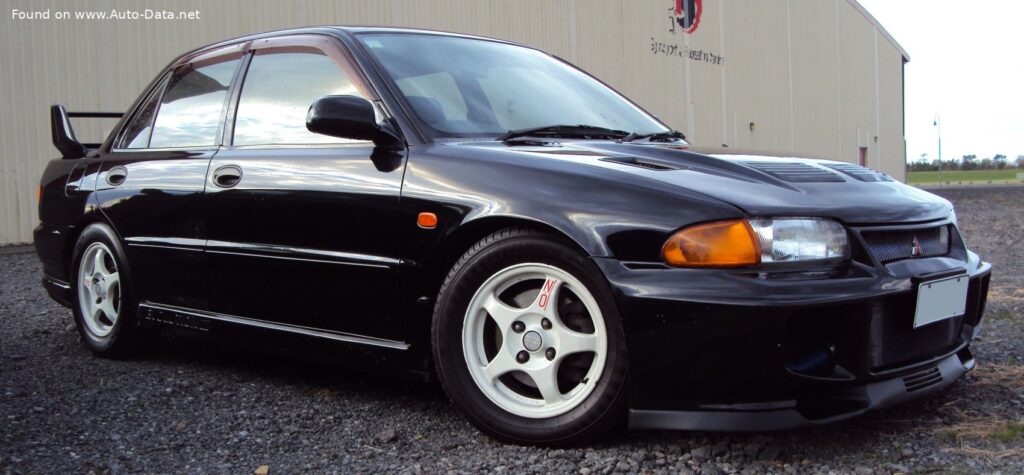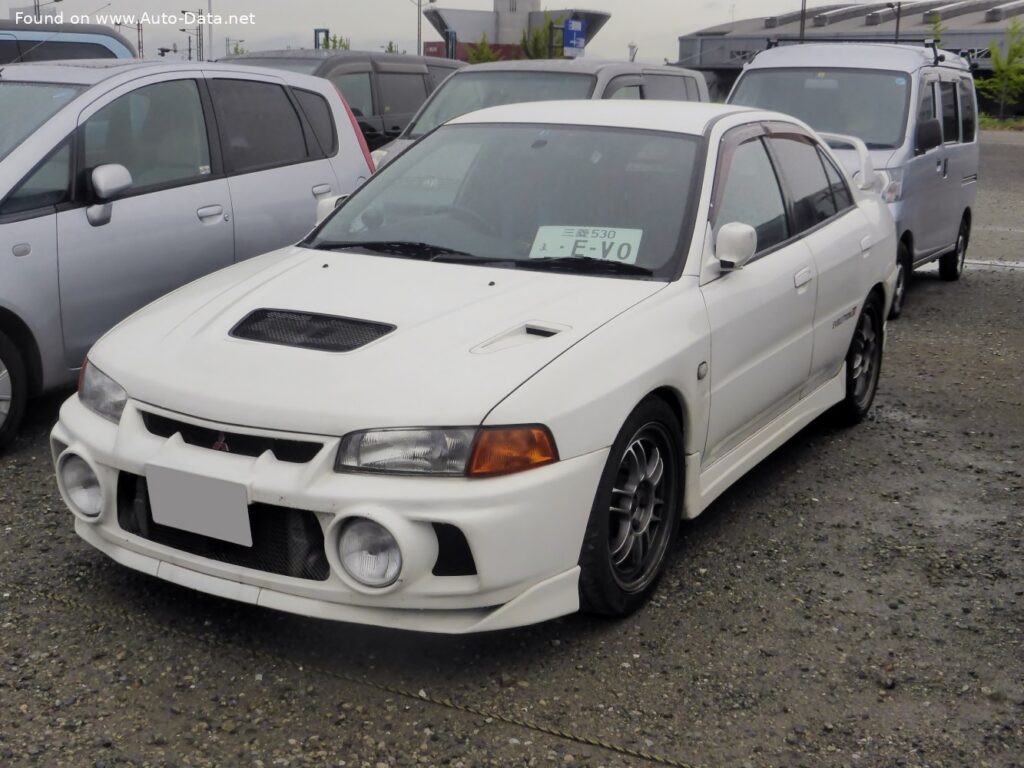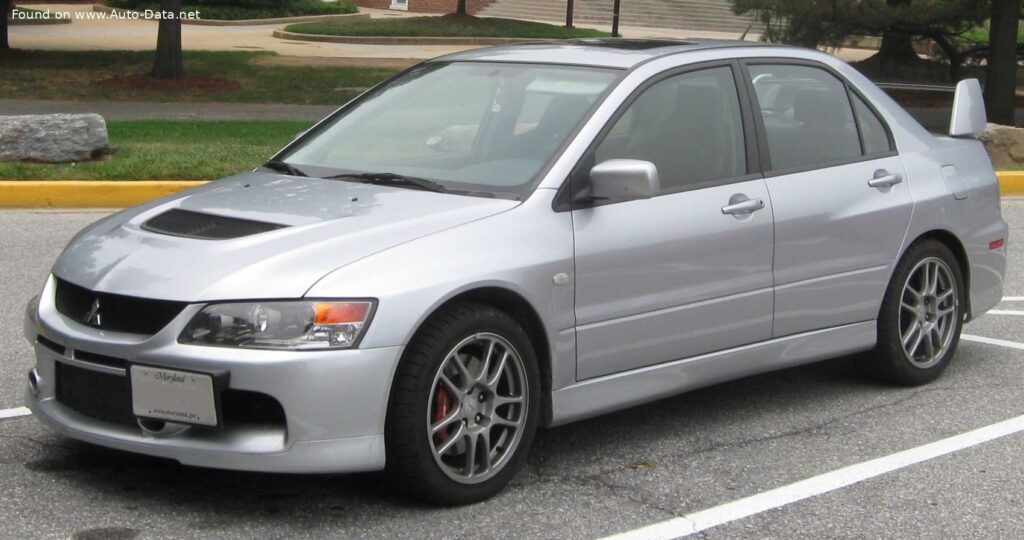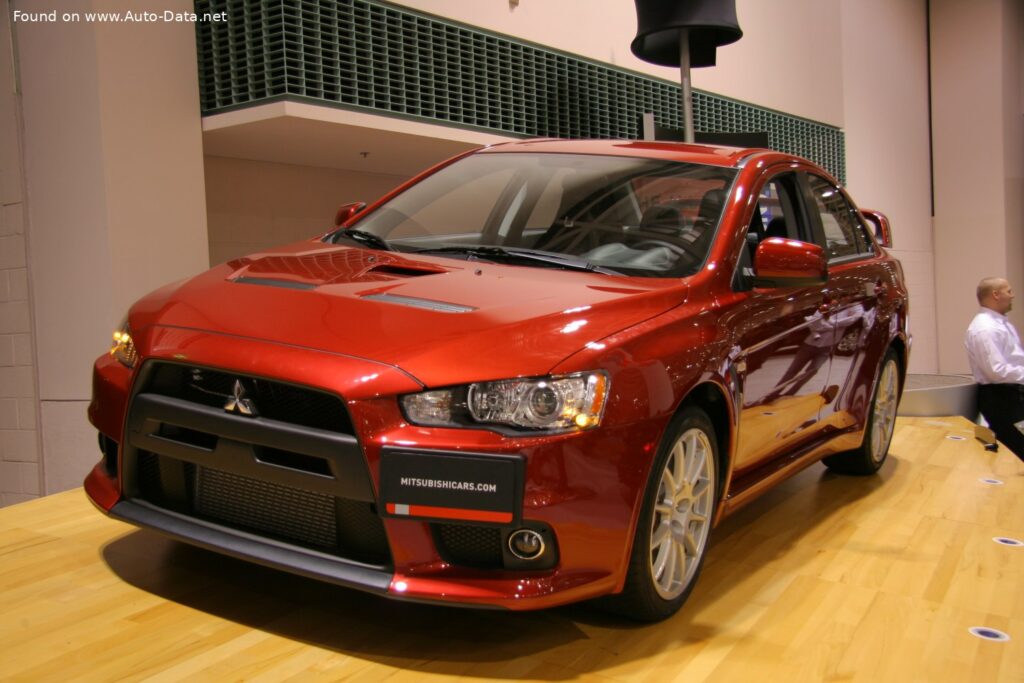
The Mitsubishi Lancer Evolution X 2.0 MIVEC (295 Hp) S-AWC TC-SST represents the tenth and final generation of Mitsubishi’s legendary high-performance sports sedan, the Lancer Evolution. Unveiled in 2007 and entering production in 2008, the Evolution X marked a significant departure from its predecessors in several key areas, while retaining the core rally-bred spirit that defined the “Evo” nameplate. This iteration was engineered to be a more refined and technologically advanced machine, designed to compete in the fiercely contested global performance sedan market, particularly against its arch-rival, the Subaru WRX STI.
The Evolution X, often referred to simply as “Evo X,” was built on Mitsubishi’s new global C-platform, which also underpinned the standard Lancer. However, it received extensive modifications to transform it into a formidable street and track weapon. For the 2008-2010 model years, the 2.0 MIVEC (295 Hp) S-AWC TC-SST variant showcased a blend of potent turbocharged power, sophisticated all-wheel-drive technology, and an advanced dual-clutch transmission, aiming to offer an unparalleled driving experience. This model continued the Evolution’s legacy as a four-door sedan capable of supercar-baiting performance, but with a newfound emphasis on driver engagement through cutting-edge electronic aids and a more premium interior.
Powertrain & Engine Architecture
At the heart of the Mitsubishi Lancer Evolution X 2.0 MIVEC (295 Hp) S-AWC TC-SST lies the all-new 4B11T engine, a 2.0-liter (1998 cm3 or 121.93 cu. in.) inline-four aluminum block power plant. This engine represented a significant departure from the venerable 4G63T found in previous generations, incorporating Mitsubishi Innovative Valve timing Electronic Control (MIVEC) on both intake and exhaust camshafts. Equipped with a robust turbocharger and an intercooler, the 4B11T delivered a potent 295 horsepower at 6500 rpm. Its maximum torque output was 269.95 lb.-ft. (366 Nm) available at a relatively low 3500 rpm, providing a broad and accessible powerband crucial for both spirited driving and daily usability.
The 4B11T engine utilizes a multi-port fuel injection system and a DOHC valvetrain with four valves per cylinder, ensuring optimal airflow and combustion efficiency. The compression ratio is 9:1, a common figure for turbocharged engines balancing power and reliability. The engine’s block is constructed from aluminum alloy, contributing to weight reduction. The turbocharger is a twin-scroll design, improving responsiveness and reducing turbo lag.
Mated to this formidable engine was Mitsubishi’s innovative Twin Clutch Sportronic Shift Transmission (TC-SST), a 6-speed automatic dual-clutch gearbox. This transmission offered rapid, seamless gear changes, allowing drivers to extract maximum performance from the engine while also providing the convenience of an automatic for daily driving. The TC-SST featured different driving modes, including Normal, Sport, and Super Sport, which adjusted shift points and aggressiveness to suit various driving conditions and preferences. This advanced transmission, combined with the power output, resulted in a weight-to-power ratio of 5.4 kg/Hp (185.5 Hp/tonne) and a weight-to-torque ratio of 4.3 kg/Nm (230.2 Nm/tonne), underscoring its performance pedigree.
Driving Characteristics
The 2.0 MIVEC (295 Hp) S-AWC TC-SST variant of the Evolution X offered a distinct driving experience compared to its siblings. While the manual transmission versions provided a more direct connection to the engine, the TC-SST offered incredibly quick and consistent shifts, often resulting in faster acceleration times. The automatic transmission was particularly well-suited for daily driving, providing a smooth and comfortable experience. However, in Sport and Super Sport modes, the TC-SST transformed the Evo X into a track-focused machine, delivering aggressive shifts and precise control.
Compared to the earlier Evolution models with the 4G63T engine, the Evo X felt more refined and less raw. The 4B11T engine, while producing comparable power, delivered it in a more linear and predictable manner. The S-AWC system played a crucial role in enhancing handling, providing exceptional grip and stability in all conditions. The gear ratios in the TC-SST were optimized for both acceleration and fuel efficiency, offering a balance between performance and practicality. The electronically controlled center differential and active yaw control further enhanced the car’s cornering ability, allowing it to rotate and maintain grip with remarkable precision.
Equipment & Trim Levels
The Evolution X 2.0 MIVEC (295 Hp) S-AWC TC-SST typically came standard with a comprehensive list of features. These included Recaro sport seats, a premium audio system, automatic climate control, power windows and locks, and keyless entry. The interior upholstery was typically a combination of leather and suede, providing a sporty and luxurious feel. The dashboard featured aluminum trim and a multi-information display that provided real-time data on engine performance, S-AWC settings, and other vehicle parameters.
Optional extras included a sunroof, navigation system, and upgraded Brembo brakes. The exterior could be customized with various options, such as different wheel designs, rear spoilers, and body kits. The “Final Edition” models, released towards the end of production, featured unique styling elements and exclusive interior trim.
Chassis & Braking
The Evolution X’s chassis was designed for maximum rigidity and performance. It featured a reinforced unibody construction and extensive use of high-strength steel. The front suspension utilized an independent McPherson strut setup with coil springs and a transverse stabilizer, while the rear employed an independent multi-link suspension with coil springs and a transverse stabilizer. This combination provided a firm yet communicative ride.
Braking power was supplied by large ventilated discs at both the front (350 mm) and rear (330 mm), complemented by an Anti-lock Braking System (ABS) for enhanced safety. The braking system was designed to withstand repeated hard use on the track. The car rode on 245/40 R18 tires mounted on 8.5J x 18 wheel rims, providing substantial grip. Steering was a hydraulic rack and pinion system, offering direct feedback to the driver.
Market Reception & Comparison
Critics generally praised the Mitsubishi Lancer Evolution X 2.0 MIVEC (295 Hp) S-AWC TC-SST for its exceptional performance, handling, and advanced technology. The S-AWC system was widely regarded as a game-changer, providing a level of grip and stability that was unmatched by many competitors. The TC-SST transmission was also praised for its quick and seamless shifts. However, some critics noted that the Evo X lacked the raw, visceral feel of older Evolution models.
Compared to other trims in the Lancer Evolution lineup, the 2.0 MIVEC (295 Hp) S-AWC TC-SST variant represented the top-of-the-line model. It offered the highest level of performance and technology, making it the most desirable option for enthusiasts. Fuel economy was comparable to other high-performance sedans, with a combined rating of 22.4 US mpg (10.5 l/100 km). Reliability was generally good, although some owners reported issues with the TC-SST transmission.
Technical Specifications
| Brand | Mitsubishi |
| Model | Lancer Evolution |
| Generation | Lancer Evolution X |
| Type (Engine) | 2.0 MIVEC (295 Hp) S-AWC TC-SST |
| Start of Production | 2008 year |
| End of Production | 2010 year |
| Powertrain Architecture | Internal Combustion engine |
| Body Type | Sedan |
| Seats | 5 |
| Doors | 4 |
| Performance Specs | |
| Fuel Consumption (Urban, NEDC) | 13.9 l/100 km (16.9 US mpg) |
| Fuel Consumption (Extra Urban, NEDC) | 8.5 l/100 km (27.7 US mpg) |
| Fuel Consumption (Combined, NEDC) | 10.5 l/100 km (22.4 US mpg) |
| CO2 Emissions (NEDC) | 250 g/km |
| Fuel Type | Petrol (Gasoline) |
| Acceleration 0 – 60 mph | 6 seconds |
| Acceleration 0 – 100 km/h | 6.3 seconds |
| Maximum Speed | 150.37 mph (242 km/h) |
| Emission Standard | Euro 4 |
| Weight-to-Power Ratio | 5.4 kg/Hp, 185.5 Hp/tonne |
| Weight-to-Torque Ratio | 4.3 kg/Nm, 230.2 Nm/tonne |
| Engine Specs | |
| Power | 295 Hp @ 6500 rpm |
| Power Per Liter | 147.6 Hp/l |
| Torque | 269.95 lb.-ft. (366 Nm) @ 3500 rpm |
| Engine Layout | Front, Transverse |
| Engine Model/Code | 4B11T |
| Engine Displacement | 1998 cm3 (121.93 cu. in.) |
| Number of Cylinders | 4 |
| Engine Configuration | Inline |
| Cylinder Bore | 86 mm (3.39 in.) |
| Piston Stroke | 86 mm (3.39 in.) |
| Compression Ratio | 9:1 |
| Number of Valves Per Cylinder | 4 |
| Fuel Injection System | Multi-port manifold injection |
| Engine Aspiration | Turbocharger, Intercooler |
| Valvetrain | DOHC |
| Engine Oil Capacity | 5.6 l (5.92 US qt) |
| Coolant Capacity | 7.5 l (7.93 US qt) |
| Space, Volume and Weights | |
| Kerb Weight | 1590 kg (3505.35 lbs) |
| Max. Weight | 2040 kg (4497.43 lbs) |
| Max Load | 450 kg (992.08 lbs) |
| Trunk (Boot) Space – Minimum | 323 l (11.41 cu. ft.) |
| Fuel Tank Capacity | 55 l (14.53 US gal) |
| Dimensions | |
| Length | 4505 mm (177.36 in.) |
| Width | 1810 mm (71.26 in.) |
| Height | 1480 mm (58.27 in.) |
| Wheelbase | 2650 mm (104.33 in.) |
| Front Track | 1545 mm (60.83 in.) |
| Rear (Back) Track | 1545 mm (60.83 in.) |
| Front Overhang | 920 mm (36.22 in.) |
| Rear Overhang | 935 mm (36.81 in.) |
| Ride Height (Ground Clearance) | 135 mm (5.31 in.) |
| Minimum Turning Circle (Diameter) | 11.8 m (38.71 ft.) |
| Drivetrain, Brakes and Suspension Specs | |
| Drivetrain Architecture | Internal Combustion engine (ICE) drives permanently the four wheels. |
| Drive Wheel | All-wheel drive (4×4) |
| Number of Gears and Type of Gearbox | 6 gears, automatic transmission TC-SST |
| Front Suspension | Coil spring, Independent type McPherson, Transverse stabilizer |
| Rear Suspension | Independent multi-link suspension, Transverse stabilizer, Coil spring |
| Front Brakes | Ventilated discs, 350 mm |
| Rear Brakes | Ventilated discs, 330 mm |
| Assisting Systems | ABS (Anti-lock braking system) |
| Steering Type | Steering rack and pinion |
| Power Steering | Hydraulic Steering |
| Tires Size | 245/40 R18 |
| Wheel Rims Size | 8.5J x 18 |
Legacy
The Mitsubishi Lancer Evolution X, particularly the 2.0 MIVEC (295 Hp) S-AWC TC-SST variant, carved out a significant niche in the performance automotive landscape. As the final iteration of a legendary lineage, it faced immense pressure to uphold the rally-inspired heritage while adapting to modern demands for refinement, technology, and broader appeal. Its primary competitor throughout its lifespan was the Subaru WRX STI, and the rivalry between these two Japanese performance icons fueled a passionate fanbase and relentless innovation in the segment.
The Evo X’s impact was characterized by its sophisticated Super All-Wheel Control (S-AWC) system and the introduction of the Twin Clutch Sportronic Shift Transmission (TC-SST). While some purists initially lamented the departure from the raw, mechanical feel of older Evos and the optional automatic transmission, the TC-SST proved to be a remarkably effective and engaging gearbox, offering lightning-fast shifts that often outpaced manual counterparts. S-AWC, with its array of electronic differentials and stability controls, made the Evo X incredibly capable at handling corners and maximizing traction, allowing drivers of varying skill levels to experience its formidable performance.
The Evolution X was lauded for its exceptional grip, precise steering, and powerful braking, making it a formidable track-day weapon and an exhilarating road car. Its aggressive styling, including the wide body and prominent rear wing, instantly communicated its performance intent. While it offered a more refined interior and a quieter ride than previous generations, it still maintained a firm suspension that prioritized handling over ultimate comfort, a characteristic appreciated by enthusiasts.
However, the Evo X’s tenure was relatively short-lived. The global automotive industry was shifting towards greater fuel efficiency and electrification, and Mitsubishi, facing financial pressures, began to re-evaluate its product strategy. The decision to discontinue the Lancer Evolution after the X generation was a somber moment for many automotive enthusiasts worldwide. The final “Final Edition” models in 2015 marked the end of an era, leaving a void in the performance sedan market that few cars could truly fill.
Today, the Mitsubishi Lancer Evolution X is revered as a modern classic and a testament to Mitsubishi’s engineering prowess. Its blend of a potent turbocharged engine, advanced all-wheel-drive technology, and a sophisticated dual-clutch transmission ensures its place in automotive history. It represents the pinnacle of Mitsubishi’s rally-bred performance philosophy in a production car, offering a driving experience that remains thrilling and engaging, cementing its legacy as one of the most iconic Japanese sports sedans ever produced.