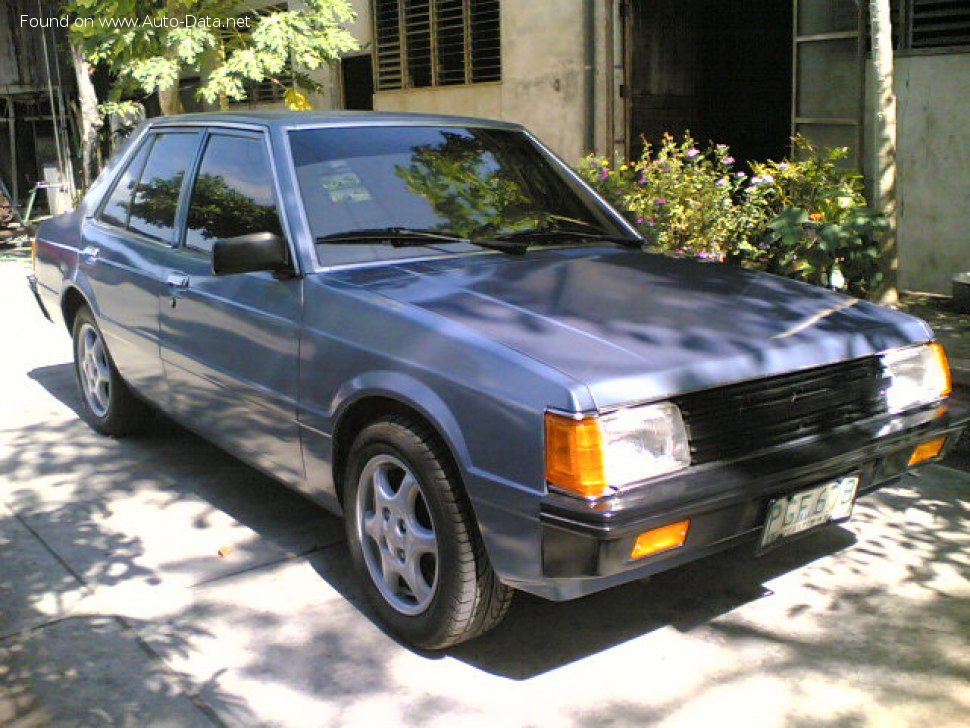
The Mitsubishi Lancer II 1.6 (82 Hp) represents the second generation of Mitsubishi’s successful compact car, produced between 1979 and 1983. Often referred to as the Lancer EX in certain markets, this iteration built upon its predecessor, introducing more contemporary styling and refined engineering. Positioned as a practical and economical family sedan, the Lancer II was crucial for Mitsubishi’s global expansion, offering a blend of reliability, efficiency, and straightforward design. While not a high-performance machine, the 1.6-liter variant with 82 horsepower provided adequate motivation for daily driving, embodying the characteristics of Japanese compacts during an era of increasing fuel consciousness and evolving emission standards. Its rear-wheel-drive architecture, carried over from the first generation, offered a traditional driving feel that appealed to many buyers.
Powertrain & Engine Architecture
Under the hood, the Mitsubishi Lancer II 1.6 (82 Hp) featured Mitsubishi’s 4G32 engine, a naturally aspirated, inline four-cylinder unit with a single overhead camshaft (SOHC) valvetrain and two valves per cylinder. Displacing 1,597 cubic centimeters (97.45 cu. in.), this engine was designed for durability and efficiency rather than outright speed. It produced 82 horsepower at 5,500 revolutions per minute (rpm) and 85.56 lb-ft of torque at 3,500 rpm. This resulted in a power per liter figure of 51.3 horsepower, competitive for its time.
Fuel delivery was managed by a carburetor system, typical for vehicles of this vintage, providing a reliable, though less precise, method of fuel-air mixing compared to later fuel injection systems. The engine’s compression ratio stood at 9.5:1, contributing to its modest but consistent performance. Power was sent to the rear wheels via a five-speed manual transmission, offering a more engaging driving experience and better fuel economy than the common four-speed units of the period. This powertrain allowed the Lancer II 1.6 to reach a maximum speed of 99.42 mph (160 km/h), making it suitable for highway cruising.
The engine utilized a cast iron block and an aluminum cylinder head, a common construction for engines of this era balancing cost and durability. The SOHC valvetrain, while simpler than dual overhead cam designs, offered a good compromise between performance and maintenance requirements. The carburetor, typically a Mikuni or Solex unit depending on the market, required periodic adjustment and cleaning to maintain optimal performance. The 4G32 engine was known for its robustness and ability to withstand high mileage with proper maintenance.
Driving Characteristics
The Mitsubishi Lancer II 1.6 (82 Hp) offered a driving experience typical of rear-wheel-drive compact sedans of the late 1970s and early 1980s. Acceleration was adequate for everyday driving, but not particularly brisk. The 0-60 mph time was estimated to be around 13-14 seconds. The five-speed manual transmission allowed drivers to keep the engine in its optimal power band, maximizing performance. Compared to higher-output versions of the Lancer II, such as those equipped with larger engines, the 1.6-liter model felt noticeably less powerful, especially when fully loaded or climbing hills. However, it offered a more fuel-efficient and affordable option.
The rear-wheel-drive layout provided a balanced chassis and predictable handling. The steering was relatively direct, offering a good feel for the road. The suspension, while not particularly sophisticated, provided a comfortable ride on most road surfaces. The gear ratios in the five-speed transmission were well-spaced, allowing for smooth shifting and efficient cruising. The engine’s torque curve was relatively flat, providing usable power across a wide range of engine speeds. Overall, the Lancer II 1.6 (82 Hp) offered a pleasant and predictable driving experience, prioritizing practicality and economy over outright performance.
Equipment & Trim Levels
The Mitsubishi Lancer II 1.6 (82 Hp) was generally offered with a fairly basic level of standard equipment, reflecting its position as an entry-level or mid-range trim. Standard features typically included cloth upholstery, vinyl floor covering, a basic AM/FM radio, and manual windows and door locks. The dashboard layout was simple and functional, with clearly labeled gauges and controls. Optional extras varied depending on the market, but could include a more advanced AM/FM stereo with cassette player, air conditioning, power windows, and upgraded interior trim.
The interior was designed with durability and practicality in mind. The seats were typically covered in a durable cloth material, and the dashboard was constructed from hard-wearing plastics. The overall aesthetic was clean and uncluttered. The Lancer II 1.6 (82 Hp) did not offer many luxury features, but it provided a comfortable and functional interior for everyday use. Trim levels often varied by region, with some markets offering a slightly more upscale “GL” or “Super” trim with additional features.
Chassis & Braking
The Mitsubishi Lancer II 1.6 (82 Hp) utilized an independent McPherson strut suspension at the front, offering a good balance of ride comfort and handling. The rear suspension featured an independent coil spring and trailing arm setup, which was a relatively sophisticated design for a car in its class at the time, contributing to improved ride quality and road holding. Braking duties were handled by disc brakes at the front and drum brakes at the rear, a standard configuration that provided reliable stopping power.
The steering system was a cone worm with recirculation balls, offering a direct feel typical of the era. The chassis was relatively lightweight, contributing to the car’s nimble handling. The front and rear stabilizer bars, while not particularly thick, helped to reduce body roll during cornering. The tires were typically steel-belted radials, providing good grip and durability. The overall chassis and braking system were designed to provide safe and predictable handling, prioritizing stability and control over outright performance.
Market Reception & Comparison
The Mitsubishi Lancer II 1.6 (82 Hp) received generally positive reviews from automotive critics, who praised its reliability, fuel efficiency, and affordable price. It was considered a competitive offering in the compact sedan segment, alongside rivals such as the Toyota Corolla, Nissan Sunny (Sentra), and Honda Civic. Compared to higher-output versions of the Lancer II, the 1.6-liter model offered better fuel economy but less performance. Its fuel economy was estimated to be around 30-35 mpg in combined driving, making it an attractive option for budget-conscious buyers.
The 1.6-liter engine was generally considered to be reliable and durable, requiring minimal maintenance. However, the carburetor system could be prone to issues if not properly maintained. The rear-wheel-drive layout offered a more traditional driving feel compared to the front-wheel-drive designs that were becoming increasingly popular at the time. Overall, the Lancer II 1.6 (82 Hp) was a well-rounded and practical compact sedan that offered a good value for money.
Technical Specifications
| Category | Specification |
| General Information | |
| Brand | Mitsubishi |
| Model | Lancer |
| Generation | Lancer II |
| Type (Engine) | 1.6 (82 Hp) |
| Start of Production | 1979 year |
| End of Production | 1983 year |
| Powertrain Architecture | Internal Combustion engine |
| Body type | Sedan |
| Seats | 5 |
| Doors | 4 |
| Performance Specs | |
| Fuel Type | Petrol (Gasoline) |
| Maximum speed | 160 km/h |
| Weight-to-power ratio | 11.9 kg/Hp |
| Weight-to-torque ratio | 8.4 kg/Nm |
| Engine Specs | |
| Power | 82 Hp @ 5500 rpm |
| Power per liter | 51.3 Hp/l |
| Torque | 116 Nm @ 3500 rpm |
| Engine layout | Front, Longitudinal |
| Engine Model/Code | 4G32 |
| Engine displacement | 1597 cm3 |
| Number of cylinders | 4 |
| Engine configuration | Inline |
| Cylinder Bore | 76.9 mm |
| Piston Stroke | 86 mm |
| Compression ratio | 9.5:1 |
| Number of valves per cylinder | 2 |
| Fuel injection system | Carburettor |
| Engine aspiration | Naturally aspirated engine |
| Valvetrain | SOHC |
| Engine oil capacity | 4 l |
| Coolant | 6.5 l |
| Space, Volume and Weights | |
| Kerb Weight | 975 kg |
| Max. weight | 1440 kg |
| Max load | 465 kg |
| Fuel tank capacity | 50 l |
| Permitted trailer load with brakes (12%) | 900 kg |
| Permitted trailer load without brakes | 550 kg |
| Dimensions | |
| Length | 4225 mm |
| Width | 1620 mm |
| Height | 1385 mm |
| Wheelbase | 2440 mm |
| Front track | 1335 mm |
| Rear (Back) track | 1325 mm |
| Front overhang | 750 mm |
| Rear overhang | 1035 mm |
| Ride height (ground clearance) | 165 mm |
| Minimum turning circle (turning diameter) | 9.6 m |
| Drivetrain, Brakes and Suspension Specs | |
| Drivetrain Architecture | Rear-wheel drive |
| Drive wheel | Rear wheel drive |
| Number of gears and type of gearbox | 5 gears, manual transmission |
| Front suspension | Independent type McPherson |
| Rear suspension | Independent coil spring, Trailing arm |
| Front brakes | Disc |
| Rear brakes | Drum |
| Steering type | Cone worm with recirculation balls |
Legacy
The Mitsubishi Lancer II, particularly the 1.6 (82 Hp) variant, played a pivotal role in Mitsubishi’s strategy to establish itself as a global automaker. While specific sales figures for this exact trim in the United States are less prominent, the Lancer nameplate generally performed well in its primary markets. The Lancer II showcased Mitsubishi’s growing engineering prowess, offering a durable powertrain and a relatively advanced independent rear suspension for its class. This generation helped solidify Mitsubishi’s brand image as a producer of dependable and value-for-money vehicles.
The 4G32 engine, while not a high-performance unit, proved to be remarkably durable and reliable. Many examples of the Lancer II 1.6 (82 Hp) remain on the road today, a testament to the engine’s longevity. In the used car market, these early Lancer models are appreciated by enthusiasts for their classic Japanese styling, mechanical simplicity, and the foundational role they played in Mitsubishi’s rich automotive heritage. They serve as a testament to an era when compact sedans were the backbone of family transportation, offering accessible and dependable mobility.