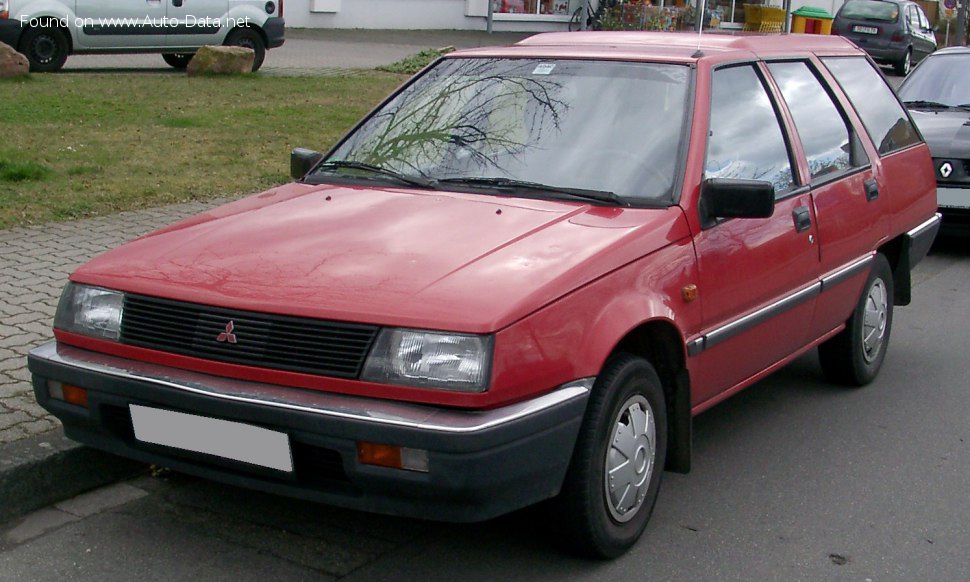
The Mitsubishi Lancer, a nameplate synonymous with compact automotive solutions for decades, saw numerous iterations and body styles catering to diverse global markets. Among these, the third generation, often referred to by its chassis codes C10/C30 series, introduced a particularly interesting and somewhat niche variant: the Mitsubishi Lancer III Wagon 1.8 (90 Hp) 4×4. Produced specifically for the 1987 model year, this vehicle represented a blend of traditional compact station wagon utility with the then-emerging appeal of all-wheel-drive capability in a mainstream package. While not a high-volume seller in every market, this Lancer Wagon carved out a distinct identity, particularly in regions where challenging weather conditions or unpaved roads were common, offering enhanced traction and versatility that set it apart from its front-wheel-drive contemporaries.
Positioned in the compact segment, the Lancer III Wagon, especially in its 4×4 guise, aimed to provide a practical and reliable family vehicle or a capable workhorse, depending on the market and owner’s needs. Its relatively conservative styling and robust mechanicals were hallmarks of Mitsubishi vehicles from this era, emphasizing durability and functionality over flamboyant design. This specific 1.8-liter, 90 horsepower, all-wheel-drive model showcased Mitsubishi’s commitment to offering a broad range of options within its popular Lancer lineup, hinting at the company’s future prowess in four-wheel-drive technology seen in models like the Montero and the legendary Lancer Evolution.
Engine & Performance of the Mitsubishi Lancer III Wagon
Under the hood, the 1987 Mitsubishi Lancer III Wagon 1.8 (90 Hp) 4×4 was powered by a naturally aspirated 1.8-liter inline-four gasoline engine. This powerplant delivered a respectable 90 horsepower, a modest but entirely adequate output for a compact station wagon in the late 1980s. The engine was designed with a focus on reliability, fuel efficiency (for its time), and smooth power delivery, rather than outright acceleration. Its naturally aspirated nature meant predictable performance without the added complexity and cost of turbocharging, a common characteristic of mainstream vehicles of that era.
The power output of 90 Hp, while not designed for spirited driving, was more than sufficient to propel the Lancer Wagon through urban traffic, maintain highway speeds, and handle light loads. The engine’s torque characteristics were likely tuned for everyday usability, ensuring decent low-end grunt for pulling away from a stop and navigating varied terrain. Paired with a manual transmission (typical for a 4×4 model of this vintage, though automatic options might have existed for other variants), the powertrain offered a direct and engaging driving experience for those who preferred to control gear shifts.
What truly distinguished this particular Lancer Wagon was its 4×4 drivetrain. While specific details of the system (e.g., full-time, part-time with a transfer case, or a viscous coupling system) are not widely documented, it’s safe to assume for a 1987 compact car, it would have been a relatively straightforward and robust system. This 4×4 capability provided significantly enhanced traction on slippery surfaces like snow, ice, gravel, or muddy tracks. For consumers living in regions with harsh winters or those frequently traversing unpaved roads, this feature transformed the Lancer Wagon from a mere family hauler into a genuinely versatile and capable vehicle, offering peace of mind and improved safety in challenging conditions. It foreshadowed the modern crossover trend, albeit in a more traditional station wagon body.
Design & Features
Exterior Design
The exterior design of the Mitsubishi Lancer III Wagon reflected the prevailing automotive aesthetics of the mid-to-late 1980s. It featured a largely boxy, functional silhouette, prioritizing interior space and cargo capacity over aerodynamic sleekness. Sharp lines and a relatively upright stance defined its profile, characteristic of Japanese compact cars of that period. The station wagon body style, with its extended roofline and large rear hatch, immediately conveyed its practical intentions. While not overtly stylish by today’s standards, its design was clean, unassuming, and timelessly functional, contributing to good outward visibility and ease of maneuverability. The 4×4 designation might have been subtly indicated by badging or slightly higher ground clearance, hinting at its enhanced capabilities without resorting to rugged, off-road styling cues.
Interior and Practicality
Inside, the Lancer III Wagon was designed with practicality and durability in mind. The cabin offered seating for five occupants, with a focus on comfortable, durable cloth upholstery and straightforward ergonomics. Dashboards of this era were typically uncluttered, featuring clear analog gauges and easily accessible controls for heating, ventilation, and the radio. The primary strength of the wagon body was its cargo volume. With the rear seats in place, it offered a substantial luggage area, perfect for groceries, sports equipment, or family travel. Folding down the rear seats would significantly expand this space, transforming the Lancer into a capable hauler for larger items, making it a versatile choice for small businesses or families requiring extra utility.
Technological and Safety Features
In terms of features, the 1987 Lancer III Wagon would have offered a standard complement for a compact car of its time. This typically included manual windows, a basic AM/FM radio (often with a cassette player), and a simple heater/ventilation system. Power steering would likely have been standard or a common option, aiding maneuverability. Air conditioning, if offered, would have been an optional extra. Safety features were rudimentary compared to modern vehicles; standard equipment would have included three-point seatbelts for front occupants and lap belts for rear passengers. Anti-lock braking systems (ABS) were still a premium feature, rarely found on compact wagons of this class in 1987. The inherent stability provided by the 4×4 system, however, would have offered a significant active safety advantage in adverse driving conditions.
Technical Specifications: Mitsubishi Lancer III Wagon 1.8 (90 Hp) 4×4
| Category | Specification |
| Brand | Mitsubishi |
| Model | Lancer |
| Generation | Lancer III Wagon (C10/C30 Series) |
| Variant (Engine) | 1.8 (90 Hp) 4×4 |
| Start of Production | 1987 |
| End of Production | 1987 |
| Powertrain Architecture | Internal Combustion Engine |
| Body type | Station Wagon (Estate) |
| Fuel Type | Petrol (Gasoline) |
| Power | 90 Hp |
| Engine Aspiration | Naturally aspirated engine |
| Drivetrain | 4×4 (All-Wheel Drive) |
The Mitsubishi Lancer III Wagon 1.8 (90 Hp) 4×4, despite its relatively short production run for this specific variant, played a significant role in showcasing Mitsubishi’s engineering philosophy: building robust, reliable, and versatile vehicles. In an era dominated by front-wheel-drive compact sedans and wagons, the availability of an affordable 4×4 option in a mainstream station wagon body was somewhat forward-thinking. This particular model year, 1987, highlights a specific configuration that might have been targeted at particular markets or a limited production run within the broader Lancer III generation (which spanned from 1983 to 1988/1990 depending on the market and body style).
In its primary markets, which often included Europe, Japan, and potentially parts of Australasia, the Lancer Wagon competed against established players like the Toyota Corolla Wagon, Nissan Sunny/Sentra Wagon, and European equivalents such as the Opel Kadett Caravan or Ford Escort Wagon. What distinguished the 4×4 Lancer was its ability to offer a level of all-weather and light-duty off-road capability that its two-wheel-drive competitors typically lacked. This made it an attractive option for families in rural areas, individuals needing reliable transport in snowy climates, or those who simply appreciated the added traction and control.
The Lancer’s reputation for mechanical durability and straightforward maintenance contributed to its enduring appeal. While it may not have achieved the same iconic status as its rally-bred Lancer Evolution descendants, this humble 4×4 wagon contributed to Mitsubishi’s image as a manufacturer capable of producing practical and capable vehicles for everyday use. It served as a testament to the brand’s ability to integrate advanced drivetrain technologies into accessible packages, bridging the gap between utilitarian SUVs and conventional passenger cars.
Today, the 1987 Mitsubishi Lancer III Wagon 1.8 (90 Hp) 4×4 is a rare sight, but it holds a special place for enthusiasts of classic Japanese cars and those who appreciate the understated engineering of the era. It represents a period when manufacturers experimented with bringing all-wheel drive into more segments, paving the way for the ubiquitous crossovers and SUVs we see on roads today. Its legacy is not one of groundbreaking design or blistering performance, but rather of quiet competence, unwavering reliability, and a pioneering spirit in offering enhanced capability to the everyday driver. It stands as a testament to Mitsubishi’s dedication to building vehicles that genuinely served their owners’ diverse needs, no matter the climate or terrain.