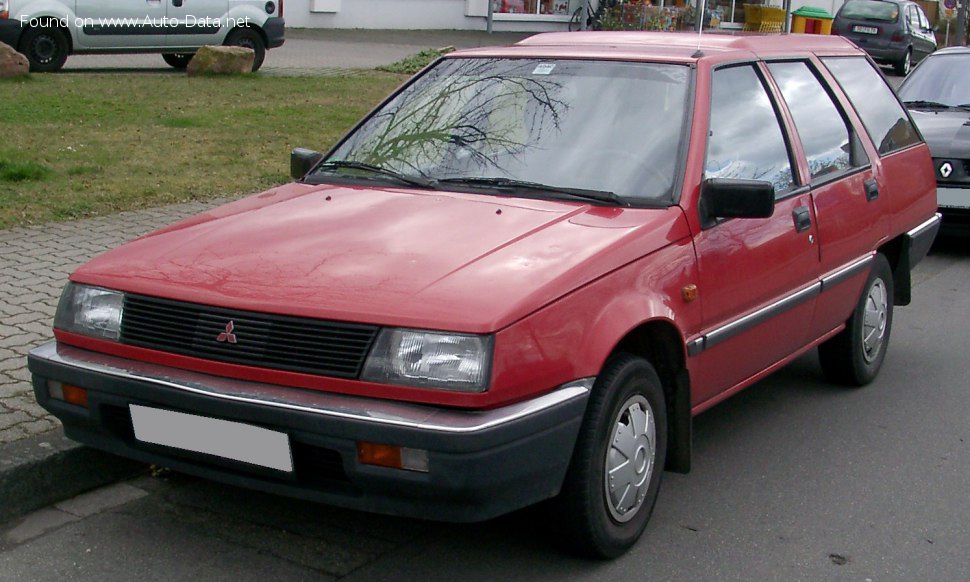
The Mitsubishi Lancer III Wagon 1.8 (94 Hp) 4×4 represents a unique and highly practical chapter in the Lancer’s extensive global history. Produced between 1988 and 1992, this particular variant of the third-generation Lancer (also known as the C10/C30 series) carved out a niche in various international markets, particularly in Europe, Asia, and Australia, where its combination of compact dimensions, generous cargo space, and a capable all-wheel-drive system proved highly desirable. While the Lancer sedan and coupe saw broader distribution, this specific 4×4 wagon was tailored for consumers seeking enhanced traction and utility without the bulk or fuel consumption of a dedicated SUV, a concept that predated the modern crossover trend. It embodied Mitsubishi’s reputation for building robust, reliable vehicles designed to handle diverse driving conditions.
During its production run, the Lancer III Wagon stood out in the crowded compact segment by offering a feature not commonly found in its direct competitors: a factory-installed 4×4 drivetrain. This made it an ideal choice for buyers in regions with challenging climates, unpaved roads, or those who simply valued the added security and capability of all-wheel traction. The car was positioned as a sensible, no-nonsense family hauler that could also venture off the beaten path, distinguishing itself from its purely front-wheel-drive contemporaries.
Powertrain and Performance: The Heart of the Mitsubishi Lancer III Wagon
At the core of the Mitsubishi Lancer III Wagon 1.8 (94 Hp) 4×4 was a straightforward yet dependable 1.8-liter (1755 cm³) inline-four gasoline engine. This naturally aspirated unit, utilizing a Single OverHead Camshaft (SOHC) valvetrain with two valves per cylinder, was designed for durability and efficiency rather than outright speed. It delivered a respectable 94 horsepower at 5500 rpm and 100.31 lb-ft of torque at 4500 rpm. Fuel was delivered via a multi-port manifold injection system, a modern touch for its era, ensuring reliable starting and consistent performance. The engine’s layout was front, transverse, a common configuration for compact cars of the time, optimizing interior space.
Power was sent to all four wheels through a robust 5-speed manual transmission, offering the driver direct control over the vehicle’s dynamics. This all-wheel-drive (4×4) system was a key differentiator, providing superior grip in slippery conditions, whether due to rain, snow, or loose gravel. While not designed for extreme off-roading, it significantly enhanced the wagon’s versatility and safety on varied terrain. The Lancer III Wagon 4×4 could reach a maximum speed of 99.42 mph (160 km/h), a respectable figure for a utility-focused vehicle of its class.
In terms of fuel economy, the 1.8-liter engine offered competitive figures for its segment and drivetrain, especially considering the added weight and friction losses of a 4×4 system. It achieved an urban fuel consumption of approximately 19.6 US mpg and an extra-urban (highway) rating of around 29.4 US mpg. These numbers underscored its practicality as a daily driver, balancing power with reasonable operating costs. The vehicle’s weight-to-power ratio stood at 12.3 kg/Hp, indicating its utilitarian nature rather than a performance-oriented focus.
Mitsubishi Lancer III Wagon: Design and Features
The design of the Mitsubishi Lancer III Wagon was quintessentially late 1980s: functional, unpretentious, and focused on maximizing interior volume within a compact footprint. As a 5-door station wagon (often referred to as an “estate” in many markets), its primary appeal lay in its cargo-carrying capabilities. With five seats and a minimum trunk space of 13.31 cubic feet (377 liters), it offered ample room for luggage, groceries, or sports equipment, making it a highly practical choice for families and active individuals.
Measuring 162.01 inches in length, 64.37 inches in width, and 55.71 inches in height, with a wheelbase of 93.7 inches, the Lancer Wagon was compact enough for easy maneuverability in urban environments, yet spacious enough inside to be genuinely useful. The exterior styling was clean and aerodynamic for its time, with large glass areas ensuring good visibility.
Underneath, the Lancer III Wagon featured a conventional but effective suspension setup, with coil springs at both the front and rear, providing a comfortable and stable ride. Braking duties were handled by disc brakes at the front and drum brakes at the rear, a common and reliable configuration for vehicles in this class during the period. The hydraulic rack and pinion steering system provided direct feedback and ease of control, further enhancing the driving experience. Standard tires were 185/60 R14, offering a good balance of grip and ride comfort.
A Focus on Practicality
The Lancer III Wagon prioritized practicality over luxury. Interior appointments were durable and functional, with a focus on ease of use and longevity. While not lavishly equipped by modern standards, it offered essential features for its time, including a basic instrument cluster, comfortable seating, and adequate ventilation. The emphasis was on providing a reliable and versatile vehicle that could handle the demands of everyday life.
Technical Specifications
| General Information | |
|---|---|
| Brand | Mitsubishi |
| Model | Lancer |
| Generation | Lancer III Wagon |
| Type (Engine) | 1.8 (94 Hp) 4×4 |
| Start of Production | 1988 year |
| End of Production | 1992 year |
| Powertrain Architecture | Internal Combustion engine |
| Body type | Station wagon (estate) |
| Seats | 5 |
| Doors | 5 |
| Performance Specs | |
| Fuel consumption (economy) – urban | 19.6 US mpg |
| Fuel consumption (economy) – extra urban | 29.4 US mpg |
| Fuel Type | Petrol (Gasoline) |
| Maximum speed | 99.42 mph (160 km/h) |
| Weight-to-power ratio | 12.3 kg/Hp (81 Hp/tonne) |
| Weight-to-torque ratio | 8.5 kg/Nm (117.2 Nm/tonne) |
| Engine Specs | |
| Power | 94 Hp @ 5500 rpm |
| Power per liter | 53.6 Hp/l |
| Torque | 100.31 lb-ft @ 4500 rpm (136 Nm) |
| Engine layout | Front, Transverse |
| Engine displacement | 1.8 l (1755 cm³ / 107.1 cu. in.) |
| Number of cylinders | 4 |
| Engine configuration | Inline |
| Cylinder Bore | 3.17 in (80.6 mm) |
| Piston Stroke | 3.39 in (86 mm) |
| Compression ratio | 9.5:1 |
| Number of valves per cylinder | 2 |
| Fuel injection system | Multi-port manifold injection |
| Engine aspiration | Naturally aspirated engine |
| Valvetrain | OHC |
| Space, Volume and Weights | |
| Kerb Weight | 2557.36 lbs (1160 kg) |
| Trunk (boot) space – minimum | 13.31 cu. ft. (377 l) |
| Fuel tank capacity | 12.42 US gal (47 l) |
| Dimensions | |
| Length | 162.01 in (4115 mm) |
| Width | 64.37 in (1635 mm) |
| Height | 55.71 in (1415 mm) |
| Wheelbase | 93.7 in (2380 mm) |