The Mitsubishi Lancer, a nameplate synonymous with reliability and versatility for decades, saw its third generation, known internally as the C10-C30 series, introduced in 1983. While the sedan and hatchback variants were available in various markets, including North America (often rebadged as the Dodge/Plymouth Colt or Eagle Summit), the station wagon variant, particularly the Mitsubishi Lancer III Wagon 1.8 D (60 Hp), carved out a distinct niche in European and Asian markets. Produced from 1986 to 1992, this particular model represented Mitsubishi’s commitment to offering practical, fuel-efficient transportation for families and businesses in regions where diesel powertrains and compact wagons were highly valued. It was a straightforward, no-nonsense vehicle designed for durability and economy rather than outright performance, perfectly embodying the spirit of accessible motoring of its era.
Mitsubishi Lancer III Wagon 1.8 D (60 Hp): A Practical Choice
The Mitsubishi Lancer III Wagon 1.8 D (60 Hp) was a key offering in Mitsubishi’s lineup during the mid-to-late 1980s and early 1990s. It wasn’t designed for the American market, where station wagons were declining in popularity, but instead found success in regions where fuel efficiency and cargo space were highly prioritized. This model served as a workhorse for many, offering a dependable and economical solution for everyday transportation needs. It represents a period when automotive design focused on functionality and longevity, rather than flashy aesthetics or high performance.
Engine & Performance
The heart of the Mitsubishi Lancer III Wagon 1.8 D (60 Hp) was its 1.8-liter (1796 cm3 or 109.6 cu. in.) naturally aspirated diesel engine, designated the 4D65. This inline-four cylinder engine was engineered for exceptional fuel economy and long-term reliability. Producing 60 horsepower at 4500 rpm and 83.34 lb.-ft. (113 Nm) of torque at 3000 rpm, the engine provided sufficient power for typical daily driving, especially when coupled with its standard 5-speed manual transmission. The engine utilized an Overhead Camshaft (OHC) valvetrain and a precombustion chamber injection system, technologies common for diesel engines of the time, prioritizing dependability and efficiency.
While not built for speed, the Lancer III Wagon 1.8 D offered reasonable acceleration for its class, achieving 0 to 60 mph in approximately 14.6 seconds and a top speed of 90.1 mph (145 km/h). However, its true strength lay in its fuel efficiency. It boasted a combined fuel economy of 34.6 US mpg (6.8 l/100 km), and an impressive 50 US mpg (4.7 l/100 km) on the extra-urban cycle. Its 12.42 US gallon (47 liter) fuel tank provided a substantial driving range, making it ideal for long journeys and commercial applications.
Design & Features
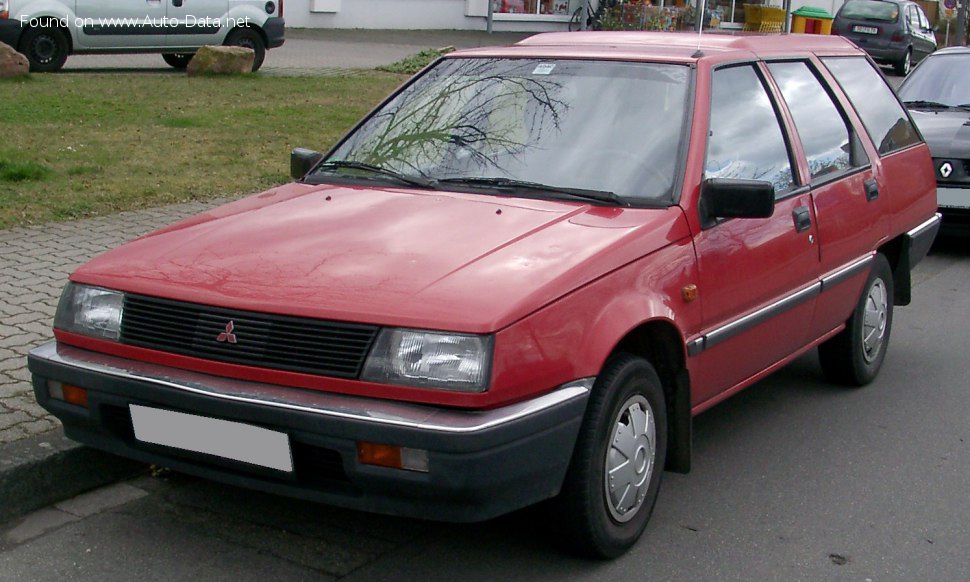
The Mitsubishi Lancer III Wagon featured a classic station wagon body style, emphasizing interior space and cargo capacity. Its five-door, five-seat configuration made it a practical choice for families or small businesses. The exterior design was clean and functional, characterized by straight lines and a boxy profile typical of 1980s automotive design. This design maximized interior volume and simplified loading and unloading.
The interior of the Lancer III Wagon was designed for durability and ease of use. Materials were selected for their hard-wearing qualities, capable of withstanding daily wear and tear. While luxury features were minimal, the cabin layout was ergonomic, with controls conveniently positioned for the driver. The minimum trunk space of 13.31 cu. ft. (377 liters) could be significantly expanded by folding down the rear seats, creating a versatile cargo area. Safety features were basic by modern standards, but the vehicle provided a solid and dependable platform. Its compact dimensions – 162.01 inches (4115 mm) in length, 64.37 inches (1635 mm) in width, and 55.71 inches (1415 mm) in height – made it easy to maneuver in urban environments while still offering ample interior room.
Technical Specifications
| Category | Specification |
| Brand | Mitsubishi |
| Model | Lancer |
| Generation | Lancer III Wagon |
| Type (Engine) | 1.8 D (60 Hp) |
| Production Years | 1986 – 1992 |
| Powertrain Architecture | Internal Combustion Engine (Front-wheel drive) |
| Body Type | Station Wagon (Estate) |
| Seats | 5 |
| Doors | 5 |
| Performance Specs | |
| Fuel Type | Diesel |
| Fuel Consumption (Urban) | 33.1 US mpg (7.1 l/100 km) |
| Fuel Consumption (Extra Urban) | 50 US mpg (4.7 l/100 km) |
| Fuel Consumption (Combined) | 34.6 US mpg (6.8 l/100 km) |
| Acceleration 0 – 60 mph | 14.6 seconds |
| Maximum Speed | 90.1 mph (145 km/h) |
| Weight-to-Power Ratio | 16.7 kg/Hp, 60 Hp/tonne |
| Weight-to-Torque Ratio | 8.8 kg/Nm, 113 Nm/tonne |
| Engine Specs | |
| Power | 60 Hp @ 4500 rpm |
| Power per liter | 33.4 Hp/l |
| Torque | 83.34 lb.-ft. (113 Nm) @ 3000 rpm |
| Engine Layout | Front, Transverse |
| Engine Model/Code | 4D65 |
| Engine Displacement | 1.8 liters (1796 cm3, 109.6 cu. in.) |
| Number of Cylinders | 4 |
| Engine Configuration | Inline |
| Cylinder Bore | 3.17 in. (80.6 mm) |
| Piston Stroke | 3.46 in. (88 mm) |
| Compression Ratio | 21.5:1 |
| Valves per Cylinder | 2 |
| Fuel Injection System | Precombustion chamber injection |
| Engine Aspiration | Naturally Aspirated |
| Valvetrain | OHC |
| Engine Oil Capacity | 5.92 US qt (5.6 l) |
| Coolant Capacity | 6.34 US qt (6 l) |
| Space, Volume & Weights | |
| Kerb Weight | 2204.62 lbs (1000 kg) |
| Trunk (Boot) Space – Minimum | 13.31 cu. ft. (377 l) |
| Fuel Tank Capacity | 12.42 US gal (47 l) |
| Dimensions | |
| Length | 162.01 in. (4115 mm) |
| Width | 64.37 in. (1635 mm) |
| Height | 55.71 in. (1415 mm) |
| Wheelbase | 93.7 in. (2380 mm) |
| Front Track | 55.51 in. (1410 mm) |
| Rear (Back) Track | 52.76 in. (1340 mm) |
| Drivetrain, Brakes & Suspension Specs | |
| Drive Wheel | Front-wheel drive |
| Gearbox | 5 gears, Manual Transmission |
| Front Suspension | Coil spring |
| Rear Suspension | Coil spring |
| Front Brakes | Disc |
| Rear Brakes | Drum |
| Steering Type | Steering rack and pinion |
| Power Steering | Hydraulic Steering |
| Tires Size | 175/70 R13 |
Legacy & Market Impact
The Mitsubishi Lancer III Wagon 1.8 D (60 Hp) established itself as a dependable and economical option in the compact wagon segment, particularly in Europe and parts of Asia. It wasn’t a glamorous model, but its success in meeting the everyday transportation needs of countless owners is a testament to its practicality. It represents an era when station wagons were the preferred choice for versatility and space, and when efficiency and durability were paramount. Its legacy is one of unwavering service and a demonstration of Mitsubishi’s commitment to building cars that were reliable and affordable.