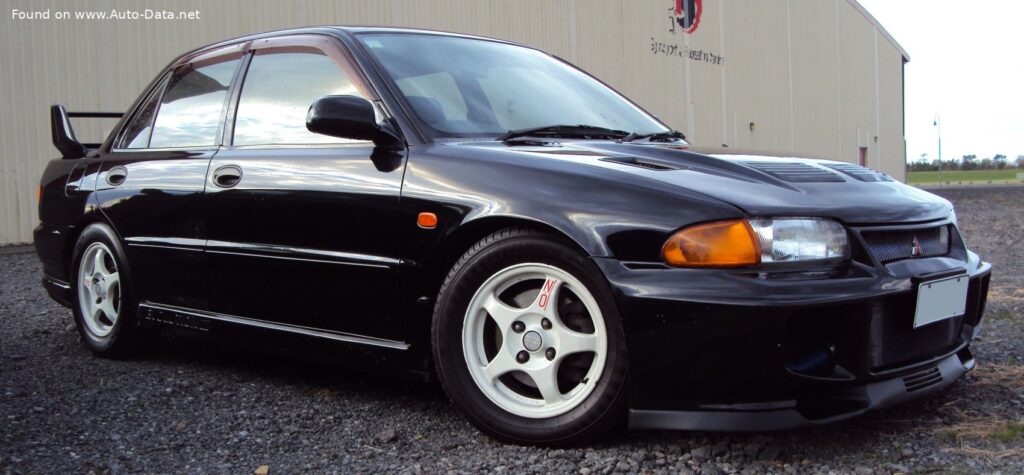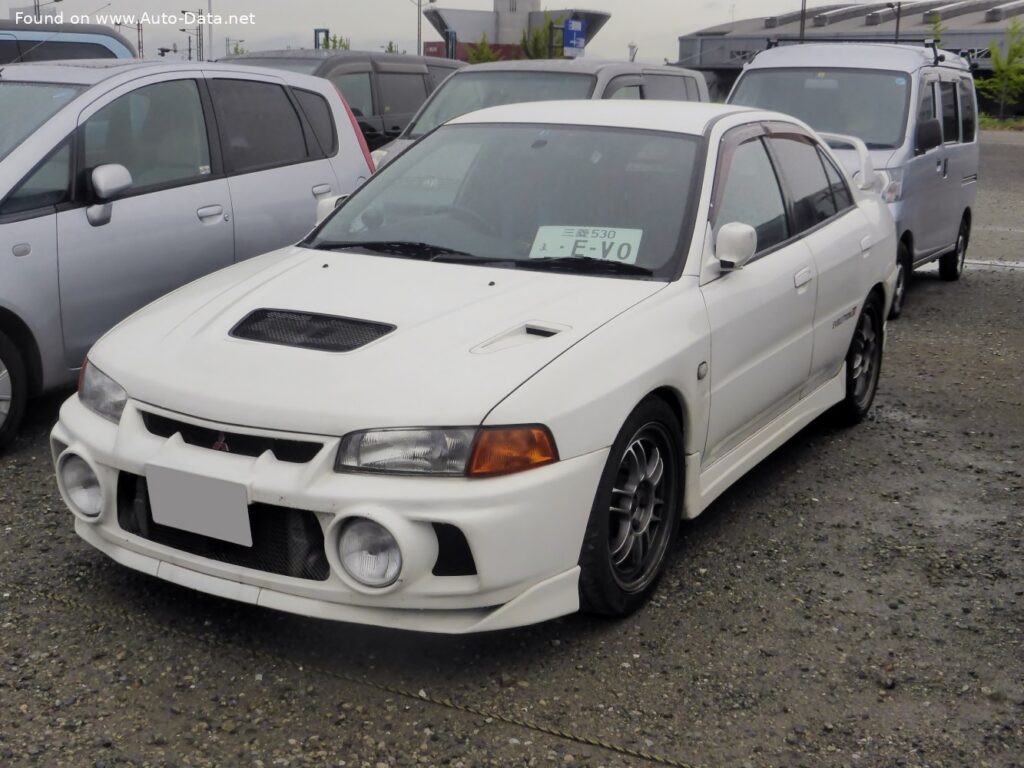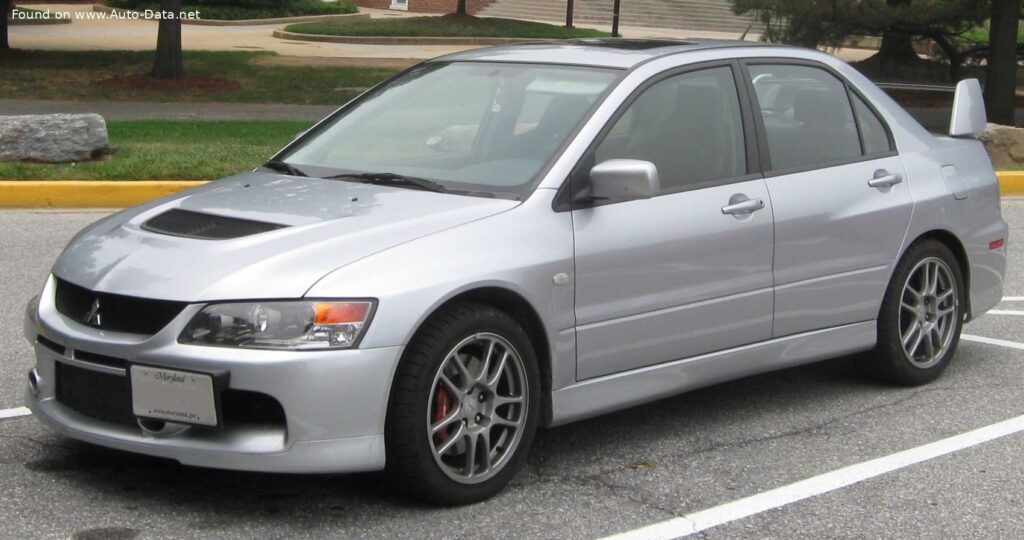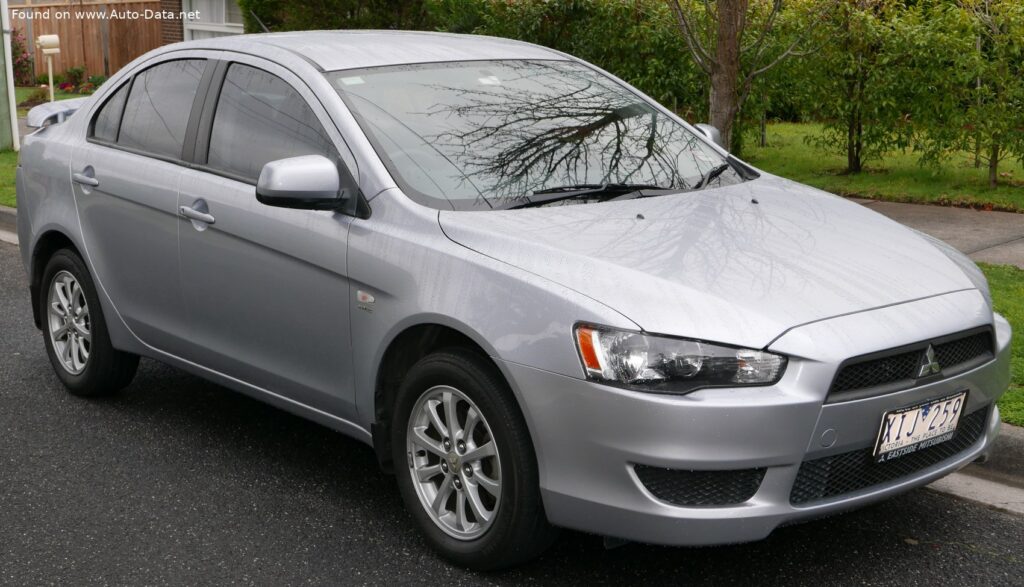
The Mitsubishi Lancer IX 1.5i (109 Hp) Automatic represents a significant offering from Mitsubishi’s ninth-generation Lancer lineup, a global compact sedan introduced in 2007. While performance-oriented versions like the Lancer Evolution captured enthusiast attention, the core of the Lancer range consisted of practical, economical vehicles designed for everyday use. This specific variant, produced from July 2009 to October 2010, was primarily targeted towards international markets, particularly Europe and Asia, where fuel efficiency and affordability were key purchasing considerations. Notably, this model was not widely sold in the United States, which received Lancer models with larger engines and different transmission options.
Mitsubishi Lancer IX 1.5i: A Global Compact Sedan
As a four-door, five-seat sedan, the Lancer IX 1.5i offered a blend of practicality and conservative styling. It positioned itself as a sensible choice for families and individuals seeking dependable transportation. Its front-wheel-drive powertrain, based on a conventional internal combustion engine, emphasized ease of use and maintenance. The Lancer IX continued Mitsubishi’s tradition of building robust and straightforward vehicles, appealing to a broad customer base seeking a reliable and affordable compact car.
Engine & Performance
The Mitsubishi Lancer IX 1.5i Automatic is powered by Mitsubishi’s 4A91 engine, a naturally aspirated, inline four-cylinder gasoline unit. Displacing 1499 cm³ (approximately 1.5 liters or 91.47 cubic inches), this engine prioritized efficiency and smooth operation over outright performance. It features a Double Overhead Camshaft (DOHC) valvetrain with four valves per cylinder, enhancing breathing for improved performance and fuel economy. Fuel delivery is managed by a multi-port manifold injection system, a proven technology for reliable fuel metering.
The engine produces 109 horsepower at 6000 rpm, resulting in a power-per-liter figure of 72.7 Hp/l. Torque output is rated at 143 Nm (or 105.47 lb.-ft.) at 4000 rpm, providing sufficient pulling power for both city driving and highway cruising. Power is transmitted to the front wheels through a 4-speed automatic transmission, a common choice for budget-conscious models of the era, prioritizing durability and ease of driving.
Performance figures include a 0 to 62 mph (0-100 km/h) time of 14.3 seconds, with a calculated 0 to 60 mph time of 13.6 seconds. The maximum speed is rated at 178 km/h (110.6 mph). Fuel economy was a key selling point, with a combined cycle fuel consumption of 6.4 liters per 100 km (36.8 US mpg). Urban consumption was rated at 8.7 l/100 km (27 US mpg), and extra-urban consumption at 5.4 l/100 km (43.6 US mpg). These figures demonstrate compliance with Euro 4 emission standards, reflecting a focus on environmental responsibility.
Design & Features
The Mitsubishi Lancer IX showcased a contemporary design for its time, featuring a clean and somewhat aggressive front fascia, a departure from the rounded lines of its predecessor. Its dimensions – 4570 mm (179.92 inches) in length, 1760 mm (69.29 inches) in width, and 1505 mm (59.25 inches) in height – positioned it squarely within the compact sedan segment, offering a balance between interior space and maneuverability. A 2635 mm (103.74 inches) wheelbase contributed to a stable ride and a reasonably spacious cabin.
The vehicle’s exterior featured a front and rear track of 1530 mm (60.24 inches), providing a solid stance. It rode on 205/60 R16 tires mounted on 6J x 16-inch wheel rims, a common size for comfort and cost-effectiveness. Inside, the Lancer IX prioritized functionality. Typical amenities for a compact sedan of this era and market segment would have included air conditioning, power windows and mirrors, and a basic audio system.
Safety features included an Anti-lock Braking System (ABS) to assist with controlled braking. The braking system comprised ventilated discs at the front and solid discs at the rear. The suspension system featured Spring Struts at the front and a Wishbone setup at the rear, aiming for a comfortable ride and predictable handling. Steering was managed by a rack and pinion system, offering direct feedback. With a minimum turning circle of 10.8 meters (35.43 feet), the Lancer IX was reasonably agile in urban environments.
Technical Specifications
| Category | Specification |
| General Information | |
| Brand | Mitsubishi |
| Model | Lancer |
| Generation | Lancer IX |
| Type (Engine) | 1.5i (109 Hp) Automatic |
| Start of production | July, 2009 year |
| End of production | October, 2010 year |
| Powertrain Architecture | Internal Combustion engine |
| Body type | Sedan |
| Seats | 5 |
| Doors | 4 |
| Performance Specs | |
| Fuel consumption (economy) – urban | 8.7 l/100 km |
| Fuel consumption (economy) – extra urban | 5.4 l/100 km |
| Fuel consumption (economy) – combined | 6.4 l/100 km |
| Fuel Type | Petrol (Gasoline) |
| Acceleration 0 – 100 km/h | 14.3 sec |
| Acceleration 0 – 62 mph | 14.3 sec |
| Acceleration 0 – 60 mph (Calculated) | 13.6 sec |
| Maximum speed | 178 km/h |
| Emission standard | Euro 4 |
| Weight-to-power ratio | 11.8 kg/Hp |
| Engine Specs | |
| Power | 109 Hp @ 6000 rpm |
| Power per liter | 72.7 Hp/l |
| Torque | 143 Nm @ 4000 rpm |
| Engine layout | Front, Transverse |
| Engine Model/Code | 4A91 |
| Engine displacement | 1499 cm³ |
| Number of cylinders | 4 |
| Engine configuration | Inline |
| Number of valves per cylinder | 4 |
| Fuel injection system | Multi-port manifold injection |
| Engine aspiration | Naturally aspirated engine |
| Valvetrain | DOHC |
| Dimensions | |
| Length | 4570 mm |
| Width | 1760 mm |
| Height | 1505 mm |
| Wheelbase | 2635 mm |
Legacy and Market Impact
The Mitsubishi Lancer, in its various iterations, held a significant position in the global compact car market. While the high-performance Lancer Evolution models achieved legendary status, the more common sedan variants, like the Lancer IX 1.5i Automatic, were the vehicles that sustained the brand’s presence in many regions. This 1.5-liter automatic variant was a common sight in European and Asian markets, competing with rivals like the Honda Civic, Toyota Corolla, Nissan Sentra, Ford Focus, and Opel Astra.
Its market impact stemmed from its reputation for reliability, affordability, and value. Mitsubishi’s engineering background translated into a durable and dependable compact sedan. The 1.5-liter engine and 4-speed automatic provided a balanced proposition of acceptable performance and reasonable fuel economy, crucial factors for buyers in markets sensitive to running costs. The Lancer IX’s styling, while not groundbreaking, was contemporary and appealing, avoiding polarizing design choices. Its robust build quality and straightforward mechanicals often resulted in lower maintenance costs, further enhancing its appeal as a practical choice. While its acceleration figures may seem modest today, it was adequate for its target demographic and prevailing traffic conditions.
The Lancer nameplate helped establish Mitsubishi as a global automotive contender. The IX generation, including the 1.5i Automatic, played a vital role in maintaining this presence as the automotive market shifted towards greater fuel efficiency and lower emissions. While Mitsubishi’s focus later shifted towards SUVs and crossovers, the Lancer IX stands as a testament to the brand’s commitment to offering a dependable and accessible compact sedan for a significant period. Its legacy is that of a reliable, unassuming, and efficient vehicle that served countless drivers worldwide.