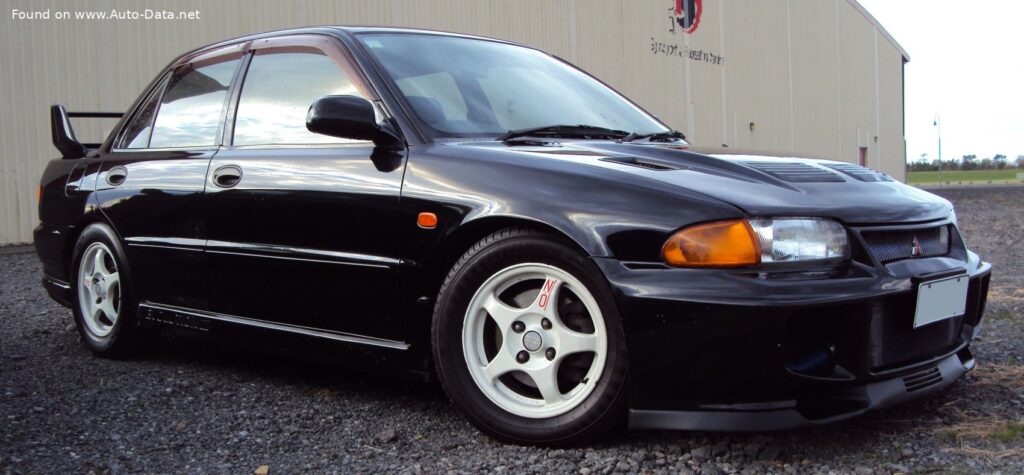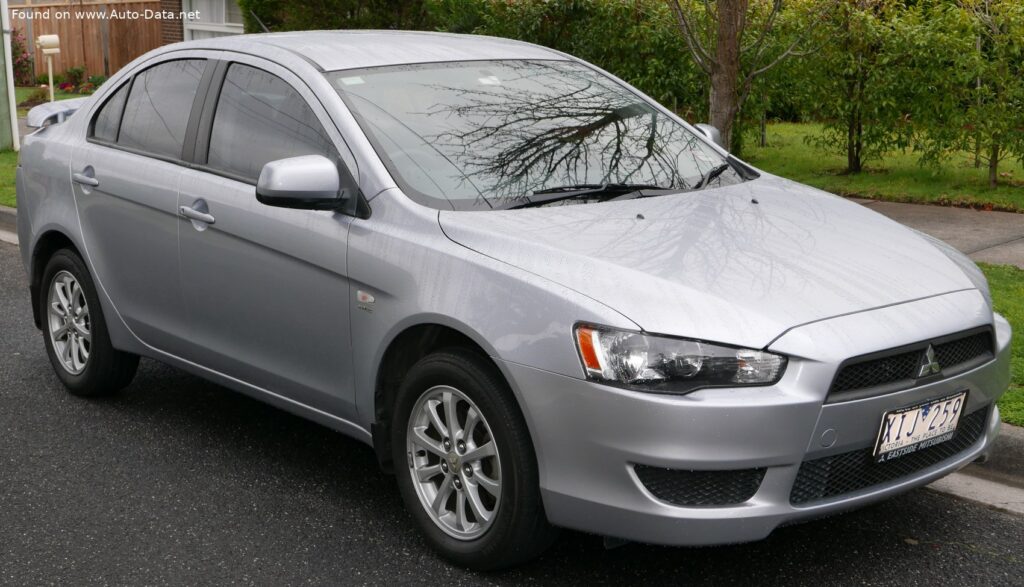
The Mitsubishi Lancer has long been synonymous with accessible performance, rally heritage, and reliable daily driving across various global markets. The specific variant under review, the Mitsubishi Lancer IX 2.0i (150 Hp) CVT 4WD, represents a particular iteration produced between 2010 and 2015. While the North American market was largely familiar with the Lancer X (also known as the CY/CZ series) during this period, this “Lancer IX” designation suggests a model tailored for specific international regions, likely Asia, Europe, or Australia, where a blend of a naturally aspirated 2.0-liter engine, a Continuously Variable Transmission (CVT), and an All-Wheel Drive (AWD) system offered a compelling package for consumers seeking efficiency, all-weather capability, and Mitsubishi’s renowned durability in a compact sedan.
This generation of the Lancer, regardless of its precise numerical designation across different territories, continued Mitsubishi’s tradition of offering a practical, four-door, five-seat sedan designed for versatility. The inclusion of a 4WD system on a non-Evolution model distinguished it from many front-wheel-drive competitors in its segment, providing enhanced traction and stability in varied driving conditions, from snowy roads to light off-pavement excursions. The 2.0-liter engine, delivering a respectable 150 horsepower, positioned this Lancer as a capable performer for everyday commutes and longer journeys, balancing power with the smooth operation characteristic of a CVT.
Engine & Performance: The Mitsubishi Lancer IX 2.0i (150 Hp) CVT 4WD
At the heart of the Mitsubishi Lancer IX 2.0i (150 Hp) CVT 4WD lies Mitsubishi’s robust 4B11 engine. This 2.0-liter (1,998 cm3 or 121.93 cu. in.) inline four-cylinder engine is a testament to Mitsubishi’s engineering prowess, offering a balance of power and efficiency. Utilizing a Double Overhead Camshaft (DOHC) valvetrain with four valves per cylinder, the 4B11 is a naturally aspirated unit, meaning it relies solely on atmospheric pressure to draw air into its cylinders, contributing to its linear power delivery and reliability.
The engine produces a peak power output of 150 horsepower at 6000 rpm, translating to a specific output of approximately 75.1 horsepower per liter. Torque is equally important for real-world driving, and this Lancer generates 198 Nm (146.04 lb.-ft.) of torque at 4250 rpm. This torque figure, available in the mid-range of the rev band, ensures responsive acceleration and confident overtaking maneuvers. Fuel is delivered via a multi-port manifold injection system, a proven technology for precise fuel metering, contributing to the vehicle’s compliance with Euro 4 emission standards. The engine is mounted in a front, transverse layout, optimizing space within the engine bay and contributing to the car’s overall weight distribution.
Engine oil capacity stands at 4.3 liters (4.54 US quarts), while the cooling system requires 7 liters (7.4 US quarts) of coolant, indicating a well-engineered thermal management system for consistent performance.
Transmission and Drivetrain
A key differentiator for this specific Lancer model is its sophisticated drivetrain. Power is routed to all four wheels through a Continuously Variable Transmission (CVT). While CVTs are often associated with seamless, gear-free acceleration, this particular unit is described as having “6 gears, automatic transmission.” This typically refers to a CVT that incorporates simulated gear ratios, often accessible via a sport mode or paddle shifters, providing drivers with a more conventional “stepped” feel akin to a traditional automatic transmission, thereby enhancing driver engagement without sacrificing the inherent smoothness and efficiency benefits of a CVT.
The All-Wheel Drive (4WD) system is perhaps the most significant feature, elevating the Lancer beyond its typical front-wheel-drive compact sedan counterparts. This system intelligently distributes power to all four wheels, optimizing traction and stability in a variety of challenging conditions, including wet roads, snowy surfaces, or even light gravel paths. For markets prone to inclement weather or varied terrain, this 4WD capability offered a distinct advantage in safety and confidence, making the Lancer IX 2.0i (150 Hp) CVT 4WD a highly practical choice.
Design & Features
The Mitsubishi Lancer IX 2.0i (150 Hp) CVT 4WD maintains the classic sedan silhouette that characterized the Lancer family for decades. With a length of 4570 mm (179.92 inches), a width of 1760 mm (69.29 inches), and a height of 1505 mm (59.25 inches), it presented a compact yet substantial presence on the road. The design language, while perhaps less overtly aggressive than its Lancer Evolution siblings, still conveyed a sense of sportiness and purpose. Its four-door configuration provided easy access for up to five occupants, making it a practical choice for families or individuals needing ample passenger and cargo space.
The wheelbase of 2635 mm (103.74 inches) contributed to a stable ride and generous interior room for its class. Both the front and rear tracks measured 1530 mm (60.24 inches), further enhancing stability. The exterior styling was generally clean and functional, with an emphasis on aerodynamic efficiency and modern aesthetics that aged gracefully throughout its production run.
Key Features and Safety
In terms of features, the Lancer IX 2.0i (150 Hp) CVT 4WD was equipped with essential systems for safety and driving dynamics. Standard safety equipment included an Anti-lock Braking System (ABS), which prevents wheel lock-up during hard braking, allowing the driver to maintain steering control. The braking system itself consisted of ventilated discs at the front and solid discs at the rear, providing strong and consistent stopping power.
Suspension components were designed for a balanced ride, combining comfort with agile handling. The front suspension utilized a Spring Strut setup, a common and effective design for compact cars, while the rear featured a Wishbone suspension, known for its ability to provide good wheel control and ride quality. Steering was managed by a responsive rack and pinion system, offering direct feedback to the driver. The vehicle rode on 205/60 R16 tires mounted on 6J x 16 wheel rims, a practical size offering a good compromise between grip, ride comfort, and replacement cost. The minimum turning circle of 10.8 meters (35.43 feet) ensured decent maneuverability in urban environments.
Technical Specifications
| Category | Specification |
| General Information | |
| Brand | Mitsubishi |
| Model | Lancer |
| Generation | Lancer IX |
| Type (Engine) | 2.0i (150 Hp) CVT 4WD |
| Start of Production | 2010 year |
| End of Production | 2015 year |
| Powertrain Architecture | Internal Combustion engine |
| Body type | Sedan |
| Seats | 5 |
| Doors | 4 |
| Performance Specs | |
| Fuel Type | Petrol (Gasoline) |
| Emission Standard | Euro 4 |
| Engine Specs | |
| Power | 150 Hp @ 6000 rpm |
| Power per liter | 75.1 Hp/l |
| Torque | 198 Nm @ 4250 rpm 146.04 lb.-ft. @ 4250 rpm |
| Engine Layout | Front, Transverse |
| Engine Model/Code | 4B11 |
| Engine Displacement | 1998 cm3 121.93 cu. in. |
| Number of Cylinders | 4 |
| Engine Configuration | Inline |
| Number of Valves per Cylinder | 4 |
| Fuel Injection System | Multi-port manifold injection |
| Engine Aspiration | Naturally aspirated engine |
| Valvetrain | DOHC |
| Engine Oil Capacity | 4.3 l 4.54 US qt |
| Coolant Capacity | 7 l 7.4 US qt |
| Space, Volume and Weights | |
| Fuel Tank Capacity | 59 l 15.59 US gal |
| Dimensions | |
| Length | 4570 mm 179.92 in. |
| Width | 1760 mm 69.29 in. |
| Height | 1505 mm 59.25 in. |
| Wheelbase | 2635 mm 103.74 in. |
| Front Track | 1530 mm 60.24 in. |
| Rear Track | 1530 mm 60.24 in. |
| Minimum Turning Circle (diameter) | 10.8 m 35.43 ft. |
| Drivetrain, Brakes and Suspension Specs | |
| Drive Wheel | All wheel drive (4×4) |
| Number of Gears and Type of Gearbox | 6 gears, automatic transmission (CVT) |
| Front Suspension | Spring Strut |
| Rear Suspension | Wishbone |
| Front Brakes | Ventilated discs |
| Rear Brakes | Disc |
| Assisting Systems | ABS (Anti-lock braking system) |
| Steering Type | Steering rack and pinion |
| Tires Size | 205/60 R16 |
| Wheel Rims Size | 6J x 16 |
Legacy and Market Impact
The Mitsubishi Lancer IX 2.0i (150 Hp) CVT 4WD carved out a specific niche in the global compact sedan market. While the Lancer X was the more prevalent model in North America during its production years, this particular “Lancer IX” variant with its 2.0-liter engine, CVT, and crucially, 4WD, found its strongest appeal in markets where all-wheel-drive capability in a compact sedan was highly valued. These markets often included regions with challenging climates, such as parts of Europe, Canada, Australia, and certain Asian countries, where unpredictable weather conditions or varied terrain made FWD vehicles less ideal for some consumers.
In these markets, the Lancer IX 2.0i (150 Hp) CVT 4WD competed against a relatively small but significant set of rivals. Its most direct competitor was often the Subaru Impreza sedan, which famously offered standard all-wheel drive across its lineup. Other competitors might have included higher-trim versions of the Toyota Corolla or Mazda 3, though these typically offered FWD as standard, with AWD often being an optional extra or available only on specific, higher-priced variants. The Lancer’s combination of a robust naturally aspirated engine, smooth CVT, and capable 4WD system offered a compelling alternative, especially for buyers looking for a reliable, no-nonsense car with enhanced traction.
The Lancer nameplate, particularly in its various iterations, holds a significant place in Mitsubishi’s history, often overshadowed by the high-performance Lancer Evolution. However, models like the Lancer IX 2.0i (150 Hp) CVT 4WD represent the backbone of the Lancer’s global appeal: a practical, dependable, and often understated compact car. This specific variant’s historical significance lies in its continuation of Mitsubishi’s commitment to offering all-wheel-drive technology beyond its performance halo cars. It democratized AWD, making it accessible in a mainstream sedan.
The Lancer’s reputation for durability and robust engineering was well-established, and this model continued that tradition. It contributed to Mitsubishi’s image as a manufacturer capable of producing vehicles that could withstand demanding conditions, a trait inherited from its extensive rally heritage. While not a sales leader in all markets, its unique blend of features ensured it remained a relevant and respected choice for consumers prioritizing all-weather capability, a smooth driving experience, and the long-term reliability for which Mitsubishi vehicles are known. Its production run from 2010 to 2015 also marked a period where Mitsubishi was navigating evolving market demands, and this Lancer variant served as a testament to its adaptive engineering and continued global presence in the compact sedan segment.