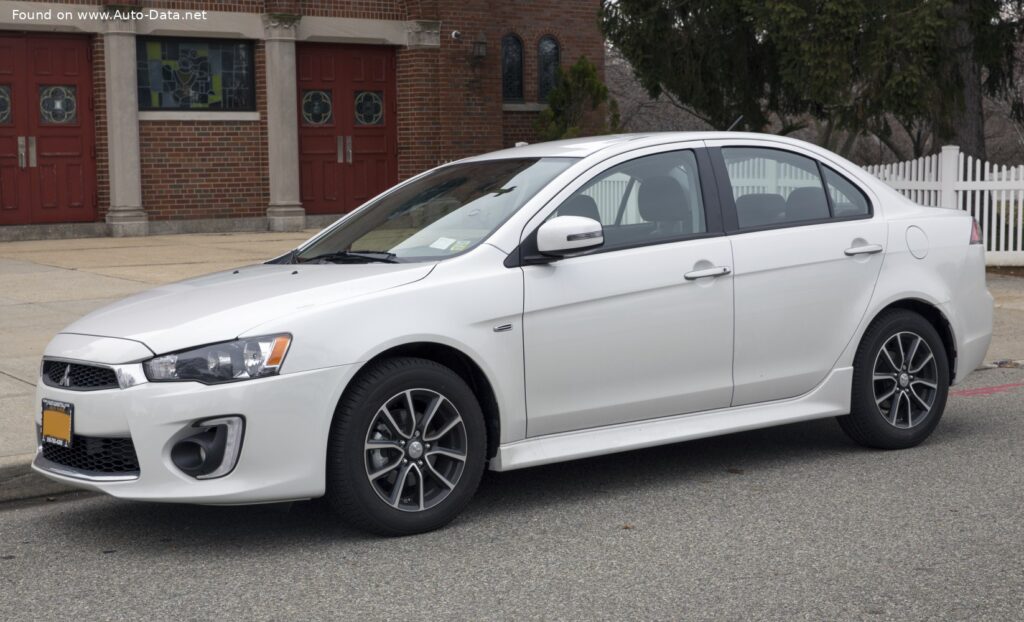
The Mitsubishi Lancer has long stood as a cornerstone of the Japanese automaker’s global portfolio, recognized for its blend of practicality, reliability, and accessible performance. The specific variant under review, the Mitsubishi Lancer IX (facelift 2015), represents a refreshed iteration of a platform primarily tailored for markets outside of North America, particularly in Europe and parts of Asia, where compact sedans with smaller, more efficient engines hold significant appeal. Launched in 2015 and produced through 2017, this Lancer model, equipped with the 1.6-liter MIVEC engine, aimed to offer a compelling package of fuel efficiency, modern features, and a comfortable ride within the highly competitive C-segment sedan category.
While the Lancer nameplate is familiar to American consumers, the “IX” designation and the 1.6 MIVEC engine configuration indicate a model optimized for different regulatory and market demands than its contemporary U.S. counterparts, which typically featured larger engines. This 2015 facelift brought subtle yet effective updates, ensuring the Lancer remained relevant, especially in regions prioritizing fuel economy and lower emissions standards, such as the Euro 6 mandate it proudly met.
Engine & Performance: The 1.6 MIVEC Heart
At the core of the Mitsubishi Lancer IX (facelift 2015) is its 1.6-liter (1590 cm3 or 97.03 cu. in.) 4A92 MIVEC engine. MIVEC, Mitsubishi Innovative Valve timing Electronic Control system, is the brand’s proprietary variable valve timing technology, designed to optimize valve lift and timing for improved power output, fuel efficiency, and reduced emissions across the RPM range. This naturally aspirated, inline four-cylinder engine delivers a respectable 117 horsepower at 6000 rpm, providing ample power for daily driving and highway cruising.
Torque output stands at 113.58 lb.-ft. (154 Nm) available at 4000 rpm, ensuring a responsive feel in city traffic and sufficient pulling power. Paired exclusively with a five-speed manual transmission driving the front wheels, the Lancer 1.6 MIVEC demonstrates a balanced approach to performance and economy. The sprint from 0 to 60 mph is achieved in a reasonable 10.2 seconds, with a top speed of 118.68 mph (191 km/h). These figures position the Lancer as a capable performer in its class, perfectly suited for the demands of its target markets where outright speed often takes a backseat to fuel economy and reliability.
Fuel efficiency is a strong suit for this Lancer variant. It boasts a combined fuel consumption rating of 42.8 US mpg (5.5 l/100 km), with highway figures reaching an impressive 50 US mpg (4.7 l/100 km). Urban driving yields 33.6 US mpg (7 l/100 km). These numbers, combined with CO2 emissions of 128 g/km, highlight the engine’s efficiency and its compliance with strict Euro 6 emission standards, making it an environmentally conscious choice for consumers.
Design & Features of the Mitsubishi Lancer IX (facelift 2015)
The Mitsubishi Lancer IX (facelift 2015) maintains the familiar and enduring sedan silhouette that has defined the Lancer series for years. Measuring 182.09 inches (4625 mm) in length, 69.29 inches (1760 mm) in width, and between 58.27-59.25 inches (1480-1505 mm) in height, it offers a compact yet spacious footprint. The facelift introduced subtle enhancements, typically including revised front fascias, updated grille designs, and refreshed lighting elements to give it a more contemporary appearance. Inside, the Lancer offered a practical and ergonomic cabin designed to comfortably accommodate five occupants, with four doors providing easy access.
Practicality is a key characteristic, evidenced by a generous trunk space of 14.13 cubic feet (400 liters), making it suitable for family use or extended travel. The vehicle’s kerb weight ranges from 2943.17 to 2954.19 lbs (1335-1340 kg), contributing to its agile handling and fuel efficiency. Standard features for this era would typically include essential safety systems like ABS (Anti-lock Braking System), a robust chassis with independent McPherson strut front suspension and independent multi-link rear suspension for a comfortable and stable ride. The electric power steering system further enhances maneuverability, particularly in urban environments.
The Lancer’s design emphasizes durability and ease of maintenance, qualities highly valued in its primary markets. While specific luxury features might vary by trim level, the core focus remains on delivering a reliable, functional, and efficient mode of transportation. The 205/60 R16 tires mounted on 6.5 J x 16 wheels provide a good balance of grip, comfort, and rolling resistance, complementing the vehicle’s overall performance characteristics.
Technical Specifications
| Category | Specification |
| General Information | |
| Brand | Mitsubishi |
| Model | Lancer |
| Generation | Lancer IX (facelift 2015) |
| Type (Engine) | 1.6 MIVEC (117 Hp) |
| Start of Production | 2015 year |
| End of Production | 2017 year |
| Powertrain Architecture | Internal Combustion engine |
| Body Type | Sedan |
| Seats | 5 |
| Doors | 4 |
| Performance Specs | |
| Fuel Consumption (Urban) | 33.6 US mpg (7 l/100 km) |
| Fuel Consumption (Extra Urban) | 50 US mpg (4.7 l/100 km) |
| Fuel Consumption (Combined) | 42.8 US mpg (5.5 l/100 km) |
| CO2 Emissions | 128 g/km |
| Fuel Type | Petrol (Gasoline) |
| Acceleration 0 – 60 mph | 10.2 sec |
| Maximum Speed | 118.68 mph (191 km/h) |
| Emission Standard | Euro 6 |
| Weight-to-Power Ratio | 11.4 kg/Hp, 87.6 Hp/tonne |
| Weight-to-Torque Ratio | 8.7 kg/Nm, 115.4 Nm/tonne |
| Engine Specs | |
| Power | 117 Hp @ 6000 rpm |
| Power per Liter | 73.6 Hp/l |
| Torque | 113.58 lb.-ft. (154 Nm) @ 4000 rpm |
| Engine Layout | Front, Transverse |
| Engine Model/Code | 4A92 |
| Engine Displacement | 1.6 liters (1590 cm3, 97.03 cu. in.) |
| Number of Cylinders | 4 |
| Engine Configuration | Inline |
| Cylinder Bore | 2.95 in. (75 mm) |
| Piston Stroke | 3.54 in. (90 mm) |
| Compression Ratio | 11:1 |
| Number of Valves per Cylinder | 4 |
| Fuel Injection System | Multi-port manifold injection |
| Engine Aspiration | Naturally aspirated |
| Valvetrain | DOHC |
| Engine Oil Capacity | 4.44 US qt (4.2 l) |
| Coolant Capacity | 6.34 US qt (6 l) |
| Space, Volume and Weights | |
| Kerb Weight | 2943.17 – 2954.19 lbs (1335-1340 kg) |
| Max. Weight | 3858.09 lbs (1750 kg) |
| Max Load | 903.9 – 914.92 lbs (410-415 kg) |
| Trunk (Boot) Space – Minimum | 14.13 cu. ft. (400 l) |
| Fuel Tank Capacity | 15.59 US gal (59 l) |
| Max. Roof Load | 176.37 lbs (80 kg) |
| Permitted Trailer Load with Brakes (12%) | 2425.08 lbs (1100 kg) |
| Permitted Trailer Load without Brakes | 1212.54 lbs (550 kg) |
| Permitted Towbar Download | 121.25 lbs (55 kg) |
| Dimensions | |
| Length | 182.09 in. (4625 mm) |
| Width | 69.29 in. (1760 mm) |
| Width Including Mirrors | 79.88 – 80.47 in. (2029-2044 mm) |
| Height | 58.27 – 59.25 in. (1480-1505 mm) |
| Wheelbase | 103.74 in. (2635 mm) |
| Front Track | 60.24 in. (1530 mm) |
| Rear (Back) Track | 60.24 in. (1530 mm) |
| Front Overhang | 39.76 in. (1010 mm) |
| Rear Overhang | 38.58 in. (980 mm) |
| Ride Height (Ground Clearance) | 5.51 in. (140 mm) |
| Minimum Turning Circle (Turning Diameter) | 32.81 ft. (10.0 m) |
| Drivetrain, Brakes and Suspension Specs | |
| Drivetrain Architecture | Front-wheel drive, Internal Combustion engine |
| Drive Wheel | Front wheel drive |
| Number of Gears and Type of Gearbox | 5 gears, manual transmission |
| Front Suspension | Independent, type McPherson with coil spring and anti-roll bar |
| Rear Suspension | Independent multi-link spring suspension with stabilizer |
| Front Brakes | Ventilated discs |
| Rear Brakes | Drum |
| Assisting Systems | ABS (Anti-lock braking system) |
| Steering Type | Steering rack and pinion |
| Power Steering | Electric Steering |
| Tires Size | 205/60 R16 |
| Wheel Rims Size | 6.5 J x 16 |
Legacy and Market Impact
The Mitsubishi Lancer, especially in its various global iterations like the Mitsubishi Lancer IX (facelift 2015), has carved out a significant legacy as a dependable and value-driven compact sedan. While this particular 1.6 MIVEC variant was not available in the U.S., it played a crucial role in Mitsubishi’s strategy for markets where fuel efficiency, compact dimensions, and affordability were paramount. In these regions, the Lancer competed against a broad array of C-segment sedans from manufacturers like Toyota (Corolla), Honda (Civic), Nissan (Sentra/Sylphy), and various European and Korean rivals, often distinguishing itself with its robust build quality and a reputation for long-term reliability.
The 2015 facelift ensured the Lancer remained competitive during its production run, offering updated aesthetics and maintaining its core strengths. Its Euro 6 compliance was a key selling point in European markets, demonstrating Mitsubishi’s commitment to environmental standards. The car’s straightforward mechanicals, including the proven 1.6 MIVEC engine and manual transmission, appealed to buyers looking for a no-frills, durable vehicle that was economical to run and maintain.
The Lancer’s impact in these markets was characterized by its role as a practical family car or a reliable daily commuter. It wasn’t designed to be a segment leader in terms of cutting-edge technology or luxury, but rather a solid, honest performer that delivered on its promise of dependable transportation. Its strong resale value in many regions further cemented its reputation as a smart purchase. Although the Lancer nameplate has largely exited many global markets as Mitsubishi shifted focus towards SUVs and crossovers, models like the Lancer IX (facelift 2015) remain a testament to the brand’s engineering prowess in creating enduring and efficient compact sedans for diverse international audiences.