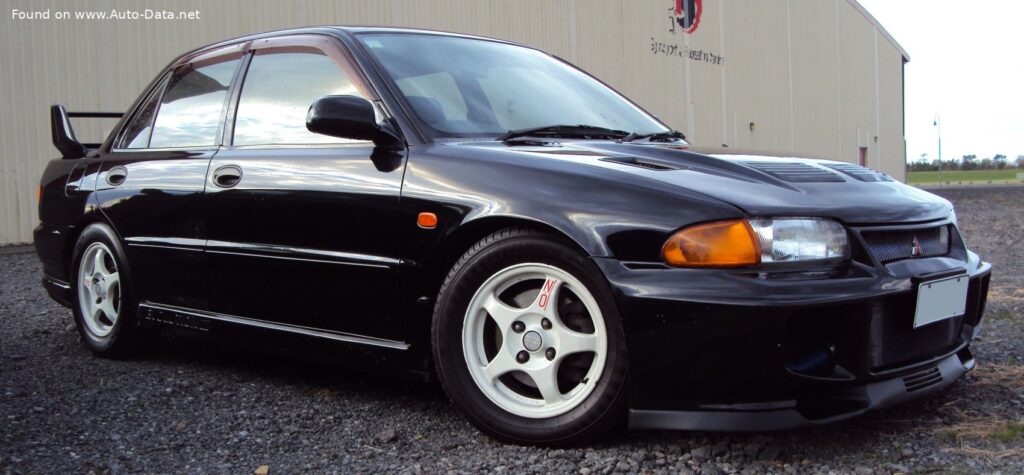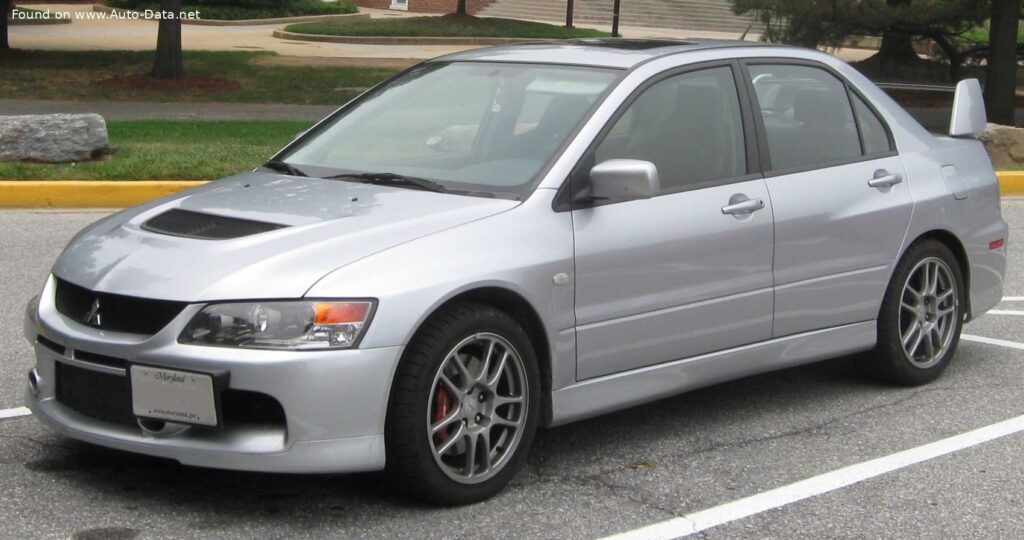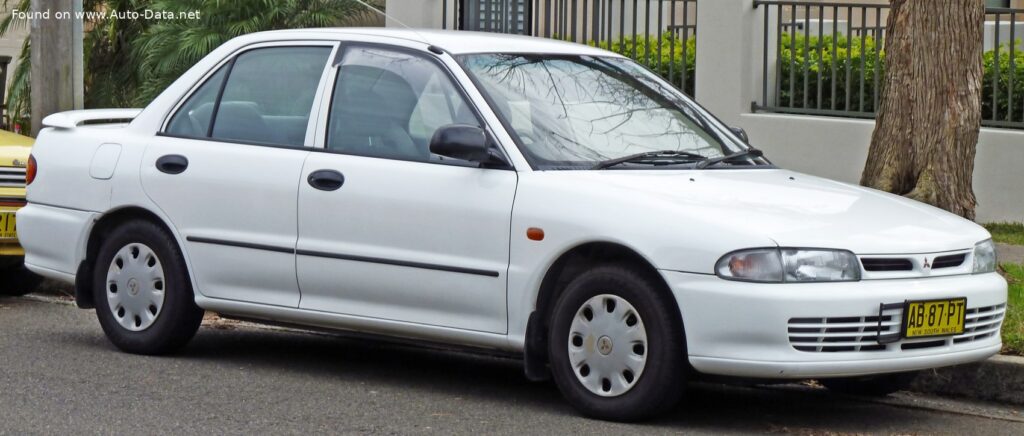
The Mitsubishi Lancer V, representing the fifth generation of Mitsubishi’s highly successful compact car, was introduced to the global market in 1992, with production continuing until 1996. This iteration of the Lancer built upon its predecessors’ reputation for reliability, affordability, and practical design, making it a popular choice in numerous international markets, particularly across Asia and Europe. The specific variant under review, the Mitsubishi Lancer V 1.3 (75 Hp), was a cornerstone of the lineup, targeting consumers who prioritized fuel efficiency and low running costs over outright performance.
Positioned in the fiercely competitive compact sedan segment, the Lancer V was designed to appeal to a broad demographic, from first-time car buyers to small families. While the Lancer nameplate has gained significant recognition in later generations for its performance-oriented Evolution models, this fifth-generation 1.3-liter variant showcases the more pragmatic side of the Lancer family. It embodied Mitsubishi’s engineering philosophy of creating durable, no-nonsense vehicles capable of withstanding diverse driving conditions while offering a comfortable and straightforward ownership experience. Its role was crucial in maintaining Mitsubishi’s market share in a segment dominated by established rivals, providing a sensible and dependable transportation solution.
Engine & Performance: The Heart of the Mitsubishi Lancer V
The powertrain architecture of the Mitsubishi Lancer V 1.3 (75 Hp) centers around a modest yet highly efficient internal combustion engine. Under the hood, this Lancer variant featured a 1.3-liter (1299 cm³ or 79.27 cu. in.) naturally aspirated inline-four gasoline engine. This powerplant was configured with an Overhead Camshaft (OHC) valvetrain and utilized a multi-port manifold injection system, a common and reliable setup for its era, ensuring consistent fuel delivery and combustion.
The engine produced a respectable 75 horsepower at 6000 rpm, which, while not designed for high-octane thrills, was entirely adequate for daily commuting and urban driving. Torque output stood at 108 Nm (approximately 79.66 lb.-ft.) available at a relatively low 3000 rpm. This characteristic torque delivery made the Lancer V 1.3 surprisingly tractable in city traffic, requiring less frequent gear changes and providing sufficient pull from lower engine speeds.
In terms of performance, the Lancer V 1.3 (75 Hp) achieved a 0-60 mph acceleration time of 11.9 seconds, with a top speed rated at 105.63 mph (170 km/h). These figures underscored its role as an economical compact car rather than a performance machine. Its real strength lay in its fuel economy, with a combined consumption rating of 6.9 liters per 100 km, translating to an impressive 34.1 US mpg. This efficiency was a significant selling point, especially in markets where fuel costs were a primary concern for consumers.
Drivetrain and Chassis Dynamics
Power was sent to the front wheels via a robust 5-speed manual transmission, a common and reliable choice for vehicles in this class during the early 1990s. The front-wheel-drive architecture contributed to the car’s predictable handling characteristics and optimized interior space. The chassis featured a wishbone front suspension, known for its ability to provide a good balance between ride comfort and handling precision. At the rear, a spring strut setup was employed, a cost-effective and space-efficient solution that offered adequate stability and comfort for a compact sedan.
Braking duties were handled by disc brakes at the front, offering confident stopping power, complemented by drum brakes at the rear, a typical configuration for entry-level models of the time. The steering system utilized a hydraulic rack and pinion setup, providing direct feedback to the driver and enhancing maneuverability, particularly in urban environments. The tire size of 155/80 R13 further emphasized the vehicle’s economical nature, contributing to lower rolling resistance and improved fuel efficiency.
Design & Features of the Fifth-Generation Mitsubishi Lancer V
The fifth-generation Mitsubishi Lancer, available as a 4-door sedan, presented a clean, understated, and functional design typical of early 1990s Japanese automotive aesthetics. Its exterior styling was characterized by smooth lines and a gentle aerodynamic profile, moving away from the boxier designs of the previous decade. The dimensions of the Lancer V 1.3 (75 Hp) were compact yet practical, with a length of 168.31 inches, a width of 66.54 inches, and a height of 54.53 inches. The wheelbase measured 98.43 inches, providing a stable platform and contributing to a surprisingly spacious cabin for its class.
The design prioritized practicality and ease of use, reflecting the car’s intended role as a reliable daily driver. The modest dimensions made it agile in urban traffic and easy to park, attributes highly valued in crowded city environments. Despite its compact footprint, the Lancer V offered a comfortable ride for five occupants, making it a viable option for small families or as a commuter vehicle.
Interior Comfort and Practicality
Inside, the Lancer V 1.3 (75 Hp) embraced a straightforward and ergonomic layout. The dashboard was logically arranged, with clear instrumentation and easily accessible controls. While not opulent, the interior materials were durable and designed to withstand the rigors of daily use. Seating for five was standard, with a focus on comfort and support for everyday journeys. The trunk space was a practical 11.3 cubic feet (320 liters), offering sufficient capacity for groceries, luggage, or other essentials, further enhancing its appeal as a versatile family car.
For its era, safety features were relatively basic but included essential elements such as seatbelts for all occupants. The robust construction and predictable handling characteristics contributed to a sense of security. Power steering, specifically a hydraulic system, was a welcome feature, significantly reducing effort during parking and low-speed maneuvers, enhancing the overall driving experience. The Lancer V was designed to be a reliable workhorse, and its features were carefully chosen to support this core mission without unnecessary complexities.
Technical Specifications for the Mitsubishi Lancer V 1.3 (75 Hp)
| Category | Specification |
| General Information | |
| Brand | Mitsubishi |
| Model | Lancer |
| Generation | Lancer V |
| Type (Engine) | 1.3 (75 Hp) |
| Start of Production | 1992 year |
| End of Production | 1996 year |
| Powertrain Architecture | Internal Combustion engine |
| Body type | Sedan |
| Seats | 5 |
| Doors | 4 |
| Performance Specs | |
| Fuel consumption (economy) – combined | 34.1 US mpg (6.9 l/100 km) |
| Fuel Type | Petrol (Gasoline) |
| Acceleration 0 – 60 mph | 11.9 sec |
| Maximum speed | 105.63 mph (170 km/h) |
| Weight-to-power ratio | 12.5 kg/Hp |
| Weight-to-torque ratio | 8.7 kg/Nm |
| Engine Specs | |
| Power | 75 Hp @ 6000 rpm |
| Power per liter | 57.7 Hp/l |
| Torque | 79.66 lb.-ft. @ 3000 rpm (108 Nm) |
| Engine layout | Front, Transverse |
| Engine displacement | 1.3 liters (1299 cm³ / 79.27 cu. in.) |
| Number of cylinders | 4 Inline |
| Cylinder Bore | 2.8 in. (71 mm) |
| Piston Stroke | 3.23 in. (82 mm) |
| Compression ratio | 9.5:1 |
| Number of valves per cylinder | 3 |
| Fuel injection system | Multi-port manifold injection |
| Engine aspiration | Naturally aspirated engine |
| Valvetrain | OHC |
| Space, Volume and Weights | |
| Kerb Weight | 2072.35 lbs. (940 kg) |
| Max. weight | 3196.7 lbs. (1450 kg) |
| Max load | 1124.36 lbs. (510 kg) |
| Trunk (boot) space – minimum | 11.3 cu. ft. (320 l) |
| Fuel tank capacity | 13.21 US gal (50 l) |
| Dimensions | |
| Length | 168.31 in. (4275 mm) |
| Width | 66.54 in. (1690 mm) |
| Height | 54.53 in. (1385 mm) |
| Wheelbase | 98.43 in. (2500 mm) |
| Front track | 57.09 in. (1450 mm) |
| Rear (Back) track | 57.48 in. (1460 mm) |
| Drivetrain, Brakes and Suspension Specs | |
| Drivetrain Architecture | The Internal combustion engine (ICE) drives the front wheels of the vehicle. |
| Drive wheel | Front wheel drive |
| Number of gears and type of gearbox | 5 gears, manual transmission |
| Front suspension | Wishbone |
| Rear suspension | Spring Strut |
| Front brakes | Disc |
| Rear brakes | Drum |
| Steering type | Steering rack and pinion |
| Power steering | Hydraulic Steering |
| Tires size | 155/80 R13 |
The Mitsubishi Lancer V, particularly the 1.3 (75 Hp) variant, played a significant role in Mitsubishi’s global strategy during the early to mid-1990s. While not a high-profile model in the North American market, where Mitsubishi focused on other nameplates like the Mirage and Galant in the compact segment, the Lancer V was a workhorse in Asia, Europe, and other emerging markets. Its reputation was built on its unwavering reliability, low maintenance costs, and exceptional fuel economy, making it an ideal choice for budget-conscious consumers and fleet operators alike.
The Lancer V’s mechanical simplicity and robust construction contributed to its longevity and ease of service, factors that cemented its standing as a dependable vehicle. It helped Mitsubishi compete effectively against established rivals in the compact class. Key competitors during its production run included the Honda Civic, Toyota Corolla, Nissan Sentra (known as Sunny in many markets), and the Mazda 323 (also marketed as the Protegé). These cars all vied for market share by offering similar blends of efficiency, practicality, and affordability. The Lancer V held its own by consistently delivering on its promise of reliable and economical transportation.
In its primary markets, the Lancer V 1.3 (75 Hp) was strategically positioned as a value-for-money proposition. It wasn’t the flashiest or the most powerful, but it consistently delivered on the core requirements of a compact family sedan. Its front-wheel-drive layout, combined with the efficient 1.3-liter engine and 5-speed manual transmission, offered a balanced package of driving dynamics and operating economy. This particular variant underscored Mitsubishi’s commitment to providing accessible and practical vehicles to a global audience, laying the groundwork for the brand’s continued expansion.
The historical significance of the Lancer V lies in its contribution to the Lancer lineage, bridging the gap between earlier, more utilitarian models and the later, more technologically advanced and performance-oriented generations, like the famed Lancer Evolution series. For many, the Lancer V represented the quintessential compact car of the 1990s: unpretentious, durable, and eminently practical. Even today, examples of the Lancer V can still be found on roads in various parts of the world, a testament to its inherent quality and the engineering resilience that Mitsubishi built into its vehicles. It remains a classic example of how a well-engineered, economical car can leave a lasting impact by simply fulfilling its purpose with unwavering dependability.