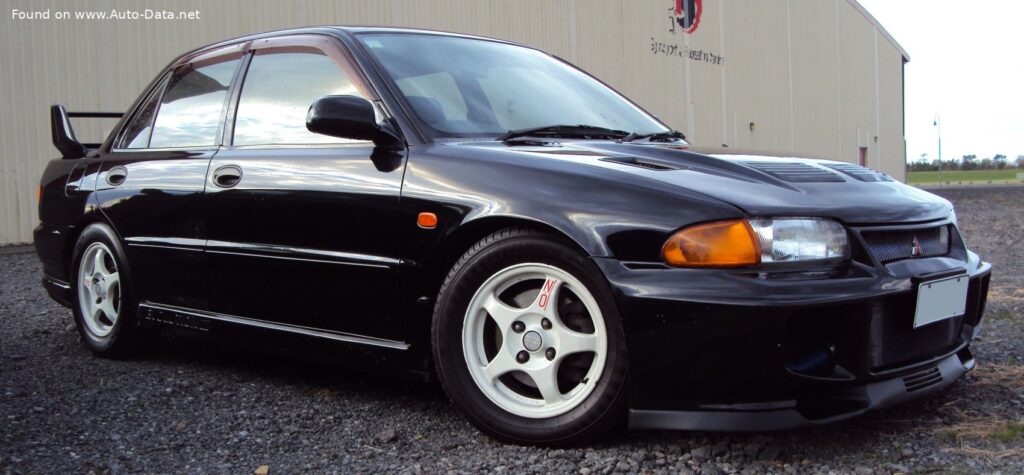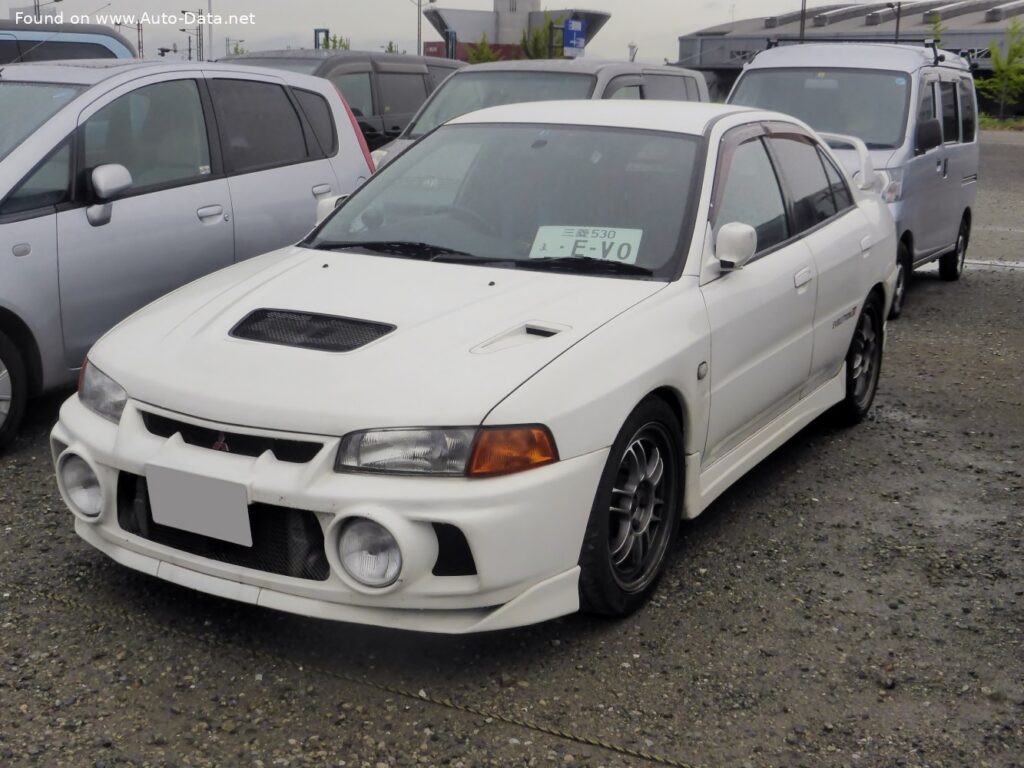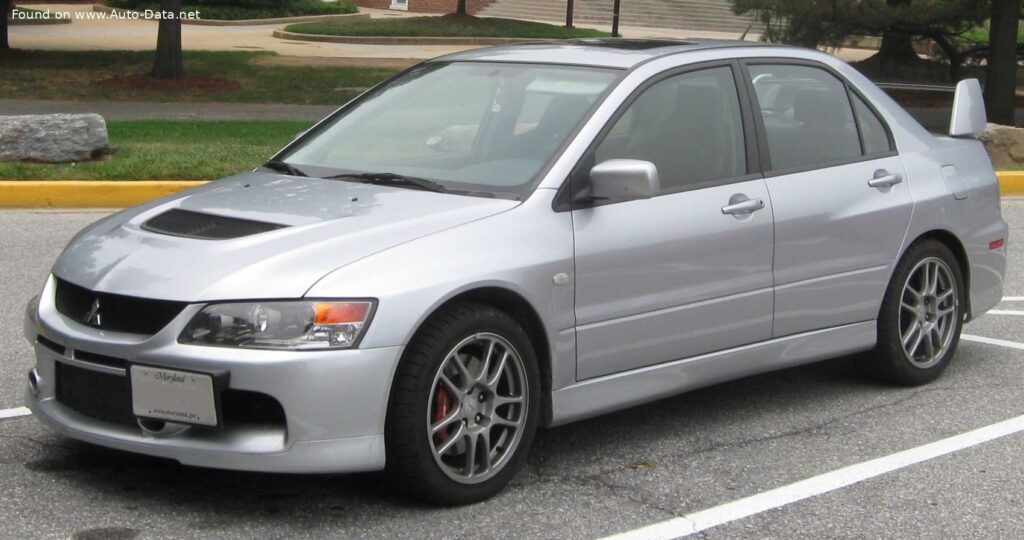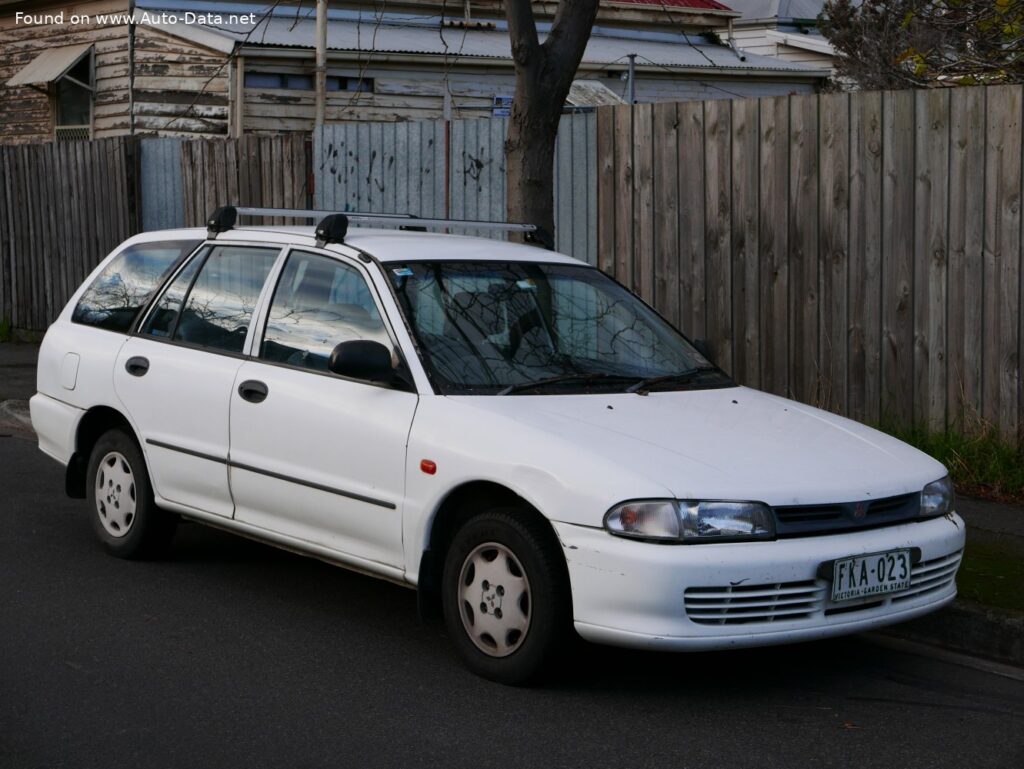
The Mitsubishi Lancer V Wagon 1.6 16V (113 Hp) represents a practical and dependable variant of the fifth-generation Lancer, produced between 1992 and 2000. While the Lancer nameplate might evoke images of high-performance Evolution sedans for some enthusiasts, this particular wagon model carved out its niche as a reliable and economical family hauler and small business workhorse across various international markets, particularly in Europe, Asia, and Australia. In these regions, where compact wagons were highly valued for their blend of maneuverability, fuel efficiency, and cargo capacity, the Lancer V Wagon offered a compelling package. It stood as a testament to Mitsubishi’s engineering philosophy of building robust, no-nonsense vehicles designed for longevity and everyday utility. This generation of Lancer, internally known as the CB/CD/CE series, provided a platform for a variety of body styles, with the wagon variant emphasizing practicality over outright sportiness, yet still maintaining a respectable level of performance for its class.
The Fifth-Generation Mitsubishi Lancer V Wagon: A Global Workhorse
The fifth-generation Mitsubishi Lancer, launched in 1992, was a significant model for the Japanese automaker, underpinning a wide range of vehicles from economy sedans to the rally-bred Lancer Evolution. The station wagon variant, specifically the Mitsubishi Lancer V Wagon, was tailored to meet the demands of consumers needing more cargo space and versatility than a typical sedan could offer. Its design ethos was rooted in functionality, offering a spacious interior and a flexible cargo area without compromising on the compact footprint that made it agile in urban environments. This approach ensured its relevance and popularity in markets where space efficiency and running costs were paramount.
Engine & Performance
Under the hood of the Mitsubishi Lancer V Wagon 1.6 16V (113 Hp) lay Mitsubishi’s well-regarded 4G92 inline-four engine. This 1.6-liter (1597 cubic inches) powerplant featured a 16-valve OHC (Overhead Camshaft) valvetrain, a sophisticated setup for its time that allowed for better breathing and efficiency compared to older 8-valve designs. With a compression ratio of 10:1 and a multi-port manifold injection system, this naturally aspirated engine produced a respectable 113 horsepower at 6000 rpm and 101.05 lb.-ft. of torque at 5000 rpm. These figures translated into a lively yet economical driving experience, perfectly suited for its target audience.
Power was delivered to the front wheels via a smooth-shifting 5-speed manual transmission, a common and reliable choice for vehicles in this segment. This drivetrain architecture, coupled with the engine’s output, allowed the Lancer V Wagon to accelerate from 0 to 60 mph in approximately 9.7 seconds, with a top speed of around 114.95 mph. While not a performance car, these statistics ensured adequate merging capability on highways and confident overtaking maneuvers. Fuel efficiency was a strong point, with a combined economy rating of 32.2 US mpg, making it an attractive option for budget-conscious buyers seeking a practical family vehicle. The engine’s reputation for durability and ease of maintenance further cemented its appeal.
Design & Features
The design of the Mitsubishi Lancer V Wagon was characterized by its straightforward, utilitarian aesthetic, typical of Japanese compact cars from the 1990s. As a 5-door, 5-seat station wagon, its primary focus was on maximizing interior space and versatility. Measuring 168.31 inches in length, 66.54 inches in width, and 55.91 inches in height, with a wheelbase of 98.43 inches, the Lancer V Wagon struck a balance between a compact exterior footprint and a surprisingly spacious cabin.
The true highlight of the wagon body style was its cargo capacity. With the rear seats in place, it offered a generous 16.6 cubic feet of trunk space, which could expand to an impressive 26.13 cubic feet when the rear seats were folded down. This flexibility made it ideal for everything from grocery runs to hauling sports equipment or luggage for family trips. The interior, while not opulent, was ergonomically designed with durable materials built to withstand the rigors of daily use. Standard features for the era would have included basic climate controls, a functional dashboard layout, and comfortable seating for five occupants.
In terms of chassis and suspension, the Lancer V Wagon featured a wishbone setup at the front and a coil spring arrangement at the rear, providing a comfortable ride quality and predictable handling. Stopping power came from ventilated disc brakes at the front and drum brakes at the rear, a common and effective combination for a vehicle of its weight and performance. Hydraulic power steering made maneuvering easy, and the car rode on 175/70 R13 tires, mounted on 13-inch wheel rims, offering a good balance of grip and ride comfort. Safety features, while not as advanced as modern vehicles, would have included standard seatbelts and, depending on the market and trim level, could have featured driver and passenger airbags later in its production run.
Technical Specifications
| Category | Specification |
| Brand | Mitsubishi |
| Model | Lancer |
| Generation | Lancer V Wagon |
| Type (Engine) | 1.6 16V (113 Hp) |
| Start of Production | 1992 year |
| End of Production | 2000 year |
| Powertrain Architecture | Internal Combustion engine, Front-wheel drive |
| Body Type | Station wagon (estate) |
| Seats | 5 |
| Doors | 5 |
| Fuel Consumption (Combined) | 7.3 l/100 km (32.2 US mpg) |
| Fuel Consumption (Extra Urban) | 5.5 l/100 km (42.8 US mpg) |
| Fuel Type | Petrol (Gasoline) |
| Acceleration 0-60 mph | 9.7 sec |
| Maximum Speed | 185 km/h (114.95 mph) |
| Weight-to-Power Ratio | 9.2 kg/Hp (20.28 lbs/Hp) |
| Power | 113 Hp @ 6000 rpm |
| Power per Liter | 70.8 Hp/l |
| Torque | 137 Nm (101.05 lb.-ft.) @ 5000 rpm |
| Engine Layout | Front, Transverse |
| Engine Model/Code | 4G92 |
| Engine Displacement | 1597 cm3 (97.45 cu. in.) |
| Number of Cylinders | 4 |
| Engine Configuration | Inline |
| Cylinder Bore | 81 mm (3.19 in.) |
| Piston Stroke | 77.5 mm (3.05 in.) |
| Compression Ratio | 10:1 |
| Valves per Cylinder | 4 |
| Fuel Injection System | Multi-port manifold injection |
| Engine Aspiration | Naturally aspirated engine |
| Valvetrain | OHC |
| Kerb Weight | 1035 kg (2281.78 lbs) |
| Max. Weight | 1600 kg (3527.4 lbs) |
| Max Load | 565 kg (1245.61 lbs) |
| Trunk (Boot) Space – Minimum | 470 l (16.6 cu. ft.) |
| Trunk (Boot) Space – Maximum | 740 l (26.13 cu. ft.) |
| Fuel Tank Capacity | 50 l (13.21 US gal) |
| Length | 4275 mm (168.31 in.) |
| Width | 1690 mm (66.54 in.) |
| Height | 1420 mm (55.91 in.) |
| Wheelbase | 2500 mm (98.43 in.) |
| Front Track | 1450 mm (57.09 in.) |
| Rear (Back) Track | 1420 mm (55.91 in.) |
| Drive Wheel | Front wheel drive |
| Number of Gears | 5 |
| Type of Gearbox | Manual transmission |
| Front Suspension | Wishbone |
| Rear Suspension | Coil spring |
| Front Brakes | Ventilated discs |
| Rear Brakes | Drum |
| Steering Type | Steering rack and pinion |
| Power Steering | Hydraulic Steering |
| Tires Size | 175/70 R13 |
| Wheel Rims Size | 13 inches |
Legacy and Market Impact
The Mitsubishi Lancer V Wagon 1.6 16V (113 Hp), throughout its production run from 1992 to 2000, played a crucial role in establishing Mitsubishi’s reputation for building reliable, economical, and practical vehicles in its key international markets. While it never achieved the iconic status of its rally-bred sedan siblings like the Lancer Evolution, its enduring appeal lay in its sheer utility and low cost of ownership.
In regions like Europe, Australia, and parts of Asia, the Lancer Wagon competed fiercely with rivals such as the Toyota Corolla Wagon, Honda Civic Shuttle (and later Civic Wagon), Nissan Sunny/Sentra Wagon, and various offerings from Ford and Opel. What set the Lancer apart was its blend of Mitsubishi’s renowned reliability, a robust engine, and a spacious, adaptable interior. It became a favorite among families needing a versatile daily driver and small businesses requiring a dependable vehicle for light hauling. Its straightforward mechanicals also meant that maintenance was generally simple and affordable, further contributing to its long-term value proposition.
The legacy of the Lancer V Wagon is one of quiet competence. It wasn’t designed to be a showstopper, but rather a steadfast companion that performed its duties without complaint. It contributed significantly to Mitsubishi’s global sales figures during the 1990s, cementing the brand’s image as a producer of dependable and value-oriented vehicles. Although the market for compact wagons eventually saw a decline in favor of SUVs and crossovers in many regions, the Lancer V Wagon remains a testament to an era when practical, unpretentious station wagons were the go-to choice for millions seeking a blend of sedan-like driving dynamics and minivan-like utility. Even today, many of these vehicles can still be found on the road, a true indicator of their inherent durability and timeless functionality.