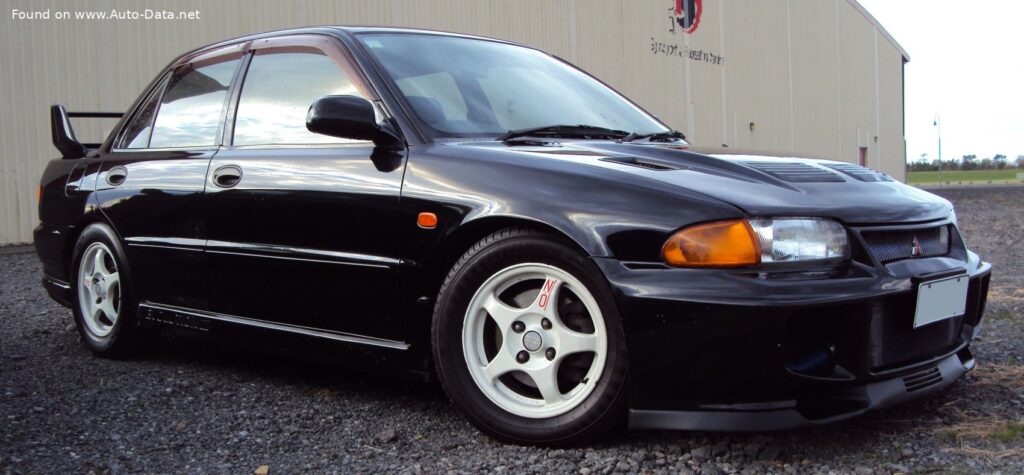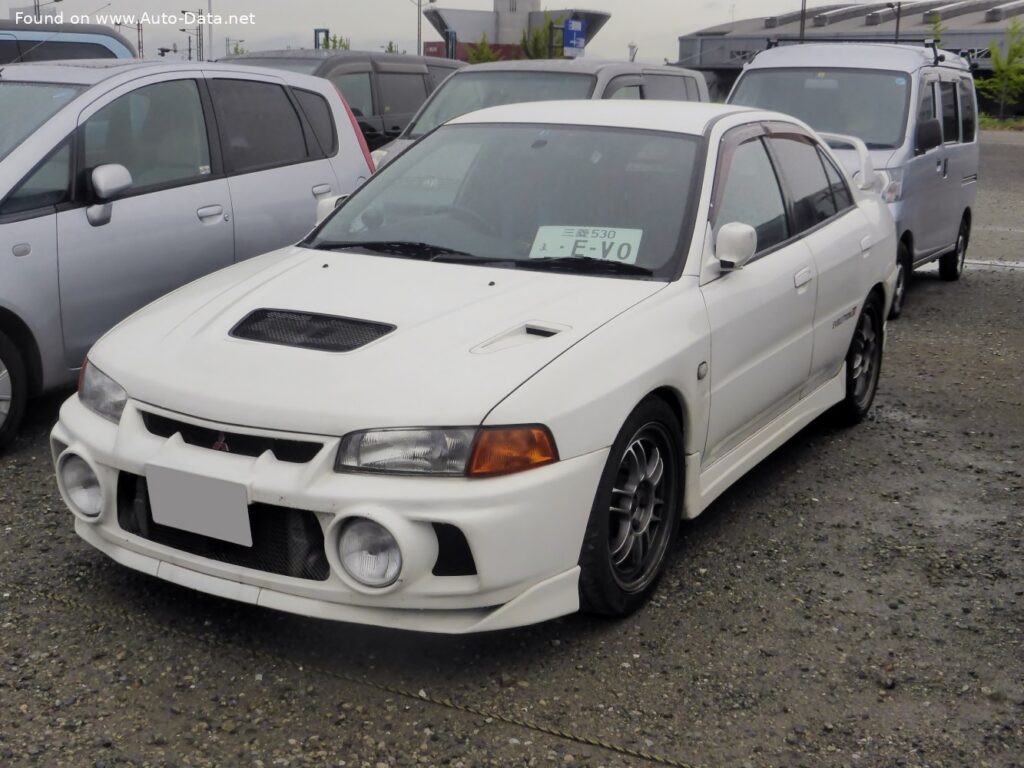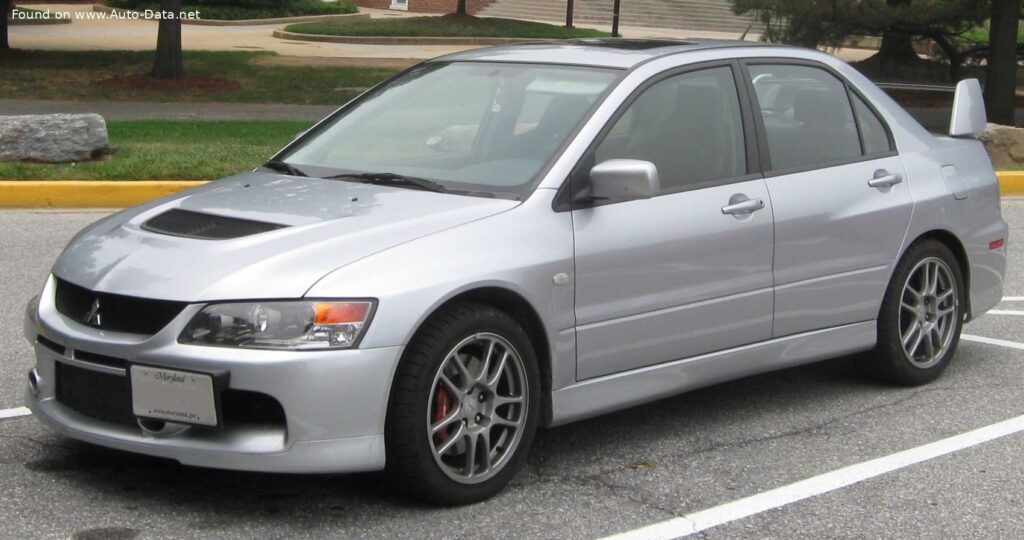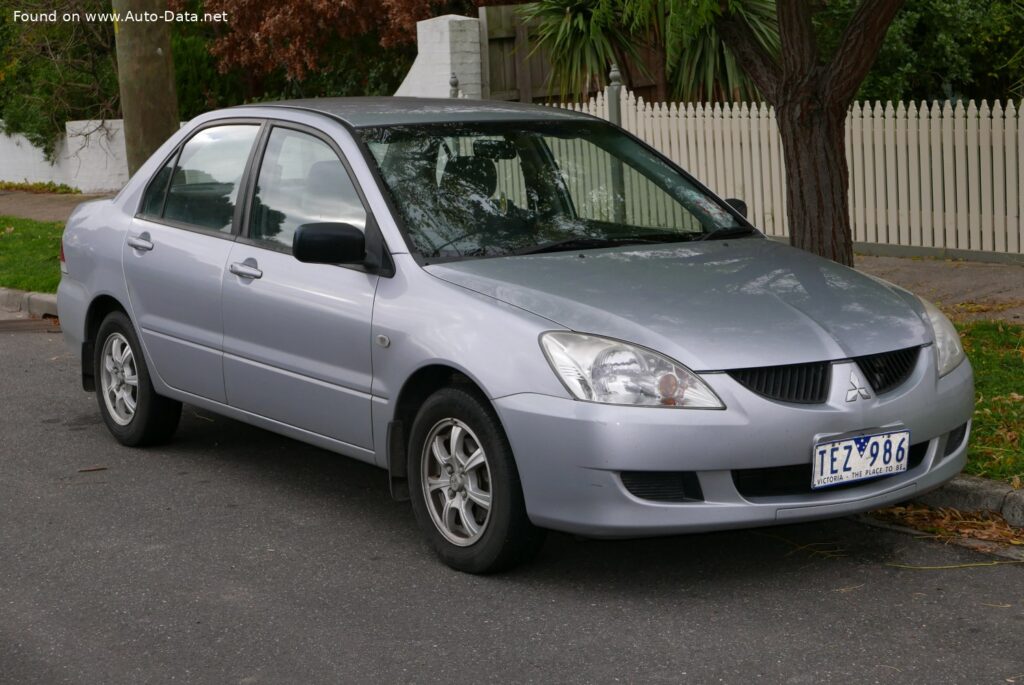
The Mitsubishi Lancer VIII, produced from 2003 to 2007, represents a significant chapter in the Lancer’s long and storied history as a globally recognized compact car. This particular variant, the Mitsubishi Lancer VIII Sport 2.0i 16V (135 Hp), carved out a niche as a practical yet spirited offering within the Lancer lineup. While the Lancer nameplate is synonymous with rally-bred performance through its Evolution variants, the standard Lancer VIII, including this Sport model, focused on delivering reliable transportation, comfortable seating for five, and a competitive feature set for the compact sedan market. It was designed to appeal to a broad customer base seeking an economical and dependable vehicle with a touch of driving engagement, particularly in markets like Europe and Asia where this specific powertrain configuration was more prevalent.
Mitsubishi Lancer VIII Sport 2.0i 16V (135 Hp): A Detailed Overview
The Lancer VIII was a key model for Mitsubishi during a period of significant change in the automotive industry. It aimed to balance affordability, practicality, and a degree of driving pleasure, appealing to a wide range of consumers. The Sport trim level, as exemplified by the 2.0i 16V, offered a slightly more engaging experience than the base models, without the substantial price premium of the high-performance Evolution versions. This model was particularly popular in regions where compact sedans were a dominant market segment, offering a compelling alternative to established competitors.
Engine & Performance
The Mitsubishi Lancer VIII Sport 2.0i 16V (135 Hp) is powered by the Mitsubishi 4G63 engine, a 2.0-liter (1997 cm3 or 121.86 cu. in.) inline-four cylinder powerplant. While renowned in its turbocharged form within the Lancer Evolution, this naturally aspirated version showcases the engine’s inherent reliability and efficiency. The 4G63 features a Double Overhead Camshaft (DOHC) valvetrain and multi-port fuel injection, generating 135 horsepower at 5750 rpm. Torque output is rated at 176 Nm (129.81 lb.-ft.) at 4500 rpm, providing sufficient power for everyday driving and highway travel.
Power is delivered to the front wheels through a precise 5-speed manual transmission, giving the driver direct control over the engine’s output. This configuration allows the Lancer VIII Sport to achieve a 0 to 60 mph acceleration time of 9.2 seconds, with a top speed of 126.76 mph (204 km/h). Fuel economy is a respectable 28 US mpg (8.4 l/100 km) combined, making it an economical choice for daily commuting. The engine’s robust construction and relatively simple design contribute to its longevity and ease of maintenance.
Design & Features
The Lancer VIII Sport 2.0i 16V (135 Hp) boasts a clean, aerodynamic sedan body style typical of early 2000s automotive design. Its four-door, five-seat layout prioritizes practicality and passenger comfort. The exterior dimensions are 176.38 inches (4480 mm) in length, 66.73 inches (1695 mm) in width, and 56.89 inches (1445 mm) in height. A 102.36-inch (2600 mm) wheelbase contributes to a stable ride and a surprisingly spacious interior for a compact vehicle.
The “Sport” designation typically included minor aesthetic enhancements, such as unique wheel designs or subtle body kit additions, and potentially a slightly firmer suspension tuning. Standard safety features for the era included power steering and an Anti-lock Braking System (ABS). The suspension system utilizes MacPherson struts at the front and a transverse stabilizer at the rear, providing a comfortable and controlled ride. Braking is handled by ventilated discs at the front and solid discs at the rear. The vehicle is equipped with 195/50 R16 tires mounted on 6J x 16-inch wheel rims, offering a balance between grip and ride quality. The trunk offers 15.19 cu. ft. (430 liters) of cargo space, ample for a vehicle in this class.
Technical Specifications: Mitsubishi Lancer VIII Sport 2.0i 16V (135 Hp)
| Category | Specification |
| General Information | |
| Brand | Mitsubishi |
| Model | Lancer |
| Generation | Lancer VIII |
| Type (Engine) | Sport 2.0i 16V (135 Hp) |
| Start of Production | 2003 |
| End of Production | 2007 |
| Powertrain Architecture | Internal Combustion engine |
| Body type | Sedan |
| Seats | 5 |
| Doors | 4 |
| Performance Specs | |
| Fuel consumption (economy) – urban | 11.7 l/100 km (20.1 US mpg) |
| Fuel consumption (economy) – extra urban | 6.5 l/100 km (36.2 US mpg) |
| Fuel consumption (economy) – combined | 8.4 l/100 km (28 US mpg) |
| Fuel Type | Petrol (Gasoline) |
| Acceleration 0 – 60 mph | 9.2 sec |
| Maximum speed | 204 km/h (126.76 mph) |
| Weight-to-power ratio | 9.4 kg/Hp (20.72 lbs/Hp) |
| Weight-to-torque ratio | 7.2 kg/Nm (15.87 lbs/Nm) |
| Engine Specs | |
| Power | 135 Hp @ 5750 rpm |
| Power per liter | 67.6 Hp/l |
| Torque | 176 Nm @ 4500 rpm (129.81 lb.-ft. @ 4500 rpm) |
| Engine layout | Front, Transverse |
| Engine Model/Code | 4G63 |
| Engine displacement | 1997 cm3 (2.0 liters / 121.86 cu. in.) |
| Number of cylinders | 4 Inline |
| Cylinder Bore | 85 mm (3.35 in.) |
| Piston Stroke | 88 mm (3.46 in.) |
| Compression ratio | 10.3:1 |
| Number of valves per cylinder | 4 |
| Fuel injection system | Multi-port manifold injection |
| Engine aspiration | Naturally aspirated engine |
| Valvetrain | DOHC |
| Engine oil capacity | 4.3 l (4.54 US qt) |
| Coolant | 7 l (7.4 US qt) |
| Space, Volume and Weights | |
| Kerb Weight | 1270 kg (2799.87 lbs.) |
| Max. weight | 1750 kg (3858.09 lbs.) |
| Max load | 480 kg (1058.22 lbs.) |
| Trunk (boot) space – minimum | 430 l (15.19 cu. ft.) |
| Fuel tank capacity | 50 l (13.21 US gal) |
| Dimensions | |
| Length | 4480 mm (176.38 in.) |
| Width | 1695 mm (66.73 in.) |
| Height | 1445 mm (56.89 in.) |
| Wheelbase | 2600 mm (102.36 in.) |
| Front track | 1470 mm (57.87 in.) |
| Rear (Back) track | 1470 mm (57.87 in.) |
| Drivetrain, Brakes and Suspension Specs | |
| Drivetrain Architecture | The Internal combustion engine (ICE) drives the front wheels of the vehicle. |
| Drive wheel | Front wheel drive |
| Number of gears and type of gearbox | 5 gears, manual transmission |
| Front suspension | Spring Strut (commonly MacPherson Strut) |
| Rear suspension | Transverse stabilizer |
| Front brakes | Ventilated discs |
| Rear brakes | Disc |
| Assisting systems | ABS (Anti-lock braking system) |
| Steering type | Steering rack and pinion |
| Power steering | Hydraulic Steering |
| Tires size | 195/50 R16 |
| Wheel rims size | 6J x 16 |
Legacy and Market Impact
The Mitsubishi Lancer VIII, including the Sport 2.0i 16V (135 Hp) model, played a vital role in Mitsubishi’s global portfolio during the early to mid-2000s. While it might not have garnered the same enthusiast following as its high-performance Evolution siblings, it was a crucial bread-and-butter model that competed in the fiercely contested compact sedan segment. In markets where it was offered, such as Europe, Australia, and parts of Asia, it stood as a reliable, economical, and somewhat sporty alternative to rivals like the Honda Civic, Toyota Corolla, and Mazda3.
Its legacy is one of dependable, no-nonsense transportation with a hint of driving enjoyment. The 4G63 engine, even in its naturally aspirated form, contributed to a reputation for durability and straightforward maintenance. The “Sport” trim level aimed to attract buyers looking for a bit more zest than the standard models, without venturing into the extreme performance territory of the Evo. It offered a balanced package of everyday usability, reasonable running costs, and a chassis that, while not overtly dynamic, was competent and predictable. Ultimately, the Lancer VIII Sport 2.0i 16V (135 Hp) embodied Mitsubishi’s commitment to producing well-engineered, practical vehicles for a global audience. It may not be the most celebrated Lancer variant, but it was a solid performer that upheld the brand’s reputation for reliability and offered a compelling option for drivers seeking a compact sedan with a bit more character than the average commuter car.