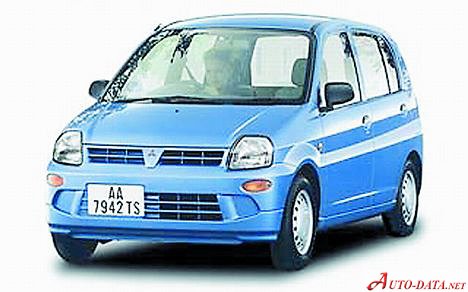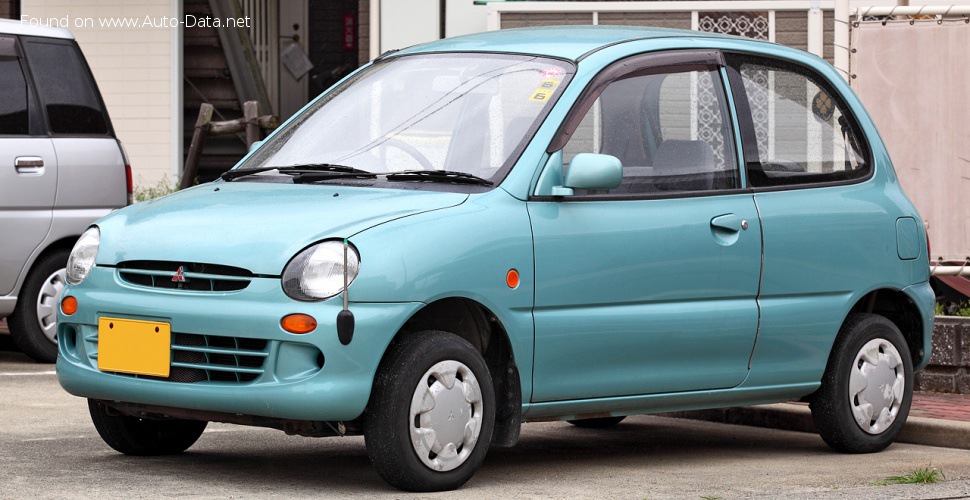
The Mitsubishi Minica V, produced from 1993 to 1999, represents the fifth generation of Mitsubishi’s long-running Minica line, a nameplate that first appeared in 1962. This particular iteration, the Mitsubishi Minica V 0.66 i 16V ST-4WD (55 Hp) Automatic, is a prime example of the Japanese Kei car segment. Kei cars, or “light automobiles,” are a category of vehicles in Japan subject to specific governmental regulations regarding size, engine displacement, and power output, offering tax and insurance benefits to their owners. The Minica V was designed to excel within these strict parameters, providing economical and practical urban transportation for the Japanese domestic market. While never officially sold in the United States, understanding its role in Japan sheds light on a unique and highly specialized automotive culture, showcasing ingenuity in maximizing utility within minimal constraints.
The Mitsubishi Minica V: A Kei Car for the Japanese Market
As a 3-door hatchback, the Minica V was engineered for maximum interior space efficiency, maneuverability in congested city environments, and fuel economy. The addition of an all-wheel-drive (4WD) system in this specific variant further enhanced its appeal, especially in regions of Japan that experience heavy snowfall or require better traction on unpaved roads, a surprising but valuable feature for such a compact vehicle. The Minica V was a key player in a segment defined by practicality and regulatory compliance, catering to a specific need within the Japanese automotive landscape.
Engine & Performance: Maximizing Output
At the heart of the Mitsubishi Minica V 0.66 i 16V ST-4WD lies a remarkably compact, naturally aspirated 0.66-liter (659 cm3) inline four-cylinder engine. This powerplant, a marvel of small-engine engineering for its time, featured a 16-valve OHC (Overhead Camshaft) valvetrain and multi-port manifold fuel injection. Designed to comply with the stringent Kei car regulations of the era, which capped engine displacement at 660 cubic centimeters, this engine delivered a modest but effective 55 horsepower at a high 7000 rpm. Its power per liter figure of 83.5 Hp/l was impressive for a naturally aspirated engine of this size, demonstrating Mitsubishi’s ability to extract significant output from minimal displacement.
Torque output was 44.25 lb.-ft. (60 Nm) at 5000 rpm. While these figures might seem low by conventional American automotive standards, they were perfectly adequate for the Minica V’s intended purpose: navigating urban landscapes and short commutes. The engine’s high-revving nature was typical for Kei car engines, which often needed to be pushed to higher RPMs to access their peak power. Power was channeled through a 4-speed automatic transmission, a common choice for urban vehicles to provide ease of driving, particularly in stop-and-go traffic. The inclusion of an all-wheel-drive (4×4) system, dubbed “ST-4WD,” was a significant differentiator, offering enhanced traction and stability, a feature not always found in vehicles of this class and size, further underscoring its versatility in diverse Japanese driving conditions.
Despite its modest power, the Minica V benefited from an exceptionally low curb weight of just 1609.37 lbs (730 kg). This featherlight construction contributed to a weight-to-power ratio of 13.3 kg/Hp (75.3 Hp/tonne) and a weight-to-torque ratio of 12.2 kg/Nm (82.2 Nm/tonne), ensuring that the 55 horsepower was effectively utilized. The vehicle’s nimble dimensions and light weight made it surprisingly agile and responsive within its operational context.
Design & Features: Practicality and Efficiency
The Mitsubishi Minica V adopted a conventional 3-door hatchback body style, a practical choice for maximizing interior volume and accessibility within its diminutive footprint. Its exterior dimensions were strictly dictated by Kei car regulations: a length of 129.72 inches (3295 mm), a width of 54.92 inches (1395 mm), and a height of 59.25 inches (1505 mm). These dimensions allowed it to fit into the smallest parking spaces and maneuver through narrow city streets with ease, offering a minimum turning circle of just 30.18 feet (9.2 meters).
Despite its compact size, the Minica V was designed to comfortably seat four occupants, though rear passenger space would naturally be limited for adults on longer journeys. The tall roofline was a common Kei car design trait, providing crucial headroom and contributing to a more airy cabin feel, compensating for the narrow body. The design prioritized functionality over flashy aesthetics, with a simple, unadorned exterior that reflected its role as an affordable and dependable utility vehicle.
Key features for its era and segment included a hydraulic power steering system, making low-speed maneuvers and parking effortless. The suspension setup comprised a spring strut system at the front and coil springs at the rear, a common and cost-effective arrangement for compact cars, providing a reasonable balance of ride comfort and handling. Braking was handled by disc brakes at the front and drum brakes at the rear, a typical configuration for entry-level vehicles. Importantly, this specific variant was equipped with ABS (Anti-lock Braking System), a significant safety feature for the mid-1990s, enhancing braking performance and control under adverse conditions. The vehicle rode on 13-inch wheels fitted with 155/70 R13 S tires, providing a balance of grip and ride comfort appropriate for its size and performance.
Technical Specifications: Mitsubishi Minica V 0.66 i 16V ST-4WD
| Category | Specification |
| General Information | |
| Brand | Mitsubishi |
| Model | Minica |
| Generation | Minica V |
| Type (Engine) | 0.66 i 16V ST-4WD (55 Hp) Automatic |
| Start of production | 1993 year |
| End of production | 1999 year |
| Powertrain Architecture | Internal Combustion engine |
| Body type | Hatchback |
| Seats | 4 |
| Doors | 3 |
| Performance Specs | |
| Fuel Type | Petrol (Gasoline) |
| Weight-to-power ratio | 13.3 kg/Hp |
| Weight-to-torque ratio | 12.2 kg/Nm |
| Engine Specs | |
| Power | 55 Hp @ 7000 rpm |
| Power per liter | 83.5 Hp/l |
| Torque | 60 Nm @ 5000 rpm |
| Torque (lb.-ft.) | 44.25 lb.-ft. @ 5000 rpm |
| Engine layout | Front, Transverse |
| Engine displacement | 659 cm3 |
| Engine displacement (Liters/cu. in.) | 0.66 Liters / 40.21 cu. in. |
| Number of cylinders | 4 |
| Engine configuration | Inline |
| Cylinder Bore | 60 mm |
| Piston Stroke | 58.3 mm |
| Compression ratio | 8.5:1 |
| Number of valves per cylinder | 4 |
| Fuel injection system | Multi-port manifold injection |
| Engine aspiration | Naturally aspirated engine |
| Valvetrain | OHC |
| Space, Volume and Weights | |
| Kerb Weight | 730 kg |
| Kerb Weight (lbs.) | 1609.37 lbs. |
| Fuel tank capacity | 32 l |
| Fuel tank capacity (US gal) | 8.45 US gal |
| Dimensions | |
| Length | 3295 mm |
| Length (in.) | 129.72 in. |
| Width | 1395 mm |
| Width (in.) | 54.92 in. |
| Height | 1505 mm |
| Height (in.) | 59.25 in. |
| Wheelbase | 2280 mm |
| Wheelbase (in.) | 89.76 in. |
| Front track | 1215 mm |
| Front track (in.) | 47.83 in. |
| Rear (Back) track | 1215 mm |
| Rear (Back) track (in.) | 47.83 in. |
| Minimum turning circle (turning diameter) | 9.2 m |
| Minimum turning circle (turning diameter) (ft.) | 30.18 ft. |
| Drivetrain, Brakes and Suspension Specs | |
| Drive wheel | All wheel drive (4×4) |
| Number of gears and type of gearbox | 4 gears, automatic transmission |
| Front suspension | Spring Strut |
| Rear suspension | Coil spring |
| Front brakes | Disc |
| Rear brakes | Drum |
| Assisting systems | ABS (Anti-lock braking system) |
| Steering type | Steering rack and pinion |
| Power steering | Hydraulic Steering |
| Tires size | 155/70 R13 S |
| Wheel rims size | 13 |
Legacy and Market Impact
The Mitsubishi Minica V played a vital role in the highly competitive Japanese Kei car segment throughout the 1990s. Its main competitors included other stalwarts of the Kei class, such as the Suzuki Alto, Daihatsu Mira, and Honda Today. These vehicles all vied for market share by offering maximum practicality, fuel efficiency, and affordability within the strict regulatory framework. The Minica V distinguished itself with its robust engineering, reliable powertrain, and, in this specific variant, the added utility of an all-wheel-drive system, which made it particularly appealing to customers in mountainous regions or areas prone to inclement weather.
The Minica series, including the fifth generation, contributed significantly to Mitsubishi’s reputation as a manufacturer capable of producing dependable and innovative small cars. While its performance figures might seem modest, the Minica V offered a compelling package for its target demographic: a low-cost, easy-to-drive, and exceptionally fuel-efficient vehicle with surprisingly good interior space for its exterior dimensions. Its compact size was not just about compliance; it was a fundamental aspect of its utility, allowing drivers to navigate Japan’s often cramped urban environments and take advantage of preferential parking and toll rates. The Minica V’s legacy is one of successful adaptation and engineering prowess within a highly specialized niche.