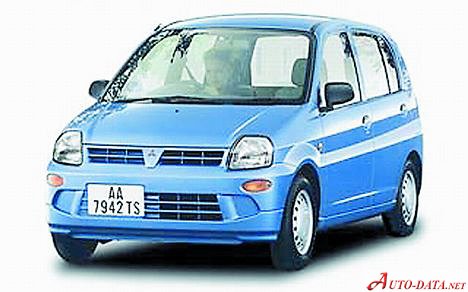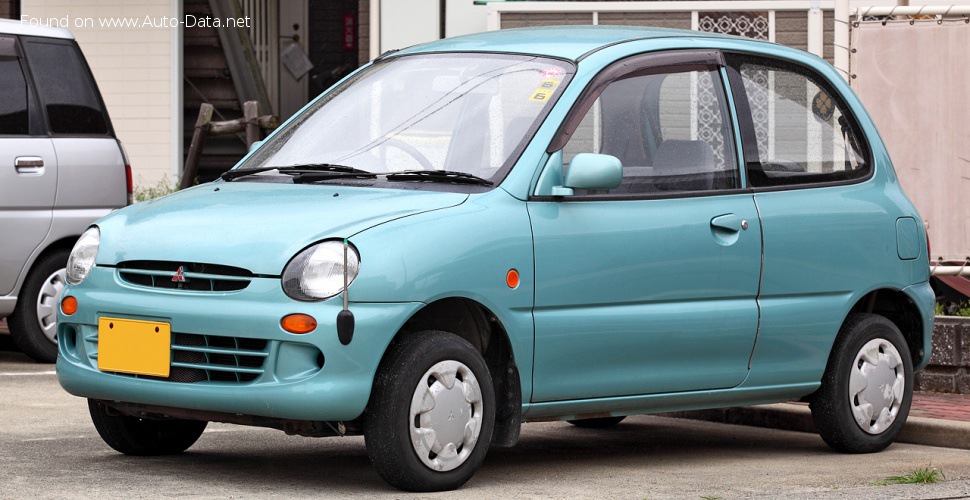
The Mitsubishi Minica, a long-standing nameplate in the Japanese automotive industry, has consistently represented the compact and highly regulated “Kei car” segment. The fifth generation, produced from 1993 to 1999, marked a significant advancement for the model, successfully combining practicality with surprising technological sophistication. The Mitsubishi Minica V 0.66 i 20V SR-Z (64 Hp) was a standout trim, offering a spirited driving experience within the strict limitations of Japan’s Kei car regulations. This 3-door hatchback exemplified Mitsubishi’s engineering prowess, integrating advanced features and a turbocharged engine into a small package designed for Japan’s dense urban environments. While never officially sold in the United States, the Minica V 0.66 i 20V SR-Z provides a compelling insight into the unique automotive culture and engineering challenges of the Japanese Kei segment, demonstrating how maximum performance can be achieved with minimal displacement.
Mitsubishi Minica V 0.66 i 20V SR-Z: A Detailed Overview
The Minica V represented a pivotal point in the model’s evolution. Prior generations had established the Minica as a reliable and economical city car, but the fifth generation aimed to elevate the experience with improved performance, handling, and features. The SR-Z trim, in particular, was targeted towards drivers seeking a more engaging and sporty driving experience within the Kei car framework. The Kei car class, defined by strict regulations regarding engine displacement, dimensions, and power output, necessitates innovative engineering solutions to deliver a satisfying driving experience. The Minica V SR-Z successfully navigated these constraints, becoming a popular choice for those seeking a fun and efficient urban vehicle.
Engine & Performance
The heart of the Mitsubishi Minica V 0.66 i 20V SR-Z (64 Hp) is a remarkable feat of miniaturized engineering: a 0.66-liter (659 cm3) inline four-cylinder engine. Designated the 4A30, this powerplant was far from a basic small engine; it was a highly refined unit featuring Double Overhead Camshafts (DOHC) and an impressive five valves per cylinder. This 20-valve configuration, uncommon even in larger engines of the time, optimized airflow and combustion efficiency, crucial for maximizing performance from such a small displacement.
To further enhance its output, Mitsubishi equipped the SR-Z with a turbocharger, a common strategy within the Kei segment to reach the class’s maximum power limit. This setup allowed the engine to produce 64 horsepower at a high 7000 rpm, hitting the regulatory ceiling for Kei cars. Torque output was equally impressive for its size, delivering 71.54 lb.-ft. (97 Nm) at a relatively low 3500 rpm, ensuring responsive performance in city driving. The engine’s high specific output of 97.1 HP per liter underscored its advanced design and the engineering effort required to achieve such figures from a sub-one-liter engine.
Power is transmitted to the front wheels via a precise 5-speed manual transmission, providing an engaging driving experience that appealed to enthusiasts. This combination allowed the lightweight Minica SR-Z, with a curb weight of just 1543.24 pounds (700 kg), to achieve a top speed of 65.24 mph (105 km/h). While this may seem modest by American standards, it was more than sufficient for Japanese urban and highway conditions, where speed limits and traffic density often restrict higher speeds. The vehicle’s exceptional weight-to-power ratio of 10.9 kg/Hp further contributed to its nimble handling and surprisingly sprightly acceleration. The Minica V SR-Z also boasted remarkable fuel efficiency, achieving an impressive 54.7 US mpg (4.3 l/100 km) in combined driving, a critical selling point in a market prioritizing economy and environmental responsibility.
Design & Features
The Mitsubishi Minica V, particularly in the SR-Z trim, showcased a design philosophy balancing practicality with a touch of sportiness. As a 3-door hatchback, it offered a compact footprint ideal for navigating congested city streets and fitting into tight parking spaces. Despite its small exterior dimensions—measuring just 129.72 inches in length, 54.92 inches in width, and 58.46 inches in height—the Minica V maximized interior space through clever packaging.
The SR-Z trim level added several features aimed at enhancing the driving experience. These included sport-tuned suspension, providing improved handling and stability, and unique exterior styling elements, such as alloy wheels and a rear spoiler, to differentiate it from other Minica V models. The interior featured supportive bucket seats and a sporty steering wheel, further emphasizing the SR-Z’s performance-oriented character. While not lavishly equipped by modern standards, the Minica V SR-Z offered essential features such as air conditioning, power steering, and an AM/FM radio. Safety features, while limited compared to contemporary vehicles, included seatbelts and a reinforced body structure. The focus was on providing a safe and reliable vehicle within the constraints of the Kei car segment.
Technical Specifications
| Engine Type | 0.66L Inline-4, Turbocharged |
| Engine Code | 4A30 |
| Displacement | 659 cc (40.2 cu in) |
| Horsepower | 64 hp @ 7000 rpm |
| Torque | 71.54 lb.-ft. (97 Nm) @ 3500 rpm |
| Valve Configuration | DOHC, 20-Valve |
| Fuel System | Multi-Point Fuel Injection |
| Transmission | 5-Speed Manual |
| Drivetrain | Front-Wheel Drive |
| Curb Weight | 1543.24 lbs (700 kg) |
| Top Speed | 65.24 mph (105 km/h) |
| Fuel Economy (Combined) | 54.7 US mpg (4.3 l/100 km) |
| Length | 129.72 inches (3295 mm) |
| Width | 54.92 inches (1395 mm) |
| Height | 58.46 inches (1485 mm) |
| Weight-to-Power Ratio | 10.9 kg/Hp |
The Mitsubishi Minica V 0.66 i 20V SR-Z, while never available in the American market, represents a fascinating example of Japanese automotive engineering. It demonstrates how manufacturers can create a fun, efficient, and surprisingly capable vehicle within the strict confines of the Kei car regulations. Its advanced engine technology, lightweight construction, and sporty features made it a popular choice for urban drivers in Japan, and it remains a testament to Mitsubishi’s ingenuity and commitment to innovation.