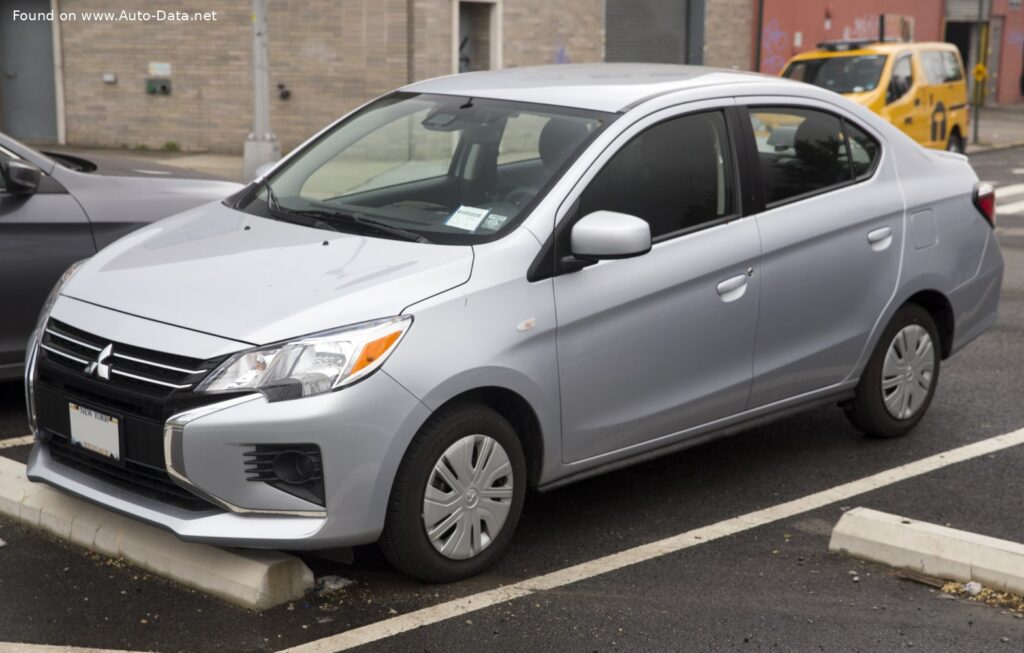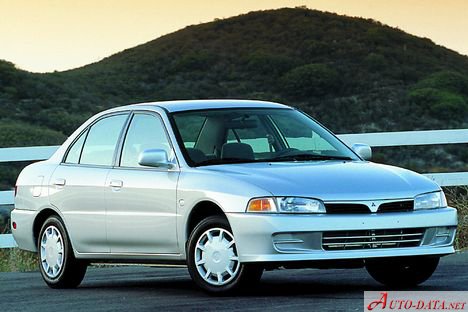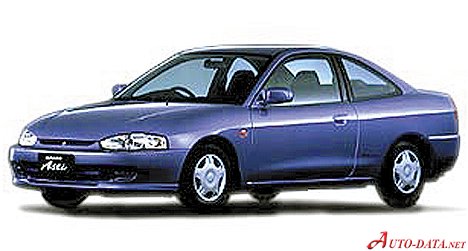
The Mitsubishi Mirage V Asti (CJO) represents the fifth generation of Mitsubishi’s enduring compact car lineage, specifically the two-door coupe variant produced from 1996 to 2002. While the Mirage nameplate has a long history, particularly in North American markets as an economy sedan and hatchback, the Asti sub-designation was typically reserved for the sportier coupe versions in Japan and other Asian and Oceanic regions. This particular iteration, the 1.3 i 12V (88 Hp) Automatic, exemplifies the model’s role as an affordable, stylish, and efficient compact coupe, offering a blend of practical daily usability with a hint of sportiness for its primary markets.
The Mitsubishi Mirage V Asti: A Global Compact Coupe
The Mirage V Asti was built upon the same robust platform as the more ubiquitous Lancer sedan and Mirage hatchback of the era, showcasing Mitsubishi’s strategy of platform sharing to offer a diverse range of vehicles. In its home market of Japan, and various export destinations, the Asti carved out a niche for consumers seeking a compact car with a more dynamic aesthetic than its sedan or hatchback counterparts, without compromising on Mitsubishi’s renowned reliability and economical operation.
Engine & Performance
At the heart of the Mitsubishi Mirage V Asti 1.3 i 12V (88 Hp) Automatic lies a compact yet capable 1.3-liter (1298 cm3, or 79.21 cu. in.) inline four-cylinder engine. This naturally aspirated gasoline powerplant featured a single overhead camshaft (OHC) valvetrain with four valves per cylinder, totaling 12 valves, a common and efficient setup for the late 1990s. Fuel delivery was managed by a multi-port manifold injection system, ensuring precise fuel metering for optimal combustion.
This engine was designed for smooth, economical operation rather than outright blistering performance. It produced a respectable 88 horsepower at 6000 rpm, translating to a power-per-liter figure of 67.8 Hp/l, which was competitive for its class at the time. Torque output stood at 108 Nm (79.66 lb.-ft.) delivered at a relatively low 3000 rpm, providing decent low-end grunt for city driving and quick acceleration from a standstill. The engine’s front, transverse layout was typical for front-wheel-drive compact cars, optimizing packaging and interior space.
Power was sent to the front wheels via a four-speed automatic transmission. While a manual gearbox would have offered more driver engagement, the automatic option catered to a broader audience seeking convenience, particularly in urban environments. With a curb weight of just 960 kg (2116.44 lbs), the Asti boasted a weight-to-power ratio of 10.9 kg/Hp (91.7 Hp/tonne) and a weight-to-torque ratio of 8.9 kg/Nm (112.5 Nm/tonne). These figures suggest that the 1.3-liter engine provided adequate performance for daily commuting and highway cruising, emphasizing efficiency and ease of driving over raw speed.
Design & Features
The Mitsubishi Mirage V Asti (CJO) adopted a sleek, two-door coupe body style, designed to appeal to buyers looking for a more youthful and sporty appearance than traditional sedans. Its dimensions were compact, measuring 4230 mm (166.54 in) in length, 1690 mm (66.54 in) in width, and 1365 mm (53.74 in) in height. The relatively short wheelbase of 2415 mm (95.08 in) contributed to its agile handling characteristics in tight urban settings.
Despite its coupe designation, the Asti offered a practical interior layout with seating for four occupants. The design prioritized functionality and durability, typical of Japanese compacts of the era. Trunk space was a commendable 420 liters (14.83 cu. ft.), making it surprisingly versatile for a compact coupe and capable of accommodating luggage or groceries for a small family. The fuel tank capacity of 50 liters (13.21 US gallons) ensured a decent cruising range.
Underneath its skin, the Mirage V Asti featured a conventional but effective suspension setup, with coil springs at both the front and rear, providing a comfortable ride quality balanced with predictable handling. Braking performance was handled by ventilated discs at the front and solid discs at the rear, a common configuration for vehicles in this class, offering reliable stopping power. An Anti-lock Braking System (ABS) was a significant safety feature for the time, providing enhanced control during emergency braking maneuvers.
Steering was facilitated by a hydraulic rack and pinion system, offering direct and communicative feedback to the driver. The car rode on 13-inch wheels fitted with 175/70 R13 tires, a standard size that emphasized ride comfort and cost-effective tire replacement. While not equipped with luxury amenities, the Asti focused on providing essential features and a dependable driving experience, consistent with its market positioning as an accessible compact coupe.
Technical Specifications
| Feature | Value |
| Brand | Mitsubishi |
| Model | Mirage V Asti (CJO) |
| Type (Engine) | 1.3 i 12V (88 Hp) Automatic |
| Production Start | 1996 year |
| Production End | 2002 year |
| Powertrain Architecture | Internal Combustion engine |
| Body Type | Coupe |
| Seats | 4 |
| Doors | 2 |
| Fuel Type | Petrol (Gasoline) |
| Power | 88 Hp @ 6000 rpm |
| Power per liter | 67.8 Hp/l |
| Torque | 108 Nm (79.66 lb.-ft.) @ 3000 rpm |
| Engine Layout | Front, Transverse |
| Engine Displacement | 1298 cm3 (1.3 L / 79.21 cu. in.) |
| Number of Cylinders | 4 |
| Engine Configuration | Inline |
| Cylinder Bore | 71 mm (2.8 in) |
| Piston Stroke | 82 mm (3.23 in) |
| Compression Ratio | 9.5:1 |
| Number of Valves per Cylinder | 4 |
| Fuel Injection System | Multi-port manifold injection |
| Engine Aspiration | Naturally aspirated engine |
| Valvetrain | OHC |
| Kerb Weight | 960 kg (2116.44 lbs) |
| Weight-to-power ratio | 10.9 kg/Hp (91.7 Hp/tonne) |
| Weight-to-torque ratio | 8.9 kg/Nm (112.5 Nm/tonne) |
| Trunk (boot) space – minimum | 420 l (14.83 cu. ft.) |
| Fuel Tank Capacity | 50 l (13.21 US gal) |
| Length | 4230 mm (166.54 in) |
| Width | 1690 mm (66.54 in) |
| Height | 1365 mm (53.74 in) |
| Wheelbase | 2415 mm (95.08 in) |
| Front Track | 1450 mm (57.09 in) |
| Rear (Back) Track | 1460 mm (57.48 in) |
| Drivetrain Architecture | The Internal combustion engine (ICE) drives the front wheels of the vehicle. |
| Drive Wheel | Front wheel drive |
| Number of Gears and Type of Gearbox | 4 gears, automatic transmission |
| Front Suspension | Coil spring |
| Rear Suspension | Coil spring |
| Front Brakes | Ventilated discs |
| Rear Brakes | Disc |
| Assisting Systems | ABS (Anti-lock braking system) |
| Steering Type | Steering rack and pinion |
| Power Steering | Hydraulic Steering |
| Tires Size | 175/70 R13 |
| Wheel Rims Size | 13 |
Legacy and Market Impact
The Mitsubishi Mirage V Asti, particularly in its 1.3-liter automatic guise, played a significant role in Mitsubishi’s product lineup during the late 1990s and early 2000s, especially in markets outside of North America. While the Mirage name was familiar to US consumers, the Asti coupe was primarily targeted at the Japanese domestic market (JDM) and other Asian and Oceanic regions, where compact coupes held a certain appeal for their blend of style and practicality.
Its market impact stemmed from its position as an accessible entry-level coupe. It offered a sporty aesthetic derived from the more performance-oriented Mirage Cyborg and Lancer Evolution models, but in a more economical and user-friendly package. For younger buyers or those on a budget, the Asti provided a stylish alternative to conventional sedans and hatchbacks without incurring the higher costs associated with more powerful sports coupes. Its reputation for reliability and fuel efficiency, hallmarks of Japanese compact cars, further solidified its appeal.
Competitors in its primary markets included other compact coupes of the era, such as the Honda Civic Coupe (EJ/EM), Toyota Corolla Levin/Sprinter Trueno (AE111), and various Nissan Sunny/Sentra coupe derivatives. The Asti differentiated itself by offering a solid, if not outstanding, driving experience combined with Mitsubishi’s brand reputation for durability. While this specific 1.3-liter automatic variant wasn’t a performance icon, the broader Asti lineup, especially models with larger engines or manual transmissions, did garner attention in the enthusiast community for their potential as tuner cars.
Ultimately, the Mitsubishi Mirage V Asti (CJO) 1.3 i 12V (88 Hp) Automatic stands as a testament to Mitsubishi’s ability to offer a diverse range of vehicles on shared platforms. It was a practical, reliable, and aesthetically pleasing compact coupe that fulfilled the needs of a specific market segment, providing economical transportation with a touch of youthful flair. Its legacy is that of a dependable workhorse with a sporty facade, contributing to Mitsubishi’s global presence in the compact car segment during a transitional period in automotive design and technology.