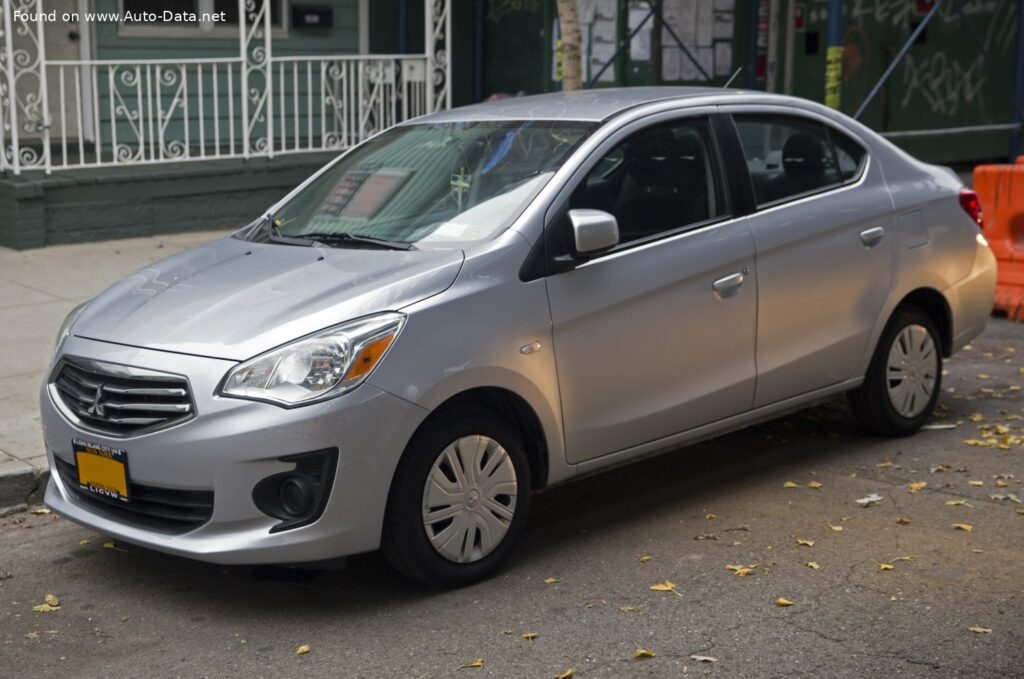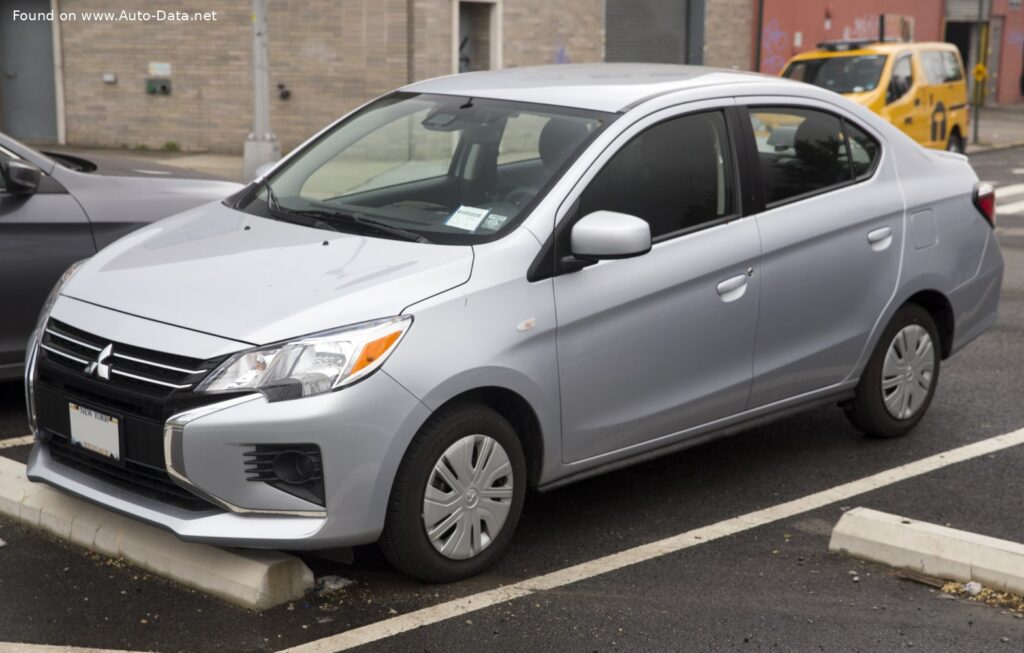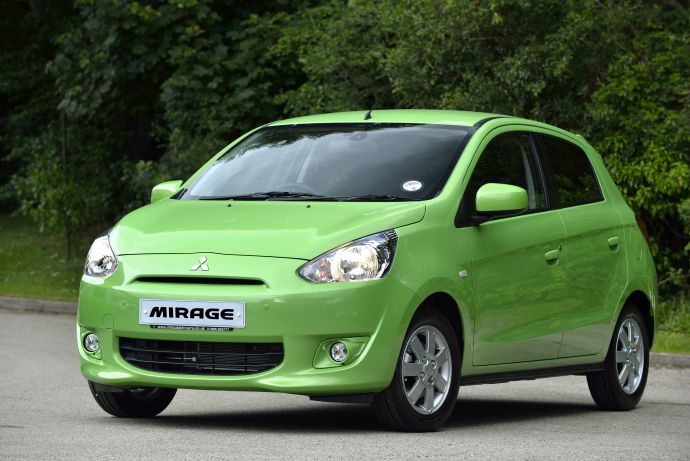
The Mitsubishi Mirage VI Hatchback, produced from 2012 to 2016, represents the sixth generation of Mitsubishi’s long-running Mirage subcompact car. While not officially sold in the United States during this generation, the Mirage held a significant position in the European and Asian markets as an affordable and fuel-efficient city car. It competed with vehicles like the Fiat Panda, Renault Twingo, and Toyota Aygo, offering a practical and economical transportation solution. This iteration of the Mirage focused heavily on maximizing fuel economy and minimizing running costs, appealing to budget-conscious buyers and those navigating congested urban environments.
Mitsubishi Mirage VI Hatchback 1.2 MIVEC: An Overview
The Mirage VI, particularly the 1.2 MIVEC CVT variant, was designed as a no-frills, efficient hatchback. It prioritized practicality and affordability over outright performance or luxury. The “VI” designation signifies its place as the sixth generation in a lineage dating back to the original Mirage introduced in 1978. The 1.2 MIVEC engine, coupled with a Continuously Variable Transmission (CVT), was a key component of its appeal, offering smooth acceleration and optimized fuel consumption. The car’s compact size made it easy to maneuver and park in tight city spaces, further enhancing its usability.
Engine & Performance
The heart of the Mirage VI 1.2 MIVEC is a 1.2-liter, inline-three cylinder gasoline engine. This engine, designated the 3A92, produces 80 horsepower at 6000 rpm and 106 Nm (78.18 lb.-ft.) of torque at 4000 rpm. While not a powerhouse, the engine is surprisingly refined for its size and configuration. The power-to-weight ratio stands at 10.8 kg/Hp, and the torque-to-weight ratio is 8.2 kg/Nm. The engine utilizes multi-port fuel injection and a double overhead camshaft (DOHC) valvetrain, contributing to its efficiency and responsiveness. The CVT transmission provides seamless gear changes, optimizing fuel economy and drivability. Acceleration from 0 to 100 km/h (0-62 mph) takes 12.8 seconds, and 0 to 60 mph is achieved in approximately 12.2 seconds. The Mirage VI 1.2 MIVEC has a top speed of 173 km/h (107.5 mph). The engine’s naturally aspirated design and relatively small displacement contribute to its fuel efficiency, making it an attractive option for those seeking low running costs.
Design & Features
The Mirage VI Hatchback is a five-door, five-seater vehicle with a practical and functional design. Its compact dimensions – 3710 mm (146.06 in.) in length, 1665 mm (65.55 in.) in width, and 1490 mm (58.66 in.) in height – make it well-suited for urban environments. The hatchback body style provides versatility, with a trunk space ranging from 487 liters (17.2 cu. ft.) with the rear seats up to 1331 liters (47 cu. ft.) with the seats folded down. Safety features, while basic by modern standards, included ABS (Anti-lock Braking System). The interior is designed with practicality in mind, offering comfortable seating for five passengers. The car’s drag coefficient of 0.28 contributes to its aerodynamic efficiency, further enhancing fuel economy. The McPherson strut front suspension and torsion beam rear suspension provide a comfortable ride, while the electric power steering offers light and precise handling. The vehicle rides on 15-inch wheels with 175/55 R15 tires.
Technical Specifications
| Brand | Mitsubishi |
| Model | Mirage |
| Generation | Mirage VI Hatchback |
| Type (Engine) | 1.2 MIVEC (80 Hp) CVT |
| Start of production | 2012 |
| End of production | 2016 |
| Powertrain Architecture | Internal Combustion engine |
| Body type | Hatchback |
| Seats | 5 |
| Doors | 5 |
| Fuel consumption (urban) | 4.6 l/100 km (51.1 US mpg, 61.4 UK mpg, 21.7 km/l) |
| Fuel consumption (extra urban) | 3.8 l/100 km (61.9 US mpg, 74.3 UK mpg, 26.3 km/l) |
| Fuel consumption (combined) | 4.1 l/100 km (57.4 US mpg, 68.9 UK mpg, 24.4 km/l) |
| CO2 emissions | 100 g/km |
| Fuel Type | Petrol (Gasoline) |
| Acceleration 0 – 100 km/h | 12.8 sec |
| Acceleration 0 – 62 mph | 12.8 sec |
| Acceleration 0 – 60 mph | 12.2 sec |
| Maximum speed | 173 km/h (107.5 mph) |
| Emission standard | Euro 5 |
| Weight-to-power ratio | 10.8 kg/Hp |
| Weight-to-torque ratio | 8.2 kg/Nm |
| Power | 80 Hp @ 6000 rpm |
| Torque | 106 Nm @ 4000 rpm (78.18 lb.-ft. @ 4000 rpm) |
| Engine layout | Front, Transverse |
| Engine Model/Code | 3A92 |
| Engine displacement | 1193 cm3 (72.8 cu. in.) |
| Number of cylinders | 3 |
| Engine configuration | Inline |
| Cylinder Bore | 75 mm (2.95 in.) |
| Piston Stroke | 90 mm (3.54 in.) |
| Compression ratio | 11:1 |
| Number of valves per cylinder | 4 |
| Fuel injection system | Multi-port manifold injection |
| Engine aspiration | Naturally aspirated engine |
| Valvetrain | DOHC |
| Engine oil capacity | 3 l (3.17 US qt | 2.64 UK qt) |
| Coolant capacity | 4.6 l (4.86 US qt | 4.05 UK qt) |
| Kerb Weight | 865 kg (1907 lbs.) |
| Max. weight | 1370 kg (3020.33 lbs.) |
| Max load | 505 kg (1113.33 lbs.) |
| Trunk (boot) space – minimum | 487 l (17.2 cu. ft.) |
| Trunk (boot) space – maximum | 1331 l (47 cu. ft.) |
| Fuel tank capacity | 35 l (9.25 US gal | 7.7 UK gal) |
| Length | 3710 mm (146.06 in.) |
| Width | 1665 mm (65.55 in.) |
| Height | 1490 mm (58.66 in.) |
| Wheelbase | 2450 mm (96.46 in.) |
| Front track | 1430 mm (56.3 in.) |
| Rear track | 1415 mm (55.71 in.) |
| Ride height (ground clearance) | 140 mm (5.51 in.) |
| Drag coefficient (Cd) | 0.28 |
| Minimum turning circle | 9.2 m (30.18 ft.) |
| Drivetrain | Front wheel drive |
| Gearbox | CVT automatic transmission |
| Front suspension | Independent, McPherson with coil spring and anti-roll bar |
| Rear suspension | Torsion |
| Front brakes | Ventilated discs |
| Rear brakes | Drum |
| Steering type | Steering rack and pinion |
| Power steering | Electric |
| Tires size | 175/55 R15 |
| Wheel rims size | 15 |
The Mitsubishi Mirage VI 1.2 MIVEC CVT, while not a performance car, offered a compelling package of affordability, fuel efficiency, and practicality. Its success in markets outside of the US demonstrates the demand for compact, economical vehicles in urban environments.