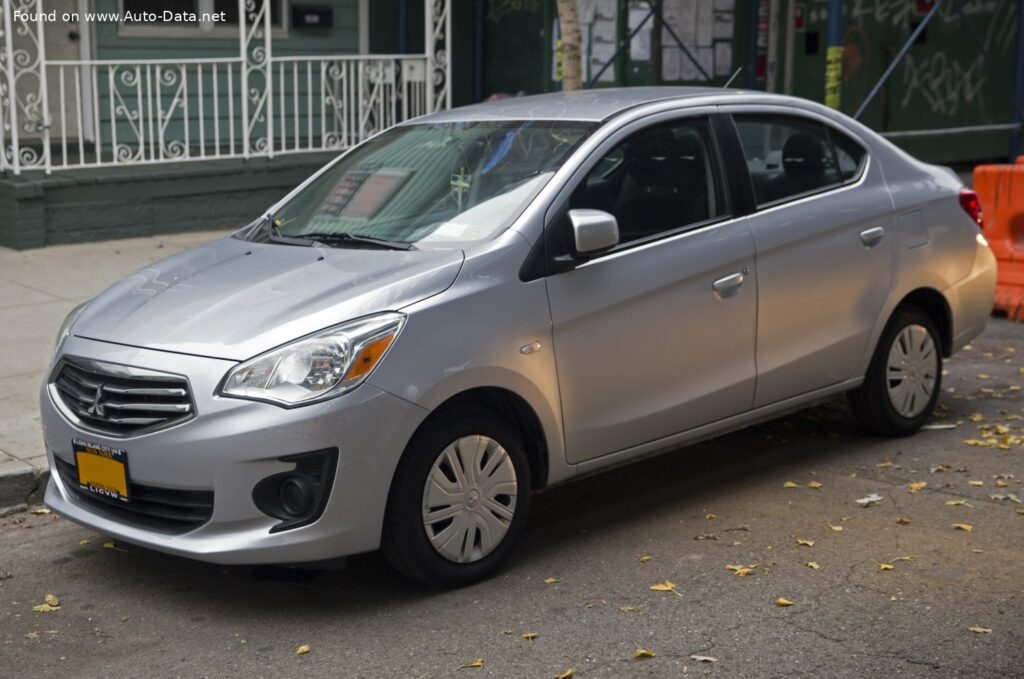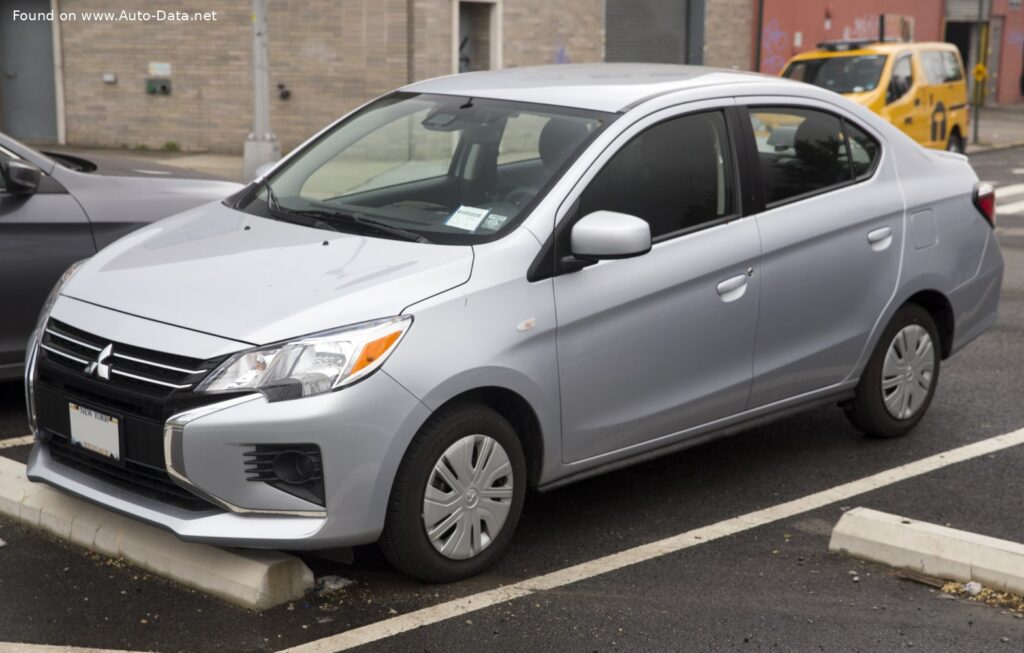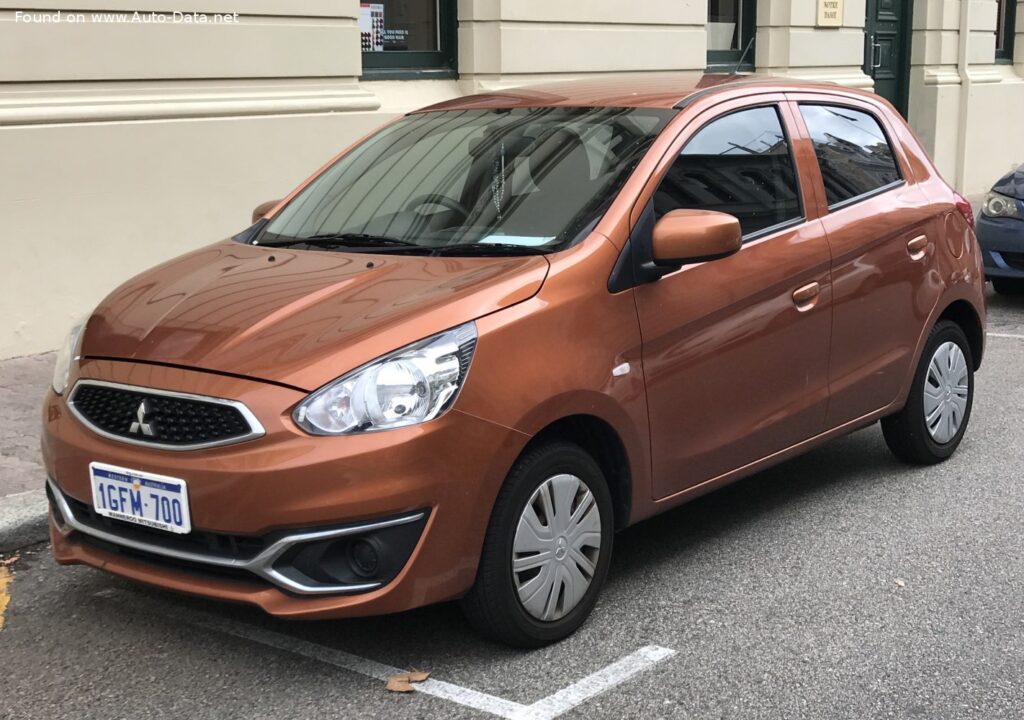
The Mitsubishi Mirage VI Hatchback (facelift 2017), powered by the 1.2 MIVEC engine producing 78 horsepower, represents a significant iteration of Mitsubishi’s subcompact offering. Primarily marketed in regions outside of North America, including Europe, Asia, and Latin America, the Mirage aimed to provide an affordable and fuel-efficient transportation solution. The 2017 facelift brought styling updates and minor mechanical refinements to the existing sixth-generation Mirage, enhancing its appeal in a competitive segment. This model occupied the supermini or city car category, focusing on practicality and economy rather than outright performance.
Mitsubishi Mirage VI Hatchback (facelift 2017) 1.2 MIVEC: An Overview
The Mirage, in its various iterations, has been a mainstay of Mitsubishi’s global lineup for decades. The sixth generation, and specifically the 2017 facelift, targeted buyers seeking a small, maneuverable vehicle for urban environments. While not officially sold in the United States after 2022, the Mirage held a niche position in markets where fuel costs are high and parking space is limited. The facelifted model aimed to address some criticisms of earlier versions, improving both the vehicle’s aesthetics and perceived quality. It competed with vehicles like the Toyota Aygo, Peugeot 108, and Fiat 500, all of which prioritize efficiency and affordability.
Engine & Performance
The heart of the 2017 Mitsubishi Mirage VI Hatchback is the 3A92 1.2-liter MIVEC inline-3 cylinder engine. This naturally aspirated engine delivers 78 horsepower at 6000 rpm and 100 Nm (73.76 lb.-ft.) of torque at 4000 rpm. While not a powerhouse, the engine is designed for efficiency, offering a combined fuel consumption of 6.5 liters per 100 kilometers (36.2 US mpg or 43.5 UK mpg). The engine’s power-to-weight ratio is 11.7 kg/Hp, and its torque-to-weight ratio is 9.2 kg/Nm. The engine utilizes a multi-port fuel injection system and a double overhead camshaft (DOHC) valvetrain. The engine displacement is 1193 cm3 (72.8 cu. in.) with a compression ratio of 10.5:1. Power delivery is adequate for city driving, and the engine is paired with a 5-speed manual transmission, contributing to its fuel-efficient nature. The front-wheel-drive configuration further simplifies the drivetrain and minimizes weight.
Design & Features
The Mirage VI Hatchback is a traditional five-door hatchback, offering seating for five passengers. The 2017 facelift included revisions to the front fascia, including a redesigned grille and headlights, giving the car a more modern appearance. The interior, while basic, was designed for practicality, with a focus on maximizing space within the vehicle’s compact footprint. Trunk space ranges from 487 liters (17.2 cu. ft.) with the rear seats up to 1331 liters (47 cu. ft.) with the rear seats folded down. Safety features, while not as comprehensive as those found in larger vehicles, included an Anti-lock Braking System (ABS). The vehicle’s dimensions are 3795 mm (149.41 in.) in length, 1666 mm (65.59 in.) in width, and 1509 mm (59.41 in.) in height. The wheelbase measures 2451 mm (96.5 in.). The curb weight ranges from 915 to 965 kg (2017.23 to 2127.46 lbs.), depending on the trim level and optional equipment. The vehicle utilizes McPherson strut front suspension and a torsion beam rear suspension. Electric power steering provides ease of maneuverability.
Technical Specifications
| Brand | Mitsubishi |
| Model | Mirage |
| Generation | Mirage VI Hatchback (facelift 2017) |
| Type (Engine) | 1.2 MIVEC (78 Hp) |
| Start of production | 2017 |
| End of production | 2019 |
| Powertrain Architecture | Internal Combustion engine |
| Body type | Hatchback |
| Seats | 5 |
| Doors | 5 |
| Fuel consumption (urban) | 7.1 l/100 km (33.1 US mpg) |
| Fuel consumption (extra urban) | 5.7 l/100 km (41.3 US mpg) |
| Fuel consumption (combined) | 6.5 l/100 km (36.2 US mpg) |
| Fuel Type | Petrol (Gasoline) |
| Weight-to-power ratio | 11.7 kg/Hp |
| Weight-to-torque ratio | 9.2 kg/Nm |
| Power | 78 Hp @ 6000 rpm |
| Torque | 100 Nm @ 4000 rpm (73.76 lb.-ft. @ 4000 rpm) |
| Engine layout | Front, Transverse |
| Engine Model/Code | 3A92 |
| Engine displacement | 1193 cm3 (72.8 cu. in.) |
| Number of cylinders | 3 |
| Engine configuration | Inline |
| Cylinder Bore | 75 mm (2.95 in.) |
| Piston Stroke | 90 mm (3.54 in.) |
| Compression ratio | 10.5:1 |
| Number of valves per cylinder | 4 |
| Fuel injection system | Multi-port manifold injection |
| Engine aspiration | Naturally aspirated |
| Valvetrain | DOHC |
| Engine oil capacity | 3 l (3.17 US qt | 2.64 UK qt) |
| Coolant capacity | 4 l (4.23 US qt | 3.52 UK qt) |
| Kerb Weight | 915-965 kg (2017.23 – 2127.46 lbs.) |
| Max. weight | 1320 kg (2910.1 lbs.) |
| Max load | 355-405 kg (782.64 – 892.87 lbs.) |
| Trunk (boot) space – minimum | 487 l (17.2 cu. ft.) |
| Trunk (boot) space – maximum | 1331 l (47 cu. ft.) |
| Fuel tank capacity | 35 l (9.25 US gal | 7.7 UK gal) |
| Length | 3795 mm (149.41 in.) |
| Width | 1666 mm (65.59 in.) |
| Height | 1509 mm (59.41 in.) |
| Wheelbase | 2451 mm (96.5 in.) |
| Front track | 1430 mm (56.3 in.) |
| Rear track | 1415 mm (55.71 in.) |
| Ride height (ground clearance) | 160 mm (6.3 in.) |
| Minimum turning circle | 9.2 m (30.18 ft.) |
| Drivetrain | Front wheel drive |
| Number of gears | 5 |
| Gearbox type | Manual transmission |
| Front suspension | Independent, McPherson with coil spring and anti-roll bar |
| Rear suspension | Torsion |
| Front brakes | Ventilated discs |
| Rear brakes | Drum |
| Assisting systems | ABS (Anti-lock braking system) |
| Steering type | Steering rack and pinion |
| Power steering | Electric |
| Tires size | 165/65 R14; 175/55 R15 |
| Wheel rims size | 14; 15 |
The Mitsubishi Mirage VI Hatchback (facelift 2017) 1.2 MIVEC, while not a performance vehicle, offered a compelling package of affordability, fuel efficiency, and practicality for buyers in its target markets. Its compact size and nimble handling made it well-suited for navigating crowded city streets, while its low running costs appealed to budget-conscious consumers.