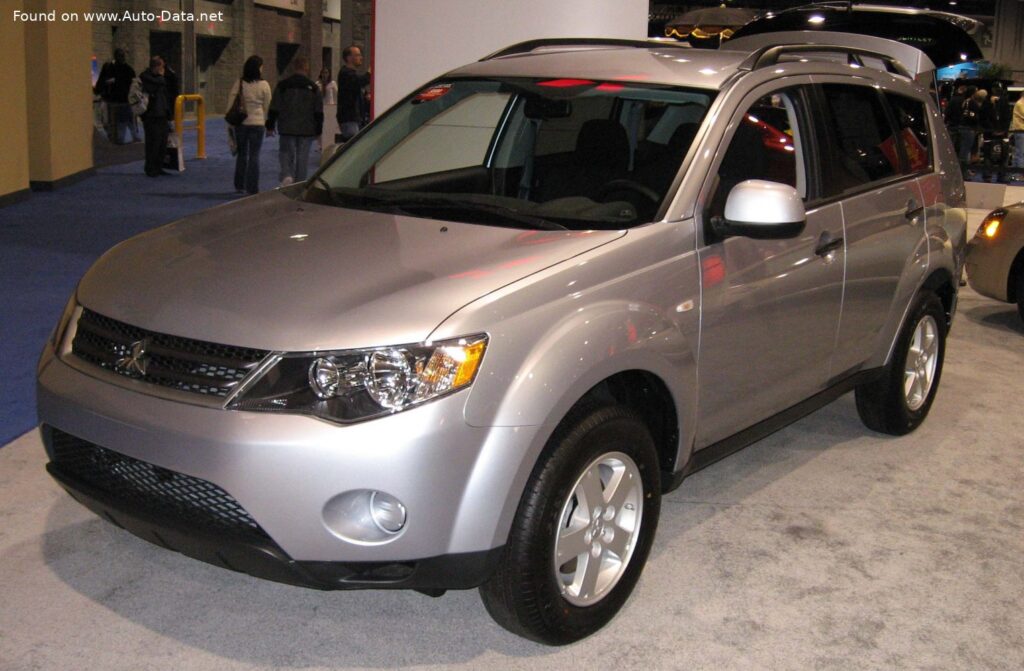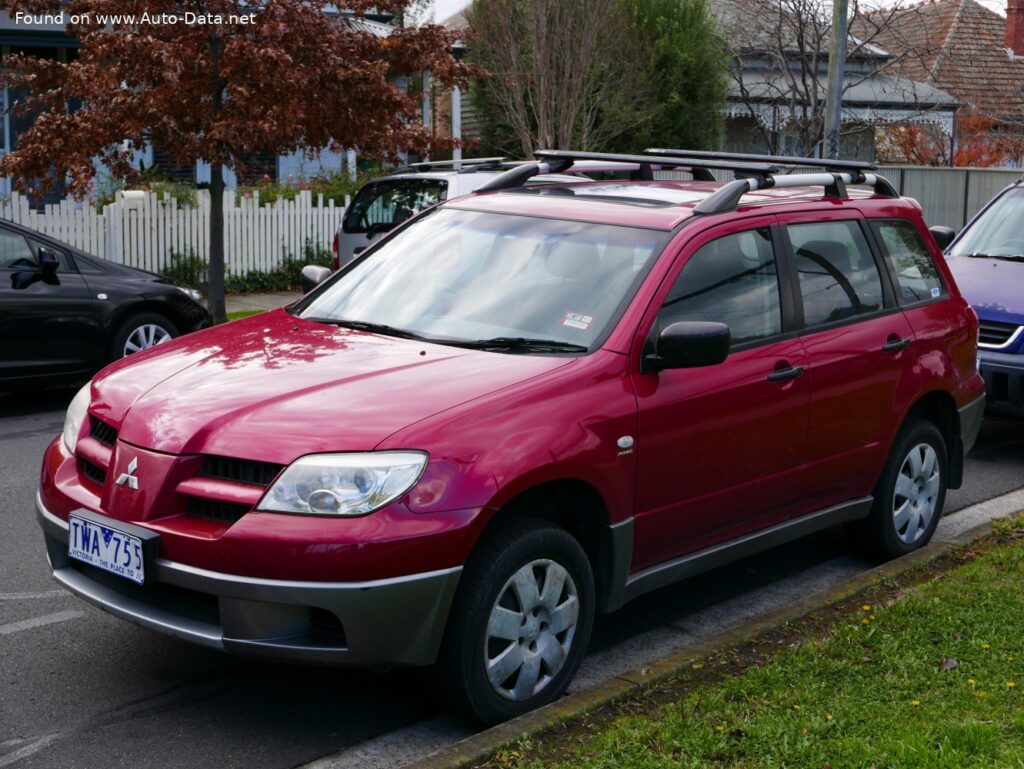
The Mitsubishi Outlander I, produced between 2001 and 2006, represents Mitsubishi’s initial foray into the compact crossover SUV segment. While not initially sold in the United States during its first generation, the Outlander was a significant model for Mitsubishi in Europe and other international markets, offering a blend of practicality, available all-wheel drive, and a relatively affordable price point. It served as a competitor to vehicles like the Honda CR-V and Toyota RAV4, aiming to provide a versatile vehicle for families and individuals seeking a capable and comfortable mode of transport.
Mitsubishi Outlander I: An Overview
The first-generation Outlander (codenamed CU2W) was based on the Mitsubishi GS platform, shared with the Lancer. It distinguished itself with a unibody construction, offering a more comfortable ride than traditional body-on-frame SUVs. The Outlander I was available with a range of engine options depending on the market, but the 2.0-liter inline-four engine, producing 136 horsepower, was a common configuration, particularly in European markets. The vehicle’s design emphasized practicality and a modern aesthetic, making it a popular choice for those seeking a versatile family vehicle.
Engine & Performance
The 2.0-liter 4G63 inline-four engine powering the Outlander I 2.0 i 16V 4WD delivers 136 horsepower at 6000 rpm and 176 Nm (129.81 lb.-ft.) of torque at 4500 rpm. This naturally aspirated engine utilizes a multi-port fuel injection system and a 10:1 compression ratio. While not exceptionally powerful, the engine provides adequate performance for everyday driving. Acceleration from 0 to 100 km/h (0-62 mph) takes approximately 11.4 seconds, and 0 to 60 mph is achieved in around 10.8 seconds. The Outlander I boasts a maximum speed of 192 km/h (119.3 mph). The engine’s power-to-weight ratio is 11.3 kg/Hp, and the torque-to-weight ratio is 8.8 kg/Nm. The engine’s displacement is 1997 cm3 (121.86 cu. in.), and it features four valves per cylinder. The engine requires 4.3 liters (4.54 US qt | 3.78 UK qt) of oil and 7 liters (7.4 US qt | 6.16 UK qt) of coolant.
Design & Features
The Mitsubishi Outlander I is a five-door SUV/Crossover with seating for five passengers. Its body style is characterized by a relatively boxy shape, typical of early 2000s SUV design. The vehicle’s dimensions are 4550 mm (179.13 in) in length, 1750 mm (68.9 in) in width, and 1605 mm (63.19 in) in height, with a wheelbase of 2625 mm (103.35 in). The Outlander I prioritizes interior space, offering a generous 1708 liters (60.32 cu. ft.) of trunk space with the rear seats folded down. Standard safety features for the era included ABS (Anti-lock Braking System). The vehicle’s suspension utilizes coil springs on both the front and rear axles, providing a comfortable ride. Ventilated discs are used for the front brakes, while discs are used for the rear brakes. The Outlander I rides on 215/60 R16 tires. The kerb weight is 1540 kg (3395.12 lbs), with a maximum weight of 1995 kg (4398.22 lbs) and a maximum load capacity of 455 kg (1003.1 lbs).
Technical Specifications
| Brand | Mitsubishi |
| Model | Outlander |
| Generation | Outlander I |
| Type (Engine) | 2.0 i 16V 4WD (136 Hp) |
| Start of production | 2001 year |
| End of production | 2006 year |
| Powertrain Architecture | Internal Combustion engine |
| Body type | SUV, Crossover |
| Seats | 5 |
| Doors | 5 |
| Fuel consumption (urban) | 12.4 l/100 km (19 US mpg, 22.8 UK mpg, 8.1 km/l) |
| Fuel consumption (extra urban) | 7.6 l/100 km (30.9 US mpg, 37.2 UK mpg, 13.2 km/l) |
| Fuel Type | Petrol (Gasoline) |
| Acceleration 0 – 100 km/h | 11.4 sec |
| Acceleration 0 – 62 mph | 11.4 sec |
| Acceleration 0 – 60 mph | 10.8 sec |
| Maximum speed | 192 km/h (119.3 mph) |
| Weight-to-power ratio | 11.3 kg/Hp |
| Weight-to-torque ratio | 8.8 kg/Nm |
| Power | 136 Hp @ 6000 rpm |
| Power per litre | 68.1 Hp/l |
| Torque | 176 Nm @ 4500 rpm (129.81 lb.-ft. @ 4500 rpm) |
| Engine layout | Front, Transverse |
| Engine Model/Code | 4G63 |
| Engine displacement | 1997 cm3 (121.86 cu. in.) |
| Number of cylinders | 4 |
| Engine configuration | Inline |
| Cylinder Bore | 85 mm (3.35 in.) |
| Piston Stroke | 88 mm (3.46 in.) |
| Compression ratio | 10:1 |
| Number of valves per cylinder | 4 |
| Fuel injection system | Multi-port manifold injection |
| Engine aspiration | Naturally aspirated engine |
| Engine oil capacity | 4.3 l (4.54 US qt | 3.78 UK qt) |
| Coolant | 7 l (7.4 US qt | 6.16 UK qt) |
| Kerb Weight | 1540 kg (3395.12 lbs.) |
| Max. weight | 1995 kg (4398.22 lbs.) |
| Max load | 455 kg (1003.1 lbs.) |
| Trunk (boot) space – minimum | 1708 l (60.32 cu. ft.) |
| Fuel tank capacity | 60 l (15.85 US gal | 13.2 UK gal) |
| Length | 4550 mm (179.13 in.) |
| Width | 1750 mm (68.9 in.) |
| Height | 1605 mm (63.19 in.) |
| Wheelbase | 2625 mm (103.35 in.) |
| Front track | 1495 mm (58.86 in.) |
| Rear (Back) track | 1505 mm (59.25 in.) |
| Drive wheel | All wheel drive (4×4) |
| Number of gears and type of gearbox | 5 gears, manual transmission |
| Front suspension | Coil spring |
| Rear suspension | Coil spring |
| Front brakes | Ventilated discs |
| Rear brakes | Disc |
| Assisting systems | ABS (Anti-lock braking system) |
| Tires size | 215/60 R16 |
The Mitsubishi Outlander I, while not a groundbreaking vehicle, provided a solid foundation for the Outlander line. It offered a practical and capable option for buyers seeking a compact SUV with available all-wheel drive, establishing Mitsubishi as a contender in the growing crossover market. Its successor generations would build upon this foundation, incorporating more advanced technology and features to meet evolving consumer demands.